George Sand
b. 1804, Paris; d. 1876, Nohant, France
George Sand, one of the major literary figures of the nineteenth century, adopted her male pseudonym in 1832 for the publication of Indiana, a novel about a woman who abandons an unhappy marriage to find love. Well known for dressing in men’s clothing, smoking cigars, and having many lovers (including famed composer Frédéric Chopin), many of her works are considered protests against the social conventions of her day. Throughout her prolific career—she published some 100 novels and produced twenty-one plays—Sand took inspiration from the countryside and her “rustic novels” challenged classist representations of peasant life. Her most successful novels include Lélia (1833), Mauprat (1837), La mare au diable (1846), François le Champi (1848), and La petite Fadette (1849).
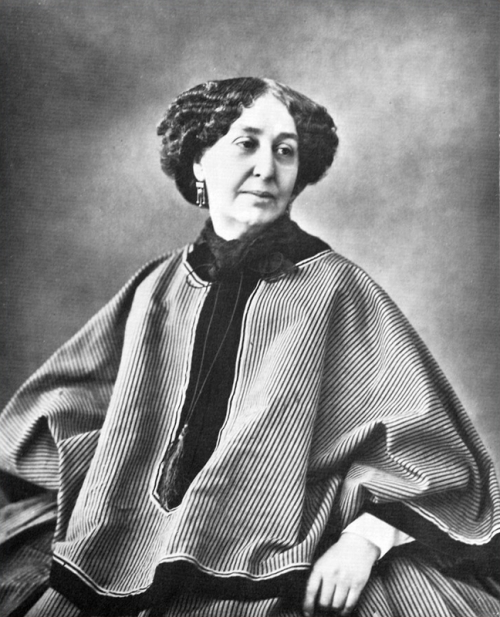
Félix Nadar. George Sand, 1864. George Eastman House, Rochester, N.Y.
Related Place Setting
Related Heritage Floor Entries
- Jane Austen
- Joanne Baillie
- Elizabeth Bekker
- Charlotte Brontë
- Emily Brontë
- Frances Brooke
- Elizabeth Barrett Browning
- Fanny Burney
- Anne Clough
- Albertine Necker de Saussure
- Elizabeth Druzbacka
- Maria Edgeworth
- George Eliot
- Margaret Fuller
- Anna Karsch
- Mary Lyon
- Harriet Martineau
- Hedwig Nordenflycht
- Baba Petkova
- Christina Rossetti
- Susanna Rowson
- Hermine Veres
- Bettina von Arnim
- Bertha von Suttner
- Emma Willard