Boadaceia
(b. circa A.D. 25, Celtic Britain; d. circa A.D. 62, Celtic Britain)
Boudica (this spelling is used in an effort to stay as true as possible to her original Celtic name) was married to Prasutagus, king of the Iceni people, a Celtic tribe living in southeastern England (present-day Norfolk). Prasutagus, following tradition, willed his kingdom to the Roman Empire, with the provision that his two daughters be co-heirs. After his death, the Romans annexed his kingdom as though it were conquered territory. The Iceni people's property was stolen, and Prasutagus's family treated as slaves. His widow Boudica was reputed to have been beaten by the Roman soldiers and her two daughters raped.
In the year A.D. 60, the Iceni joined with the Trinovantes, a neighboring people, to revolt against the Romans. They chose Boudica, the popular widow of their beloved king, as their leader. After a series of smaller battles in which Boudica's troops were victorious, they met the full force of the Roman army. The Roman soldiers were far outnumbered by the rebel Celtic forces, but they were better equipped and defeated Boudica and her army after a long battle, which Boudica commandeered from a chariot with her daughters. Boudica's army was slaughtered, and it was shortly after this battle that she died.
There are two historical sources on Boudica's life—one claims she poisoned herself and the other asserts she died from illness. Historical sources note that she was buried with all the pomp and ceremony accorded the funeral of a great leader. Since the discovery of these sources during the Renaissance, the popularity of her legend has grown, and her life continues to be interpreted in popular culture. She is a cultural symbol in Great Britain, as she stands for leadership, strength, and courage against an occupying power.
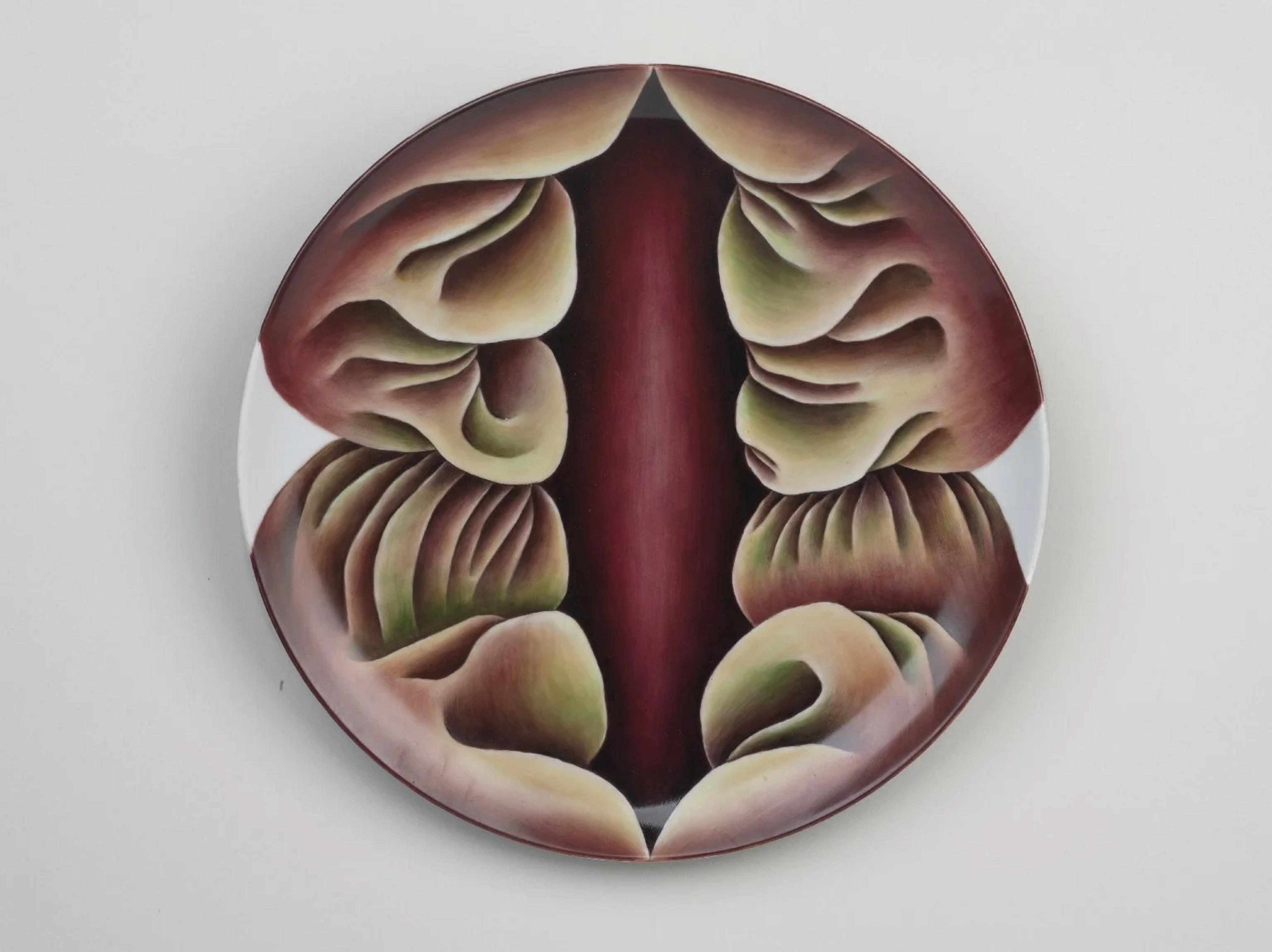
On the plate there is a structure similar to Stonehenge, representing the British Isles where her people were from. A stylized golden helmet, also decorated with Celtic patterns, signifies Boudica's status as a warrior.
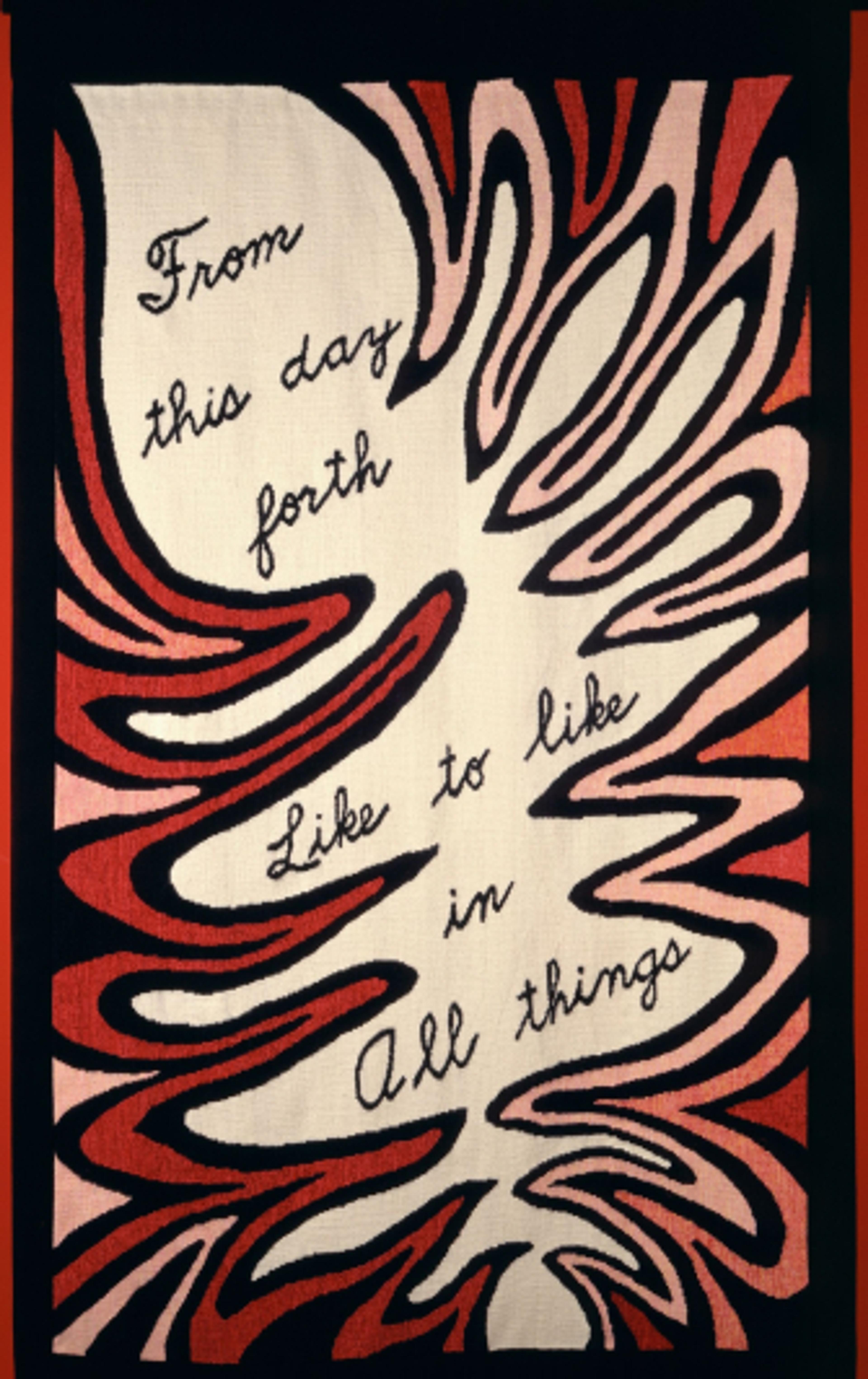
Adorning the swirling patterns in the runner are handmade enameled jewels, which could be found on the traditional Celtic jewelry that Boudica would have worn as queen. The embroidered patterns on the runner and in the illuminated letter "B," were also adapted from designs found on first-century jewelry, shields, and mirrors.
Related Heritage Floor Entries
Alexandra of Jerusalem
Aretaphilia of Cyrene
Arsinoe II
Artemisia I
Artemisia II
Basilea
Brynhild
Cartismandua
Chiomara
Cleopatra
Cynane
Eachtach
Macha of the Red Tresses
Meave
Medb of Connacht
Muirgel
Olympias
Tomyris
Veleda
Zenobia
Primary Sources
Tain Bo Cuailnge from The Book of Leinster. Trinity College, Dublin, MS H 2.18. 1160.
Tacitus. Annals, Agricola, Histories.
Translations, Editions, and Secondary Sources
Andrews, Ian. Boudicca’s Revolt. Cambridge, UK and New York: Cambridge University Press, 1972.
Collingridge, Vanessa. Boudica:The Life and Legends of Britain’s Warrior Queen. New York: Overlook Press, 2006.
Fraser, Antonia. Boadicea’s Chariot. London: Weidenfeld & Nicolson, 1988.
Grant, Michael, trans. Tacitus: The Annals of Imperial Rome. 1956; reprint ed., London and New York: Penguin Books, 1996.
Hingley, Richard, and Christina Unwin. Boudica: Iron Age Warrior Queen. London: Hambledon and London, 2005.
Mallory, J. P., ed. Aspects of the Táin. Belfast: December Publications, 1992.
Scott, James M. Boadicea. London: Constable, 1975.
Sealey, Paul R. The Boudican Revolt Against Rome. Buckinghamshire, UK: Shire Publications, 1997.
Webster, Graham. Boudica: The British Revolt Against Rome, AD 60. 1978; reprint ed., London: Routledge, 2000.
Wellesley, Kenneth, trans. Tacitus: The Histories. 1964; reprint ed., London and New York: Penguin Books, 1995.
Web Resources
FAQ

Eastern Parkway/Brooklyn Museum