Perhaps the most well known myth of Ishtar/Inanna tells of how she chose a young shepherd Dumuzi (later called Tammuz), as her lover; they later became joined through the ritual called "Sacred Marriage." Shortly after, Dumuzi died. In one version, he is killed by raiders and mourned by his wife, sister, and mother. In another, Ishtar/Inanna travels to the underworld and once there must sacrifice Dumuzi, offering him as her replacement, in order to leave. For half the year, he returns to the world, while his sister takes his place in the underworld, thus becoming the dying and reborn god of agricultural fertility.
Ishtar is described as taking many lovers; in the Epic of Gilgamesh, the hero refuses her advances, enumerating the grim fates of her other lovers. In other myths, Ishtar controls thunderstorms and rains, wages war in the divine world, and steals the me (Sumerian for "offices") from the god Enki. These are difficult to define; they can be characterized as divine powers, properties, or principles that enable the continuation of order, institutions, and thus organized civilization. Ishtar's possession of them contributes to what Thorkild Jacobson in The Treasures of Darkness calls her "infinite variety" as a goddess.
Rituals connected to the worship of Ishtar/Inanna include a Sacred Marriage in which a male ruler is identified with Dumuzi. As the practice was recounted only in literature, it is unclear whether it was purely symbolic or an actual reenactment. In art and texts, Ishtar is depicted supporting favored rulers in battle. Kings may have invoked their devotion to her in order to legitimate their rule. Ishtar/Inanna was also worshipped locally, as a goddess associated with particular cities. However, the majority of references to Ishtar/Inanna are from ancient literature, mostly myths, epics, and hymns. The actual practices associated with her cult are not well documented in ancient records.
As the goddess of sex, Ishtar may have been connected with sexual practice in cults, in a way that is not yet fully understood. Past popular and scholarly literature often refers to her association with prostitution. Beginning with Herodotus, later ancient Greek accounts describe a practice that required women, once in their lives, to perform sex with a stranger within Ishtar's temple precincts. Although the existence of prostitution is documented in ancient Mesopotamia, this particular form of "sacred prostitution" is not. Explicit erotic and sexual references do abound in texts concerning Ishtar/Inanna. However, ancient terms for classes of individuals associated with her cult or temple (formerly often translated to "sacred prostitute") more likely encompass a range of roles in cult rituals that changed over time.
Because of her multiple aspects and powers, Ishtar/Inanna remains a complex and confusing goddess figure in modern study. Scholars suggest she incorporates contradictory forces to the point of embodying paradox: sex and violence, fecundity and death, beauty and terror, centrality and marginality, order and chaos. Rivka Harris views her as a "liminal" figure (Harris, "Inanna-Ishtar as Paradox," 265). In Women of Babylon: Gender and Representation in Mesopotamia, Zainab Bahrani calls her the embodiment of "alterity" (Bahrani, Women of Babylon, 158). Ishtar, in all her variety and contradiction, was a central figure in ancient Mesopotamian religion and culture for millennia.
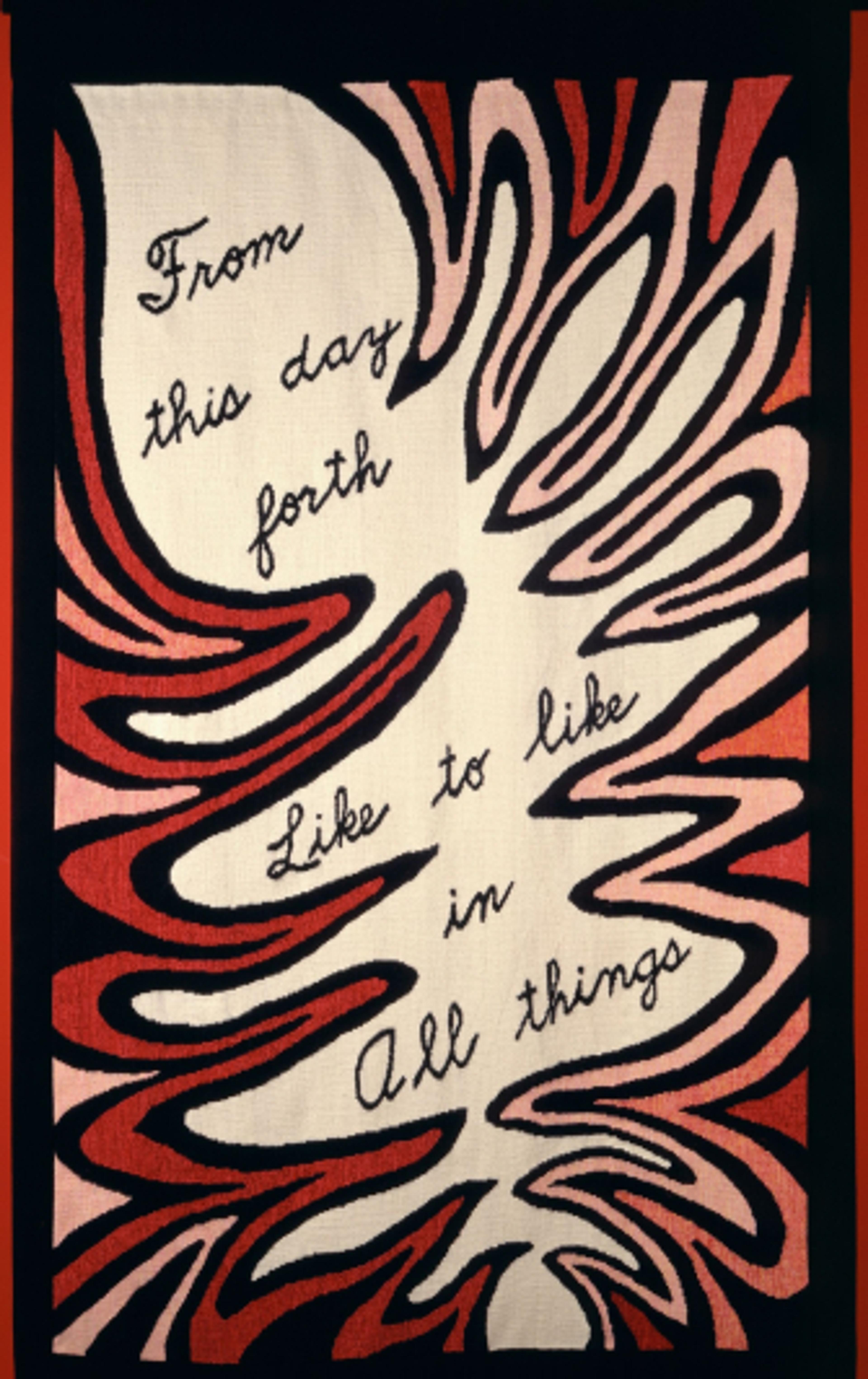
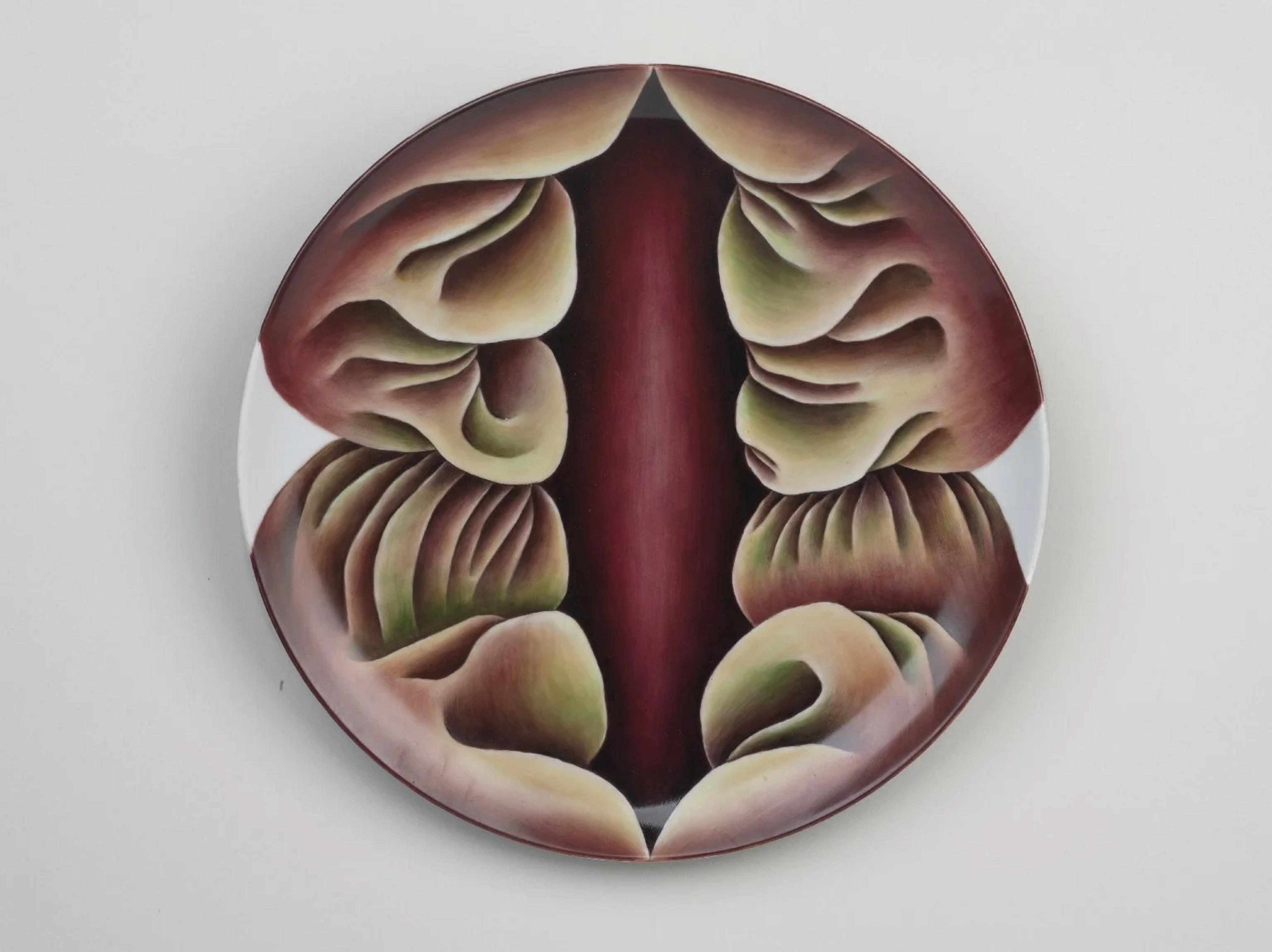
The colors of the plate and runner, mainly shades of gold with green highlights, were chosen as Ishtar's colors. The gold represents her grandeur and also echoes some of the colors of the Mesopotamian architecture and landscape, while green is her sacred color. On the plate, she is depicted as the positive female creator with multiple breast-like forms that allude to her role as a giver of life. These forms are paralleled in the stitching around the capital letter, done in Italian shading.
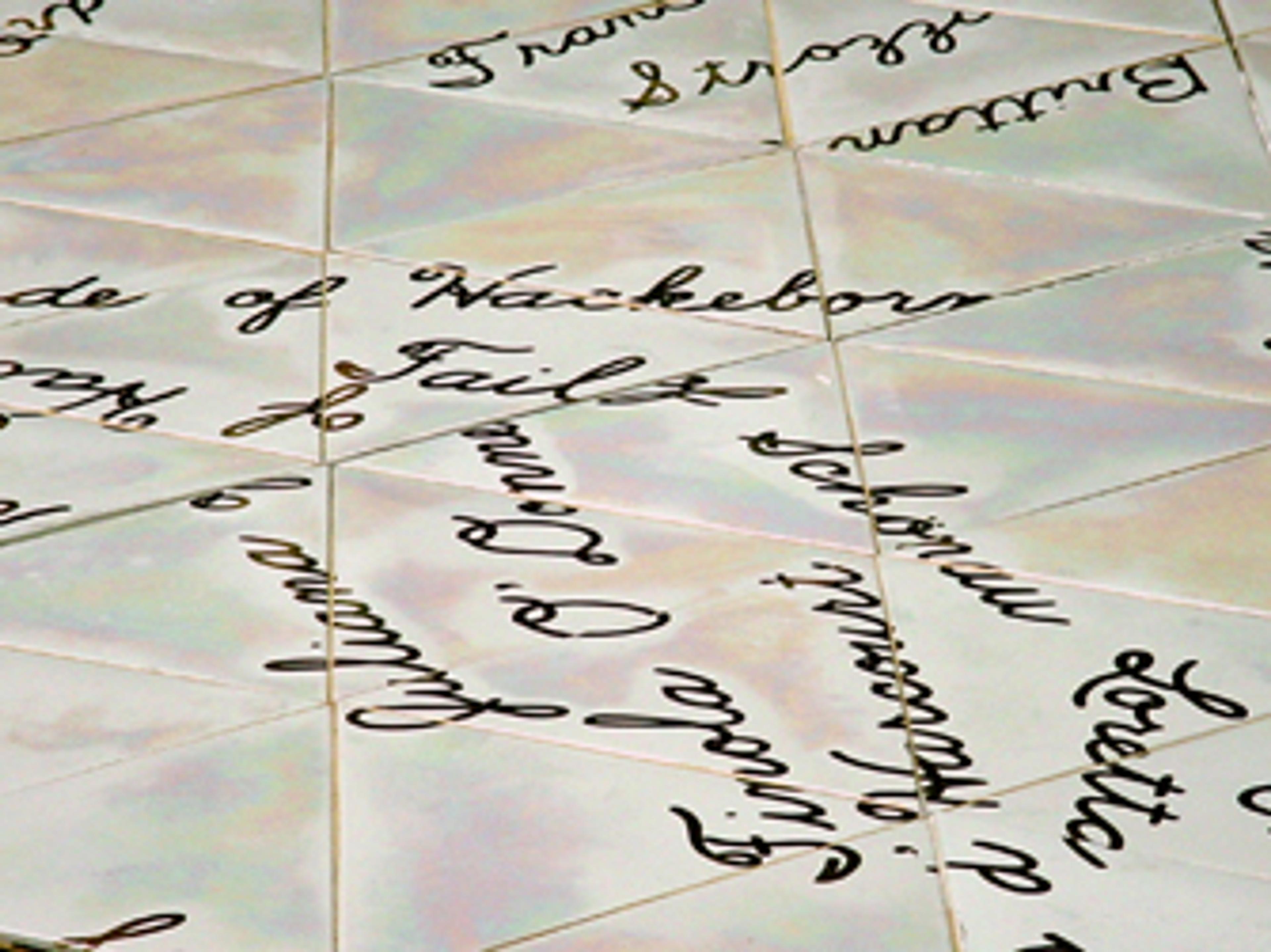
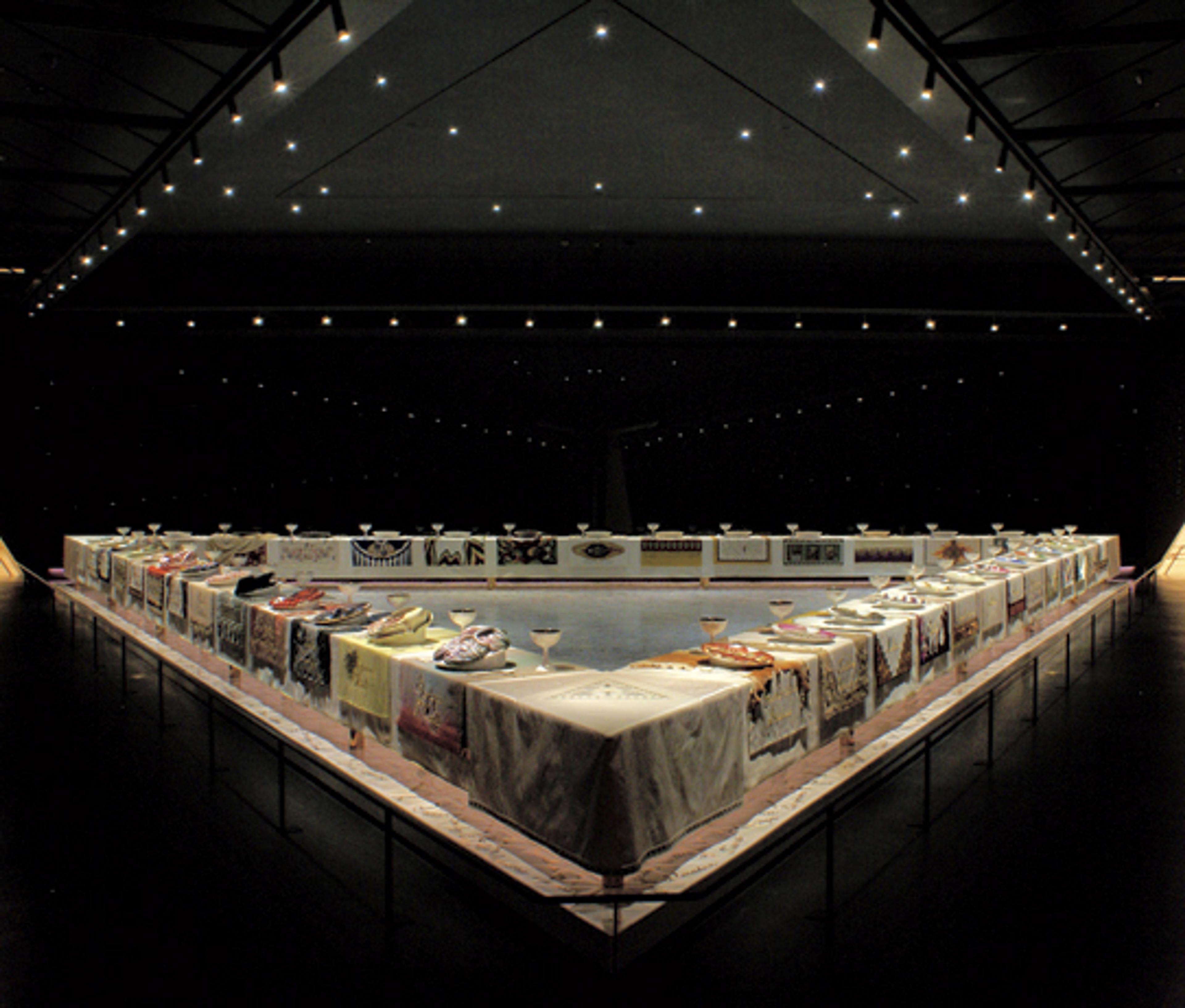
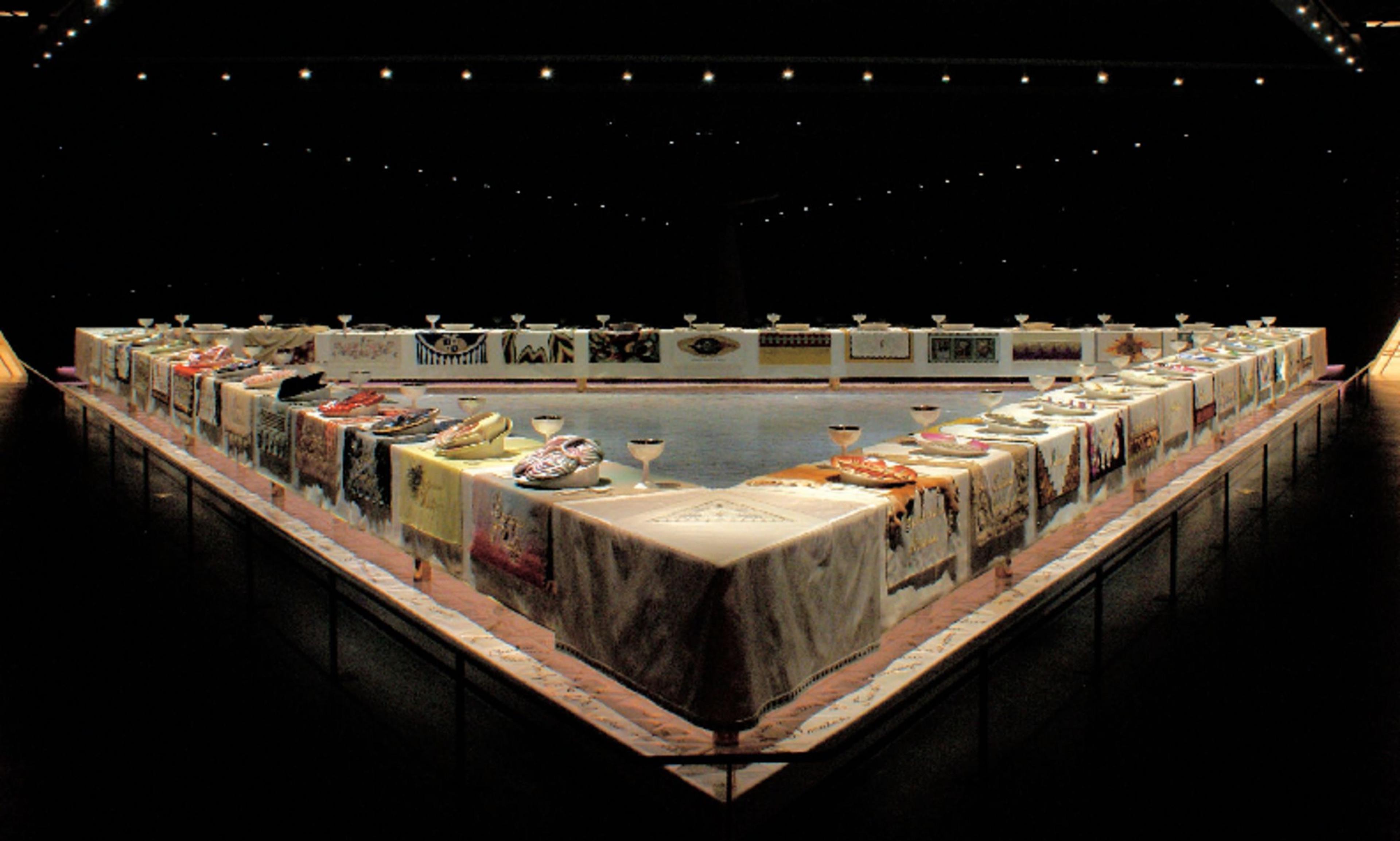
Because Ishtar is usually identified as a later form of Inanna, a Sumerian goddess, there are many similarities between their myths and artistic representations. The two are often seen as one goddess with one tradition. In much of the literature, they are referred to as a single being, Ishtar/Inanna or Inanna/Ishtar. In The Dinner Party, however, Judy Chicago has chosen to represent them as two separate entities. Inanna can be found on the Heritage Floor as one of the names related to Ishtar.
Related Heritage Floor Entries
Amat-Mamu
Anahita
Anath
Aphrodite
Arinitti
Asherah
Ashtoreth
Astarte
Baranamtarra
Blodeuwedd
Cerridwen
Cybele
Encheduanna
Hannahanna
Hathor
Iltani
Inanna
Isis
Kubaba
Shibtu
Shub-Ad of Ur
Tanith
Primary Sources
The Epic of Gilgamesh. Sumeria, 2000 B.C.
Translations, Editions, and Secondary Sources
Bahrani, Zainab. Women of Babylon: Gender and Representation in Mesopotamia. London: Routledge, 2001.
Black, Jeremy, and Anthony Green. Gods, Demons and Symbols of Ancient Mesopotamia. Austin: University of Texas Press, 1992.
Foster, Benjamin R., ed. The Epic of Gilgamesh. New York: W. W. Norton, 2001.
Harris, Rivka. Gender and Aging in Mesopotamia: The Gilgamesh Epic and Other Ancient Literature. Norman: University of Oklahoma Press, 2000.
----. “Inanna-Ishtar as Paradox and a Coincidence of Opposites.” History of Religions 30 (1991): 261–78.
Jacobsen, Thorkild. The Treasures of Darkness: A History of Mesopotamian Religion. New Haven: Yale University Press, 1976.
-----. The Harps That Once. . . Sumerian Poetry in Translation. New Haven: Yale University Press, 1987.
Leeming, David Adams. Goddess: Myths of the Female Divine. Oxford, UK and New York: Oxford University Press, 1994.
Leick, Gwendolyn. Sex and Eroticism in Mesopotamian Literature. London and New York: Routledge, 1994.
Stone, Merlin. Ancient Mirrors of Womanhood: A Treasury of Goddess and Heroine Lore from Around the World. Boston: Beacon Press, 1979.
Wolkstein, Diane, and Samuel Noah Kramer. Inanna, Queen of Heaven and Earth: Her Stories and Hymns from Sumer. Harper & Row: New York, 1983.
Web Resources
Encyclopedia Mythica at Pantheon.org : Ishtar
Gateways to Babylon
Sacred Texts Online : Descent of Ishtar into the Lower World
The Gilgamesh epic
Contributors
FAQ

Eastern Parkway/Brooklyn Museum