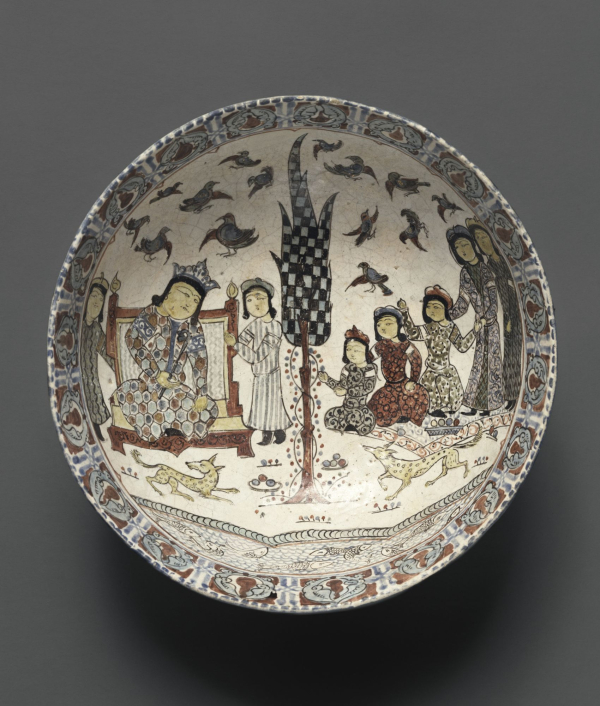
Bowl with an Enthronement Scene, Iran, Seljuk period, late 12th–early 13th century. Ceramic; fritware, underglaze and overglaze painted, gilded; 3 3/16 × 8 1/4 in. (8.1 × 21 cm). Brooklyn Museum, Gift of the Ernest Erickson Foundation, Inc., 86.227.61. (Photo: Brooklyn Museum)
Bowl with an Enthronement Scene, Iran, Seljuk period, late 12th–early 13th century. Ceramic; fritware, underglaze and overglaze painted, gilded; 3 3/16 × 8 1/4 in. (8.1 × 21 cm). Brooklyn Museum, Gift of the Ernest Erickson Foundation, Inc., 86.227.61. (Photo: Brooklyn Museum)
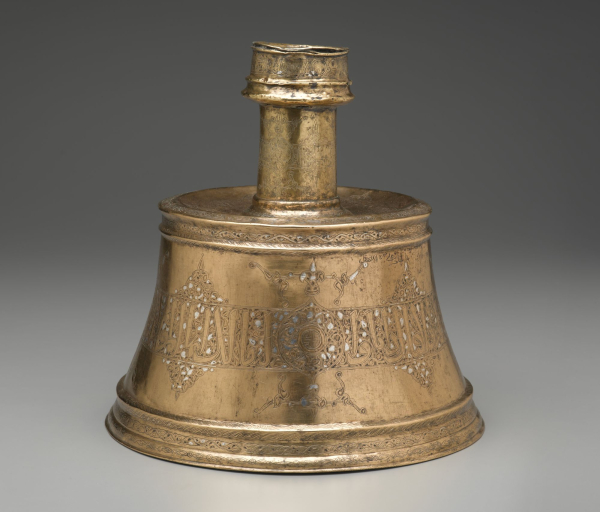
Candlestick, Egypt or Syria, Mamluk period, 14th century. Copper alloy; punched, engraved; inlaid with silver; h. 11 × 11 3/4 in. (27.9 × 29.8 cm). Brooklyn Museum, Gift of the Ernest Erickson Foundation, Inc., 86.227.197. (Photo: Brooklyn Museum)
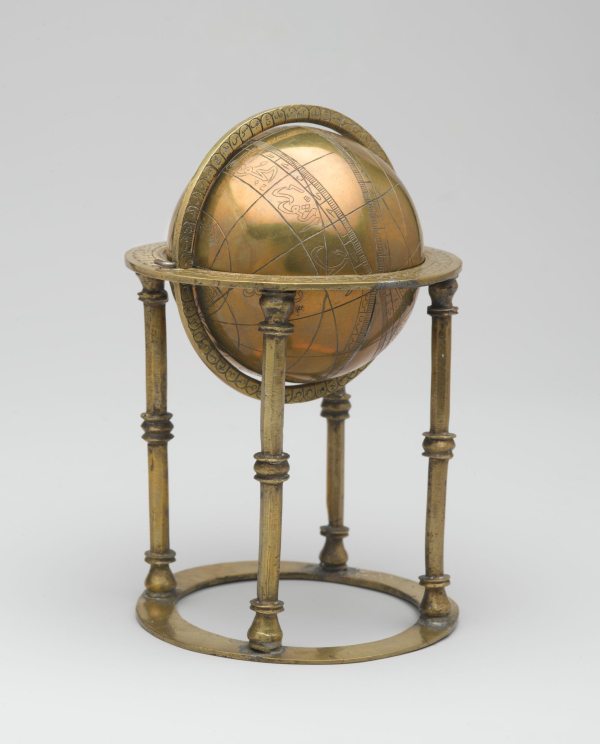
Celestial Sphere with Stand, possibly Iran, 18th century. Copper alloy, 7 × 4 1/2 in. (17.8 × 11.4 cm). Brooklyn Museum, Museum Collection Fund, 20.993. (Photo: Brooklyn Museum, 20.993)
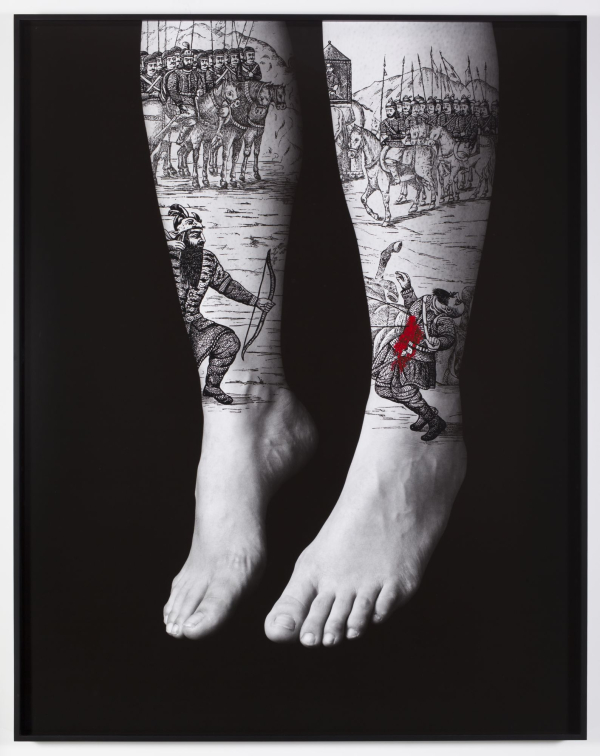
Shirin Neshat (born 1957, Iran, lives America). Divine Rebellion, 2012. Acrylic on laser-exposed gelatin silver print, 62 × 49 in. (157.5 × 124.5 cm). Brooklyn Museum, Bequest of Samuel Zachary Gitlin and Mary Hayward Weir, gift of Dr. Richard Bassin, Bessemer Trust Company, IBM Gallery of Science, and David Saks, by exchange and Alfred T. White Fund, 2012.22. © Shirin Neshat. (Photo: Image courtesy the artist and Gladstone Gallery, New York and Brussels)
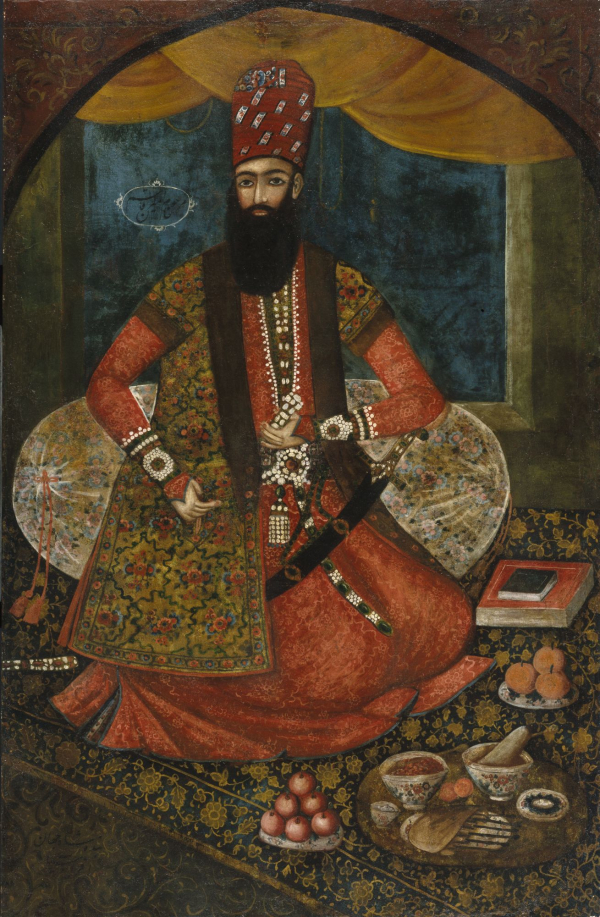
Portrait of the Late Amir Qasim Khan, Iran, Qajar period, H. 1272 / 1855 C.E. Oil on canvas, 59 × 37 in. (149.9 × 94 cm). Brooklyn Museum, Gift of Mr. and Mrs. Charles K. Wilkinson, 73.145. (Photo: Brooklyn Museum)
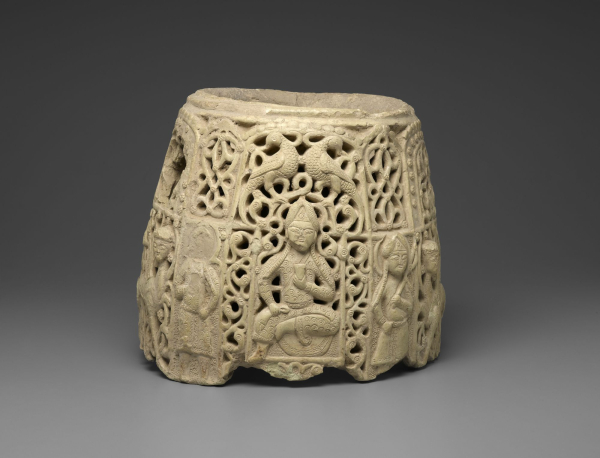
Water Cooling Jug, Iraq, Syria, or Turkey (Jazira region), Seljuk period, late 12th–early 13th century. Ceramic; earthenware, 12 × 14 1/4 × 14 1/4 in. (30.5 × 36.2 × 36.2 cm). Brooklyn Museum, Gift of The Roebling Society, 73.30.6. (Photo: Brooklyn Museum)
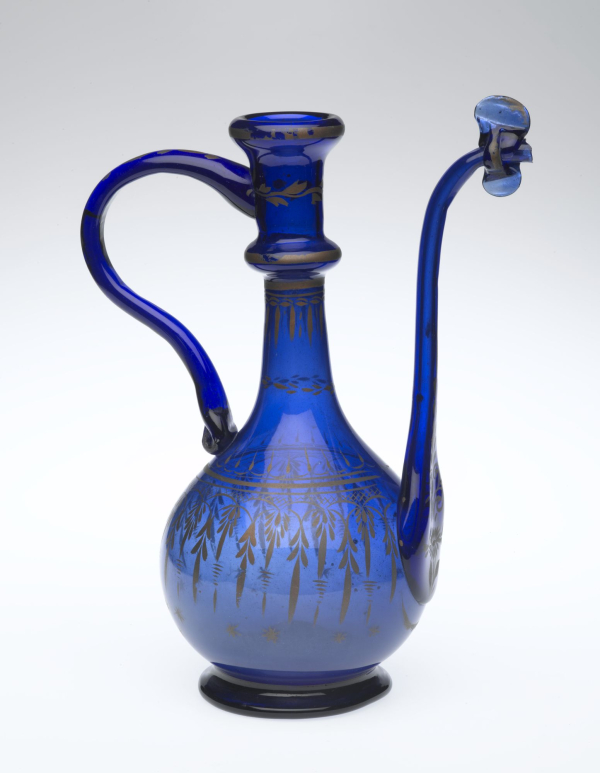
Ewer, Iran, (Qum), Qajar period, 19th century. Glass; free-blown, applied, pinched, gilded; tooled on the pontil, 10 1/4 × 7 1/2 × 4 5/16 in. (26 × 19 × 11 cm). Brooklyn Museum, Henry L. Batterman Fund, 47.203.19. (Photo: Brooklyn Museum)
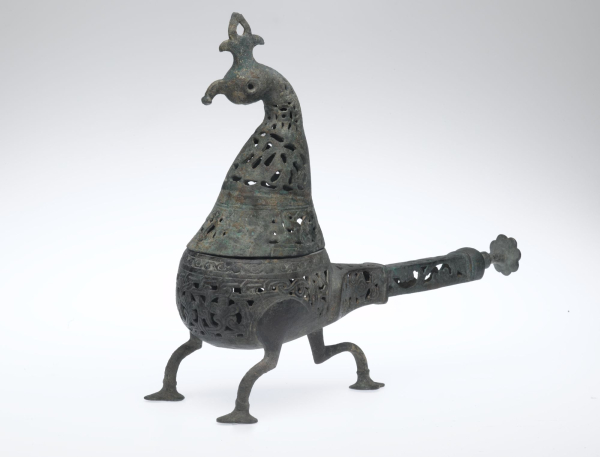
Peacock-Shape Incense Burner, Iran, Seljuk period, 12th–13th century. Copper alloy; pierced and engraved, 10 1/2 × 11 1/2 in. (26.7 × 29.2 cm). Brooklyn Museum, Special Middle Eastern Art Fund, 70.98.1. (Photo: Brooklyn Museum)
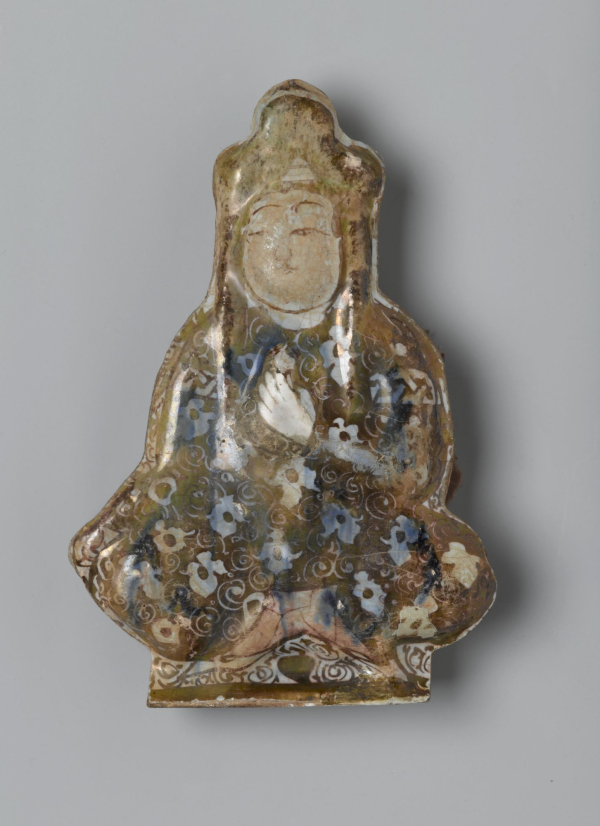
Tile in the Shape of a Seated Figure, Iran (probably Kashan), early 13th century. Ceramic; fritware, molded, underglaze painted, overglaze lustered, 5 1/2 × 4 in. (14 × 10.2 cm). Brooklyn Museum, Gift of the Ernest Erickson Foundation, Inc., 86.227.69. (Photo: Brooklyn Museum)
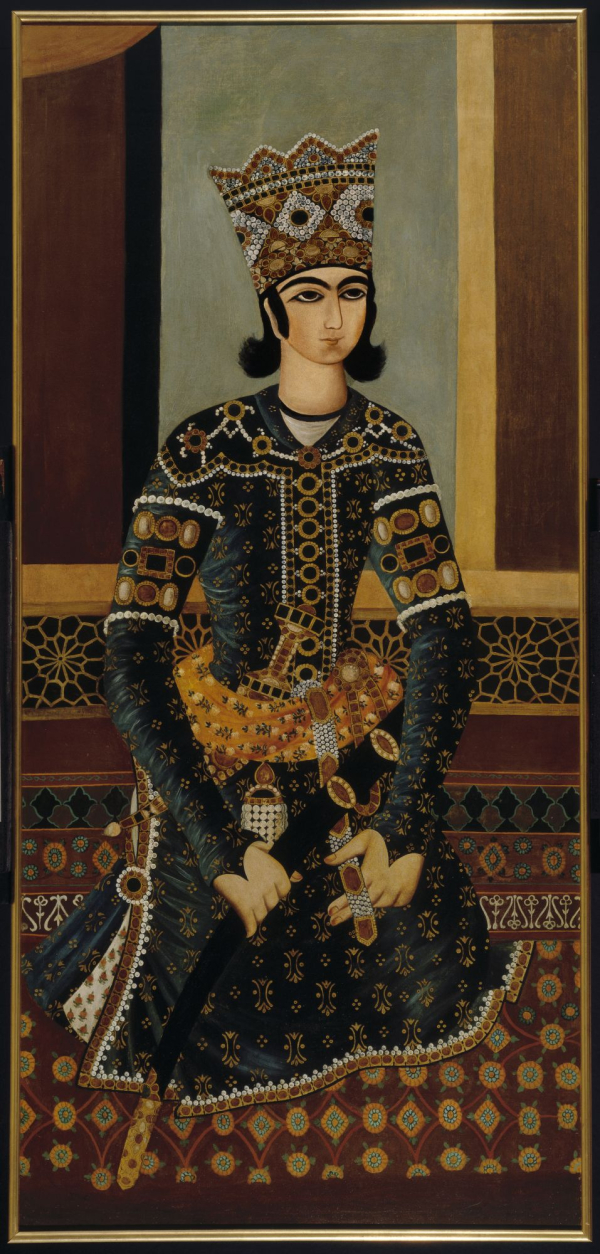
Seated Prince, Iran, Qajar period, circa 1825. Oil on canvas, 62 × 29 in. (157.5 × 73.7 cm). Brooklyn Museum, Gift of Mr. and Mrs. Charles K. Wilkinson, 70.62.2. (Photo: Brooklyn Museum)
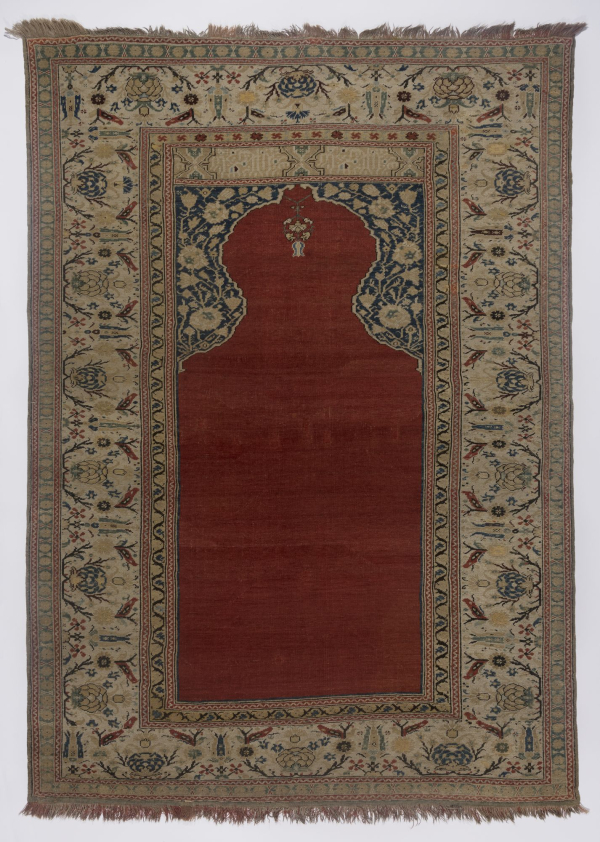
Prayer Carpet, Turkey (Gördes), Ottoman period, 18th century. Wool warp and weft, wool pile, 73 1/2 × 51 in. (186.7 × 129.5 cm). Brooklyn Museum, Gift of the Ernest Erickson Foundation, Inc., 86.227.120. (Photo: Brooklyn Museum)
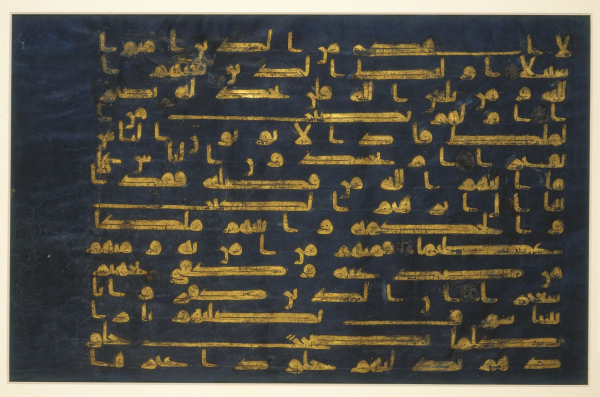
Folio from the “Blue Qur'an,” North Africa or Iraq (?), 9th–10th century. Ink, gold, silver on indigo-dyed parchment, 11 3/16 × 15 in. (28.4 × 38.1 cm). Brooklyn Museum, Gift of Beatrice Riese, 1995.51a-b. (Photo: Brooklyn Museum)

Arts of the Islamic World
Long-Term Installation
Arts of Asia and the Islamic World, 2nd Floor
 Now featured on Bloomberg Connects
Our holdings of the Arts of the Islamic World represent a wide range of artistic traditions from Islamic cultures located in Asia and Africa, as well as parts of Europe and, more recently, diasporic communities around the world. The objects on view were created over the course of the last fourteen centuries, from the seventh century to today, in a variety of mediums, including ceramics, glass, metalwork, textiles, and works on paper. Although most of our collection is historical, the inclusion of modern and contemporary works reflects the dialogue between the past and the present.
This presentation is organized around a series of themes that touch on important facets of artistic development within the Islamic world. Separate sections focus on religious arts and secular arts, and highlight the main differences in function and aesthetics. Individual labels provide in-depth explanations of where and when those objects were made.
The Religious Art gallery comprises objects that are central to religious spaces and activities, including Qur’ans and mosque furnishings. A highlight is a section devoted to a prayer carpet, which is presented on the ground within a display that features related tiles and mosque furnishings. An accompanying video shows the interior of a mosque during a daily prayer.
The galleries devoted to the secular arts are organized around a number of themes: Rulers and Authority, Palatial Surroundings, Fine Dining and Drinking, the Literary World, Personal Luxury, Science and Magic, Nomadic Life, and the Discovery of Raqqa Ceramics by Refugees. In these focused perspectives, objects from different regions or periods appear side by side, showing how these concepts have been interpreted across the Islamic world. In the central gallery is a large and low case displaying ceramic and glass vessels that would have been used by diners seated on carpets or cushions on the ground. We hold the country’s most expansive collection of paintings from the Qajar period in Iran, examples of which are located throughout these galleries.
The Arts of the Islamic World galleries are organized by Ayşin Yoltar-Yıldırım, Hagop Kevorkian Associate Curator of Islamic Art.