Collections: Arts of Africa

  • 1st Floor
    Arts of Africa, Steinberg Family Sculpture Garden
  • 2nd Floor
    Arts of Asia and the Islamic World
  • 3rd Floor
    Egyptian Art, European Paintings
  • 4th Floor
    Contemporary Art, Decorative Arts, Elizabeth A. Sackler Center for Feminist Art
  • 5th Floor
    Luce Center for American Art

Hiroshige's One Hundred Famous Views of Edo

Hiroshige's 118 woodblock landscape and genre scenes of mid-nineteenth-century Tokyo, is one of the greatest achievements of Japanese art.

    On View: Sofa

    Box sofas such as this one were very popular in the United States at the end of the first quarter of the nineteenth century. This particular...


    Login to play

    Login with Google ID

    Forgot your password?

    Not a Posse member? Register

    Brooklyn Museum Posse:
    Exploring the collection

    When you join the posse, your tags comments and favorites will display with your attribution and save to your profile.

     
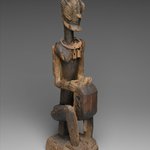
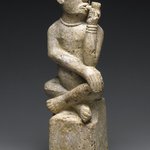
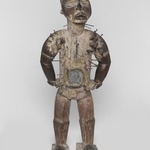
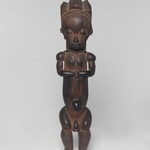
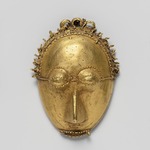
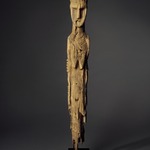
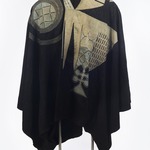
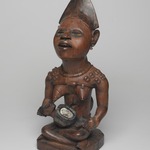
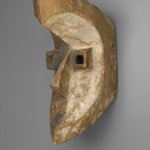
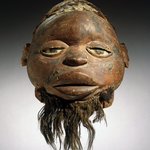
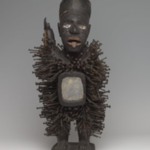
    Standing Male Figure with Head Turned Left (Nkishi)Figure of a Monkey, possibly for MbraFragment of a HeadLikishi Dance Costume Shirt and Head Cover with Pwo MaskNdop Portrait of King Mishe miShyaang maMbulMaskReliquary Guardian Figure (Eyema-o-Byeri)Power Figure (Nkishi)Grave Marker (Tumba)Lipiko MaskMaskMwaash aMbooy MaskPower Figure (Nkisi Nkondi)Figure of Mother and Child (Phemba)Water PipeFemale Figure with Medicinal Charge (Musinju)Chiefs ChairPair of Rattles (Likishi Dance Costume Accessory)Pair of Rattles (Likishi Dance Costume Accessory)Skirt (Likishi Dance Costume Accessory)Wig (Likishi Dance Costume Accessory)Ceremonial HoePendant Cross with Ear Cleaner ExtensionSoul Container (Eraminhô)Power Figure (Nkishi)Waist Pendant with Oba and Two AttendantsKomo Society MaskDouble Bell (Egogo)Palm Wine Cup (Mbwoongntey)Mudpack Coiffure (Emedot)Pendant CrossPendant CrossPendant CrossMother with Child (Lupingu Lua Luimpe)Likishi Dance Costume LeggingsPower Figure (Nkishi)Kabwelulu Gourd FigureMask (Nganga Diphombe)Ceremonial Staff (Kibango)Ceremonial Staff (Kibango)Qur’anic Writing BoardMans CorsetSide-Blown Horn with Figurative Base (Oko)Personal Miniature Mask (Ma Go)Boli Figure, for the Kono SocietyGold WeightReliquary Guardian Figure (Boumba Bwiti)Elephant Gold WeightPower Figure (Nkisi Nkondi)Fragment of a SaltcellarHairpinHair OrnamentDivination Torso Figure (Nkishi)Kneeling Female FigureStaff with Female Figure (Udlwedlwe)

    Collection – Showing objects 1 - 55 of 3810

    View All
     

    African Innovations Now Open!

    After many months of object review, checklist creation, cross-departmental consultation, budgeting, conservation, design, research, writing, photography, editing, construction, painting, installation, and lighting, I am pleased to report that African Innovations is now open to the public. Our ace Technology team has put together the following short video introduction, with footage of the installation in progress.

    To conclude our series, I would like to share one final work. Red Escape II, by Viyé Diba, a Senegalese artist who lives and works in Dakar, is a brand-new acquisition, making its debut in African Innovations. The work was purchased as a joint acquisition by Eugenie and me, on behalf of both the African and Contemporary collections. Thus, it may also find its way into a Contemporary collection rotation at some point in the future.

    Red Escape II

    Viyé Diba (Senegalese, born 1954). Red Escape II, 1999. Cotton strip cloth, paint, sand, wood, metal , 67 x 55 in. (170.2 x 139.7 cm). Brooklyn Museum, Gift of Elliot Picket, by exchange and Alfred T. White Fund, 2011.30. © artist or artist's estate. Photo by Bonnie Morrison.

    The painting itself is composed entirely of materials Diba found in Dakar, making the accumulated hands that previously touched these materials part of the work’s story. The piece of painted yellow wood, projecting between the seams of this woven canvas, and the abstract forms that suggest fleeing figures at the top, all evoke the possibility of liberation—from the plane of the canvas, from the strictures of either painting or sculpture or, perhaps, from the history of Dakar itself, a former minor way station in the odious historical trade in human captives.

    While currently the only significant abstract contemporary work in the African collection, in its materials and surfaces Red Escape II evokes the centuries of more figurative creative expression that came before it. With its themes of community and freedom, it offers a fitting coda to African Innovations.

    Author profile

    About Kevin D. Dumouchelle

    Kevin D. Dumouchelle joined the Brooklyn Museum in 2007, and was promoted to Assistant Curator for the Arts of Africa and the Pacific Islands in 2008. He is the curator of a major reinstallation of the Museum’s African collection, titled African Innovations (August 2011). Other exhibitions he has curated include Power Incarnate: Allan Stone’s Collection of Sculpture from the Congo at the Bruce Museum, where he was a guest curator. He contributed to the writing and editing of a major catalogue of works in the African collection, African Art: A Century at the Brooklyn Museum, published by the Brooklyn Museum in association with DelMonico Books • Prestel in fall 2009. His other publications include works on architecture, canonical African sculpture, and contemporary photography. Dumouchelle earned an M.A. and M.Phil in Art History and Archaeology from Columbia University, where he has taught art history and is currently completing his Ph.D. He has pursued research in Morocco, Mali, and Ghana and was the recipient of a first-class Master’s degree in history from Oxford University and a B.S. in Foreign Service from Georgetown University.
    Filed under: Arts of Africa, Design
    Tagged: , ,
    Bookmark the permalink

    Go to the original blog post

    Elvis is in the building

    Elvis is at the Brooklyn Museum and not where you’d expect to find him—in the new installation of the Museum’s African galleries, African Innovations.

    Elvis Mask for Nyau Society

    Elvis Mask for Nyau Society, ca. 1977. Wood, paint, fiber, cloth, Brooklyn Museum, Gift of Mr. and Mrs. J. Gordon Douglas III, Frederick E. Ossorio, and Elliot Picket, by exchange and Designated Purchase Fund, 2010.41

    Brooklyn’s Elvis is a ceremonial mask of the Nyau Society of the Chewa peoples, who reside primarily in central Malawi.  The Nyau is a secret society that creates these masks for inclusion in ritualistic dances as part of initiation ceremonies, chief coronations and funerals. The masks often represent revered ancestral and animal spirits.  They also have satirical themes and occasionally depict famous foreigners as a means to provide education on social and cultural values. This unique incarnation of a western cultural icon highlights a fascinating interaction between western and non-western societies.

    The mask is hand carved from a single piece of wood with the eyes, mouth and nostrils pierced through. The face is painted with a thick application of pink paint. Synthetic hair defines Elvis’ characteristic pompadour hairstyle and sideburns as well as the eyes and eyebrows.  Various textiles and burlap are attached around the neck.

    Acquired by the Museum in 2010, Elvis wasn’t quite ready for the spotlight.  The hair had been infested with insects, painted areas were dirty and flaking, and the textiles, believed to be original to the mask, were in tatters.

    Upon its arrival in the conservation lab, the mask was monitored to determine that live insects were not present, and then it was thoroughly groomed to remove old insect casings and debris. Painted surfaces were lightly cleaned and stabilized.  The textiles around the neck were reconstructed and secured around the bottom edge of the mask by stitching the original textile to a support backing of nylon netting—the same netting textile conservators use to stabilize our mummy collection.  The netting provides support for the original fabric without altering the appearance.

    Elvis Mask Before Treatment

    Before treatment the mask was too fragile for exhibition.

    Elvis detail netting

    During treatment nylon netting was attached behind the original textile for support.

    The conservation of Elvis highlights how conservators approach the treatment of many ethnographic objects.  The mask was not restored to what it may have looked like when it was first made.  Instead, it was conserved to reflect the history of its use and to make it stable enough to be exhibited safely without further deterioration.

    Elvis will be a featured in African Innovations opening August 12th—just in time for the 34th anniversary of the Elvis’ death.  So if you can’t make it to Graceland this year, stop by the Brooklyn Museum.

    Author profile

    About Kerith Koss

    Kerith Koss is the Andrew W. Mellon Fellow in Objects Conservation at the Brooklyn Museum. She received her Master's Degree in Art History and Conservation from the Conservation Center of the Institute of Fine Arts at New York University. Before joining the Brooklyn Museum in 2008, she was a Smithsonian Post-Graduate Fellow at the Freer Gallery of Art in Washington, DC. Over the course of her conservation training, she has completed internships at the Metropolitan Museum of Art, the Field Museum in Chicago and the Shelburne Museum in Vermont and has assisted in hurricane recovery efforts at several local museums on the Gulf Coast of Mississippi.
    Filed under: Arts of Africa, Conservation
    Tagged: , , ,
    Bookmark the permalink

    Go to the original blog post

    Please Touch

    Textiles are a crucial element to the story I wanted to tell in African Innovations. Immensely varied in media, form, content and use, textile arts are found in every corner of the continent. They have played important roles in the circulation of wealth, power, ideas and artistic styles, and would remain a central part of the narrative of the gallery focusing on “Arts of the Self.” Brooklyn has a number of standout African textiles from a range of cultures, particularly from the Kuba of central Congo.

    Overskirt

    Overskirt. Unidentified Kuba artist, late 19th or early 20th century. West Kasai province, Democratic Republic of the Congo. Raffia, pigment. Purchased with funds given by Frieda and Milton F. Rosenthal, 1991. 72

    However, textiles also present considerable challenges from the point of view of design and conservation. They tend to require a considerable amount of space (at a premium in this installation), and can only be exposed to light for a limited period of time before needing to be rotated out and returned to storage. For a number of reasons, showing the strengths of Brooklyn’s African textile collection was not in the cards, this time around.

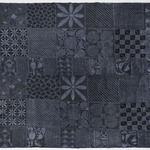
    Constraints (to mangle a phrase) can sometimes be the mother of invention, however, and we’ve come up with a new means of presenting the variety of African textile design to our visitors, without sacrificing space or museum objects. African Innovations will instead contain a wall of “touch textiles.” These are mid-to-late 20th century examples of textile genres from around the continent, generously donated by a handful of local collectors, which will be installed in a manner that will permit visitors to feel, as well as see, the variety and ingenuity of African fabric work.

    This was a really fun portion of the installation on which to work, as this idea allowed us more flexibility than would be otherwise possible in working with museum objects. I was fortunate to have a wide variety of fabrics from which to select.

    We ultimately decided to show 16 different examples of “touch textiles”—ranging from machine-printed kangas from East Africa to bark cloth from the Congolese forests and bogolan (mud cloth) from Mali—in a grid pattern, on one wall of the “Arts of the Self” section. Once I had selected our final 16, Matthew contacted a neighborhood tailor to cut and hem the samples to size.

    African Textiles

    “Touch textile” samples swarm the African conference room.

    African Textiles

    “Touch textile” samples swarm the African conference room.

    African Textiles

    An early mock-up of the “touch textile” wall.

    Tailor Shop

    Indigo cloth being prepared at the tailor’s shop.

    I hope you’ll have a chance to come and enjoy some (limited) museum rule-breaking and “please, touch!” our textile wall, once African Innovations opens at the end of next week.

    Author profile

    About Kevin D. Dumouchelle

    Kevin D. Dumouchelle joined the Brooklyn Museum in 2007, and was promoted to Assistant Curator for the Arts of Africa and the Pacific Islands in 2008. He is the curator of a major reinstallation of the Museum’s African collection, titled African Innovations (August 2011). Other exhibitions he has curated include Power Incarnate: Allan Stone’s Collection of Sculpture from the Congo at the Bruce Museum, where he was a guest curator. He contributed to the writing and editing of a major catalogue of works in the African collection, African Art: A Century at the Brooklyn Museum, published by the Brooklyn Museum in association with DelMonico Books • Prestel in fall 2009. His other publications include works on architecture, canonical African sculpture, and contemporary photography. Dumouchelle earned an M.A. and M.Phil in Art History and Archaeology from Columbia University, where he has taught art history and is currently completing his Ph.D. He has pursued research in Morocco, Mali, and Ghana and was the recipient of a first-class Master’s degree in history from Oxford University and a B.S. in Foreign Service from Georgetown University.
    Filed under: Arts of Africa
    Tagged: , , ,
    Bookmark the permalink

    Go to the original blog post

    Installation in Progress

    One of the many adaptations that moving the African collection into the South Gallery on the First Floor has required has been adjusting to a space that is both smaller and considerably more open than the old Arts of Africa galleries.

    Installation in Progress

    Installation in progress.

    Through a series of discussions and plans with Matthew, our Chief Designer, I have come to see that openness as one of the most exciting features of the new layout (instead of a problem to be overcome). The African Innovations galleries will be visible from many different angles within the Great Hall, and will allow visitors to move between the two spaces with ease, while still creating a number of separate galleries within the new installation.

    Case Layout

    Case layout for portion of opening segments of African Innovations

    Carpentry plan

    Carpentry plan for portion of opening segments of African Innovations.

    Paint Plan

    Paint plan for portion of opening segments of African Innovations.

    The design cleverly use of a series of diagonal walls, aligned with the existing architecture of the building, to create seven distinct spaces within the installation, for each of the exhibition’s themes. These mini-galleries have the benefit of organizing related works in close proximity, while still drawing upon the openness of the original space.

    If you’ve been to the museum in the last month, you have been able to watch this process play out in the open, at least in part. In that same spirit, here are a few “behind-the-scenes” shots to fill you in on parts of the construction and re-installation process that have been less visible.

    Installation

    Arts of the Dan case in Arts of Africa during de-installation with Collections Management notes explaining the mounts and movement locations of the respective objects in the case.

    Installation

    Objects in the Arts of Africa galleries were moved to temporary storage and notes indicate which cases will be re-used and re-painted for African Innovations.

    Installation

    The Arts of Africa galleries became a temporary work-space, in which cases were painted and dried, and new linen was sewn onto the backs of case boards.

    Installation

    Vitrines in the Arts of Africa galleries/work-space are covered during case painting and board preparation.

    Installation

    African Innovations’ new signature work, our Three-Headed Figure (Sakimatwemtwe) by an unidentified 19th century Lega artist, sits in temporary storage with his mount and mount sheet, awaiting his star turn.

    Installation

    In temporary storage, old favorites can be seen in (surprising!) new angles.

    Installation

    In the African Innovations galleries, the walls went up earlier in the month.

    Installation

    Now painted, the color scheme has begun to emerge...as has the eventual flow between the Great Hall and the new installation.

    Installation

    Looking through the African Innovations galleries, from near the eastern wall, upon the completion of painting.

    Author profile

    About Kevin D. Dumouchelle

    Kevin D. Dumouchelle joined the Brooklyn Museum in 2007, and was promoted to Assistant Curator for the Arts of Africa and the Pacific Islands in 2008. He is the curator of a major reinstallation of the Museum’s African collection, titled African Innovations (August 2011). Other exhibitions he has curated include Power Incarnate: Allan Stone’s Collection of Sculpture from the Congo at the Bruce Museum, where he was a guest curator. He contributed to the writing and editing of a major catalogue of works in the African collection, African Art: A Century at the Brooklyn Museum, published by the Brooklyn Museum in association with DelMonico Books • Prestel in fall 2009. His other publications include works on architecture, canonical African sculpture, and contemporary photography. Dumouchelle earned an M.A. and M.Phil in Art History and Archaeology from Columbia University, where he has taught art history and is currently completing his Ph.D. He has pursued research in Morocco, Mali, and Ghana and was the recipient of a first-class Master’s degree in history from Oxford University and a B.S. in Foreign Service from Georgetown University.
    Filed under: Arts of Africa, Design
    Tagged: , , , ,
    Bookmark the permalink

    Go to the original blog post

    Arts of Africa Gives Way to African Innovations

    Recent visitors to the museum may have noticed some increasingly dramatic changes to the first floor—first, a new series of walls began to rise in the South Gallery space beyond the Great Hall. As of this week, the African galleries have closed in their current space. But not to worry, our magnificent African collection will soon be returning in African Innovations, a new installation opening August 12.

    Construction that will soon be bringing further major changes to the first floor necessitated moving the African galleries from their current home. Faced with a big move, I jumped at the opportunity to put a new spin on one of our most beloved and important collections.

    Three-Headed Figure (Sakimatwemtwe)

    Three-Headed Figure (Sakimatwemtwe). Unidentified Lega artist, 19th century, South Kivu or Maniema province, Democratic Republic of the Congo. Wood, fiber, kaolin. Museum Expedition 1922, Robert B. Woodward Memorial Fund, 22.486

    Consisting of over 200 objects in a wide variety of media and genres, including a significant number of works not previously on view, African Innovations aims to build on our groundbreaking history of collecting and exhibiting African art, while moving towards new methods of display and interpretation for the 21st century. The signature work , a three-headed figure (sakimatwemtwe) by an unidentified Lega artist, is emblematic of the theme—with one large head rooted in its own 19th century moment, its additional faces might be said to be looking both back toward the past, and ahead to the future.

    African Innovations will arrange the museum’s African galleries chronologically for the first time, to emphasize the continent’s long record of creativity, adaptation, and artistic achievement.

    My aim is to emphasize how African art was created to solve important artistic, social, political, and cosmological problems. In so doing, it is my hope that you will further appreciate the works on view as creative solutions with a long history of formal and functional change. I wanted to move away from a primarily geographic presentation that suggested a comparatively static ‘ethnographic present.’

    Male Head

    Male Head. Unidentified Nok culture artist, 550–50 B.b.c.e. Kaduna, Plateau or Nassarawa state, Nigeria. Terracotta. This sculpture, gift of Lisa and Bernard Selz, is exhibited through the generosity of the National Commission for Museums and Monuments of the Federal Republic of Nigeria, TL2005.62

    Vessel

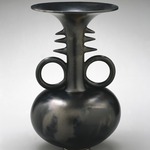
    Vessel. Magdalene Anyango N. Odundo (British, b. 1950, Kenya). Farnham, Surrey, United Kingdom, 1990. Ceramic, slip. Purchased with funds given by Dr. and Mrs. Sidney Clyman and the Frank L. Babbott Fund, 1991.26

    Instead, African Innovations will open and close with galleries focusing on “Crossroads Africa.” The first display, beginning in ancient times, establishes Africa’s ongoing history of artistic dialogue with other parts of the world and neighboring cultures, while the last extends this story into the present (and creates Brooklyn’s first dedicated space for contemporary African art). Highlights of the exhibition range from our Nok head, created as early as 550 B.C.E. to Vessel, by Magdalene Odundo, from 1990. Intriguingly, both our earliest African work and one of our latest were both made from a coiling pottery technique—how’s that for continuity and innovation!?

    Skipping Girl. Yinka Shonibare MBE

    Skipping Girl. Yinka Shonibare MBE (British, b. 1962). London, United Kingdom, 2009. Life-size fiberglass mannequin, Dutch-wax printed cotton, mixed media. Gift of Edward A. Bragaline and purchase gift of William K. Jacobs, Jr., by exchange and Mary Smith Dorward Fund, 2010.8. © Yinka Shinobare MBE

    African Innovations also offers me the opportunity to showcase a number of new acquisitions, such as Skipping Girl, by Yinka Shonibare, whose form evokes the layers of historical connections between European, Asian and African cultures and reveals the constructed nature of “authenticity.”

    I’ll leave the other new acquisitions as surprises for the opening in August. Watch this space later this month for further updates on new features in the installation and insights into the construction and design process.

    Author profile

    About Kevin D. Dumouchelle

    Kevin D. Dumouchelle joined the Brooklyn Museum in 2007, and was promoted to Assistant Curator for the Arts of Africa and the Pacific Islands in 2008. He is the curator of a major reinstallation of the Museum’s African collection, titled African Innovations (August 2011). Other exhibitions he has curated include Power Incarnate: Allan Stone’s Collection of Sculpture from the Congo at the Bruce Museum, where he was a guest curator. He contributed to the writing and editing of a major catalogue of works in the African collection, African Art: A Century at the Brooklyn Museum, published by the Brooklyn Museum in association with DelMonico Books • Prestel in fall 2009. His other publications include works on architecture, canonical African sculpture, and contemporary photography. Dumouchelle earned an M.A. and M.Phil in Art History and Archaeology from Columbia University, where he has taught art history and is currently completing his Ph.D. He has pursued research in Morocco, Mali, and Ghana and was the recipient of a first-class Master’s degree in history from Oxford University and a B.S. in Foreign Service from Georgetown University.
    Filed under: Arts of Africa
    Tagged: , , , ,
    Bookmark the permalink

    Go to the original blog post

    Recent Blog Posts

    African Innovations Now Open!
    After many months of object review, checklist creation, cross-departmental consultation, budgeting, conservation, design, research, writing... read more.

    Elvis is in the building
    Elvis is at the Brooklyn Museum and not where you’d expect to find him—in the new installation of the Museum’s African galleries, African... read more.

    Please Touch
    Textiles are a crucial element to the story I wanted to tell in African Innovations. Immensely varied in media, form, content and use, textile... read more.

    Installation in Progress
    One of the many adaptations that moving the African collection into the South Gallery on the First Floor has required has been adjusting... read more.

    Arts of Africa Gives Way to African Innovations
    Recent visitors to the museum may have noticed some increasingly dramatic changes to the first floor—first, a new series of walls began to rise... read more.

    Read all Arts of Africa blog posts

    advanced 96,836 records currently online.

    Recent Comments

    "by the overriding power of the crocodile may all evils crawl away by the reputation of the beast of the river may all enemies on land be cast down with weakness by the strength of the crocodile tail may all ill spirits disperse like smoke in the air may all power and strength be ours; may all of ill-intent be as living flesh caught between the crocodile’s jaws "
    By RajArumugam

    "LUPINGU LUA LUIMPE I am a Lulua woman here a mediator between worlds: O make me fertile give me a child make my child live long and well so that you shall smile on me with such gifts as I ask of you I shall place one figure in my home and one I shall carry with me so that you shall allow these things I ask of you I shall be mindful each day; and I shall pour oil on the figure and wipe red clay and this I shall do everyday I am a Lulua woman here a mediator between worlds: O make me fertile give me a child make my child live long and well "
    By RajArumugam

    "Thanks to this mask with supporting comments, I've been able to identify the origins of one ours. They appear to be somewhat rare. Thanks again. Larry "
    By Larry W. Harms

    Join the posse or log in to work with our collections. Your tags, comments and favorites will display with your attribution.