Skip main navigation
The Brooklyn Museum

Collections: Libraries and Archives


Goodyear Archival Collection
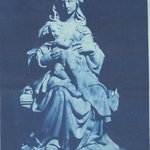
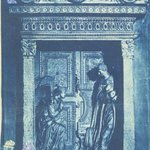
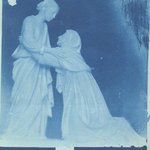
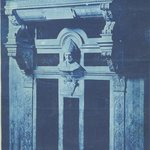
William Henry Goodyear (1846–1923) was the Brooklyn Museum's first curator of fine arts. A finding aid to the collection and an extensive selection of his photographs, either taken or collected by him, are now available online.
Lantern Slide Collection
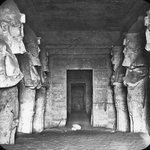
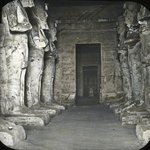
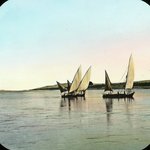
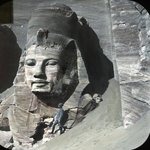
The Brooklyn Museum's lantern slide collection was started by the Museum's curator of fine arts, William Henry Goodyear, in the late nineteenth century. The Museum's Libraries and Archives now holds 11,710 glass lantern slides, and selections can be seen here.
Brooklyn Museum Building
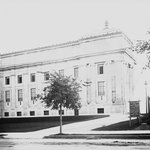
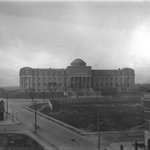
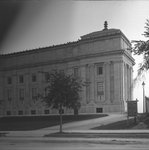
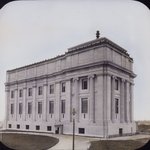
Photographic images of the development of the Brooklyn Museum's building. McKim, Mead & White created the original design plan. Images range from the first section of the building to its latest redesign.
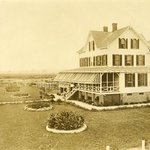
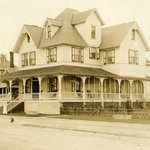
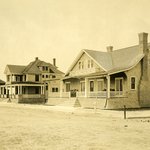
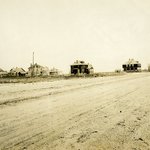
Views of Beach Haven
The Libraries and Archives hold a full range of documentary photographs of people and places around the world. Included are these photographs, in addition to many others, documenting historic American architecture.
1872 American Painting Exhibition Catalogue
A rare exhibition catalogue documenting the first historical survey of American painting in the United States. The exhibition was held on Montague Street in Brooklyn, New York, in 1872.
Maudslay Photographs
Documentary photographs of archaeological sites in Mexico and Central America taken by Alfred P. Maudslay (1850–1931).
Sintich Brothers Photographs
Photographs of an archaeological site in Tiahuanaco, Bolivia, taken by the Sintich Brothers in 1903.
Selected images from books and archival collections
Sample the visual riches of the Libraries and Archives collections with images from a variety of books, historical records, and special collections.

Join the posse or log in to work with our collection. Your tags, comments, and favorites will display with your attribution.

Recent Comments

"it is very unusal"
by

"Nice to see it in it's former surroundings."
by itisaai

"This Palace was used by/build to house Empress Eugenie of France when she visited Egypt on the occassion of the opening of the Suez-Canal. Now it's the main building of the Marriot-Hotel."
by itisaai

Recently Favorited

was favorited
by nenargentina

was favorited
by msmichls

was favorited
by msmichls

Recently Tagged Images

was tagged "women"
by FlickrCommons

was tagged "stone"
by FlickrCommons

was tagged "wing"
by convive


more
Online Resources
Highlights
Images of the Day

Recent Blog Posts

The New York Art Resources Consortium (NYARC): Towards Radical Collaboration Librarians are natural collaborators—we share materials through interlibrary loan, data through cataloging cooperatives, and our subject and technical expertise on numerous listservs and professional committees—but moving beyond these traditional modes read more...

close

The New York Art Resources Consortium (NYARC): Towards Radical Collaboration

Lily Pregill on May 15, 2009
NYARC1.jpg

Librarians are natural collaborators—we share materials through interlibrary loan, data through cataloging cooperatives, and our subject and technical expertise on numerous listservs and professional committees—but moving beyond these traditional modes of collaboration is challenging. Collaboration is hard because it often requires an institutional shift; it is time-consuming and relies on effective communication, teamwork, consensus-building and a healthy dose of respect. Last week, Brooklyn Museum hosted a discussion on collaboration led by representatives from NYARC to talk about the future of art museum libraries and used the consortium’s activities as an example of how museum libraries are working together. Since the launch of Arcade in January, there has been a lot of buzz in the art libraries community regarding NYARC and this was a good session to demystify who we are (the libraries of the Brooklyn Museum, Frick, MoMA, and the Met), what we are doing (shared catalog aka Arcade and digitization projects) and where we are going (resource sharing, collection development and engage future partners).

NYARC2.jpg

Arcade launch party held in the Reading Room of the Frick Art Reference Library, February 24, 2009. From left to right: Ken Soehner, Arthur K Watson Chief Librarian at the Thomas J. Watson Library, Metropolitan Museum of Art; Milan Hughston, Chief of Library and Museum Archives, Museum of Modern Art; Deirdre Lawrence, Principal Librarian, Brooklyn Museum; and Deborah Kempe, Chief of Collections Management & Access, Frick Art Reference Library.

The event brought a nice mix of graduate students and library professionals together to exchange ideas and ask questions of the panel, which included Ken Soehner (Met), Deborah Kempe (Frick), Milan Hughston (MoMA) and our own Deirdre Lawrence. Some of the key buzz words to come out of the discussion were that we have entered a period of “permanent beta” and “permanent whitewater”. I think these two phrases succinctly characterize today’s current environment given economic realities, the swift pace of technological advances and our users’ expectations of working and producing scholarship in an increasingly more dynamic environment. It is precisely due to the perfect storm of challenges facing us that collaboration is more necessary than ever.

Although I have been working with NYARC for the last few years, what I found really interesting during the discussion is the number of projects and sustained level of collaboration that the group has managed to realize… at times, it is difficult to see the forest for the trees and we need these events to focus on what has been accomplished and what remains to be done (a NYARC website coming soon!). None of us are fooled into thinking that we have achieved anything radical yet, but we certainly have the foundation and potential to make it happen. Stay tuned …

go to the original blog post...

close

Walt Whitman and the Arts in Brooklyn: A Commemoration in the Brooklyn Museum Library We are very proud of the fact that Walt Whitman not only lived and worked in Brooklyn but that he had a direct connection to this institution in its early read more...

close

Walt Whitman and the Arts in Brooklyn: A Commemoration in the Brooklyn Museum Library

Deirdre Lawrence on May 8, 2009
We are very proud of the fact that Walt Whitman not only lived and worked in Brooklyn but that he had a direct connection to this institution in its early days as a library. This past Saturday we had a fabulous opportunity to celebrate Whitman and our past with representatives from the Whitman Project and Woodside Press.

The Whitman Project included Associate Artistic Director Greg Trupiano; Associate Artistic Director Lon Black; Nicole Mitchell; and Hakim Williams. Both Greg and Lon read  eloquently from Whitman’s writings about witnessing the early days of the Brooklyn Apprentice’s Library and the Brooklyn Institute. Their readings from "Brooklyniana," Leaves of Grass, and Specimen Days beautifully captured Whitman’s fond memories of the sites and sounds of Brooklyn. They also read excerpts from books that were in the Library at the time Whitman was acting librarian in 1835, including titles such as The History of Printing in America by Isaiah Thomas, published in 1810, and An historical … view of the United States of America by William Winterbotham. Mezzo-soprano Nicole Mitchell graced us with her beautiful renditions of "Oh! Susannah" and “Ode,” set to the music of the "Star Spangled Banner." Hakim Williams passionately recited Whitman’s words from his texts, including “Old Brooklyn Days” and "Brooklyniana" including a wonderful description of Francis Guy’s A Snow Scene in Brooklyn in the Olden Times which describes in detail the painting in the Brooklyn Museum collection. Mr. Hakim’s reading of “Early Typesetting Experience” by Whitman set the stage for the next part of the program which focused on a poem entitled “Pictures.”

whitman.jpg

Andrew Birsh and Davin Kuntze from Woodside Press, a traditional letterpress printing shop in The Brooklyn Navy Yard, premiered their new book featuring a poem by Walt Whitman. They created a small edition of Pictures: A Poem by Walt Whitman, which is available directly from the Press. When time allows and the inspiration is there, they publish and print fine-press editions that illuminate their capabilities with classic typography, letterpress presswork, and bookbinding by hand. The beautiful letterpress chapbook is set in Linotype Baskerville, hand-sewn and printed on Magnani Avorio paper and was designed and printed for Woodside Press by Davin Kuntze.  The book has a very magical quality—we were all convinced that Walt Whitman had been overseeing the production of the book, which matches the colors and ink that were used in the original 1927 edition. Mr. Kuntze had not seen the edition that is in the Brooklyn Museum Library collection and we were all amazed on Saturday when we got our book out to compare to the new Woodside Press edition. There is an uncanny likeness to the original!

whitman2.jpg

We all agreed that Walt Whitman is still with us in spirit as he had been in the days when he lived in Brooklyn oh so long ago. A comforting thought in today’s world.  Here's the program PDF if you'd like to see it.

go to the original blog post...

close

The world through Goodyear’s eyes: photographs from the 1890’s to 1923 from the Brooklyn Museum Archives Seeing the response to historic photographs that we have posted on Flickr Commons begs a look back on why we have these images and who created them. Being an art read more...

close

The world through Goodyear’s eyes: photographs from the 1890’s to 1923 from the Brooklyn Museum Archives

Deirdre Lawrence on January 12, 2009
Seeing the response to historic photographs that we have posted on Flickr Commons begs a look back on why we have these images and who created them. Being an art museum library and archives our mission is to collect and make accessible research collections that serve to document the objects held in the Brooklyn Museum’s encyclopedic collection. We also preserve the research documents created or collected by the Museum staff who have acquired objects since the founding of the Museum as a library back in 1823. What that means is that we have a rich historical legacy of text and images that allow us to look back in time and recall the period in which the objects were created–where, when, how and why.

Susan_A_Hutchinson1.jpg

Susan A. Hutchinson, Founding Museum Librarian, with William Henry Goodyear, Founding Curator of Fine Arts in the Library Reading Room circa 1910.

Since the images collected by William Henry Goodyear (1846-1923) are generating interest today we thought it would interesting to look back at Goodyear and several of his colleagues who built the Museum’s collections over the years. So let’s declare 2009 the year of looking back and learning from history. Hopefully this exercise will educate us all as we move forward and learn about each other and our cultural heritage. Who knows maybe we will end the year in a more peaceful way than we started.

Let me start with a quote from artist John La Farge to William Henry Goodyear: “You have opened the window that has been closed for centuries, and have let in the light”.

I believe that La Farge was referring to Goodyear’s intense interest in photography as a tool to document the world he saw. A Yale graduate and student at the Universities of Berlin and Heidelberg, Goodyear devoted himself to teaching and lecturing about the history of art and architecture. After graduating from Yale in 1867, he traveled to Germany, Italy, Palestine and Syria to pursue his interest in architecture. It was in Pisa in 1870 that he began to focus on architectural details and later published in an article entitled “A Lost Art” in Scribner’s Magazine, the first of many essays he wrote about architectural refinements. Goodyear started his museum career in 1882 as a curator at the Metropolitan Museum of Art and in 1899 came to the Brooklyn Museum as the first curatorial appointment made by the newly founded museum. At Brooklyn, Goodyear led a series of research and collecting expeditions with a mission to build an art collection. He oversaw the growth of the American, European and ancient art collections including the casts of Ancient and Renaissance sculpture as well as designing and installing exhibitions of newly acquired art.

S06_P_S__230_Hall_of_Sculpture_1904.jpg

Hall of Sculpture with Casts, circa 1904.

In addition to his curatorial mandate, Goodyear dedicated time to developing his architectural theory that historic buildings were planned with irregularities which he referred to as refinements. This study focused on architectural monuments found around the world from the Cathedral of Pisa to the temples of Egypt with stops in Austria, France, Germany, Great Britain, Greece and Turkey. Like his colleague Stewart Culin, founding curator of Ethnology from 1903 to 1929, Goodyear seems to have been interested in everything and this is evidenced in his photographs of people and places around the world from a street vendor in Istanbul to the vivid depictions of the world fairs of Chicago and Paris. Goodyear recognized the importance of these fairs as an educational tool to introduce cultures from different parts of the world. He, like Culin, also saw objects at the fairs and recommended their acquisition for Brooklyn. These photographs by Alfred Percival Maudslay were exhibited at the Chicago Columbian Exposition and collected for Brooklyn after Goodyear and Culin saw them at the fair. Indeed, Goodyear worked obsessively using photography as a tool to educate and a method to document his findings in the field in addition to his writings.

Maudslay1.jpg

Maudslay photographs on view in the Chicago Columbian Exposition, circa 1893.

It seems that throughout his long life he developed theories that explored new themes in the history of art starting with his “Grammar of the Lotus” documenting continuing use of the lotus form in decorative art since its use in Ancient Egypt. He also wrote several popular histories of art and was one of the first to use actual photographs, as opposed to engravings, to illustrate these texts. He took and collected photographs and used them in the form of lantern slides to illustrate his many lectures–over 130 for the Brooklyn Museum alone–ranging from the art of ancient civilizations to the art of the nineteenth century. In addition to being known as an architectural historian, Goodyear was a scholar of anthropology, archaeology and ethnology with a focus on America, Egypt, Greece and Rome. All of this is evidenced in the photographs (lantern slides, negatives and prints) and his research (published and unpublished) found in the Museum Libraries and Archives.

His photographs offer detailed images of historic structures before the devastation of world wars and rampant twentieth century architectural “redevelopment.” His documentation of many buildings has served as guideposts to reconstruction of several monuments that have been destroyed or renovated over the years. But his influence went beyond architecture since it was his vision that laid the groundwork for two major art museum collections–the Brooklyn Museum and the Metropolitan Museum of Art. He was responsible for recommending the acquisition of several important objects including the antiquities collection and library assembled by Charles Edwin Wilbour, America’s first Egyptologist. Goodyear also established the first children’s museum in America – the Brooklyn Children’s Museum. Today we all benefit from Goodyear’s scholarship and foresight as we see the world before us through his photographs and writings.

More to come about these early visionaries in Brooklyn, but today we are honoring Professor Goodyear by releasing more images from his archives of street scenes and mosques in Turkey in response to comments on Flickr Commons.

go to the original blog post...

close

read all blog posts