Oh no! Your browser doesn't meet the minimum system requirements. We support Firefox 3+, Chrome, Safari 4+, and Internet Explorer 7+.

Sorry, but this activity isn't designed for mobile browsers. We hope you'll come back and try again when you've got access to a desktop or laptop.

Read about the exhibit

Come visit your data in Split Second

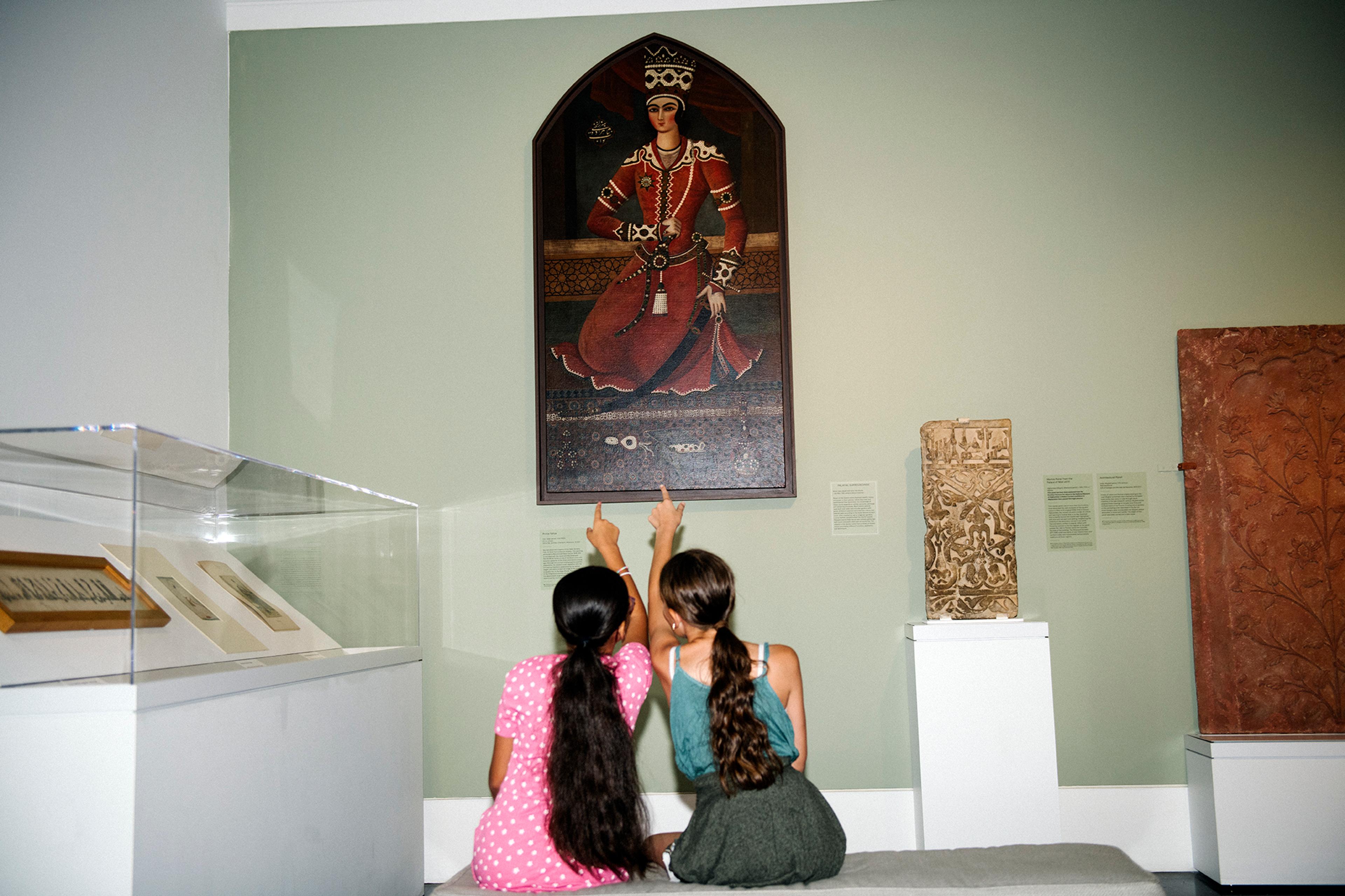
Watching Split Second: Indian Paintings get installed into the gallery this week has been a real thrill for me. I believe it is vital that digital projects inhabit the museum in real space, not just sit online and I’m privileged enough to work at an institution that sees this also.

Split Second Installation

Split Second: Indian Paintings is now on view through January 1, 2012, on the second floor of the Brooklyn Museum

Whenever we start a project that is digitally born, we wonder if will find a local audience.  In Split Second‘s case participants came from 59 countries with most traffic coming from the United States, but there was an overwhelming majority of participants coming from NYC and they were the most dedicated of the bunch.  On average, a participant spent 7 minutes and 33 seconds in the online activity, but if you were from NYC the average was 15 minutes.  I’ll never forget seeing this map in Google Analytics, which so clearly visualizes what happened online—a local audience found us and they took this project very, very seriously.

Google Analytics - Split Second - New York Participants

Map in Google Analytics showing participants from NYC area.

Even knowing that we reached a local audience, the challenge with this show would be to  create an installation that would make sense to every visitor coming in the door, whether they participated with us online.  Only time will tell if we effectively accomplished this, but I feel lucky to work with a talented team of editors, designers and interpretative materials staff who could take this material and help shape it while keeping every visitor’s perspective in mind.

At the end of the 10-week online activity 4,617 participants created 176,394 ratings and this resulted in an incredibly rich data set to explore. In the gallery, we followed Joan Cummins’ mantra…”But, what’s the so what?” and we took the most conclusive findings—the things we thought would have the most impact—and installed the works that illustrated those points.  On the web, you can review the results by exploring a visualization comparing works, data stories and a profile of each painting using the data gathered. Saying there was a lot of nuanced data to explore is putting it lightly and in the coming weeks Beau Sievers is going to be blogging about the incredibly complex findings.

In Blink: The Power of Thinking Without Thinking, Gladwell isn’t endorsing or disputing the quick decisions we make on the spur of the moment—he just explores the notion of them through a lot of different avenues. Our data very much supports his theories; rapid cognition does have an effect on what we see and how we process the art before us, but it shifts and changes under various conditions.

If you took part with us online, I can’t thank you enough for your contribution.  We hope you can come see the installation, explore the website and stay tuned for Beau’s analysis of the data.

Author profile

About Shelley Bernstein

Shelley is the Chief of Technology at the Brooklyn Museum where she works to further the Museum's community-oriented mission through projects including free public wireless access, web-enabled comment books, projects for mobile devices and putting the Brooklyn Museum collection online. She is the initiator and community manager of the Museum's initiatives on the social web. She organized Click! A Crowd-Curated Exhibition, Split Second: Indian Paintings, and GO: a community-curated open studio project. In 2010, Shelley was named one of the 40 Under 40 in Crain's New York Business and she's been featured in the New York Times. She can be found biking to work or driving '74 VW Super Beetle in Red Hook, Brooklyn with her dog Teddy. ::contact::
Filed under: Arts of Asia, Technology
Tagged:
Bookmark the permalink

5 Responses to Come visit your data in Split Second

  1. Ellen Pearlstein says:

    Hey Shelley,

    Kudos on the project! Do not forget those of us who *USED TO BE* in Brooklyn, NY!

    Best to you!

    Ellen

  2. Swellmore says:

    Since when is Northern NJ and SW Conn. not considered part of the NY Metro area?
    …Sorry, I don’t consider Rochester part of the NYC area, just because it is part of NY state.

    Otherwise, I found participating in this experiment quite enjoyable and can’t wait to see the exhibit.

    –A respondent from “off the grid,” Northern NJ, (closer than Buffalo).

  3. Respect for your work! Always ahead of time…
    Would love to exchange thoughts.
    Best wishes from Berlin,
    Steve

  4. Hey off the grid :)

    Sorry about that – Google Analytics breaks things down by state so those are the numbers that I pulled for the post. I think what struck me was not the Buffalo numbers, but all those dots closer to home…lots and lots of people from the area took part. When I’m back in town I’ll check the stats on the tri-state area and I bet you are right…I bet there were a large portion of participants there as well. Many thanks for taking part with us – we appreciate it greatly.

  5. ico says:

    Impressive reflection. I am starting to study this exhibition as an example of how content and media are use in the meaning creation and education. The more I think about it, the more I like it.

Leave a Reply

Your email address will not be published. Required fields are marked *

You may use these HTML tags and attributes: <a href="" title=""> <abbr title=""> <acronym title=""> <b> <blockquote cite=""> <cite> <code> <del datetime=""> <em> <i> <q cite=""> <strike> <strong>

1 Reaction

  1. Pingback: Brooklyn Museum: Community: bloggers@brooklynmuseum » In the Gallery vs. Online: How a Split Second Can Differ

Participate Online

Split Second online activity launches February 3, 2011.

Split-Second Decisions

Participants report stressing out when selecting objects quickly.

Slow Down and Consider

Participants are given different tasks and information in later phases of the activity.

Participation Demographics

Online activity closes; 4,617 participants created 176,394 ratings.

Exhibition Opens

Come visit your data in Split Second.

Stats: Thin-slicing vs. Unlimited Time

What the results of the experiment might tell us about thin-slicing.

Stats: Adding Information

How labels change our judgements: is education at odds with enjoyment?

Conservation: Many Hours for a Split Second

Decisions can be made within a split second, but conservation and preservation take much longer.

Stats: Gender and Information

How rating changes differed between men and women when information was added.

Stats: Engagement

How do engagement tasks affect ratings?

Stats: Complexity

What do we mean by "complexity?"

Stats: Subconscious Effects

How do certain properties of works affect us subconsciously?

Stats: Contentiousness

Which paintings were the most contentious?

Why Indian Paintings?

Why we selected Indian Paintings as subject matter.

A Curator’s Reaction to the Results

Curator Joan Cummins looks at the data.

Online vs. In-Gallery

How the data differed from what was gathered online versus in the gallery.

We're adding more stories throughout the exhibition; check back in later, or read the blog...