The Greek Slave


1 of 6
Object Label
Hiram Powers conceived the first version of this sculpture (completed 1841–47) out of sympathy for the Greek women enslaved during their war of independence with the Turks (1821–30). However, his subsequent versions (including this last of six) took on new meaning in the climate of the Civil War era. Viewers who saw the sculpture on public exhibition in the United States and Great Britain associated the figure with the violation of enslaved mulatto and black women in America.
Caption
Hiram S. Powers (American, 1805–1873). The Greek Slave, 1866. Marble, Statue: 65 1/2 x 19 1/4 x 18 3/4 in. (166.4 x 48.9 x 47.6 cm) Height of pedestal: 30 1/4 in. (76.8 cm). Brooklyn Museum, Gift of Charles F. Bound, 55.14. (Photo: Brooklyn Museum)
Tags
Gallery
Not on view
Collection
Gallery
Not on view
Collection
Artist
Title
The Greek Slave
Date
1866
Medium
Marble
Classification
Dimensions
Statue: 65 1/2 x 19 1/4 x 18 3/4 in. (166.4 x 48.9 x 47.6 cm) Height of pedestal: 30 1/4 in. (76.8 cm)
Signatures
Incised along edge of base behind post: "H POWERS / [in script] Sculp"
Credit Line
Gift of Charles F. Bound
Accession Number
55.14
Frequent Art Questions
Are these chains capable of moving?
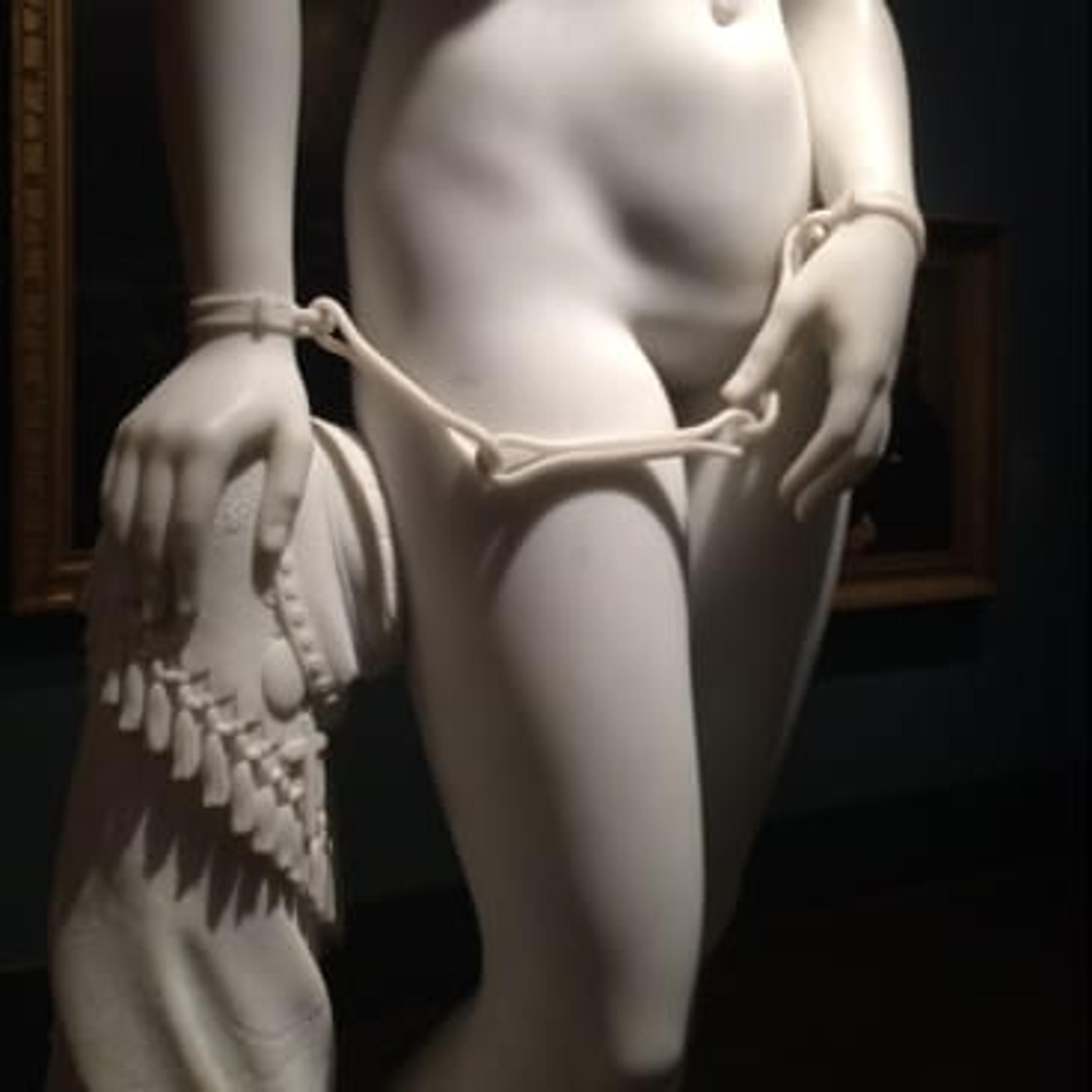 I believe that they are attached very very very thinly to her thigh and to her wrists in such a way that they do not move, even when the conservators clean the piece.
What is this?
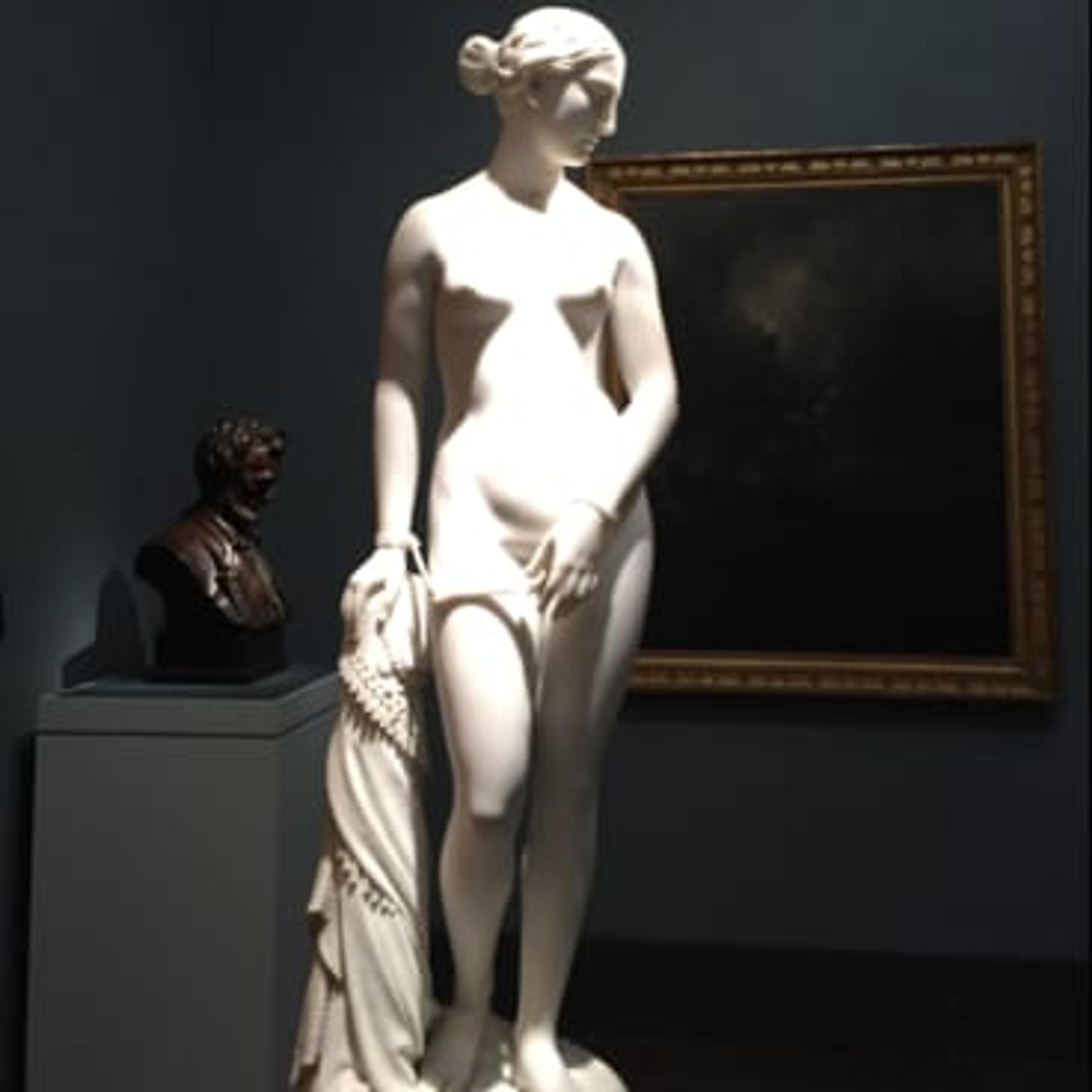 That sculpture was very famous in the United States in the mid-19th century. Powers worked in Florence and was very influenced by ancient Greek and Roman art, hence his use of white marble and his idealization of the human body. However, he was making reference to a more recent event: the Greek War of Independence against the Turks in the 1820s. This was a sympathetic treatment of the subject, at a time when it would have also been seen as a commentary on slavery in the United States. Make sure to walk around the sculpture -- it was meant to be viewed from every angle. The detailed carving of the fringed cloth is especially beautiful.
Did you have a question about the Greek slave? Or would you like some information?
I'm curious about the chains. They are different from the 1851 (?) version we have at Yale.Interesting! I just looked up the one at Yale and I see what you mean, they are quite different. Our version here dates to 1869 and the Yale version certainly does date to 1851, you're correct. I think that because so many versions were created, whoever made subsequent copies seems to have taken liberties with certain details.Can you tell me about this?
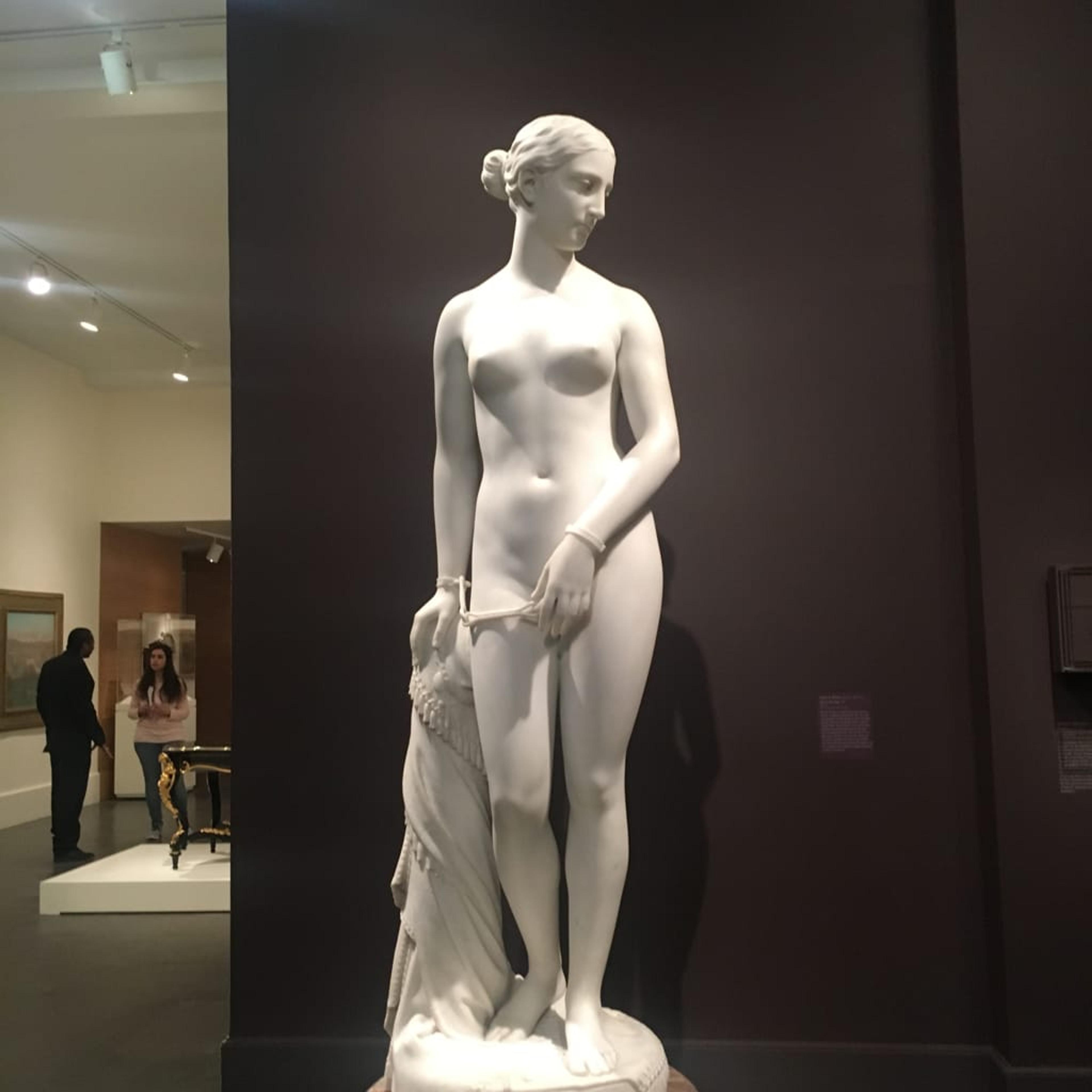 This was one of the most famous American sculptures of the mid-19th century! It was made to raise awareness of Greek women being enslaved during their War of Independence.But the subject of slavery took on a deeper meaning here in America during the Civil War, a time when America was moving to abolish slavery.
Have information?
Have information about an artwork? Contact us at
