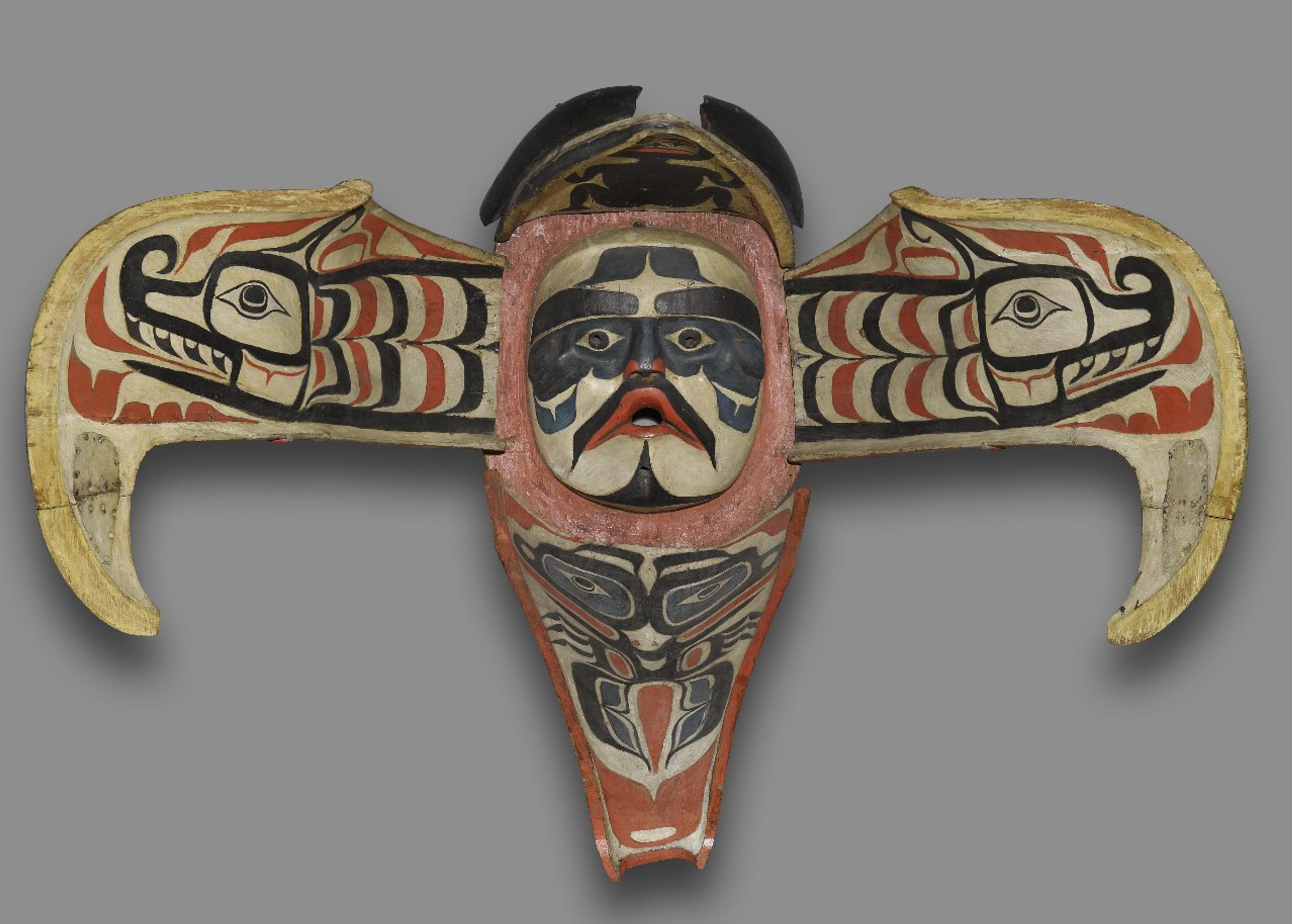
Raven Rattle
- Culture: Tsimshian, Native American
- Medium: Wood, pigment, rattles, cotton twine
- Geographical Locations:
- Place collected: Bella Bella, British Columbia, Canada
- Place made: British Columbia, Canada
- Dates: 19th century
- Dimensions: 5 1/2 x 14 x 4 in. (14.0 x 35.6 x 10.2 cm)
- Collections: Arts of the Americas
- Museum Location:
This item is not on view - Accession Number: 05.588.7292
- Credit Line: Museum Expedition 1905, Museum Collection Fund
- Rights Statement: Creative Commons-BY-NC
You may download and use Brooklyn Museum images of this three-dimensional work in accordance with a Creative Commons license. Fair use, as understood under the United States Copyright Act, may also apply.
Please include caption information from this page and credit the Brooklyn Museum. If you need a high resolution file, please contact reproductions@brooklynmuseum.org (charges apply).
For further information about copyright, we recommend resources at the United States Library of Congress, Cornell University, Copyright and Cultural Institutions: Guidelines for U.S. Libraries, Archives, and Museums, and Copyright Watch.
For more information about the Museum's rights project, including how rights types are assigned, please see our blog posts on copyright.
If you have any information regarding this work and rights to it, please contact copyright@brooklynmuseum.org. - Caption: Tsimshian (Native American). Raven Rattle, 19th century. Wood, pigment, rattles, cotton twine, 5 1/2 x 14 x 4 in. (14.0 x 35.6 x 10.2 cm). Brooklyn Museum, Museum Expedition 1905, Museum Collection Fund, 05.588.7292. Creative Commons-BY-NC
- Image: Overall, 05.588.7292_SL1.jpg. Brooklyn Museum photograph
- Catalogue Description: This rattle is called a raven rattle. It depicts a shaman on the back of a raven. The bird has a frog in its mouth, another frog touches tongues with the shaman, and frogs are on his feet. The bottom of the raven figure is carved.
Said to originate in the north, perhaps among the Tsimshian, the raven rattle is now considered an item of traditional regalia throughout the Northwest Coast. Chiefs use these rattles as part of their ceremonial dress in dances. This rattle depicts a shaman on the back of a raven. It has a frog in its mouth, another frog touches its tongue, and frogs are on the feet. The bottom also has a raven carved with abstracted figures. All these representations are transformative animals that relate to the legendary stories of the tribe, and the sound of rattles forms a conduit to the supernatural world when the rattles are employed by shamans. The use of the raven rattle always implies power. For example, it is used in dances that demonstrate the status of the chief, who has a hereditary right to use it.
FAQ


ninakuriloff
moriah11
Eastern Parkway/Brooklyn Museum