Bwanga bwa Cibola (Figure of a Mother Holding a Child)
Lulua
1 of 3
Object Label
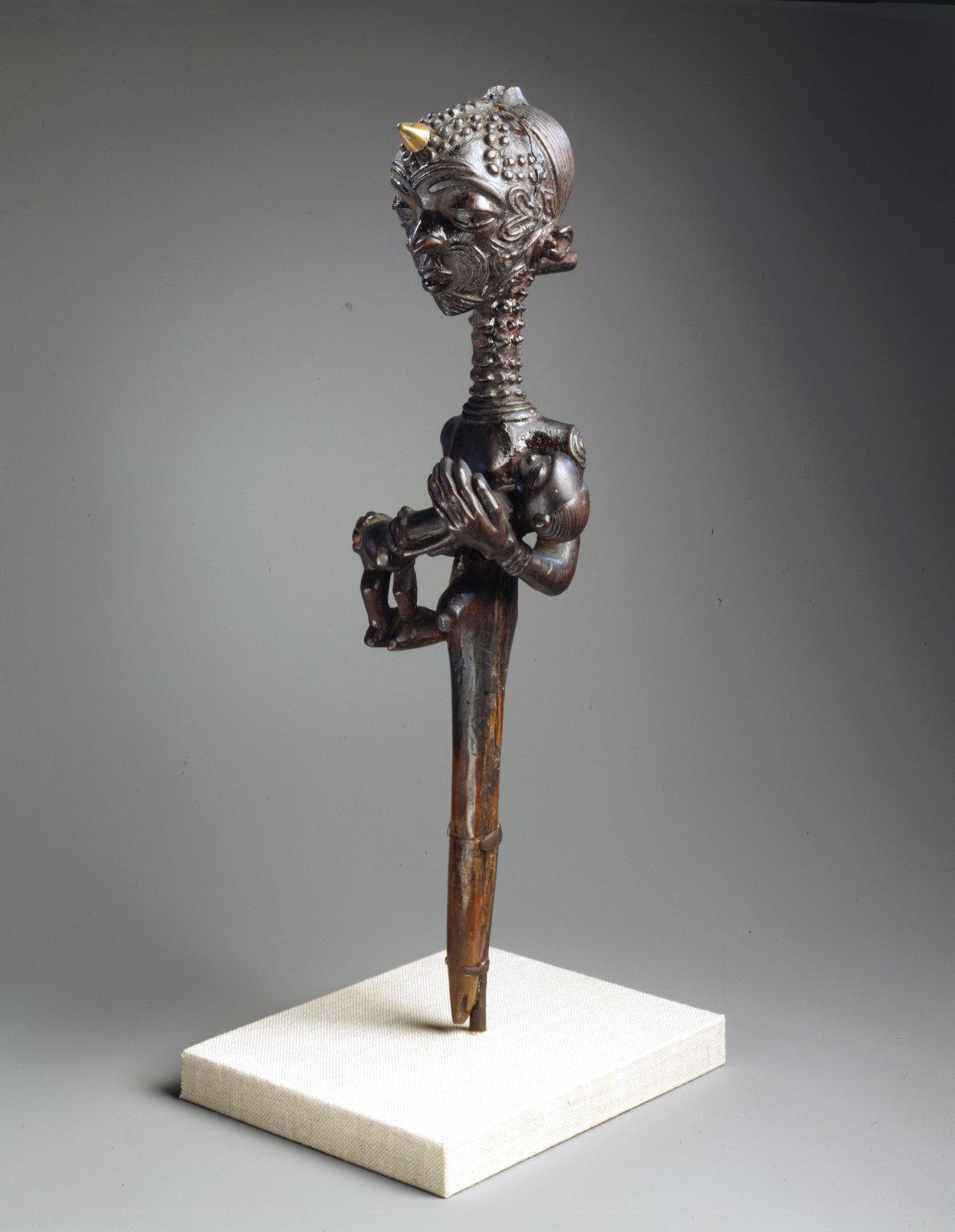
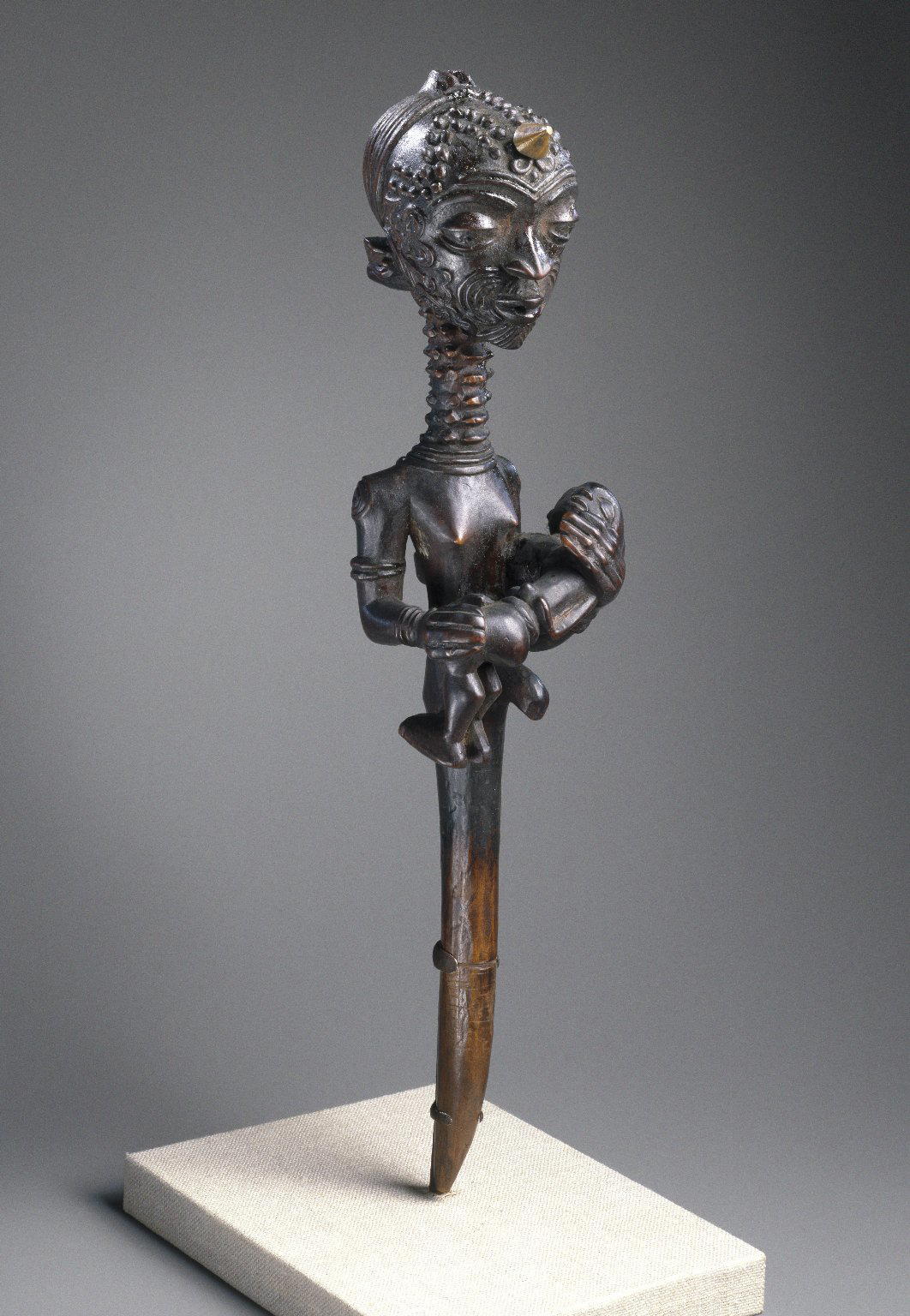
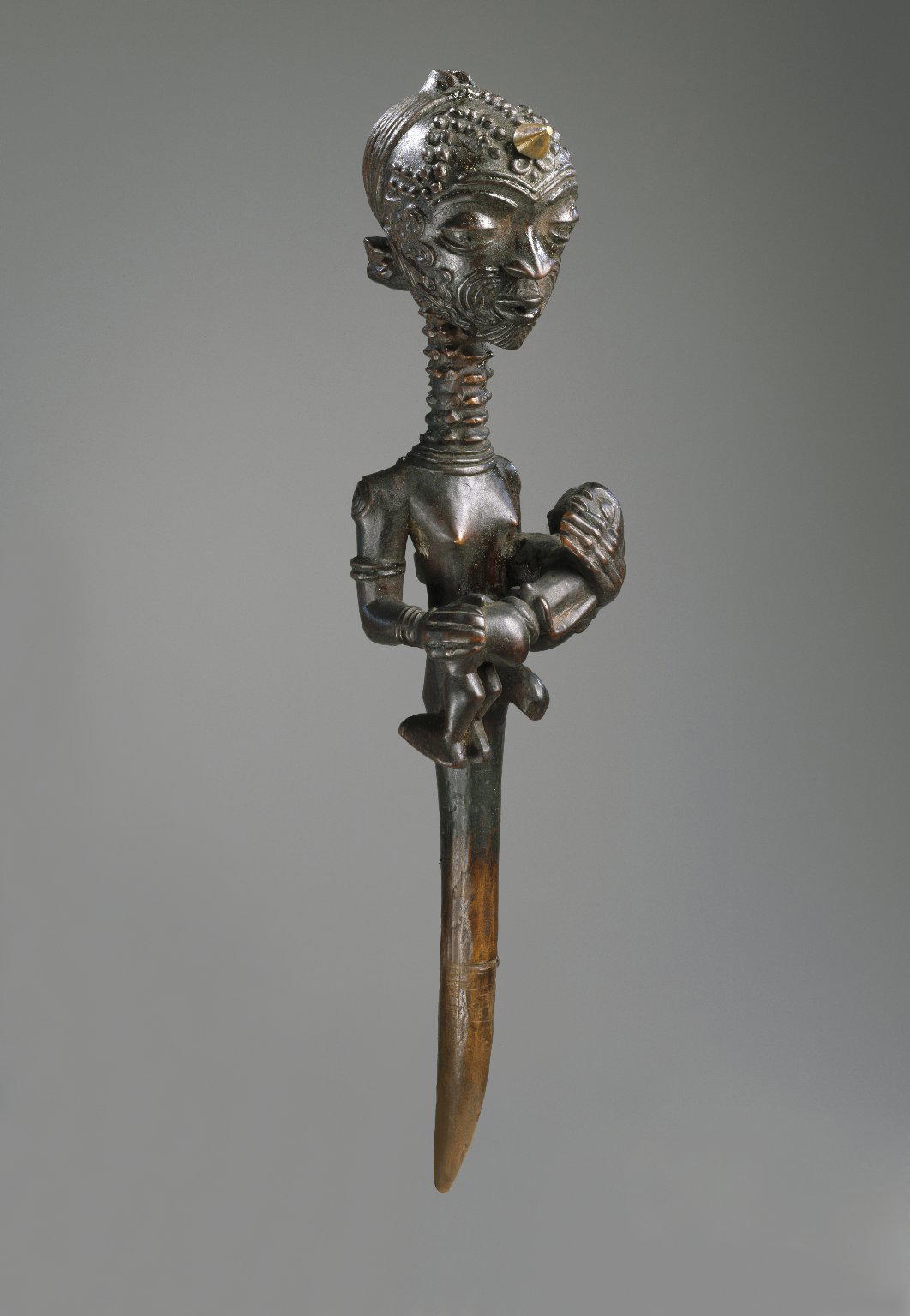
This ethereal and delicate Lulua maternity figure is considered one of the masterpieces of African art. When a woman lost children through miscarriages or infant death, she could be initiated into the Bwanga Bwa Cibola society, which used such figures to offer protection.
Caption
Lulua. Bwanga bwa Cibola (Figure of a Mother Holding a Child), 19th century. Wood, copper alloy, palm oil, tukula, organic materials, 14 x 3 3/8 x 3 1/2 in. (35.6 x 8.6 x 8.9 cm). Brooklyn Museum, Museum Collection Fund, 50.124. (Photo: Brooklyn Museum)
Tags
Gallery
Not on view
Collection
Gallery
Not on view
Collection
Culture
Title
Bwanga bwa Cibola (Figure of a Mother Holding a Child)
Date
19th century
Geography
Place made: Ndemba, West Kasai Province, Democratic Republic of the Congo
Medium
Wood, copper alloy, palm oil, tukula, organic materials
Classification
Dimensions
14 x 3 3/8 x 3 1/2 in. (35.6 x 8.6 x 8.9 cm)
Credit Line
Museum Collection Fund
Accession Number
50.124
Frequent Art Questions
It is next to Serapis.
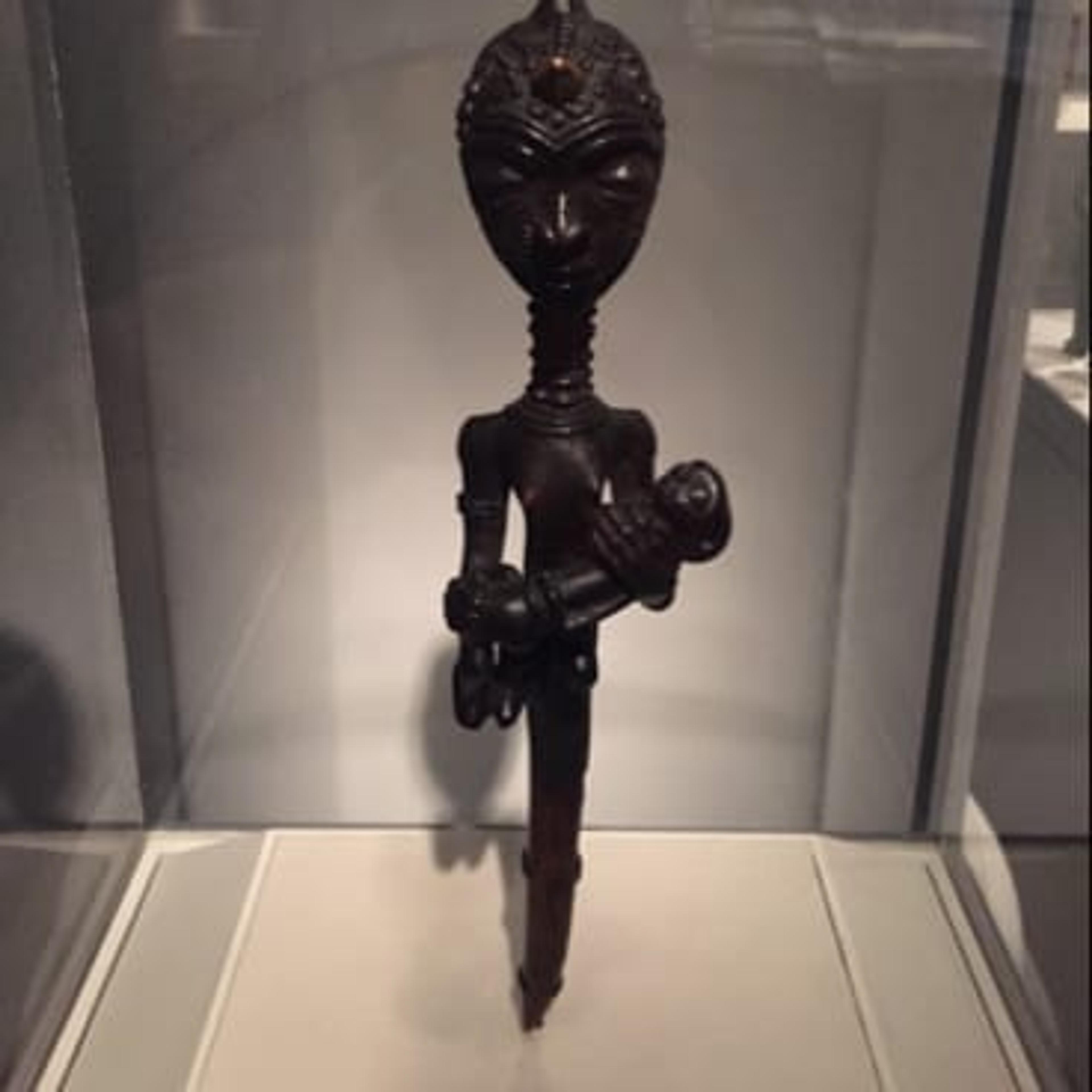 Figures like this mother and child were believed to offer protection, through the intervention of spirits, by the Bwanga Bwa Cibola society. When a woman lost successive children through miscarriages or early infant death, she could be initiated into the society to protect herself from ominous forces suspected to be the cause of the deaths. This emotionally gripping figure is considered to be one of the great masterpieces of African art.
How was this displayed when it was created?
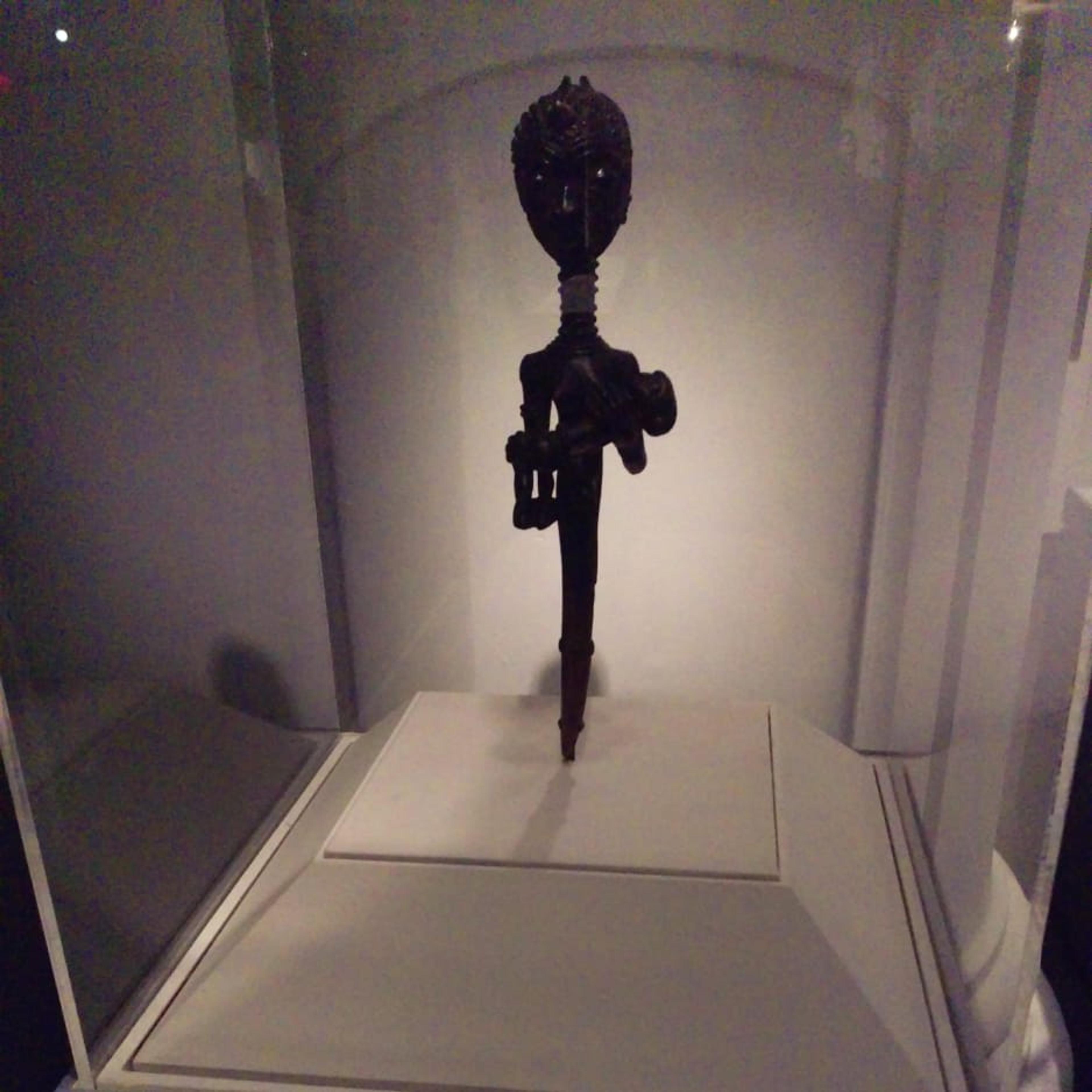 Great question! The long stem-like element is designed to stick into a pot that would contain ceremonial materials that, in conjunction with the sculpture, would assist in a woman's efforts to get pregnant.This pieces represents a very beautiful woman holding a child and was commission especially by a (presumably) wealthy woman who wished to bear children.It seems to have a copper horn on the figure. What is the significance of that.It may be a reference to the spiritual belief that the ancestral spirit is sealed within the carving.
Have information?
Have information about an artwork? Contact us at