Banda Mask
Nalu; or Baga


1 of 4
Object Label
This mask combines human features and those of a crocodile or shark with teeth bared. It has the tail of a chameleon, the horns and ears of an antelope, and features of less identifiable animals. Worn horizontally on top of the head, the mask is attached to a skirt of vegetal fibers that covers the body of the wearer. Banda masks were the property of the Simo men’s society, which historically oversaw and regulated fertility and initiation ceremonies. Today it is danced primarily for entertainment.
Caption
Nalu; or Baga. Banda Mask, late 19th or early 20th century. Wood, metal, pigment, 61 1/2 x 15 3/4 x 15 3/8 in. (156.0 x 40.0 x 39.0 cm). Brooklyn Museum, Caroline A.L. Pratt Fund, 58.7. (Photo: Brooklyn Museum)
Gallery
Not on view
Collection
Gallery
Not on view
Collection
Frequent Art Questions
What is this?
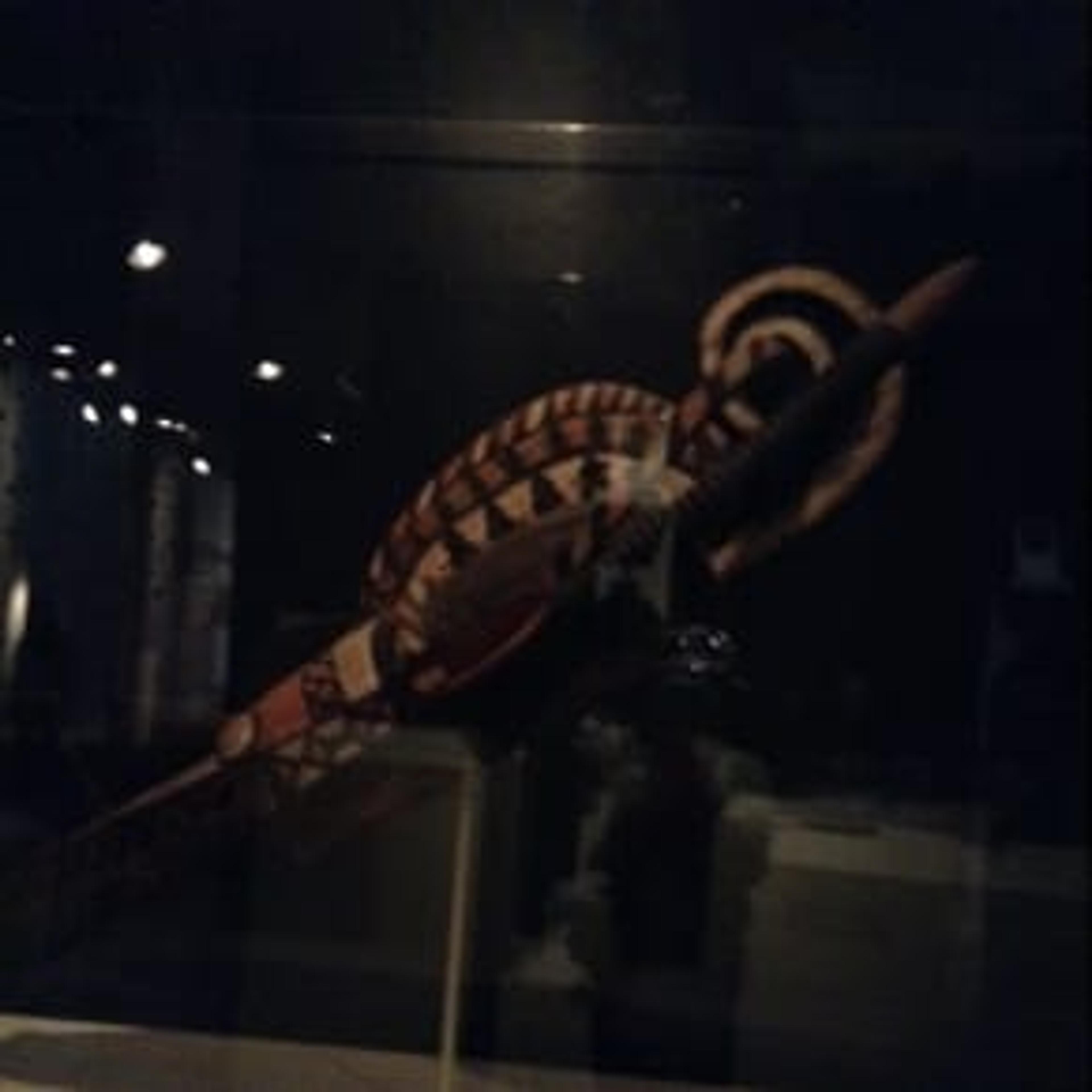 The Banda Mask was made by either a Nalu or Baga artist in Guinea. Banda is the name of a masked supernatural being found among the Baga and Nalu people along the coastal regions of Guinea. The many different animals incorporated here (crocodiles, chameleons, and antelopes) are believed to be mythical ancestors that play an important role in traditional Baga spirituality. As the Nalu and Baga have more recently converted to Islam, these masks are danced for entertainment and not for spiritual reasons.The human characteristic demonstrate Baga scarification patterns and elaborately brained hair, popular among Baga women. Interestingly this mask is so iconic it appeared on Guinea currency! From 1985 on this mask was featured on the 50 Franc bill.
Have information?
Have information about an artwork? Contact us at