Komo Society Mask
Bamana
1 of 6
Object Label
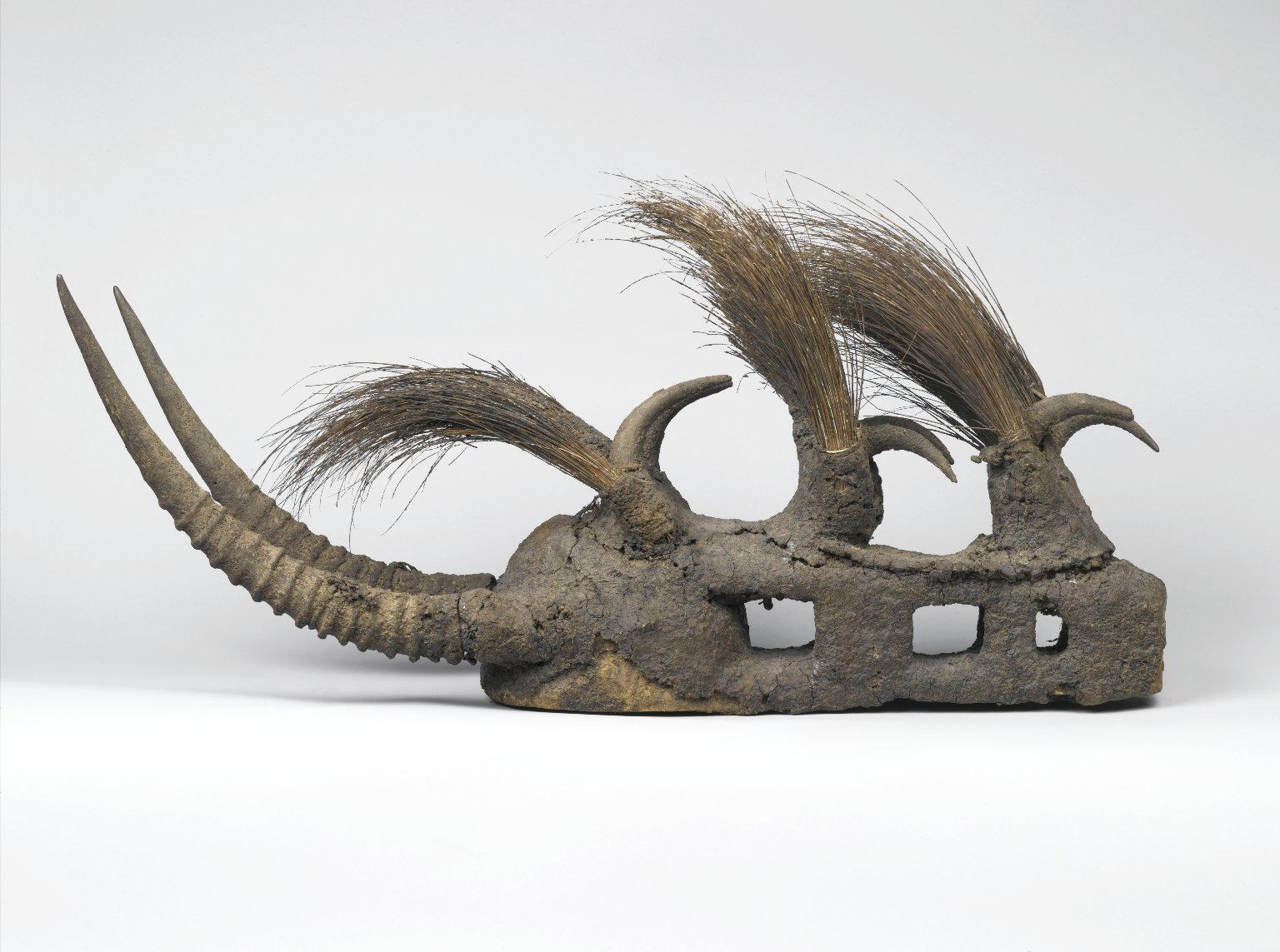
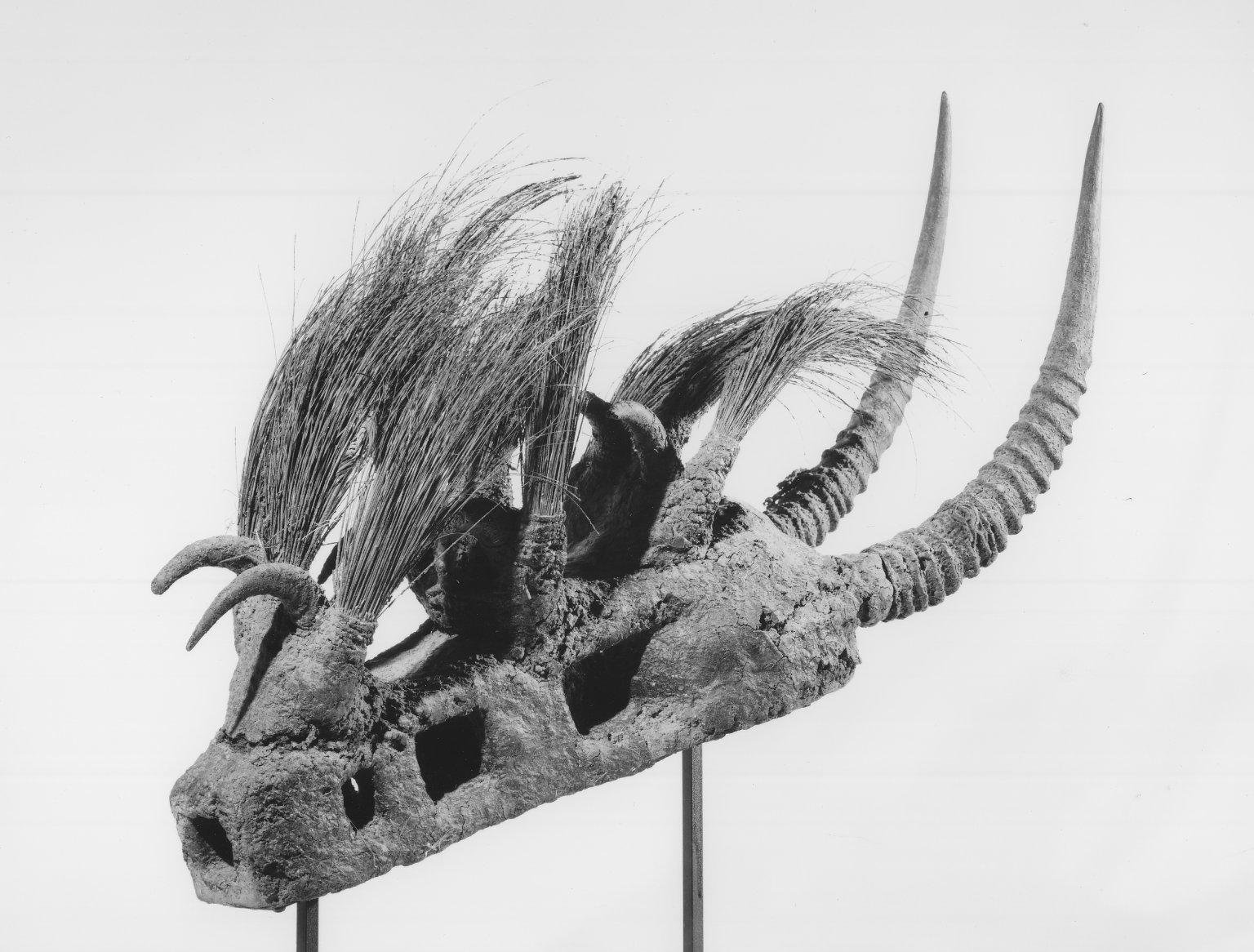
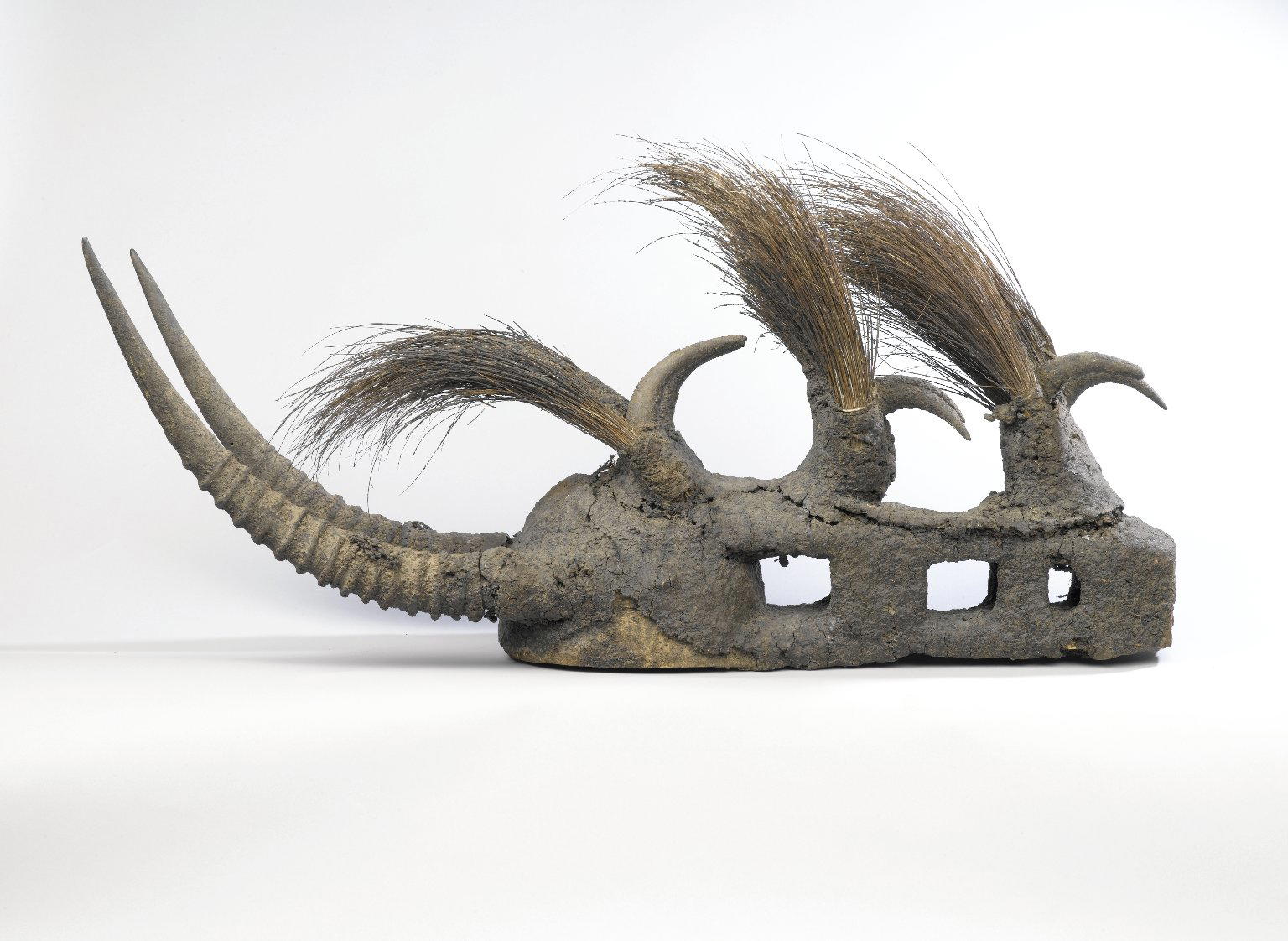
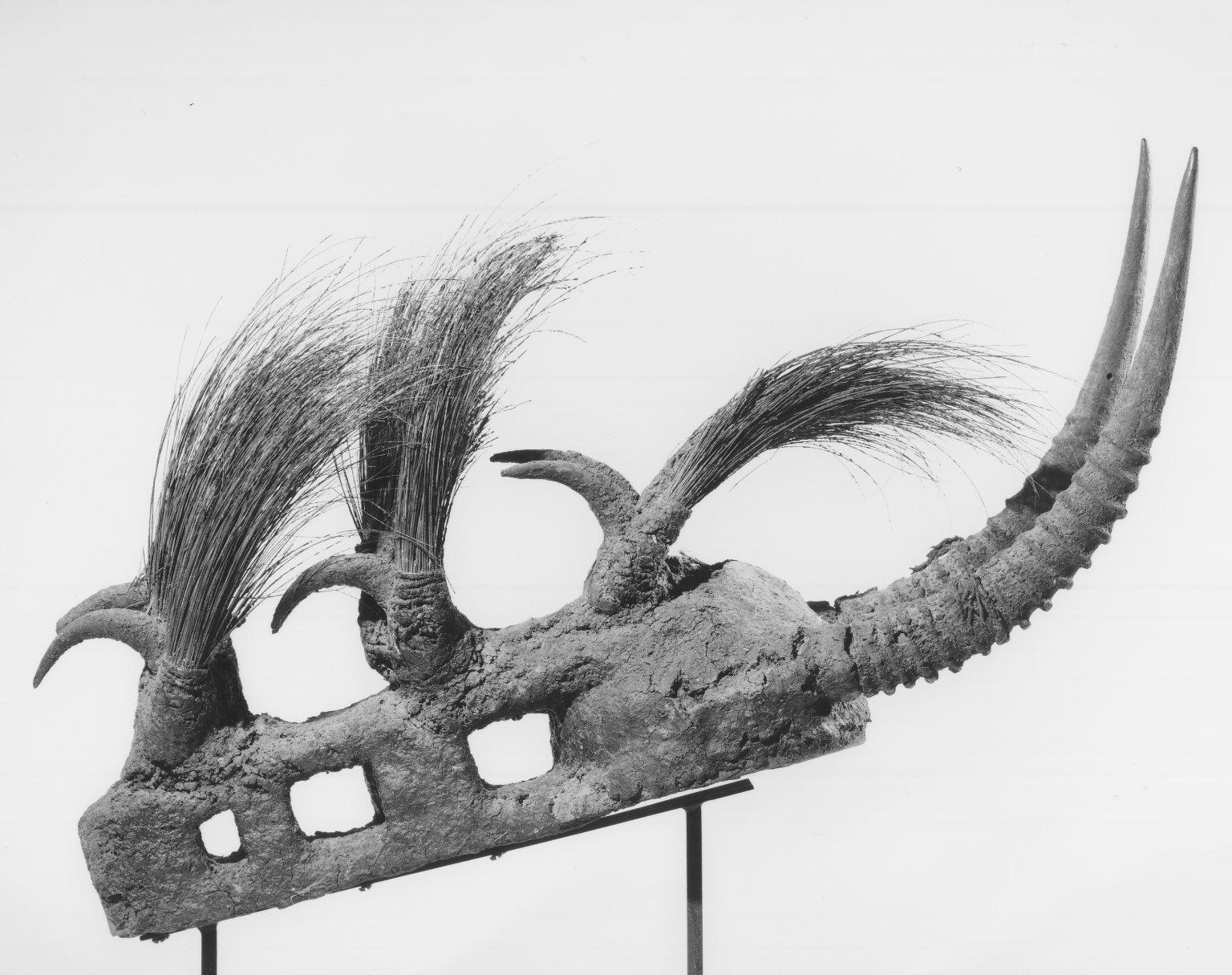
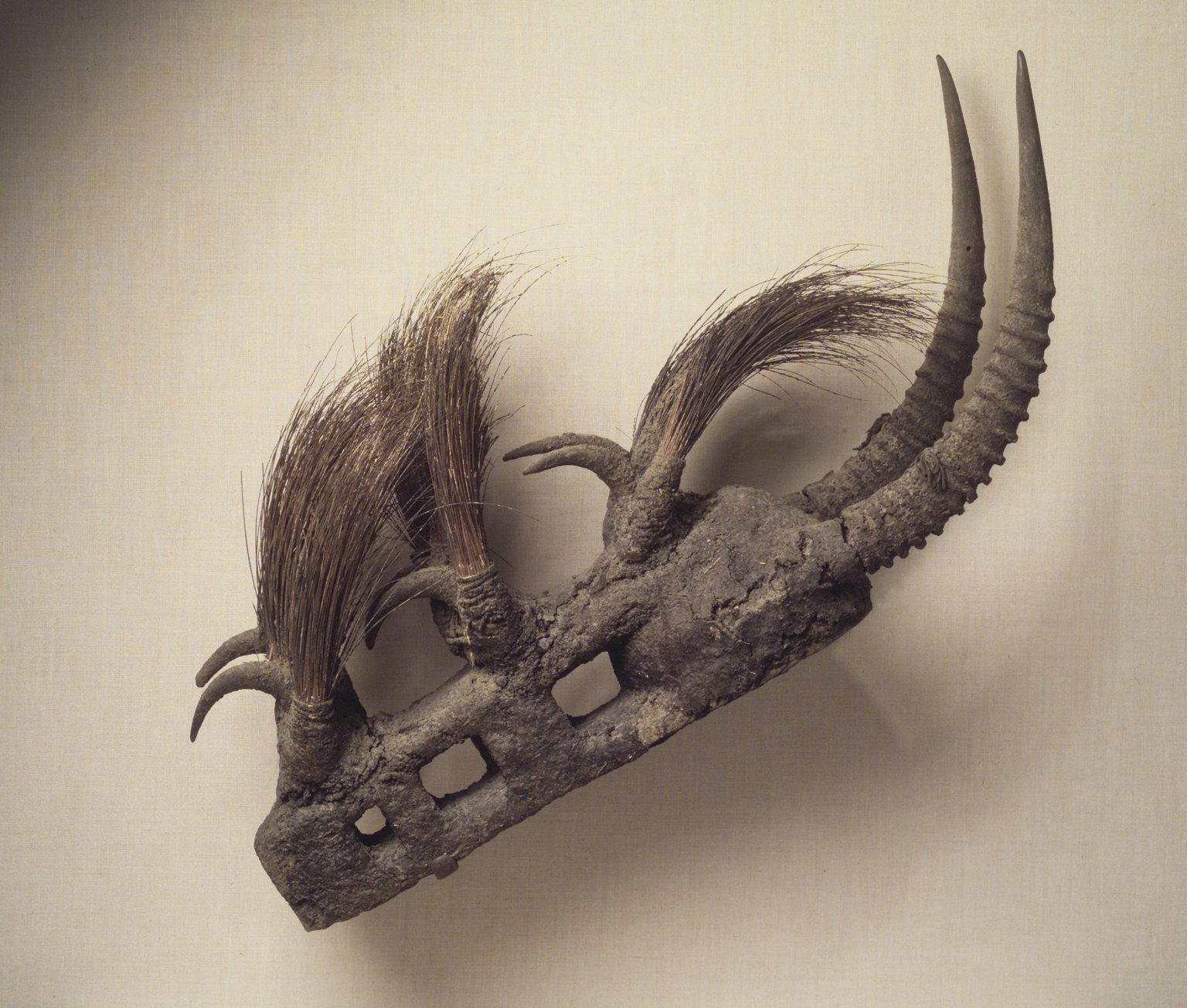
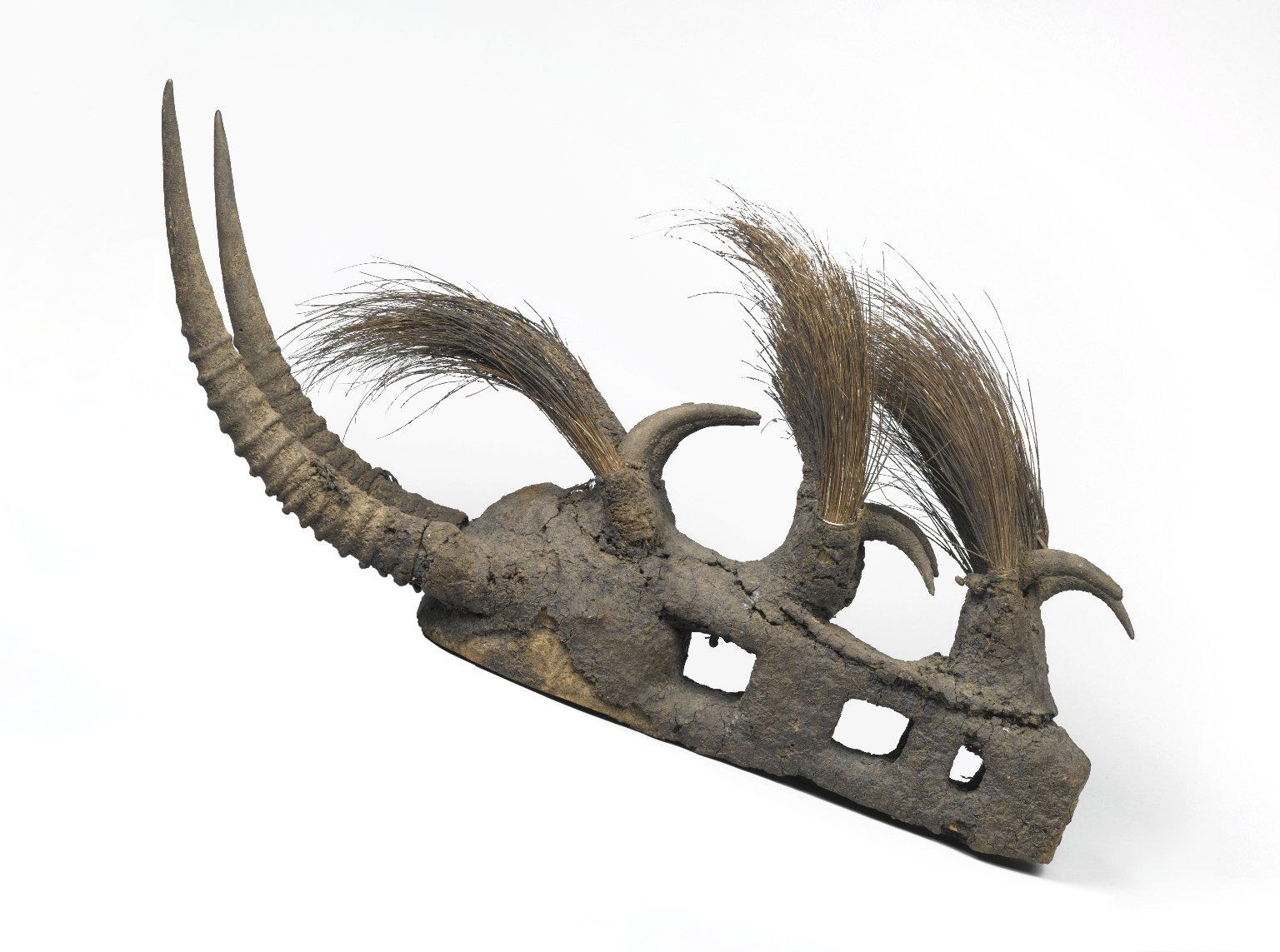
Bamana masks such as this one are worn and seen only by members of the Komo association, whose members harness the power (nyama) contained in the mask to aid members of the community. Powerful materials—including blood, chewed kola nuts, and millet beer—are applied to the mask, while prayers and sacrifices are offered. The open mouth and the horns, tusks, and porcupine quills symbolize the Komo’s power to punish those who violate its rules.
Caption
Bamana. Komo Society Mask, late 19th–early 20th century. Wood, metal, antelope horns, porcupine quills, organic materials, 14 x 8 x 33 1/2 in. (35.6 x 20.3 x 85.1 cm). Brooklyn Museum, By exchange, 69.39.3. (Photo: Brooklyn Museum)
Gallery
Not on view
Collection
Gallery
Not on view
Collection
Culture
Title
Komo Society Mask
Date
late 19th–early 20th century
Geography
Place made: Ségou, Koulikouro, or Sikasso Region, Mali
Medium
Wood, metal, antelope horns, porcupine quills, organic materials
Classification
Dimensions
14 x 8 x 33 1/2 in. (35.6 x 20.3 x 85.1 cm)
Credit Line
By exchange
Accession Number
69.39.3
Frequent Art Questions
What's this?
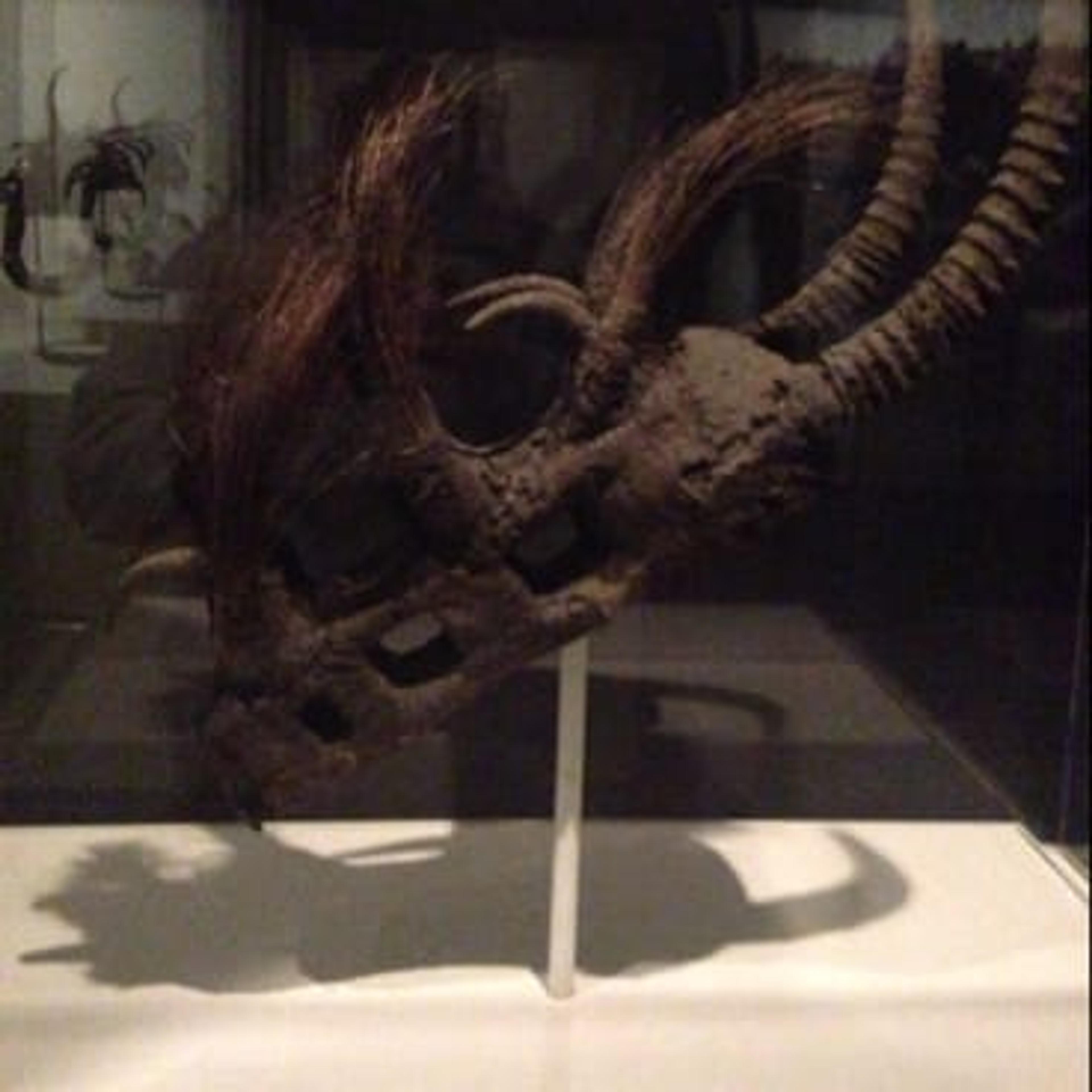 This is known as the "Komo Society Mask" was made by an unidentified Bamana artist in Mali. As you may have already read only members of the Komo Society would ever see this mask. Constructed outside of the village in secret, it would have been warn to harness spiritual powers to aid the community. It has such a fearsome appearance, likely symbolizing the power and authority of the Komo. This mask holds great spiritual power and can be seen in many ways as a religious altar – with the many different additions to the masks surface holding intense spiritual power and symbolism.
Have information?
Have information about an artwork? Contact us at