Portrait of a Woman
Robert Feke

Brooklyn Museum photograph
Object Label
The Conservator's Eye
An X radiograph of this portrait reveals a compositional change invisible to the naked eye: the elimination of an elaborate blue drape that initially hung from the sitter’s right shoulder and wrapped around her waist. This hidden feature shows up in the radiograph because Robert Feke used lead white pigment to paint the highlights. Lead is a dense material that absorbs X-rays, causing the highlights to appear white in the radiograph, even where they have been covered with additional paint. The blue color of the draping is visible within the cracks under strong magnification. Feke made this change late in the painting process, but it is unknown if the change was made at the sitter’s request.
An X radiograph of this portrait reveals a compositional change invisible to the naked eye: the elimination of an elaborate blue drape that initially hung from the sitter’s right shoulder and wrapped around her waist. This hidden feature shows up in the radiograph because Robert Feke used lead white pigment to paint the highlights. Lead is a dense material that absorbs X-rays, causing the highlights to appear white in the radiograph, even where they have been covered with additional paint. The blue color of the draping is visible within the cracks under strong magnification. Feke made this change late in the painting process, but it is unknown if the change was made at the sitter’s request.
Caption
Robert Feke (American, ca.1707–ca.1752). Portrait of a Woman, 1748. Oil on canvas, 49 3/8 x 39 9/16 in. (125.4 x 100.5 cm) frame: 59 3/8 x 49 9/16 x 4 1/4 in. (150.8 x 125.9 x 10.8 cm). Brooklyn Museum, Dick S. Ramsay Fund and Museum Purchase Fund, 43.229. (Photo: Brooklyn Museum)
Gallery
Not on view
Collection
Gallery
Not on view
Collection
Artist
Title
Portrait of a Woman
Date
1748
Medium
Oil on canvas
Classification
Dimensions
49 3/8 x 39 9/16 in. (125.4 x 100.5 cm) frame: 59 3/8 x 49 9/16 x 4 1/4 in. (150.8 x 125.9 x 10.8 cm)
Signatures
Unsigned
Credit Line
Dick S. Ramsay Fund and Museum Purchase Fund
Accession Number
43.229
Frequent Art Questions
Do you know what kind of flower the woman is holding, and if it has some symbolism?
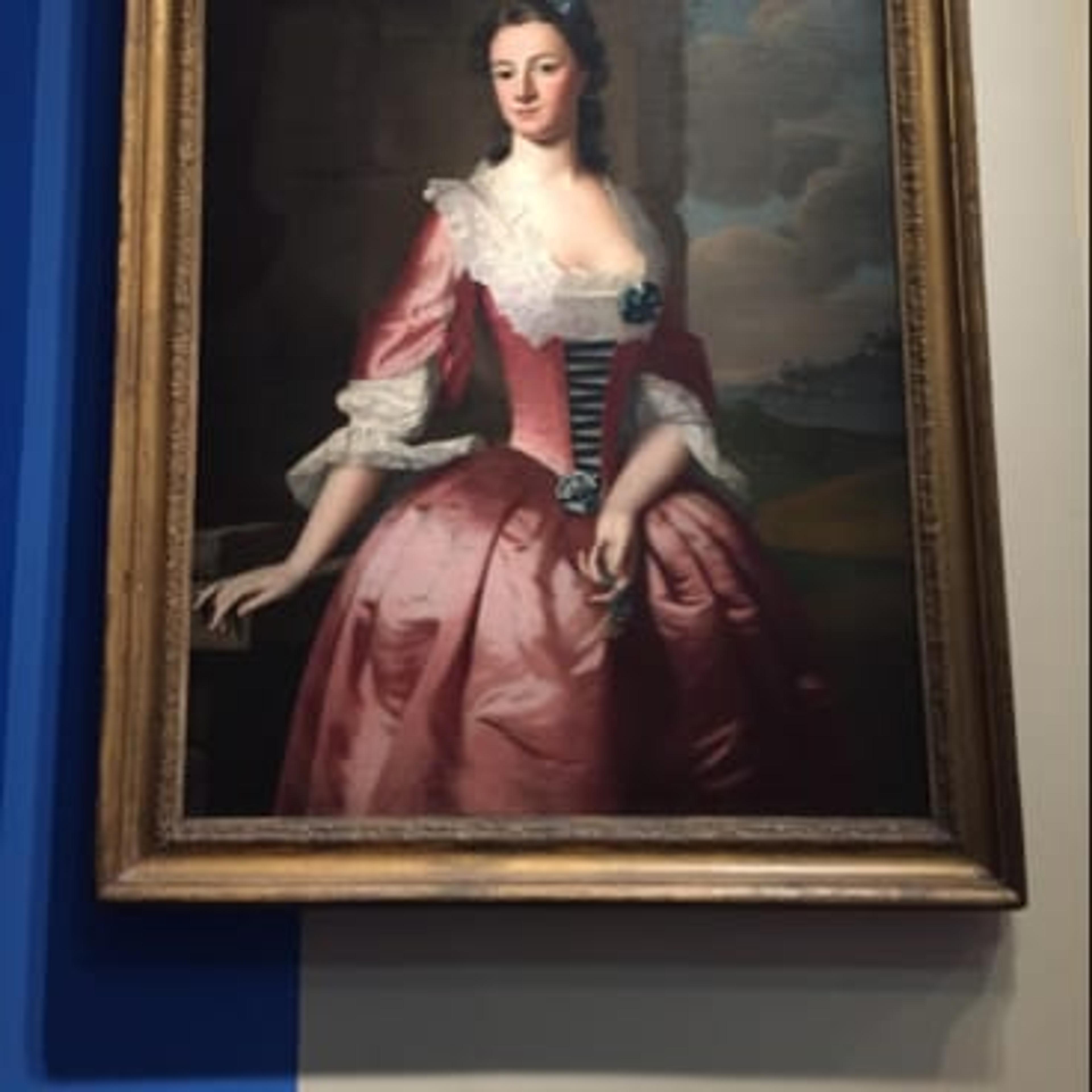 Hello! Thank you for trying the ASK app today. That is a very interesting question re: the flower. I think you are the first person to ask. One moment while we look through our curatorial notes and see if we can find an answer for you. Feel free to walk around that room while we research!Great, thanks again.Thank you for waiting! We cannot find anything in our notes about this particular flower (i.e., what type of flower it is and if that particular flower had symbolism due to the type/color/etc.). However, we do have a few sources that discuss women in colonial portraiture holding flowers as a symbol of everything from fertility (i.e., she is a young woman of marriageable age at this point) to the fleeting nature of life and age (i.e., she is in the prime of her life, but like a flower, will eventually wither), to hobby interests (i.e., the woman being painted may have been an avid gardener!).Apologies for such a very broad answer, but thank you for giving us a new question to research!No, it's great! Thanks
Who was this?
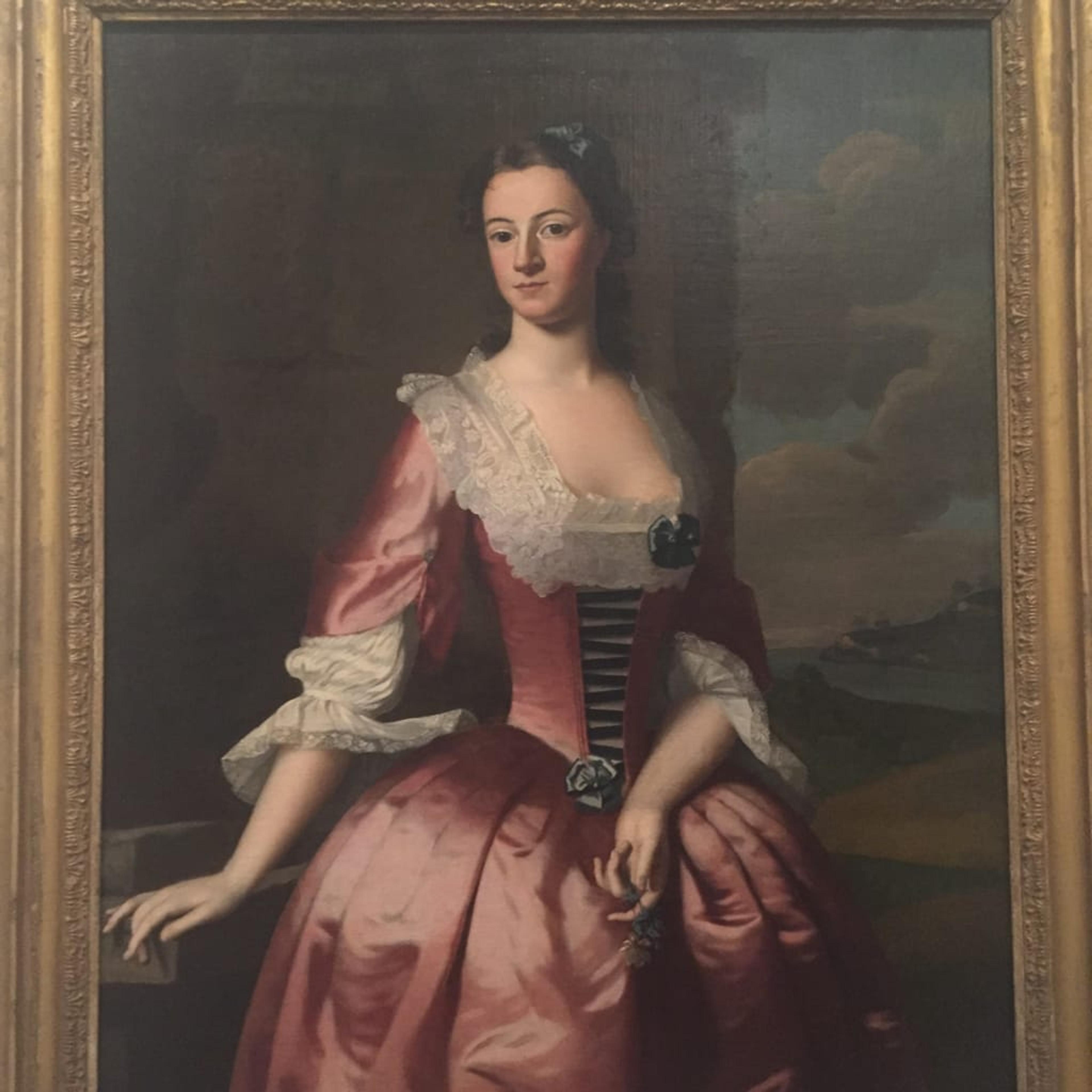 We're not sure of this woman's identity, but we can see that her gown is magnificent! It's both a sign of her wealth and the artist's innovation.Feke was a popular portraitist in the English American colonies. He sometimes used silver in his painting to make certain elements, like her gown, more lustrous.
Have information?
Have information about an artwork? Contact us at