Dolce Far Niente
John Singer Sargent


1 of 2
Object Label
John Singer Sargent spent part of several summers painting open-air subjects in Italy’s Val d’Aosta. The resulting works reveal his pleasure in the description of vividly brilliant light. To suggest an alluring sensuality, Sargent often dressed his models in costumes that he had purchased in the Middle East. Here, several figures almost seem to merge with the water, enhancing the intimacy of the gathering. All three male figures were modeled by Nicola d’Inverno, Sargent’s servant, a fact that reveals the contrivances underpinning this seemingly casual scene.
Caption
John Singer Sargent (American, born Italy, 1856–1925). Dolce Far Niente, ca. 1907. Oil on canvas, 16 1/4 x 28 1/4 in. (41.3 x 71.7 cm) frame: 24 3/8 x 36 3/8 x 3 in. (61.9 x 92.4 x 7.6 cm). Brooklyn Museum, Bequest of A. Augustus Healy, 11.518. (Photo: Brooklyn Museum)
Gallery
Not on view
Collection
Gallery
Not on view
Collection
Artist
Title
Dolce Far Niente
Date
ca. 1907
Medium
Oil on canvas
Classification
Dimensions
16 1/4 x 28 1/4 in. (41.3 x 71.7 cm) frame: 24 3/8 x 36 3/8 x 3 in. (61.9 x 92.4 x 7.6 cm)
Signatures
Signed lower right: "John S. Sargent"
Credit Line
Bequest of A. Augustus Healy
Accession Number
11.518
Frequent Art Questions
What art style is it?
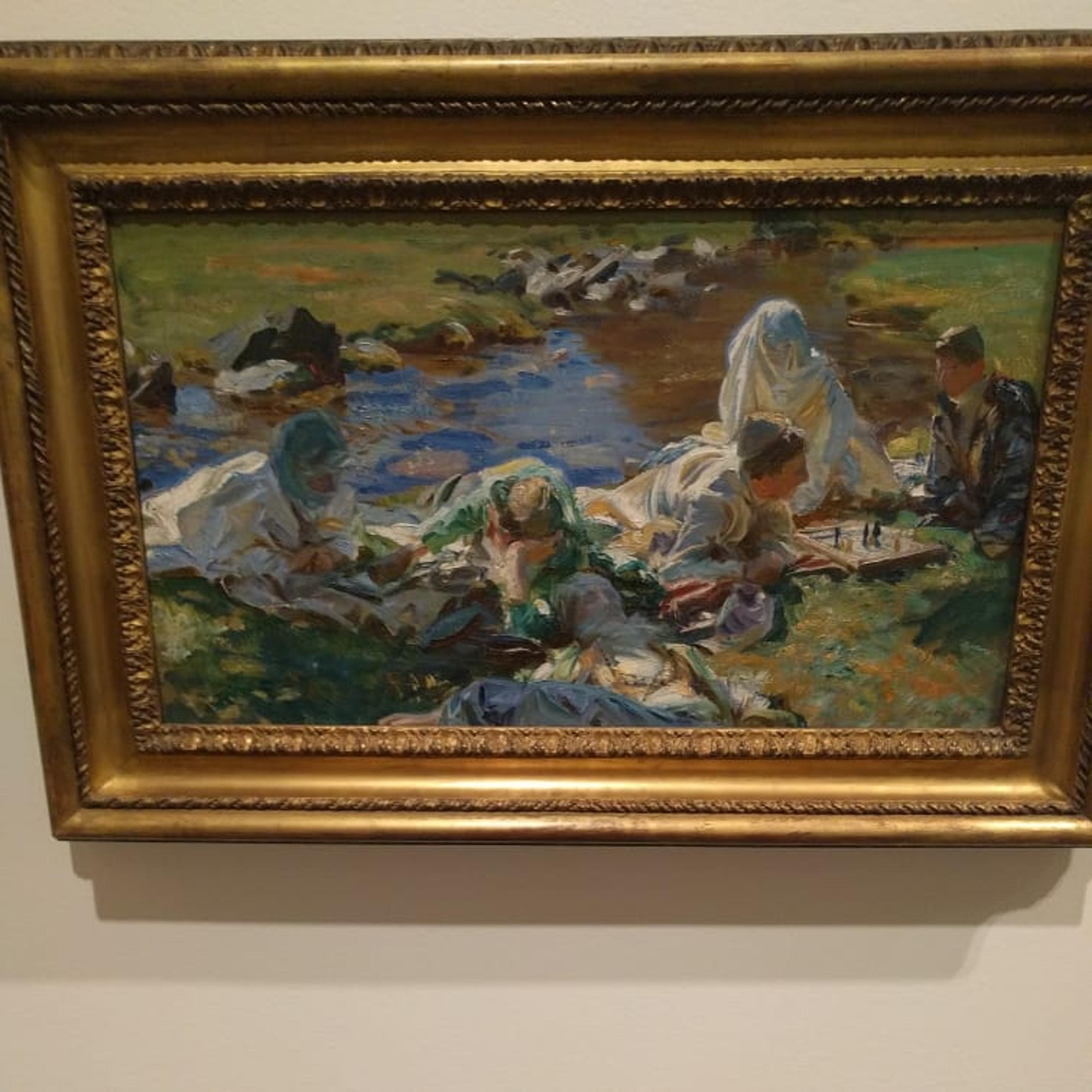 The style of this painting is called Impressionism, where the "impression" of a place was seen as more important than exact replication. Sargent spent time in France and met the first wave of French Impressionists, including Claude Monet.You can see the loose brush strokes of pure color that look "messy" close up but form a complete picture from far away. They capture the effect of light on the water, grass, and white clothing!Thanks!
Tell me more.
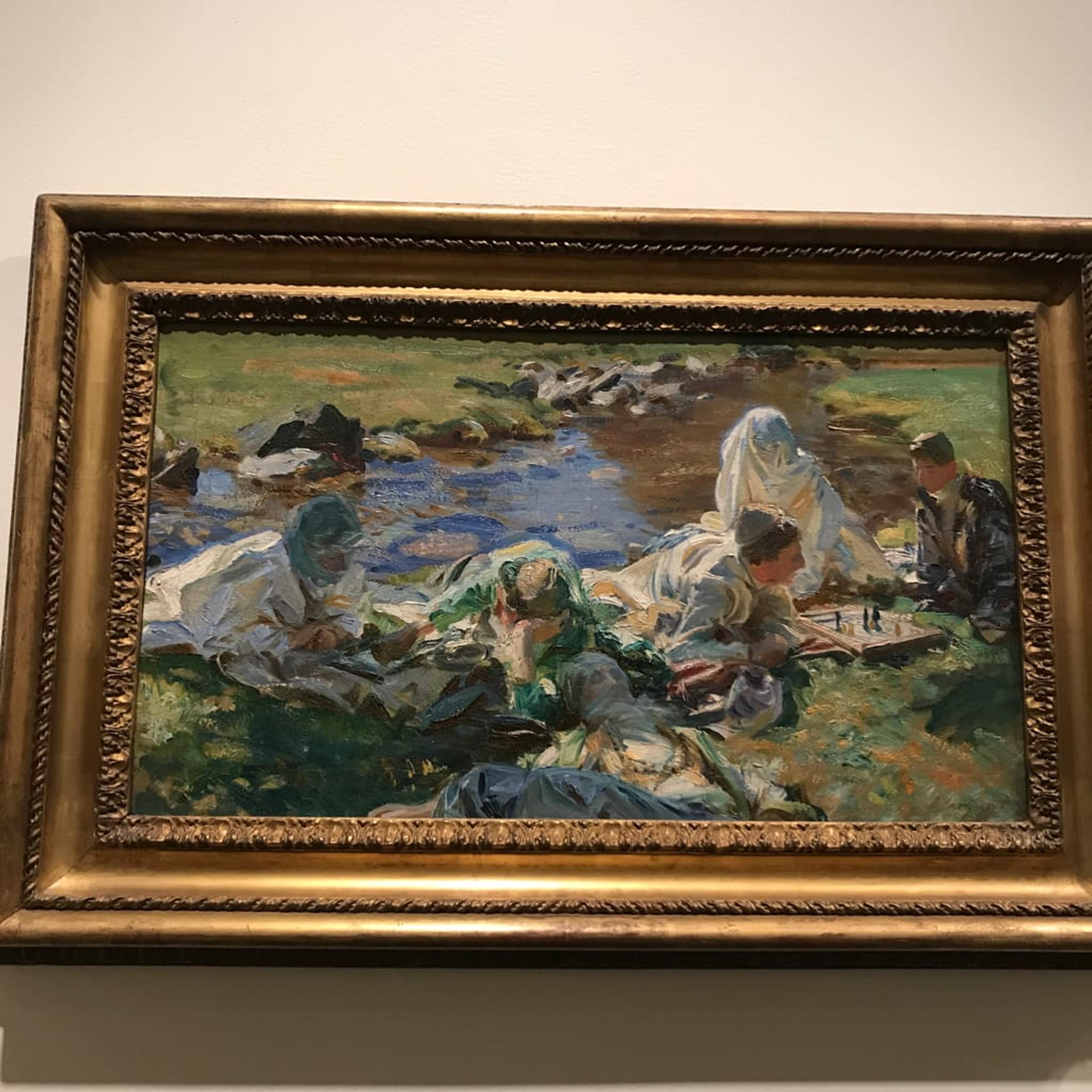 John Singer Sargent was an American artist who lived much of his life abroad.The style of this painting is called Impressionism, where the "impression" of a place was seen as more important than exact replication. Sargent spent time in France and met the first wave of French Impressionists, including Claude Monet.Take a close look at the brushwork! This quick, loose, and “painterly” application of pigment captures the immediacy of a fleeting moment in time.This painting shows the "sweetness of doing nothing"--- an Italian phrase. We do not know who modeled for the female figures in this scene, but it has been speculated that they may be the artist's nieces.Thank you!
Have information?
Have information about an artwork? Contact us at