Neferhotep in the Crown of Upper and Lower Egypt


1 of 2
Object Label
Neferhotep symbolizes the perpetuity of kingship and is usually depicted, as here, with a rounded wig surmounted by the Crown of Upper and Lower Egypt. He may also have incarnated the appeasement of various deities, including the goddesses featured in the installation Temples, Tombs, and the Egyptian Universe. Although his cult flourished mostly in southern Egypt, statues such as this are also known from northern Egypt.
Caption
Neferhotep in the Crown of Upper and Lower Egypt, ca. 380–30 B.C.E. or later. Bronze, 8 3/4 x 1 5/16 x 2 15/16 in. (22.2 x 3.4 x 7.5 cm) mount: 10 3/4 x 3 x 4 in. (27.3 x 7.6 x 10.2 cm). Brooklyn Museum, Charles Edwin Wilbour Fund, 08.480.50. (Photo: Brooklyn Museum)
Title
Neferhotep in the Crown of Upper and Lower Egypt
Date
ca. 380–30 B.C.E. or later
Period
Late Period to Ptolemaic Period
Geography
Place collected: Egypt
Medium
Bronze
Classification
Dimensions
8 3/4 x 1 5/16 x 2 15/16 in. (22.2 x 3.4 x 7.5 cm) mount: 10 3/4 x 3 x 4 in. (27.3 x 7.6 x 10.2 cm)
Credit Line
Charles Edwin Wilbour Fund
Accession Number
08.480.50
Frequent Art Questions
Why all the sculpture left foot is forward?
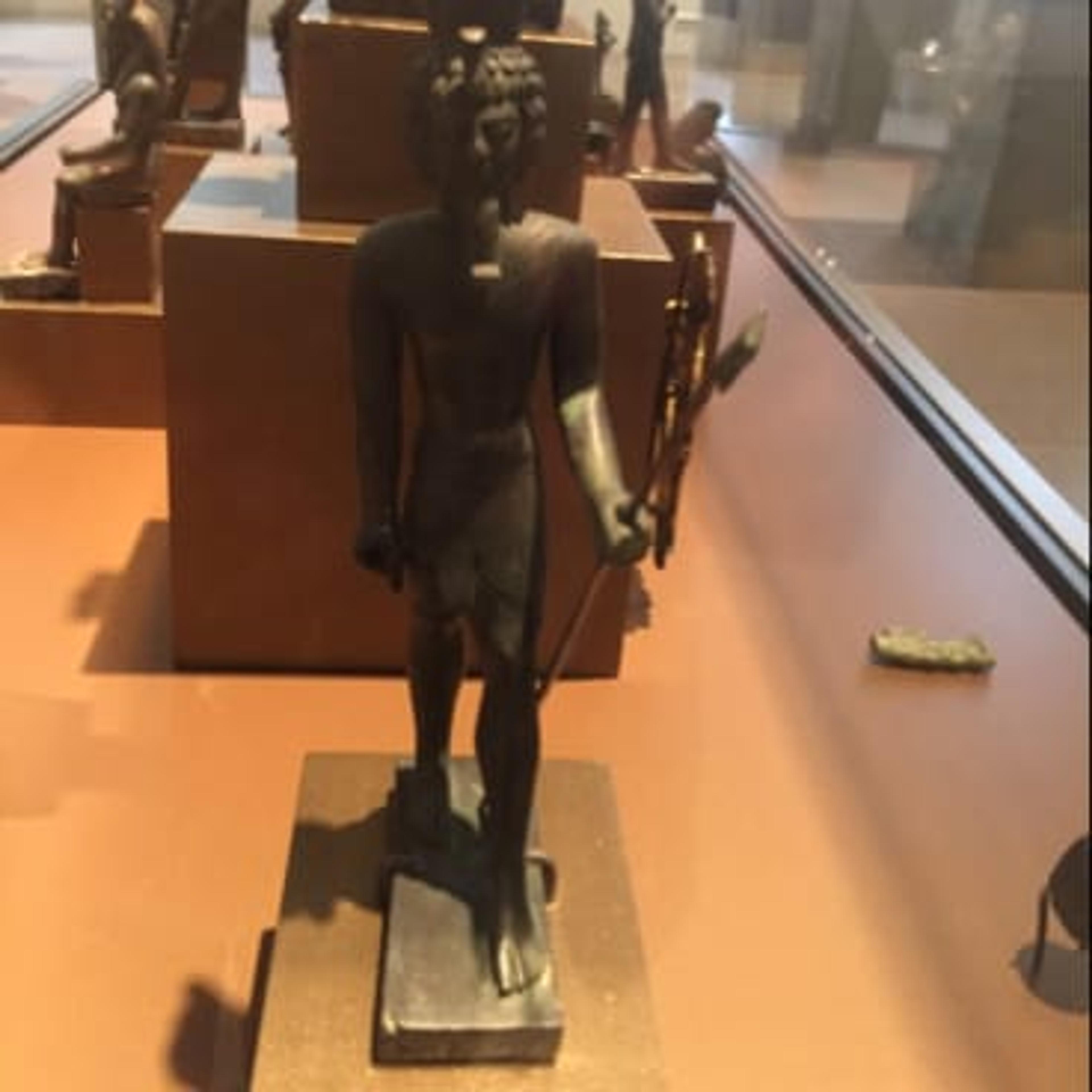 The left foot forward is used to imply movement, power and stepping into the future. It directly relates to Egyptian hieroglyphs. The reasoning for the left foot specifically relates to the way hieroglyphs were most commonly read, from right to left, and always into the faces of figures. You might notice women are shown with both feet together or their left feet only slightly advanced due to the tight dresses they're shown wearing. So the step is certainly tied to masculinity and is gendered!
Have information?
Have information about an artwork? Contact us at