Bulb Pot
James E. Powell & Sons
Object Label
The unique shape of this charming vessel was designed to hold and encourage the growth and blossoming of a single flower bulb. The undulating, organic silhouette of the exaggerated rim is characteristic of the Art Nouveau style.
Caption
James E. Powell & Sons (1834–1980). Bulb Pot, ca. 1910. Glass, height: 2 in. (5.1 cm) diameter: 7 in. (17.8 cm). Brooklyn Museum, Gift of Paul F. Walter, 1994.119.11.
Gallery
Not on view
Collection
Gallery
Not on view
Collection
Title
Bulb Pot
Date
ca. 1910
Medium
Glass
Classification
Dimensions
height: 2 in. (5.1 cm) diameter: 7 in. (17.8 cm)
Signatures
no signature
Inscriptions
no inscriptions
Markings
no marks
Credit Line
Gift of Paul F. Walter
Accession Number
1994.119.11
Frequent Art Questions
Is this a hand blown piece?
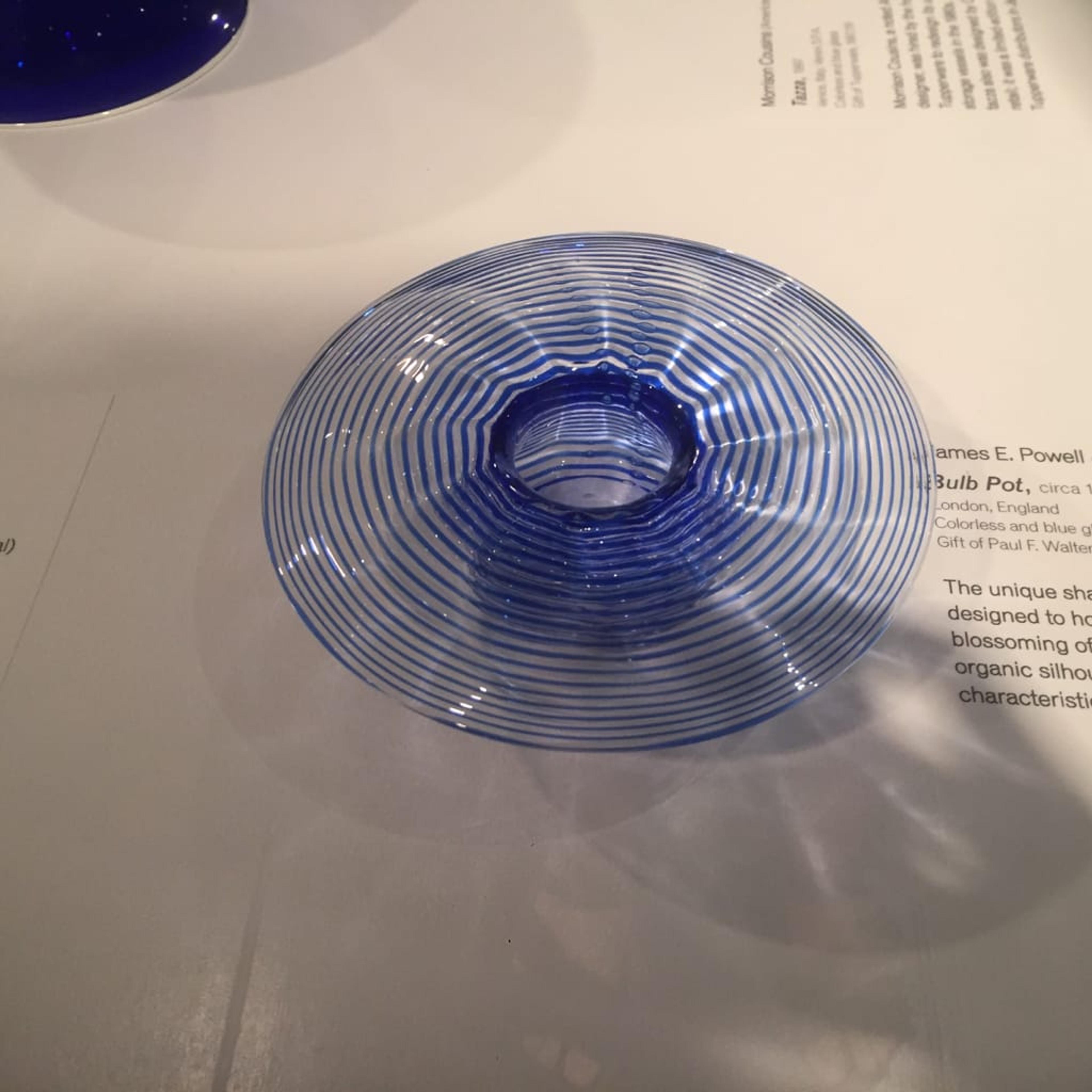 Yes, the products of Powell & Sons were hand blown! The firm was arranged according to medieval ideas of art education and they valued hand craftsmanship. This bulb pot was used to grow tulips or other flowering plants indoors during the off-season, a process known as "forcing bulbs".
What characterizes the "Art Nouveau" style?
In general, the major characteristics of Art Nouveau style are organic shapes and graceful, often swooping, lines. Artists working in Art Nouveau were interested in blending the fine and decorative arts.The bulb pot was crafted by hand. At this time, both Art Nouveau and other movements, like Arts and Crafts, were interested in returning craftsmanship to the decorative arts. It was a reaction against the industrialization occurring in Europe and the US.
Have information?
Have information about an artwork? Contact us at