Lady Tjepu

Brooklyn Museum photograph
About this Brooklyn Icon
The Brooklyn Museum is commemorating its 200th anniversary by spotlighting 200 standout objects in its encyclopedic collection.
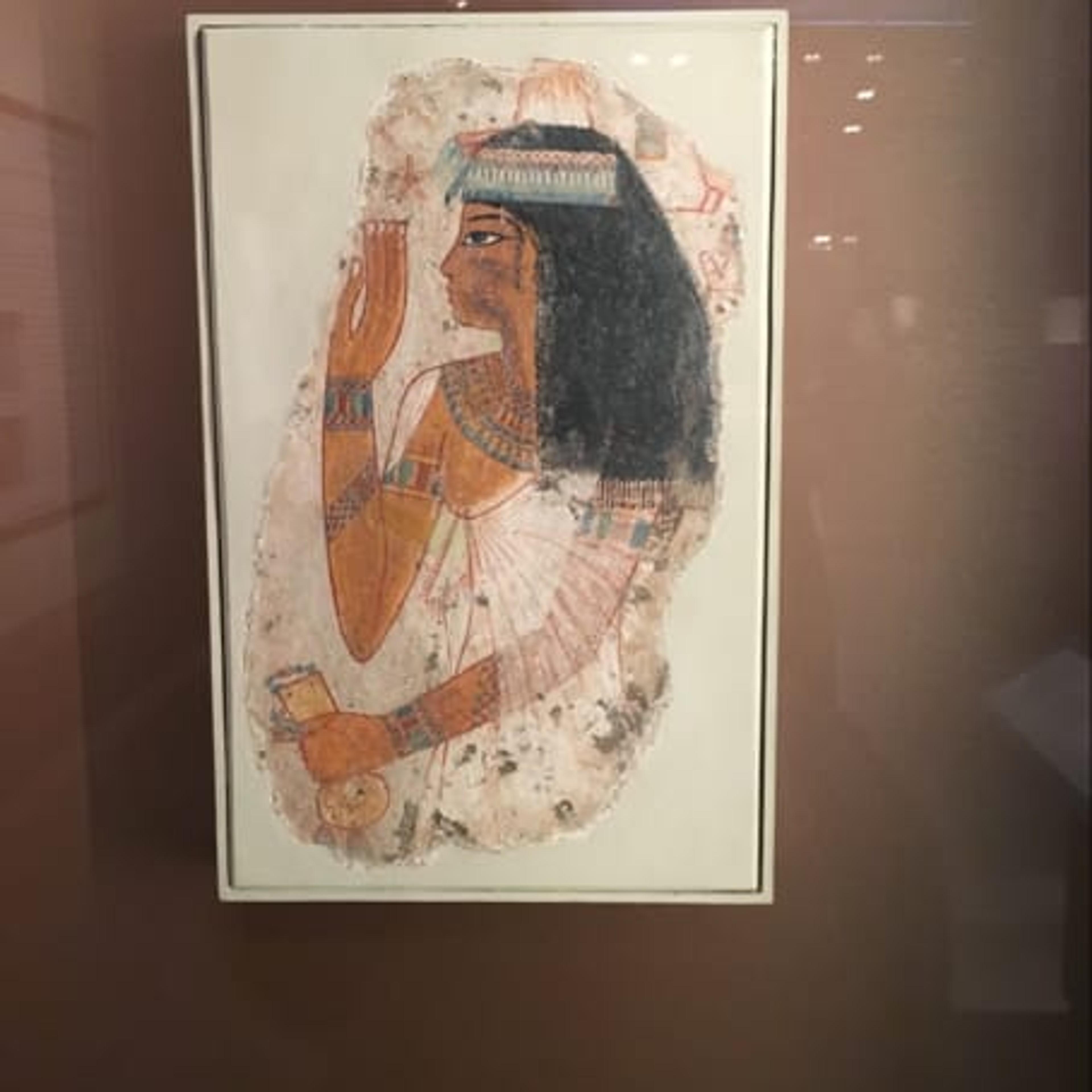
This brightly painted woman is named Tjepu. Capturing her as an idealized youth, the well-preserved and colorful fragment exemplifies the artist’s exquisite skills.
Tjepu, who held the title of Lady of the House, was the mother of a man called Nebamun. Nebamun was a sculptor, and he and another sculptor named Ipuky owned the famous tomb that once held this relief. Tjepu’s image was painted on white plaster that was applied to the tomb’s limestone walls.
Tjepu wears the typical fashion of elite women during the mid-Eighteenth Dynasty, including a sheer white dress, bracelets, armlets, necklaces, and a headpiece, crowned with a perfumed cone. She holds up one hand in adoration. In her other hand, she grasps a yellow menat, an amulet necklace that includes a counterpoise, a counterweight used to balance heavy collars. Menats were related to the goddess Hathor and were shaken to please the deity.
The full scene originally depicted Tjepu standing with Nebamun, who poured oil over food offerings for the gods. The pattern of stars above Tjepu’s hand was part of an inscription that praised many deities. With all these elements, the fragment reflects the height of artistic expression during this period.
Object Label
Tjepu was about forty years old when this painting was executed, but she is shown in what was the height of youthful fashion during the reign of Amunhotep III: a perfumed cone on her heavy wig, a delicate side tress, and a semitransparent, fringed linen dress.
Caption
Lady Tjepu, ca. 1390–1353 B.C.E.. Limestone, gesso, pigment, 14 13/16 x 9 7/16 in. (37.6 x 24 cm). Brooklyn Museum, Charles Edwin Wilbour Fund, 65.197. (Photo: Brooklyn Museum)
Tags
Title
Lady Tjepu
Date
ca. 1390–1353 B.C.E.
Dynasty
Dynasty 18
Period
New Kingdom
Geography
Place excavated: Thebes, Egypt
Medium
Limestone, gesso, pigment
Classification
Dimensions
14 13/16 x 9 7/16 in. (37.6 x 24 cm)
Credit Line
Charles Edwin Wilbour Fund
Accession Number
65.197
Frequent Art Questions
Why do Egyptian women wear wigs? Did they always wear them? Is this because they think human hair is not clean? Do they still wear wigs in Egypt? Thanks!
 Hair dressing was a very formal and ritualized process for both men and women in Egypt. Wigs were worn instead of natural hair by many people who may have also had different wigs for different occasions. The shaving of the head had a lot to do with preventing lice and flea infestations. I'm sure some modern Egyptians wear wigs too, but they're probably not like the ancient ones.
Can you tell me about her clothing?
This painting of a woman named Tjepu includes a great example of the kind of fine linen that is common in depictions of ancient Egyptian clothing.Women are often shown wearing tight-fitting, ankle length dresses made of white linen. Here, she also wears a translucent overgarment also of white linen. The lines you see in it represent pleats.In this painting of Tjepu, you also see a type of necklace called a wesekh or a broad collar, which was based on collars made of real flowers and therefore had important connotations of rebirth and regeneration.Can you tell me about his clothing?This wooden statue of a man named Sa-iset the Younger is another great example of elaborate pleating and here we have the opportunity to see it in three dimensions. This garment also would have been made of linen.
Have information?
Have information about an artwork? Contact us at