Colossal Left Foot
Roman


1 of 5
Object Label
This colossal left foot was intentionally made as just one body part. The foot with an elaborate sandal belongs to Serapis, a fusion of the Egyptian gods Osiris and Apis and various Hellenistic deities, including Zeus and Helios. Serapis enjoyed increasing popularity from Ptolemaic times, when Egypt was under Greek rule, and into the Roman period. His veneration quickly spread throughout the imperial territories, where objects like this were offered as votives, in gratitude for or anticipation of Serapis’s healing power. The serpent that winds around the leg can symbolize either Serapis or his consort Isis.
Caption
Roman. Colossal Left Foot, 1st–2nd century C.E.. Marble, 13 x 7 7/8 x 18 1/2 in. (33 x 20 x 47 cm). Brooklyn Museum, Robert B. Woodward Memorial Fund, 19.170. (Photo: Brooklyn Museum)
Gallery
Not on view
Gallery
Not on view
Frequent Art Questions
What size shoe is the Colossal Left Foot?
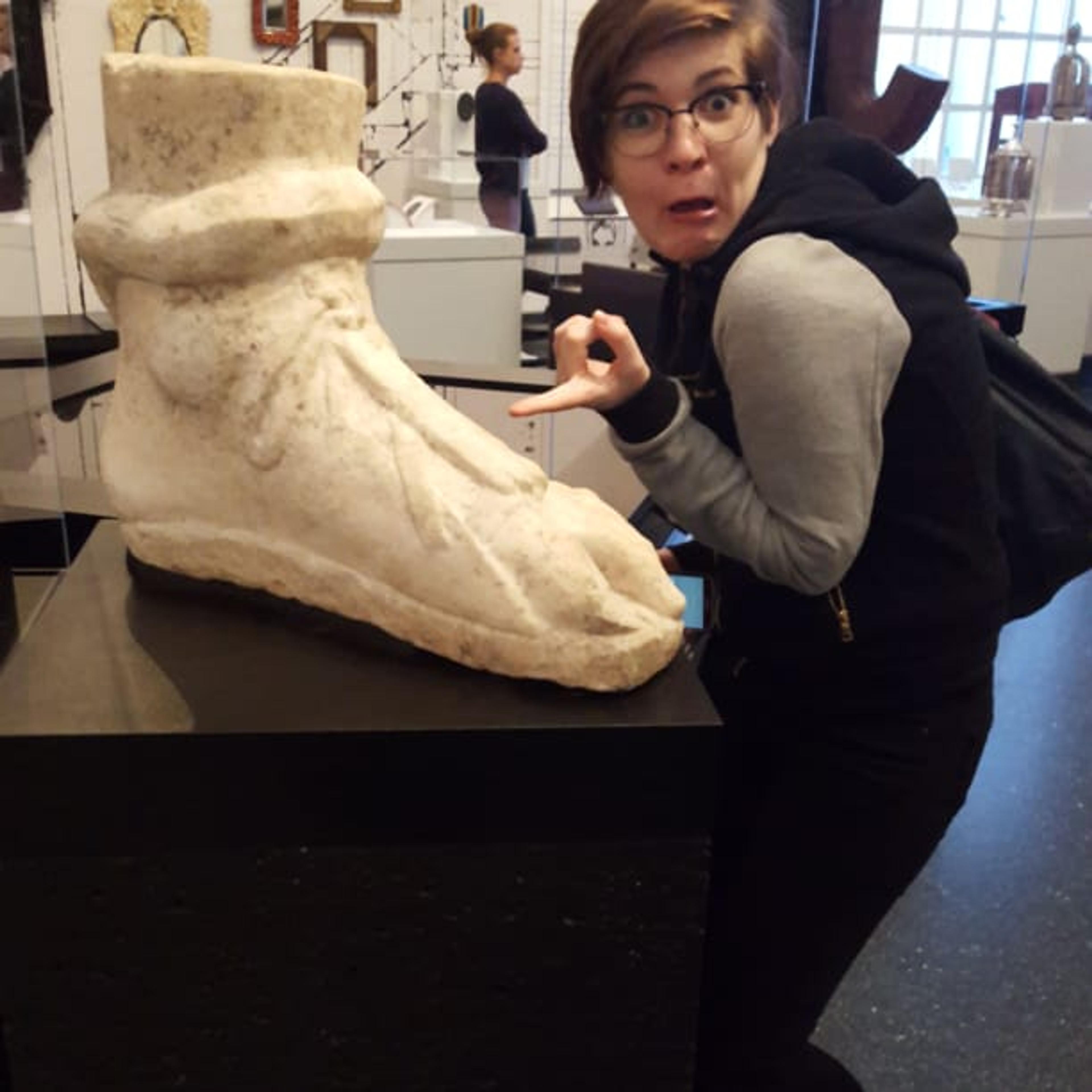 The foot is actually from Serapis, a hybrid of Zeus and Osiris, among other Greek and Egyptian deities! The Hellenistic period in Egypt was marked by a blending of Egyptian and Greek cultures, where as throughout other regions the culture became far more homogenized. This blending can be seen even in the titles the Greek Kings took the title Pharaoh.Start with a shoe joke and then some awesome facts about the Greco-Roman cultural exchange!
How can a foot represent strength when there is such a thing as an Achilles Heel?
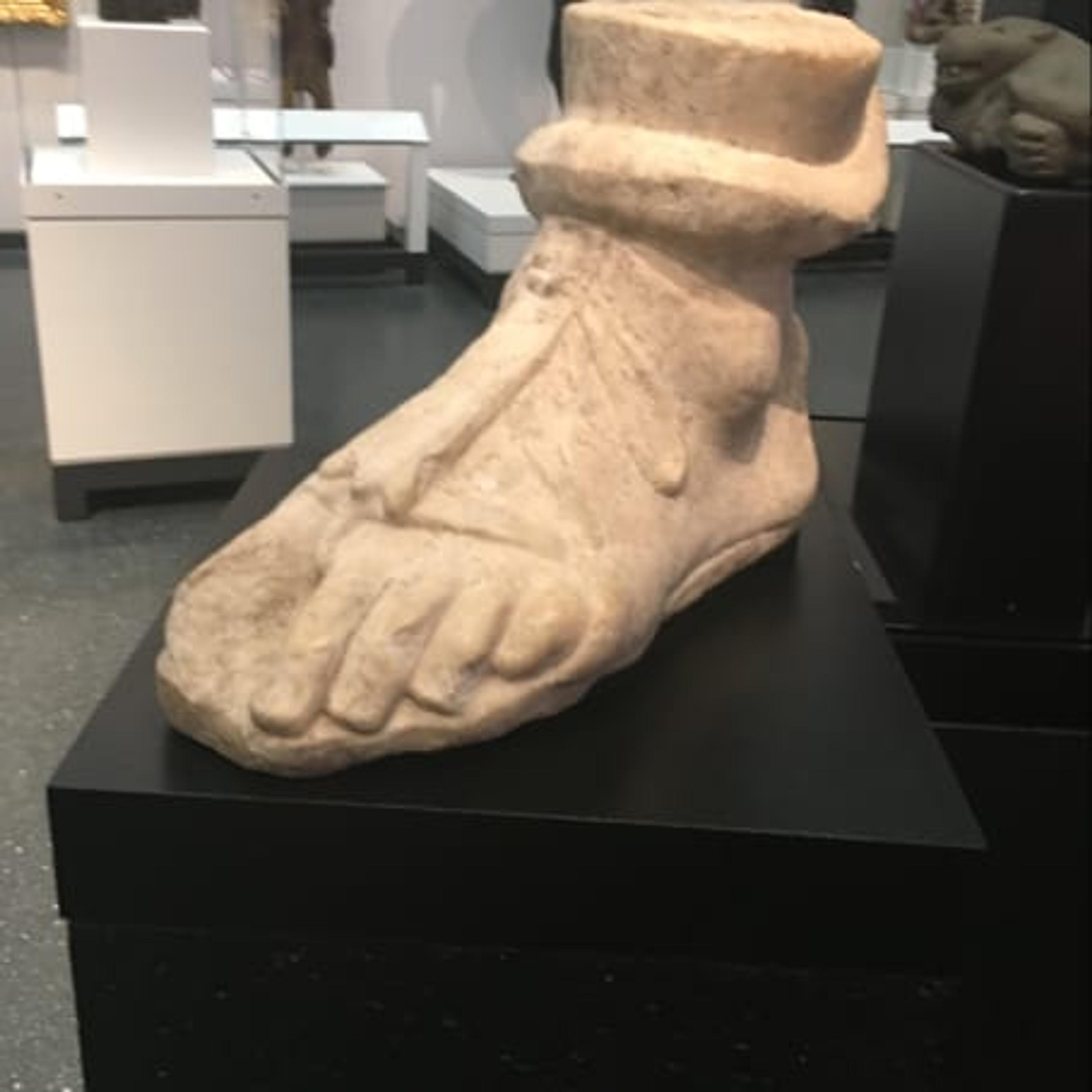 In the case of this particular foot, it is associated with the god Serapis (identified by the style of the sandal) who would not have been understood as having the same weakness(es) as Achilles. Serapis was a composite deity based largely on the Greek Zeus and the Egyptian Amun as well as the Egyptian Osiris and incorporated elements of other Egyptian and Greco-Roman deities. The Mediterranean was an incredible melting pot as the Empires got larger and larger.
Whose foot is this?
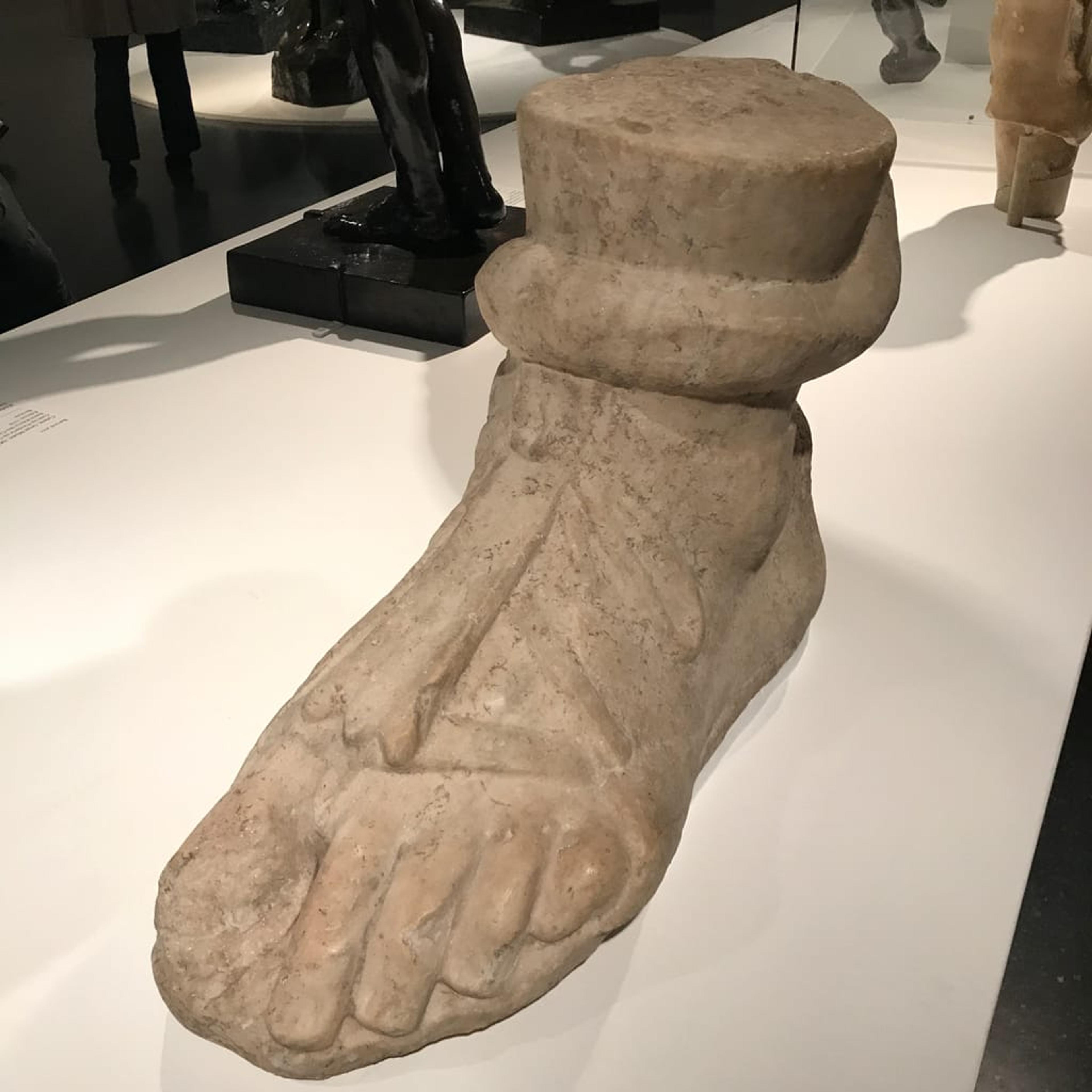 The foot belongs to Serapis, a fusion of the Egyptian gods Osiris and Apis and various Hellenistic deities, namely Zeus and Helios. This colossal left foot was intentionally made as just one body part; it's not a fragment of a larger sculpture.Rodin collected and surrounded himself with ancient artifacts like these, which I'm sure you can see reflected in his studies of disembodied heads and hands.He found symbolic and aesthetic inspiration in ancient sculptures that were missing arms or heads. He especially appreciated them as self-sufficient forms that did not require a narrative or context to be expressive.
Have information?
Have information about an artwork? Contact us at