Irukaptah and his Family


1 of 10
Object Label
Family statues from the Old Kingdom often depict the adult male as the largest figure, indicating his position as head of the household. Here, the much smaller figure of the woman is shown kneeling and embracing her husband’s leg in a conventional Egyptian gesture of love and support. The couple’s son is depicted naked with his hair in a sidelock and a finger to his mouth—a standard way of indicating that he is a young child.
Caption
Irukaptah and his Family, ca. 2455–2425 B.C.E.. Limestone, pigment, 29 × 10 × 9 1/2 in., 60 lb. (73.7 × 25.4 × 24.1 cm, 27.22kg). Brooklyn Museum, Charles Edwin Wilbour Fund, 37.17E.
Title
Irukaptah and his Family
Date
ca. 2455–2425 B.C.E.
Dynasty
Dynasty 5
Period
Old Kingdom
Geography
Reportedly from: Saqqara, Egypt
Medium
Limestone, pigment
Classification
Dimensions
29 × 10 × 9 1/2 in., 60 lb. (73.7 × 25.4 × 24.1 cm, 27.22kg)
Credit Line
Charles Edwin Wilbour Fund
Accession Number
37.17E
Frequent Art Questions
Is the size and posture of the son versus the mother a sign of position in the family?
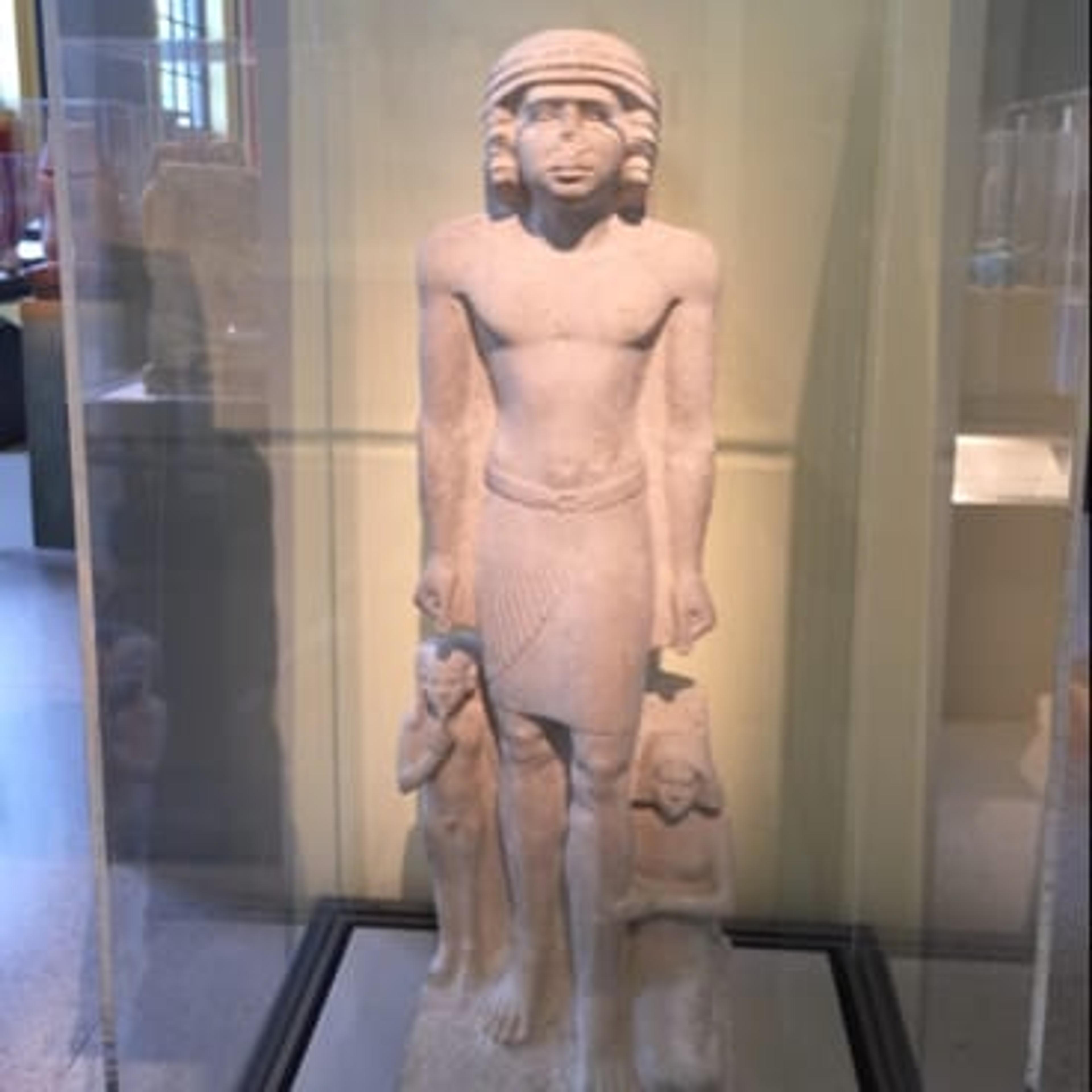 In this case, the two smaller figures are equally important, and the purpose in this grouping is to emphasize the larger central figure because it is really a sculpture of him. The smaller figures are there because they are important to his life. Here we see the wife kneeling and clasping the husband's leg as an Egyptian gesture of love and support. The way the son is depicted, nude and holding a finger to his mouth, along with his hair style, is a common way for the ancient Egyptians to indicate a child in sculpture.
What does the head piece that the male is wearing symbolize?
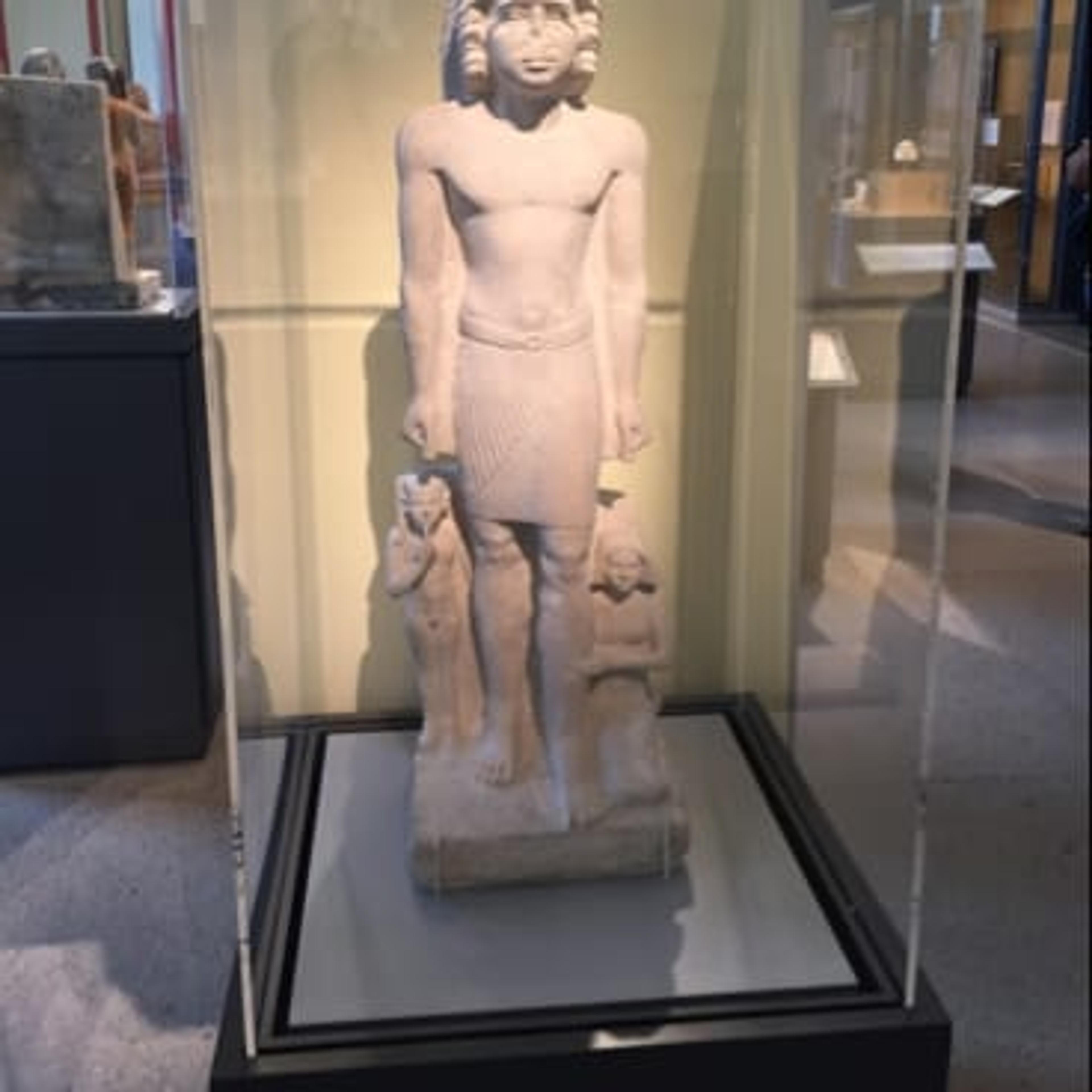 He is wearing a wig, which was common for men in ancient Egypt. Many people kept their heads shaved and wore wigs made of human hair and/or animal hair. In that hot climate, it was more comfortable to have a shaved head and the option of removing the wig.Also, why does the sidelock and finger in the mouth indicate a young child?The gesture of the child is often used for children, we think that's so because it's something that children naturally do.Is it common for the woman to hold onto the mans leg in these times?Not always but it's an interesting detail, right? This gesture was common in Old Kingdom family group statues. The label mentions that gesture as one of love and support. However, there are other works in the galleries that show the woman and the man on a more equal scale . You'll even see one sculpture, in the central gallery, where the husband and wife sit side by side with their arms around each others' shoulders.
Have information?
Have information about an artwork? Contact us at