Raised Relief of a Goddess or Queen
ca. 45–41 B.C.E.
1 of 4
Object Label
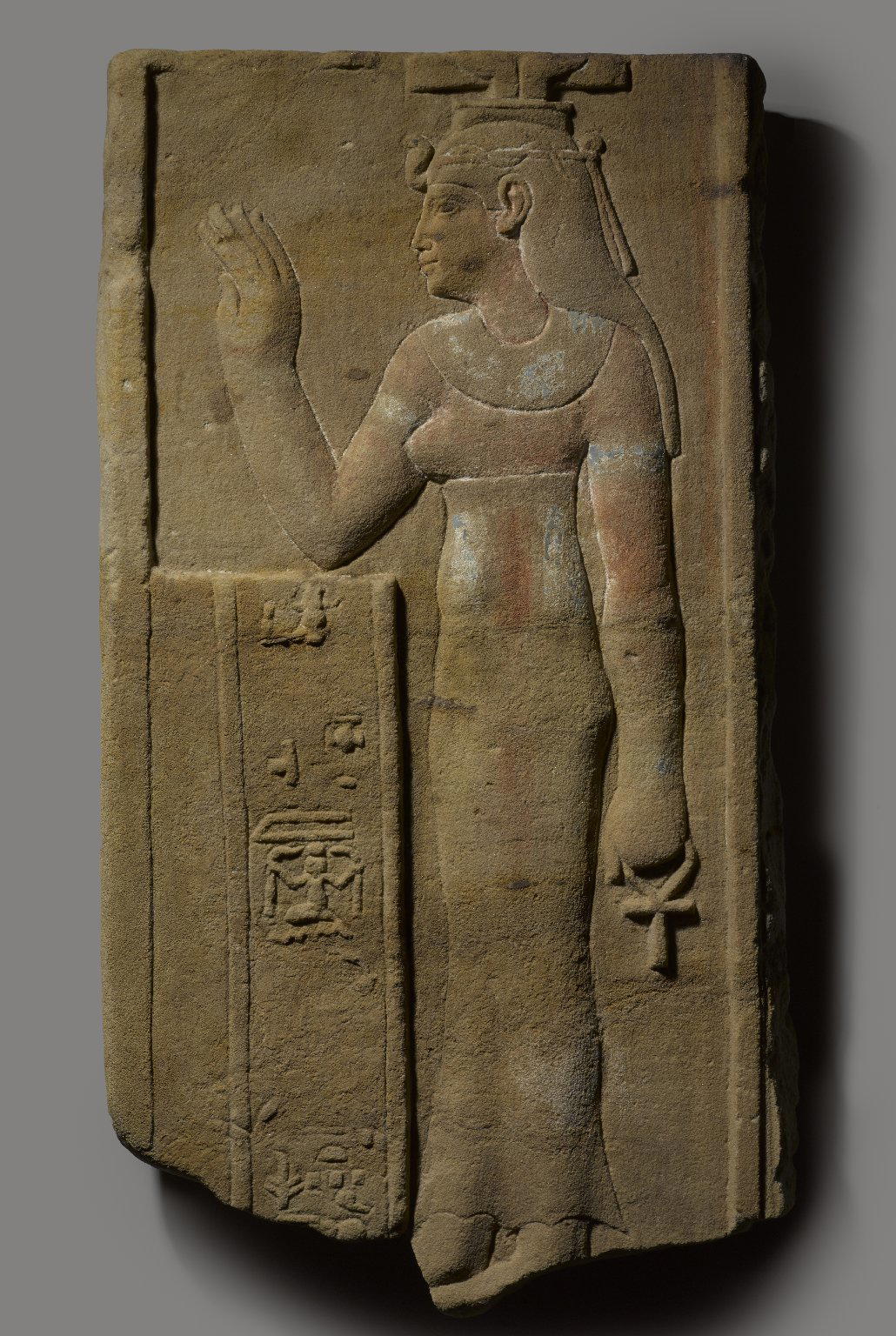
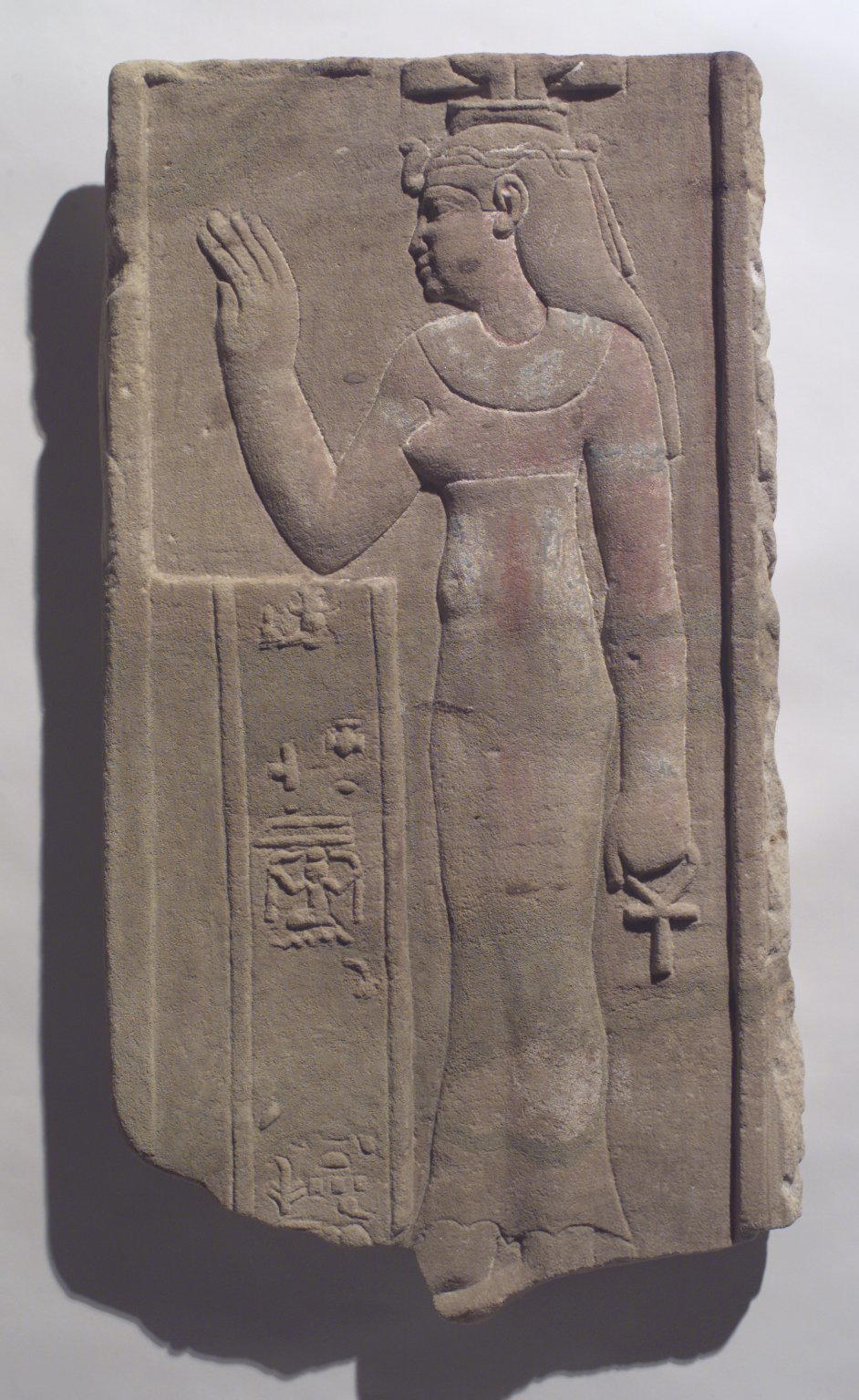
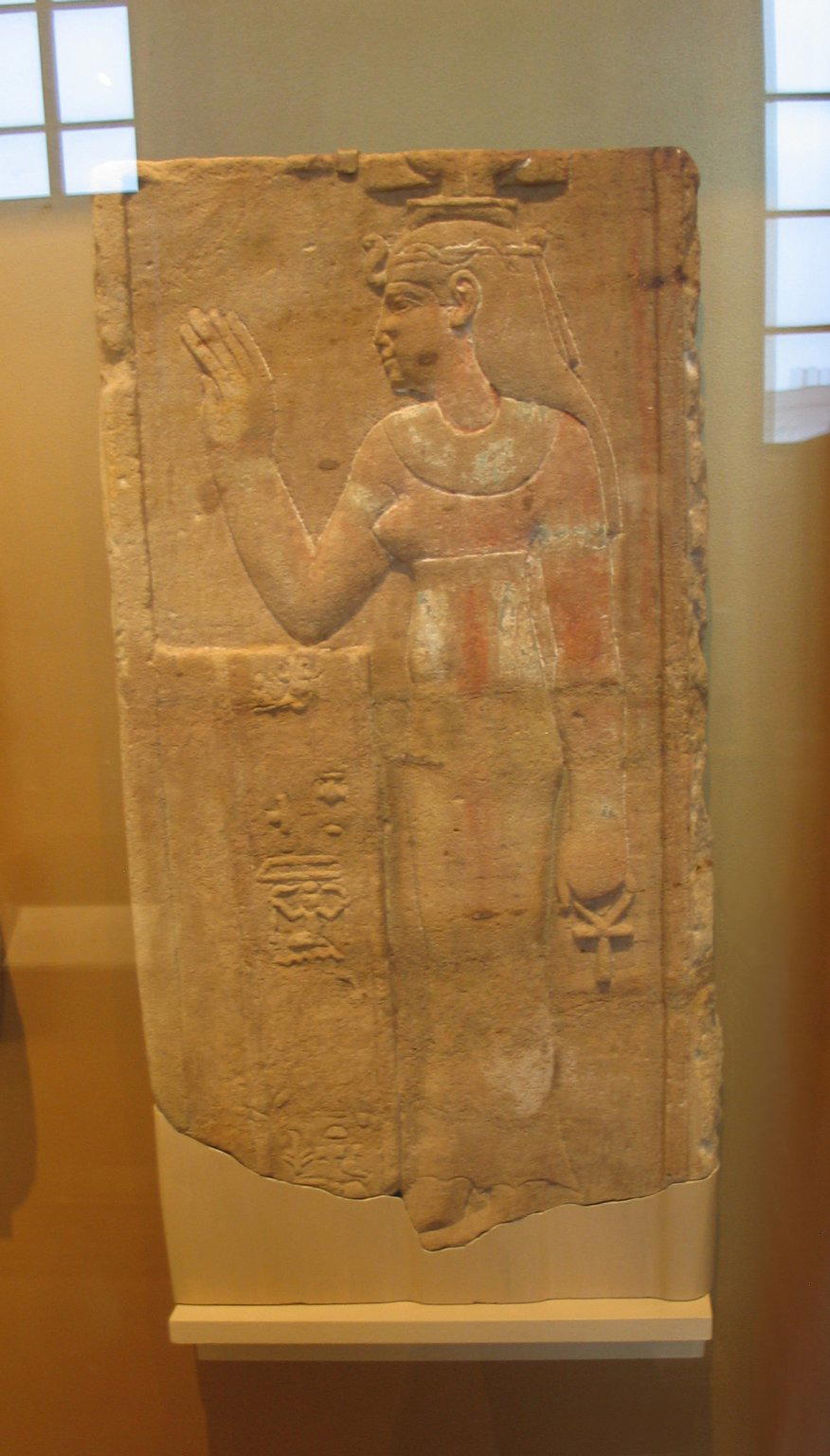
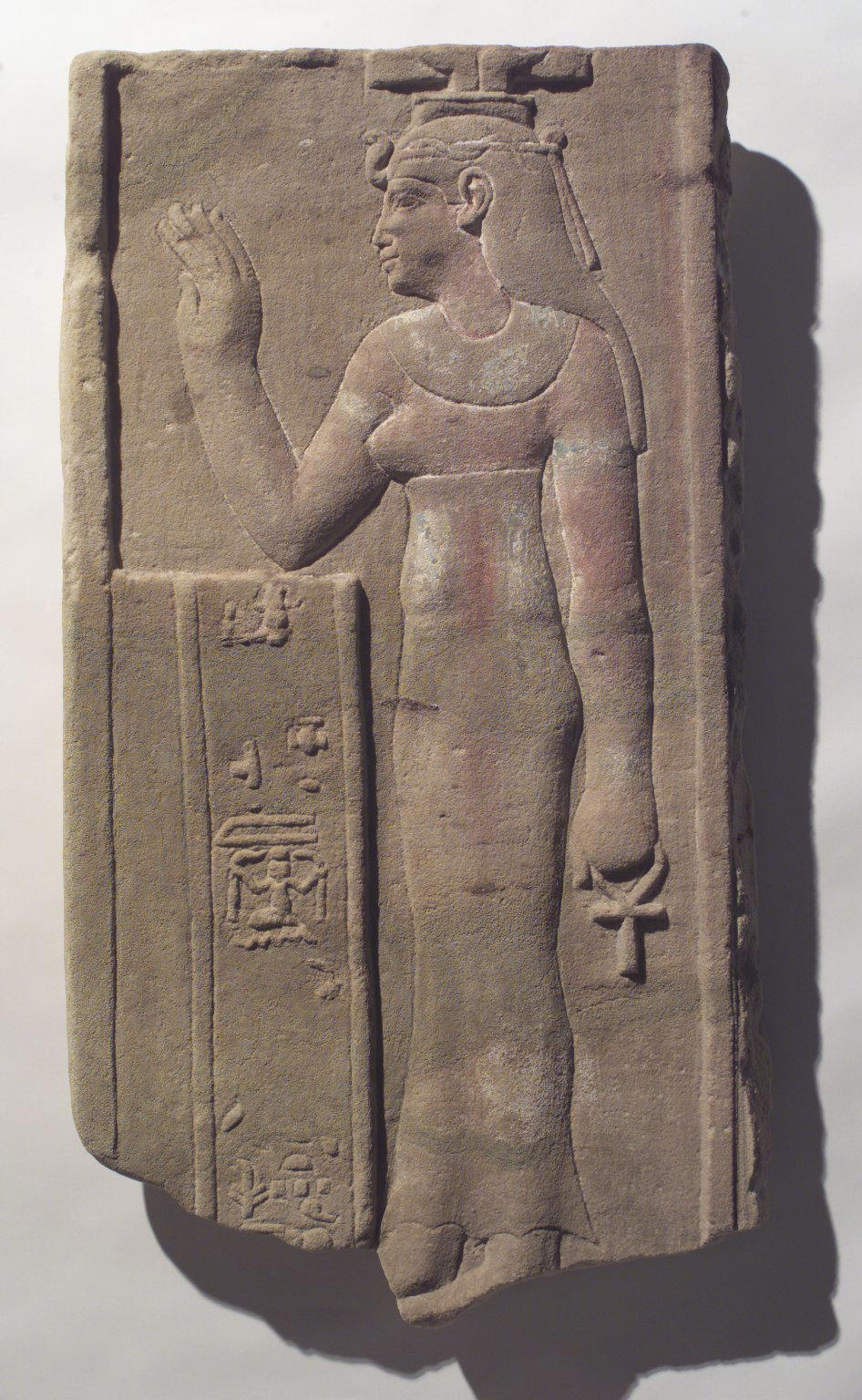
This work’s style of high, rounded relief and soft bodily proportions is characteristic of Ptolemaic art. The base of a crown is visible on the figure’s head along with a cobra at her forehead. She wears a long hairstyle and a dress that ends in a scalloped hem. One hand is raised, perhaps in worship of a divinity. The other hand holds the ankh-sign, the hieroglyph meaning “life.” The headgear, clothing, and hand gestures could characterize either a queen or a goddess. Since Ptolemaic queens were sometimes considered deities, this relief could represent both.
Caption
Raised Relief of a Goddess or Queen, ca. 45–41 B.C.E.. Sandstone, pigment, 29 x 15 3/4 x 2 3/4in. (73.7 x 40 x 7cm). Brooklyn Museum, Charles Edwin Wilbour Fund, 1989.159. (Photo: Brooklyn Museum)
Frequent Art Questions
Is there any reason the arms and hands are so large in this piece?
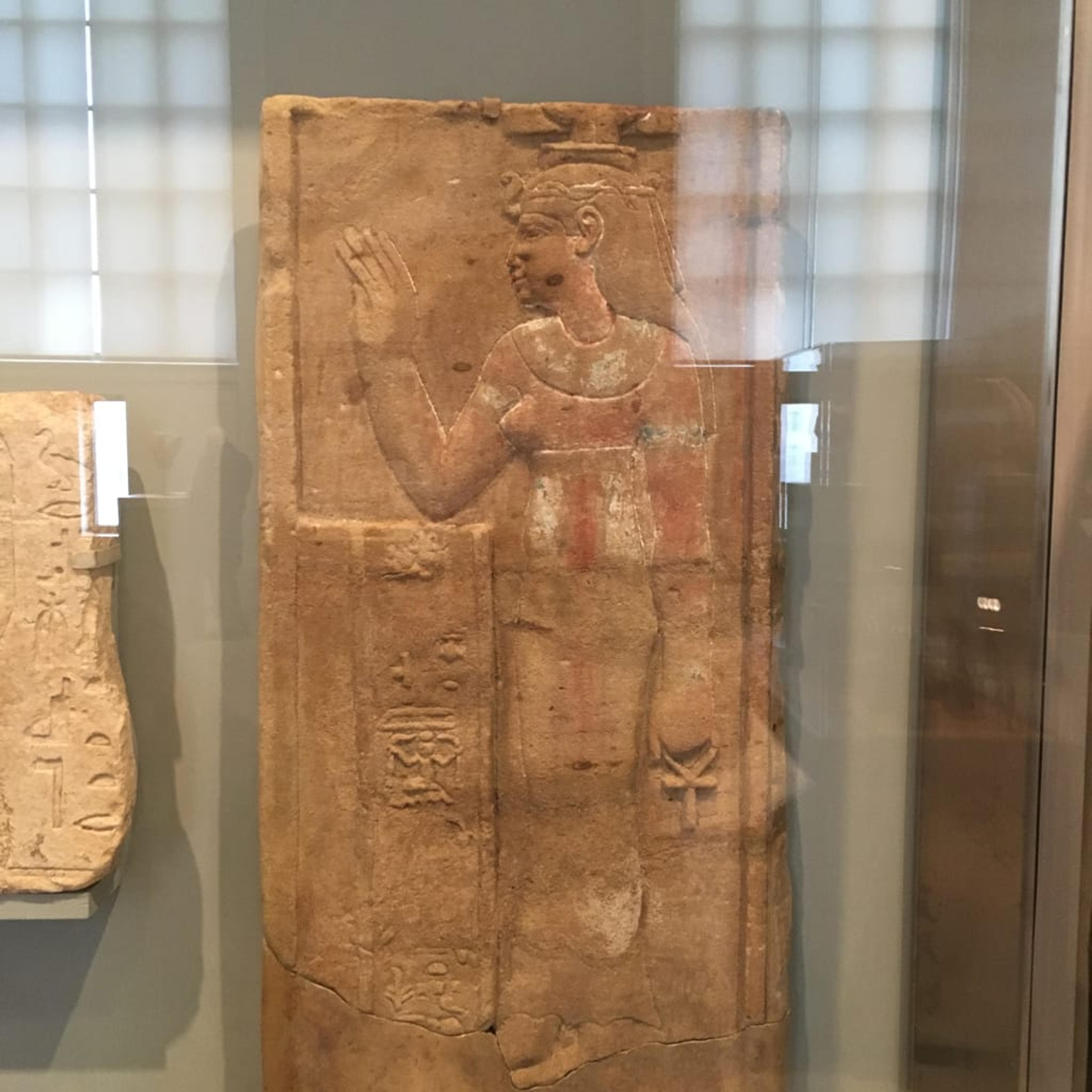 These proportions were common in reliefs carved during this time period, the Ptolemaic period. Facial features and body types in ancient Egyptian art changed like fashion trends over time.Thanks!
Have information?
Have information about an artwork? Contact us at