Head of Sorrow (Tête de la Douleur)

Brooklyn Museum photograph
Caption
Auguste Rodin (French, 1840–1917). Head of Sorrow (Tête de la Douleur), ca. 1882, enlarged ca. 1901–1902; cast before 1952. Bronze, 9 x 9 1/4 x 10 1/2 in. (22.9 x 23.5 x 26.7 cm). Brooklyn Museum, Gift of the Iris and B. Gerald Cantor Foundation, 86.87.3. (Photo: Brooklyn Museum)
Gallery
Not on view
Gallery
Not on view
Artist
Cast by
Title
Head of Sorrow (Tête de la Douleur)
Date
ca. 1882, enlarged ca. 1901–1902; cast before 1952
Geography
Place made: France
Medium
Bronze
Classification
Dimensions
9 x 9 1/4 x 10 1/2 in. (22.9 x 23.5 x 26.7 cm)
Signatures
Proper left neck: "A. Rodin" Cachet on interior, same placement as exterior signature: "A. Rodin"
Markings
Lower back edge: ".ALEXIS.RUDIER./FONDEUR. PARIS."
Credit Line
Gift of the Iris and B. Gerald Cantor Foundation
Accession Number
86.87.3
Frequent Art Questions
Tell me more.
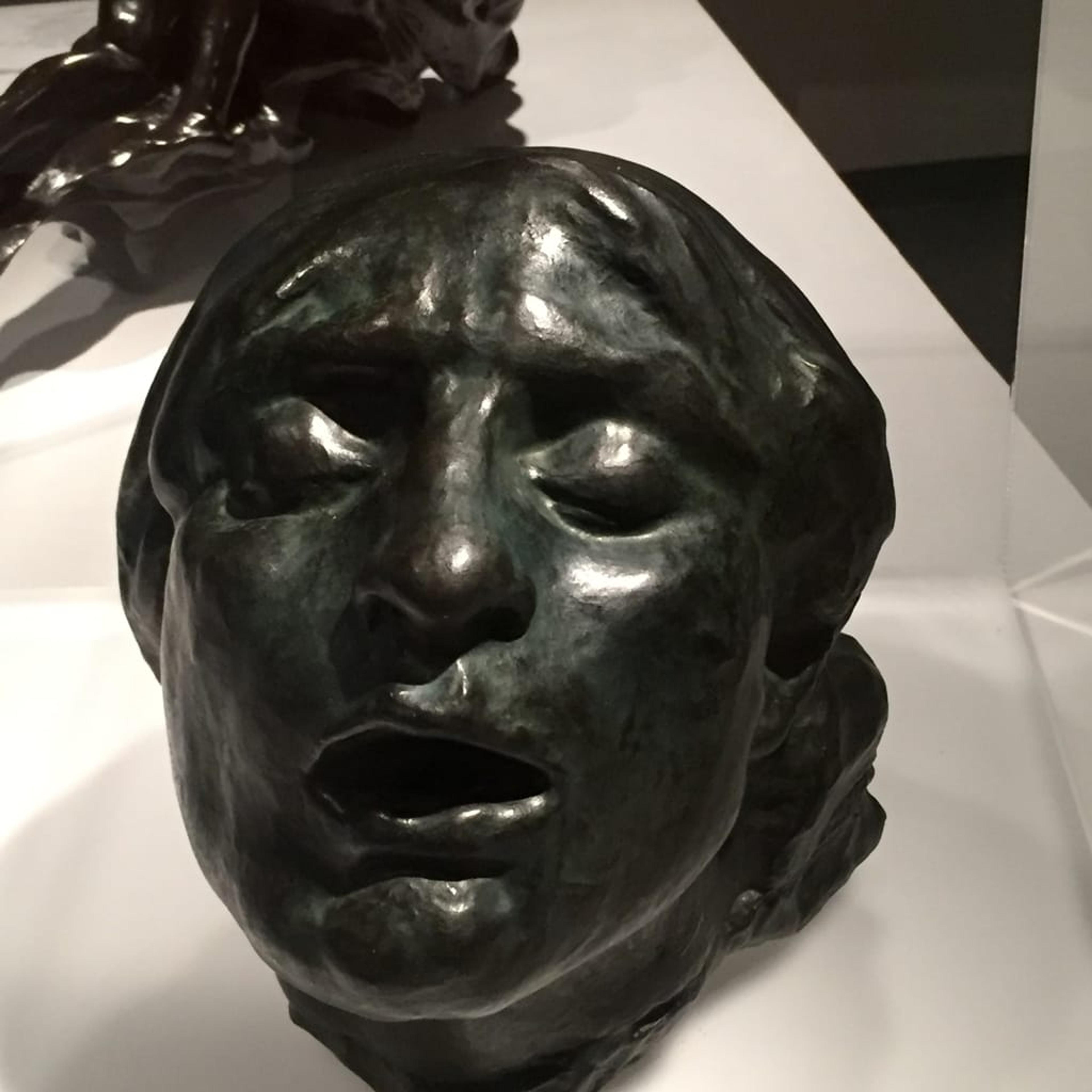 This is the Head of Sorrow, which appeared four times in Rodin's conception of The Gates of Hell, an ambitious commission that was never completed as the funding fell through.Rodin reused and recycled various fragments and figures from the commission for individual pieces after the project fell through and the Head of Sorrow was one of the most often recycled body fragments.Because the head is androgynous, Rodin could use it for both male and female figures. This method, derived from the industrial concept of interchangeability, also aligned with Rodin's conviction that art is transformable, always alive, and never finished.Thank you so much for this!
Have information?
Have information about an artwork? Contact us at