Skip main navigation
The Brooklyn Museum

1stfans: a socially networked museum membership


Would you like to give a 1stfans gift Membership?

Powered by Wufoo

1stfans introduction

1stfans: read Will Cary's introduction to 1stfans

1stfans video

see all 1stfans videos

1stfans blog

Survey and changes after the first year of 1stfans Going into our second year of 1stfans, Shelley and I wanted to do a survey to see how members felt about the first year of the program. We knew that read more...

Survey and changes after the first year of 1stfans

Will Cary on February 4, 2010
1stfans.jpg

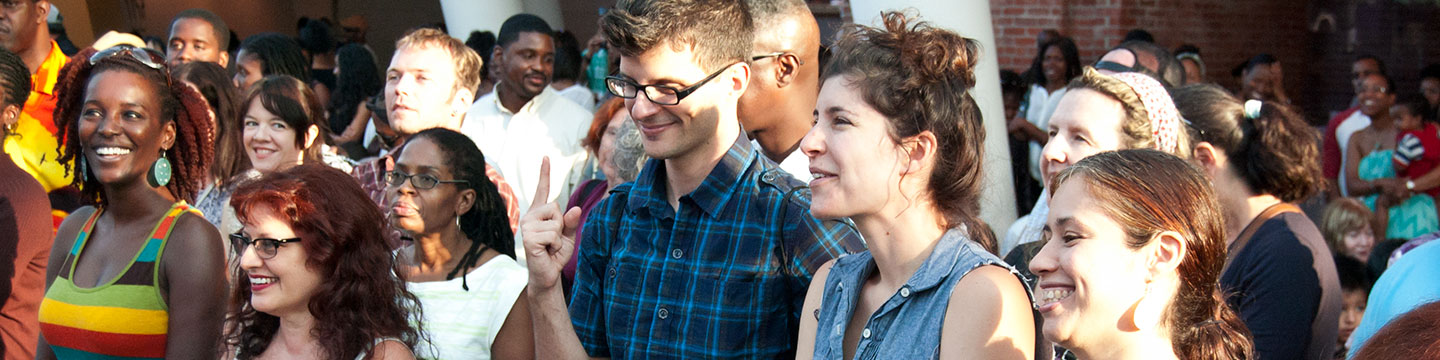
Going into our second year of 1stfans, Shelley and I wanted to do a survey to see how members felt about the first year of the program. We knew that we'd hear a variety of responses based on how people used their membership, but we were determined to see if we could identify any trends that we could use to make changes to the program. Below are a few things we learned from the 35 folks that responded to the open-ended survey we sent a couple weeks ago, as well as two changes that we're definitely going to make for year two of 1stfans.

Concept

The most positive thing we heard from the survey was that people enjoy 1stfans as an idea. Whether that sentiment followed several sentences about taking part in the meetups and interacting online, or whether it came as a consolation. Erin from Texas wrote, "I don't know how useful my feedback will be - since I became a member primarily because I think what you're doing rocks - and not because I expected to take advantage of the benefits (as I live more than 1000 miles from the Museum)."

It seems like many 1stfans joined to demonstrate their gratitude that a Museum had created a membership program that was catered to how they interact with museums today. On the other end of the geographic spectrum, one local wrote, "Already a museum member, I joined 1stfans because I love that my local art institution is so forward thinking about the concept of a virtual membership and I have definitely gotten my $20 worth." One person who wasn't entirely pleased with their experience wrote, "I don't think I've gotten what I thought I would out of my $20 membership fee so far, although I'm not so sure exactly what I was expecting.  I am glad to support the museum nonetheless."

Meetups

We heard a variety of feedback about our meetups at Target First Saturday. Most enjoyed them, although some thought they were too early in the evening, while others thought they were just the right time and length to allow them to participate in the other events. For those that came regularly, the in-person aspect of the membership is what they appreciated, not the online benefits. Mike wrote, "While I never made use of the electronic networking opportunities (blogs, twitter, facebook, etc.), I enjoyed interacting with others at the events and thought that the event composition was great. It was fun to hear about both the creative and technical aspects of art and the museum."

The "action item" that came out of the feedback from the meetups concerned bringing guests. Most didn't come alone, and felt bad making their friends sign up for 1stfans if they knew they probably wouldn't be back to First Saturday anytime soon. Chris brought up a good point, writing, "...if each member can bring a guest to a 1st Fans Meetup, then you would have an excellent chance of dramatically increasing your membership, since it's hard to get a good idea of what 1st Fans Meetups are all about without actually attending one." So from now on, we'll allow one guest to attend 1stfans meetups at select First Saturday events. We'll announce in the invite whether guests will be allowed.

Communication

We found that communication was something a lot of people talked about. That makes sense intuitively, given that communication in 1stfans is a la carte and based on how many of the social networks you are on. If you're on facebook, twitter, and flickr frequently, you'll probably get most of what we put out there. Three folks mentioned the Twitter Art Feed as being confusing or out of context. One person wrote, "I've had a hard time getting regular twitter updates. It seems like I'm always missing them and forget to check back, so I don't always catch them." Another wrote, "Because I am an on again off again twitter user, I would love an email every time there is a new artist with a short bio and a description of the project to remind me to check my twitter." Most people recognize that they won't love every Twitter Art Feed project, but it's still our responsibility to ensure that the word gets out.

Since we also heard from a couple folks about receiving emails (in addition to facebook, flickr, and twitter invites), the other big thing we're going to work on in year two of 1stfans is putting together some sort of short newsletter so everyone can have a consolidated version of what is happening coming directly to them in one place. That should help out those who think we aren't communicating as well as we could be, and it also won't add a lot more work on our end. By increasing our level of communication with 1stfan members and allowing them to give their friends some access to 1stfans programming, we're hoping to increase 1stfans participation and awareness of what's going on, as well as and expose 1stfans as a concept to a wider audience.

We've always said that 1stfans is about growing a relationship with the Museum, and we're determined to have 1stfans play just as large a role in shaping the future of the program. We're grateful to everyone who responded to the survey, and we're happy to take any more feedback either in the comments or below or by e-mailing me directly.

go to the original blog post...

close

The First Harvest in the Wilderness Valerie Hegarty's evocation of Asher B. Durand's 1855 painting The First Harvest in the Wilderness in her benefit print for the 1stfans program adds another chapter to the painting's already read more...

The First Harvest in the Wilderness

Karen Sherry on February 3, 2010

Valerie Hegarty's evocation of Asher B. Durand's 1855 painting The First Harvest in the Wilderness in her benefit print for the 1stfans program adds another chapter to the painting's already illustrious history.  Its story begins in 1855, when the Brooklyn Institute—the predecessor to the Brooklyn Museum—commissioned a work from Durand to add to its newly conceived Gallery of Fine Arts.  The money for this painting, as well as the idea for a permanent gallery, came from the late Augustus Graham (1775-1851).  A prominent local businessman and philanthropist, Graham had been actively involved in charitable institutions devoted to the edification of Brooklyn's citizenry, including the Institute (established 1843) and its forerunner, the Apprentices' Library Association (founded 1824).  Upon his death in 1851, he bequeathed a large sum to the Brooklyn Institute with the stipulation that a portion of the money be used for the purchase of art by living American artists for the Institute's picture gallery.  This stipulation was progressive and prescient at a time when few civic institutions had art collections and many patrons viewed American art as inferior to European art.

97.12_reference_SL1.jpg

Asher B. Durand (American, 1796-1886). The First Harvest in the Wilderness, 1855. Oil on canvas, 31 5/8 x 48 1/16 in. (80.3 x 122 cm) Frame: 43 1/2 x 59 1/2 x 4 3/4 in. (110.5 x 151.1 x 12.1 cm). Brooklyn Museum, Transferred from the Brooklyn Institute of Arts and Sciences to the Brooklyn Museum, 97.12

For its inaugural purchase with the Graham bequest, the Brooklyn Institute sought out one of the nation's leading artists Asher B. Durand (1796-1886).  At this time, Durand was the dean of American landscape painters known as the Hudson River School and president of the National Academy of Design in New York.  As a sign of support for the Institute, he agreed to accept the Brooklyn commission for $175, a sum far smaller than his usual asking price. 

At first glance, The First Harvest in the Wilderness, which was hanging on the Institute's walls by September of 1856, is an allegory of the nineteenth-century concept of Manifest Destiny.  This belief held that the United States was destined to expand across the entire continent.  (Many Americans viewed westward expansion as the inevitable progress of a divinely favored and culturally superior nation, although it resulted in the exploitation of natural resources and the often violent subjugation of native peoples.)  Durand's picture depicts the softer side of Manifest Destiny in the form of a pioneer family domesticating the frontier through settlement and agriculture.  We see their homestead in the center of the painting in the midst of a rugged landscape of forests and mountains-the bright light that shines upon this clearing not only draws the viewer's attention to the homestead, but also symbolizes divine approbation.  While a man harvests a field of wheat (dotted with the stumps of trees he has felled), his wife stands before their snug log cabin (built from felled trees) and cows and horses graze in their pens.  Durand suggests that the pioneers enjoy the fruits of their labor-an idyllic and bountiful existence on the frontier full of promise of future rewards.

97.12_detail.png

Asher B. Durand (American, 1796-1886). The First Harvest in the Wilderness (detail), 1855. Oil on canvas, 31 5/8 x 48 1/16 in. (80.3 x 122 cm) Frame: 43 1/2 x 59 1/2 x 4 3/4 in. (110.5 x 151.1 x 12.1 cm). Brooklyn Museum, Transferred from the Brooklyn Institute of Arts and Sciences to the Brooklyn Museum, 97.12

A closer examination of The First Harvest in the Wilderness reveals that this vision of national progress also had particular, local significance for Brooklyn.  The large rock in the right foreground of the painting is inscribed with the name "GRAHAM," a clear reference to Augustus Graham, the Brooklyn Institute's benefactor whose bequest funded this commission. This rock serves as a rustic gravestone memorializing the man.  In addition, its prominence in the composition symbolizes Graham's important role in advancing civilized pursuits in another kind of wilderness-the American art scene.  One reporter for the art journal The Crayon was quick to pick up on the painting's analogy between progress on the frontier and progress in the arts.  He wrote:

The sentiment of the picture is also in keeping with the circumstances belonging to its production.  The field of Art is, in the country, but just emerging into the reality of a clearing, upon which the sun of encouragement does shine, if it gleams from clouds and is surrounded by shadows.  As an illustration, Mr. Graham may be considered the pioneer in the wilderness, and all honor be to his memory for being the first to make a clearing.[1]

In other words, just as the settler transforms the inhospitable frontier into farmland, so too did Augustus Graham cultivate the arts in the cultural fields of America.  Although Graham's vision for the Brooklyn Institute took decades to accomplish-shifting administrative priorities and declining financial fortunes hampered the plans for a permanent gallery in the nineteenth century-his support helped to make American art one of the finest and foundational collections of the Brooklyn Museum.

Pillated_Hegarty_20x200.jpg

Valerie Hegarty. First Harvest in the Wilderness with Pileated Woodpecker, 2010. 10 x 8 in., ed. of 200. © Valerie Hegarty. Image courtesy of the artist and 20×200 | Jen Bekman Projects

Given Graham's commitment to living American artists, it seems only fitting that Valerie Hegarty, an American artist of today, pays tribute to Durand's The First Harvest in the Wilderness—the first painting funded by the Graham bequest.


[1] "Domestic Art Gossip," The Crayon 3, no. 1 (January 1856): 30.


go to the original blog post...

close

read all 1stfans blog posts

1stfans meetups

see all 1stfans meetups

1stfans in your community

Twitter Facebook Flickr

1stfans twitter art feed open call

Submit a proposal for the 1stfans Twitter Art Feed