The Great Triumphal Chariot of the Emperor Maximilian I
Albrecht Dürer

1 of 10
Object Label
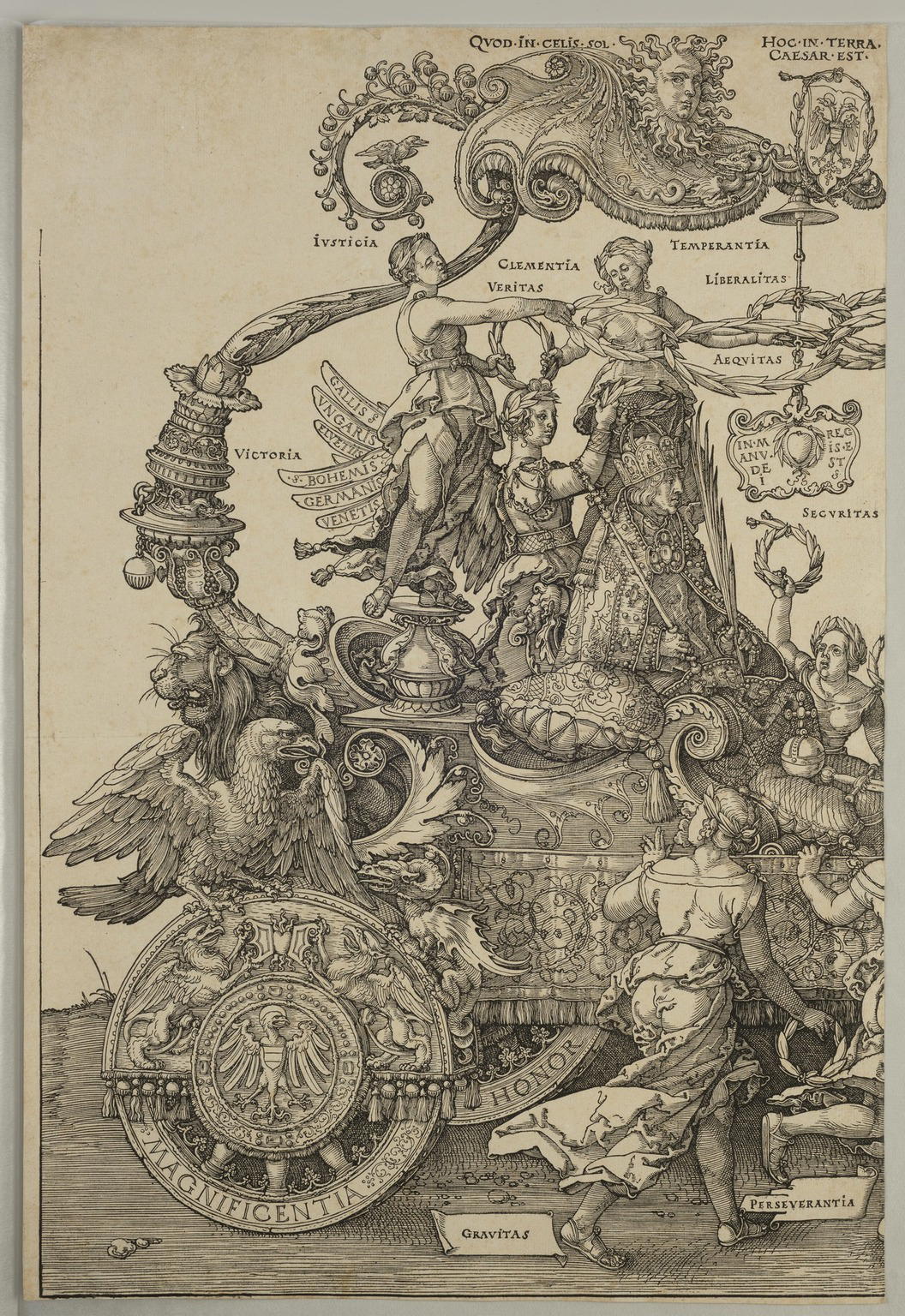
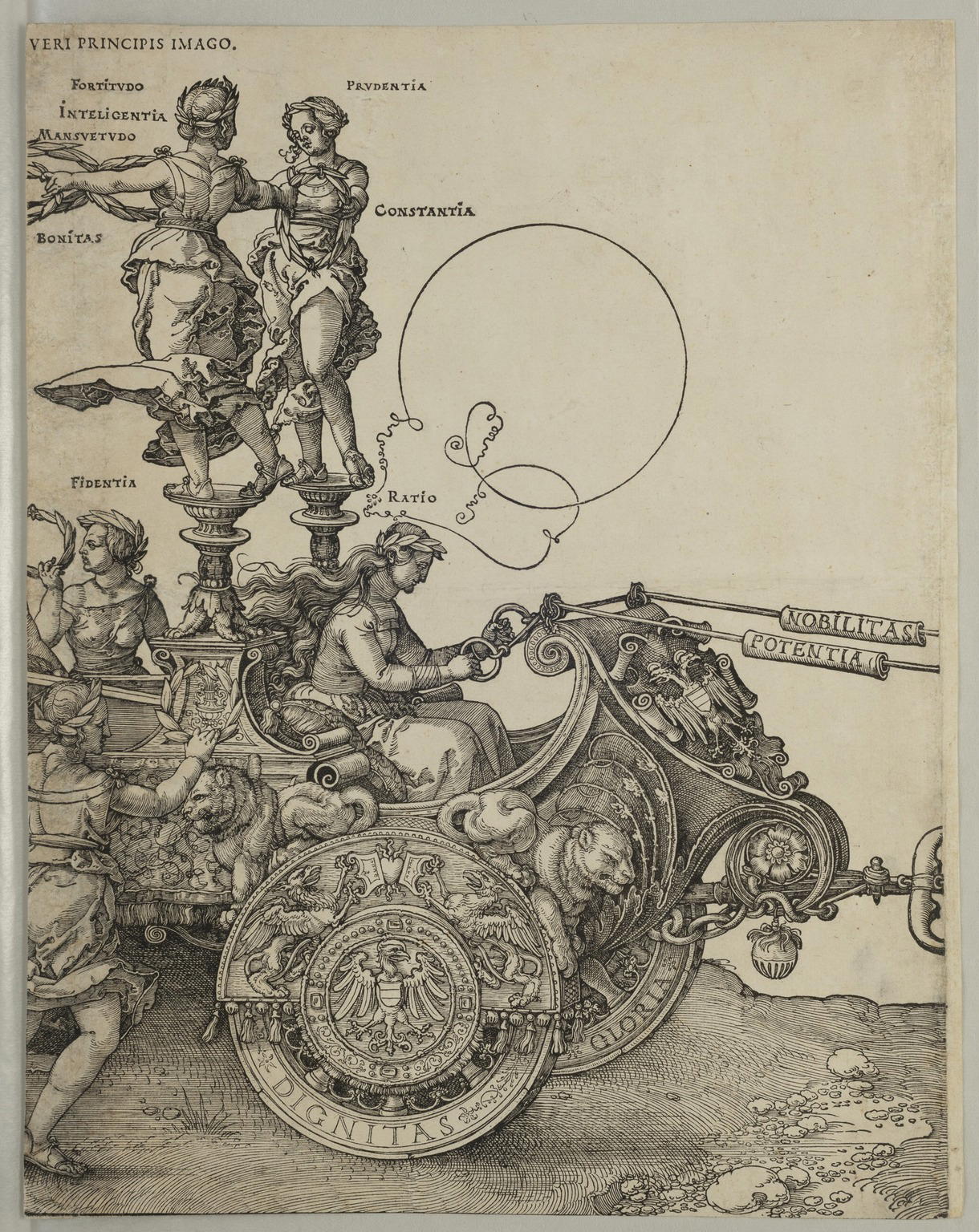
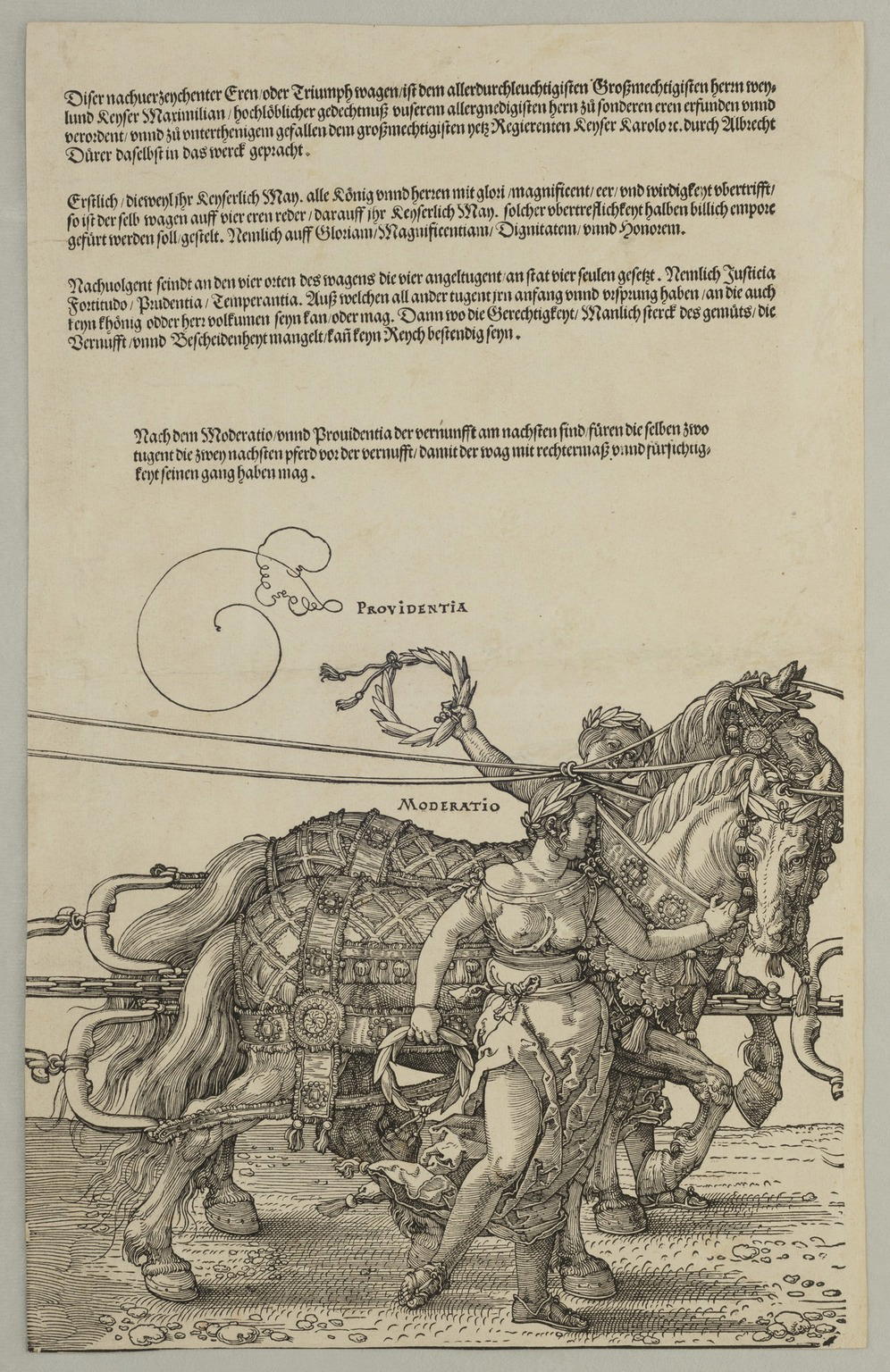
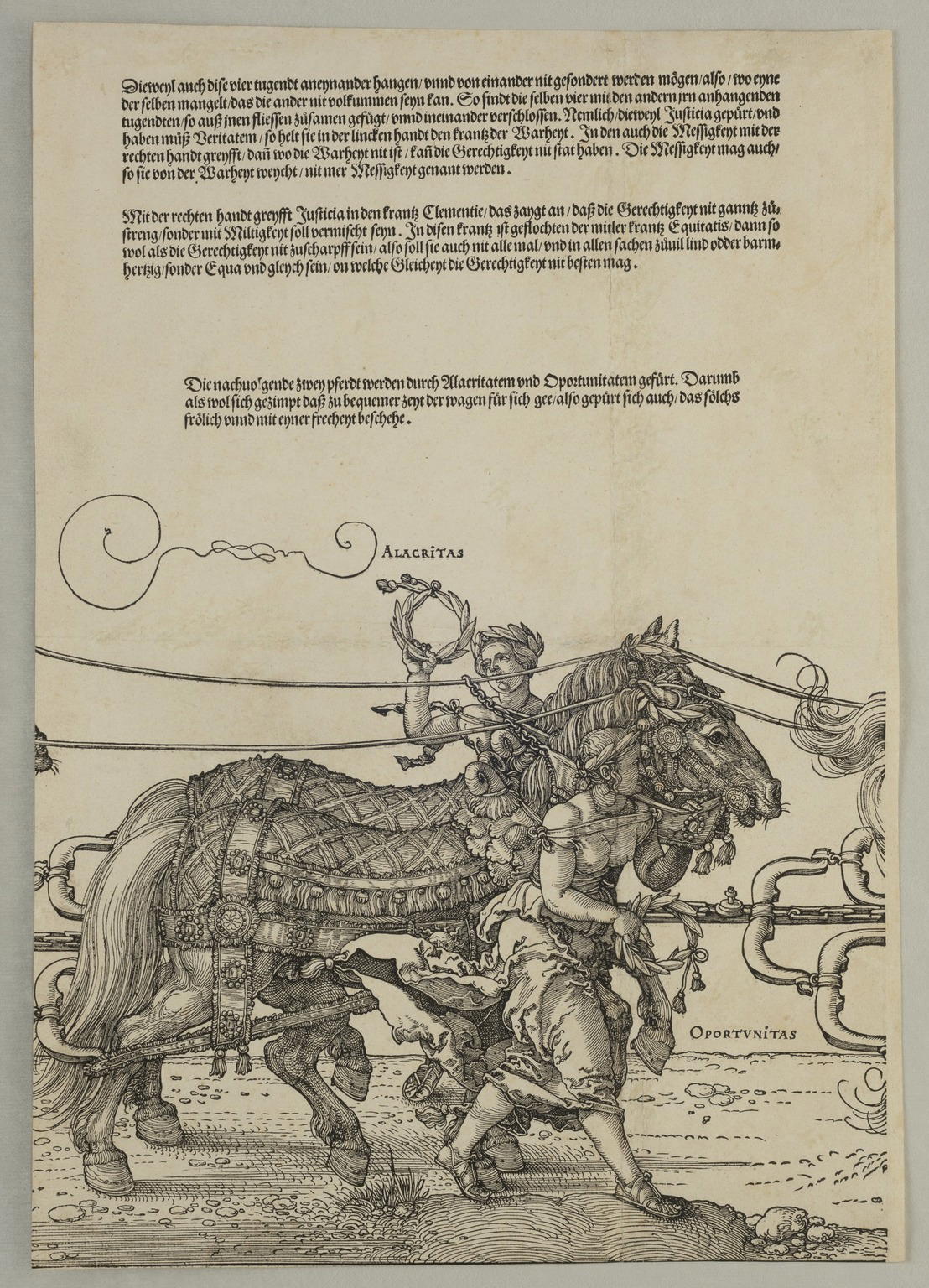
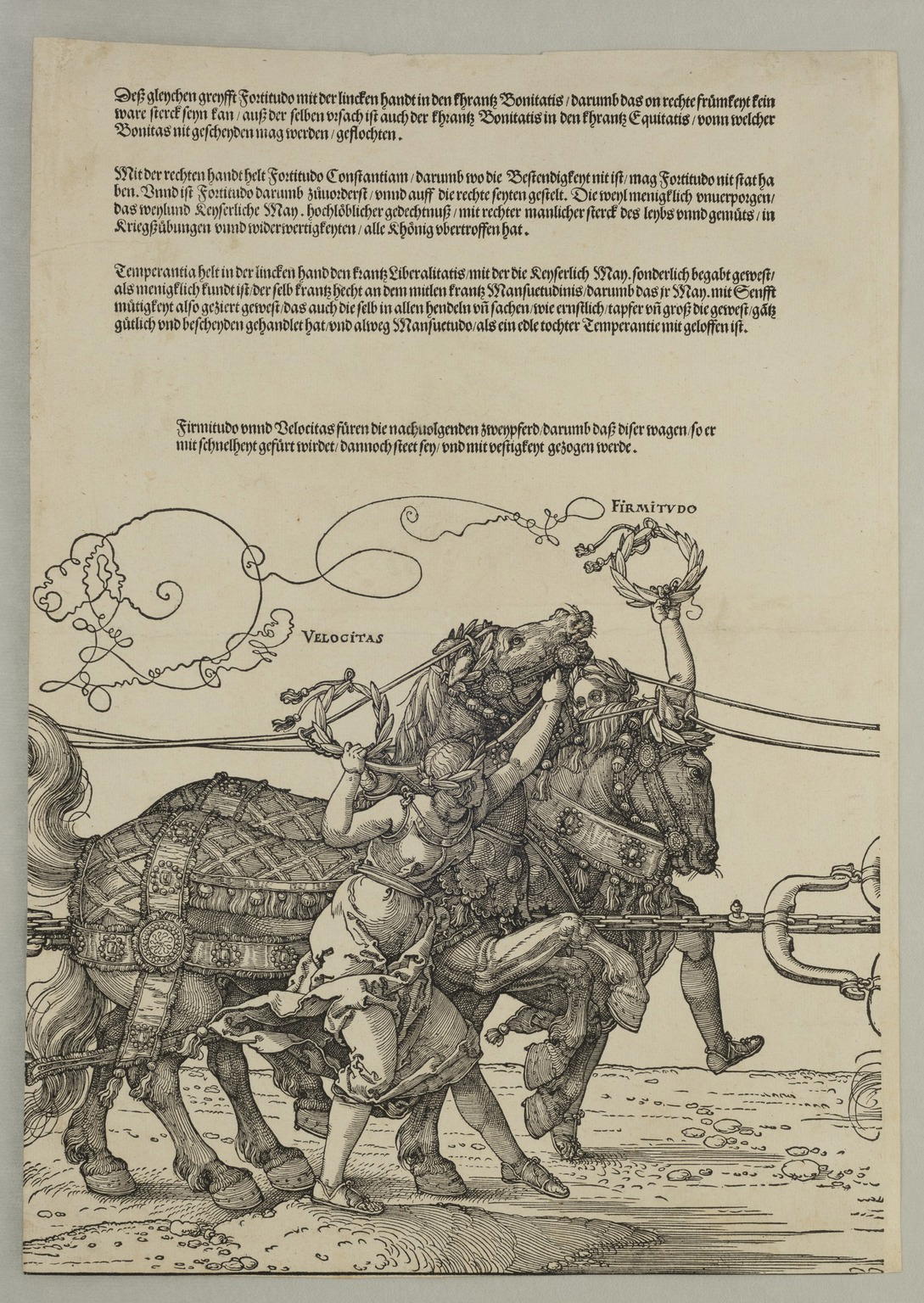
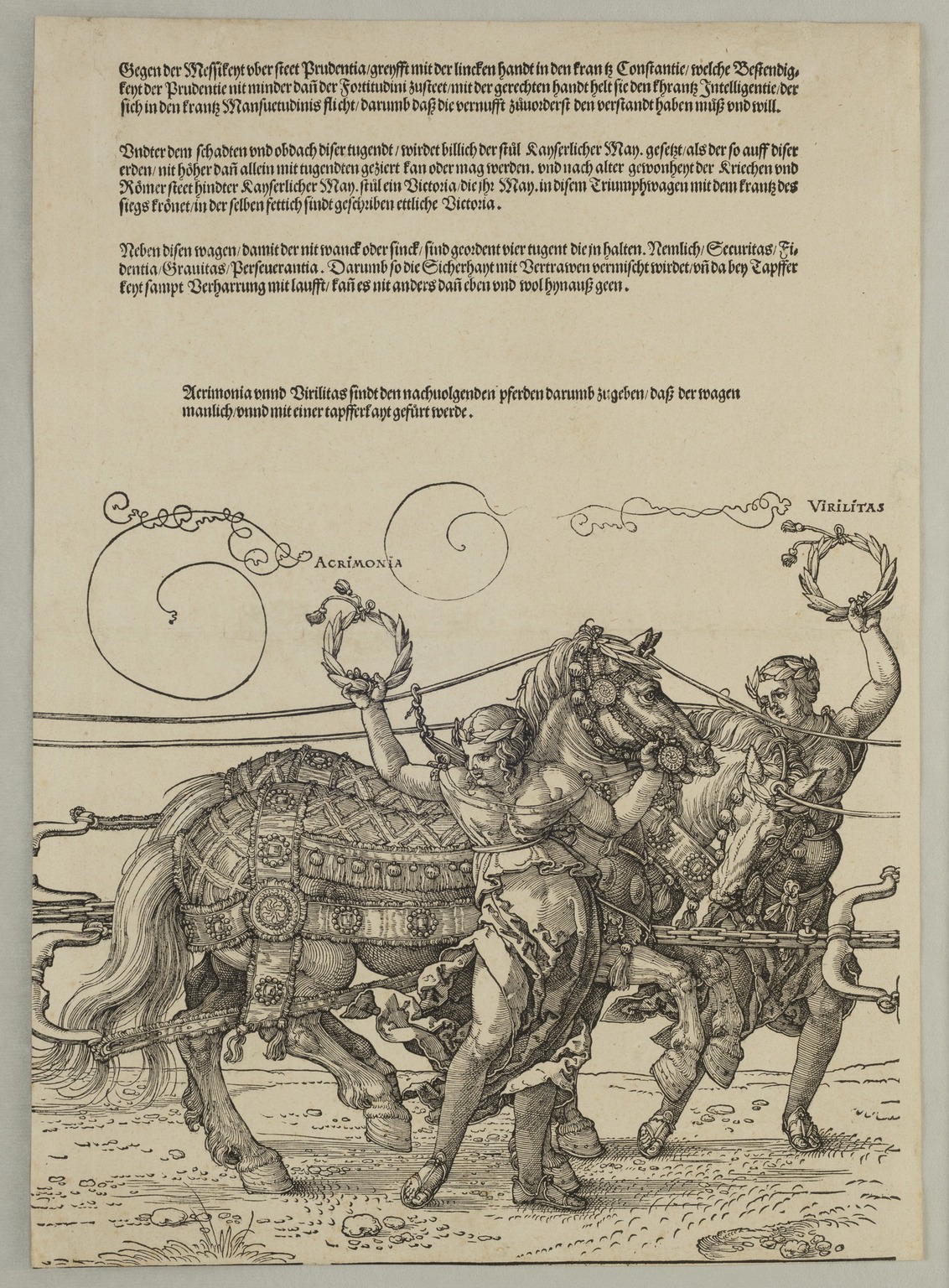
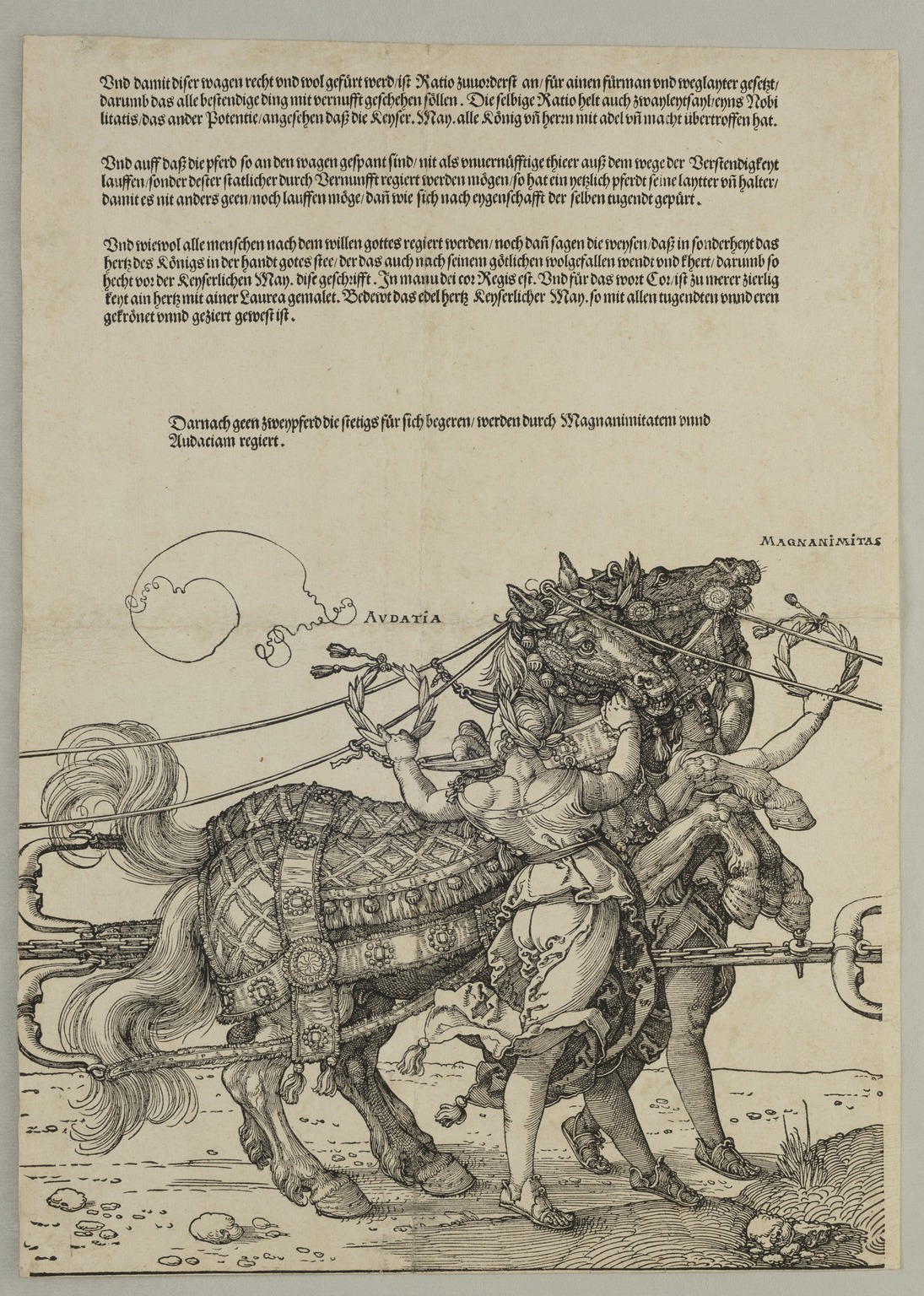
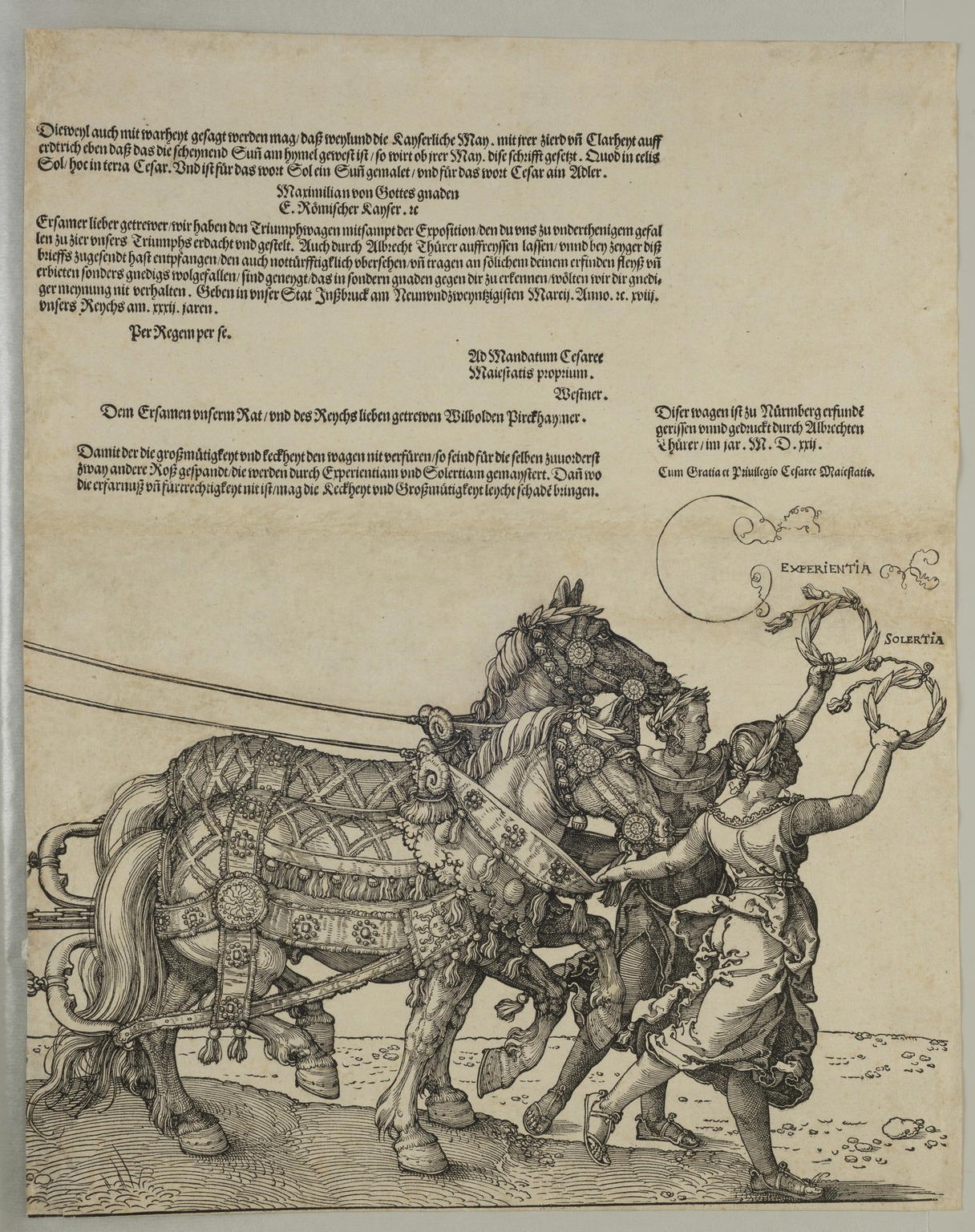
Albrecht Dürer revolutionized the techniques of woodcut and engraving, and was the first artist to achieve fame through his work as a printmaker. In 1512 the Holy Roman Emperor Maximilian I, who recognized how useful the new medium of printmaking would be for spreading his fame and burnishing his image, commissioned Dürer to create in his honor a gigantic, multipart woodcut inspired by imperial processions of antiquity. The emperor died before the ambitious work was completed, but the entrepreneurial Dürer published the last eight-block section of the procession as a tribute to him.
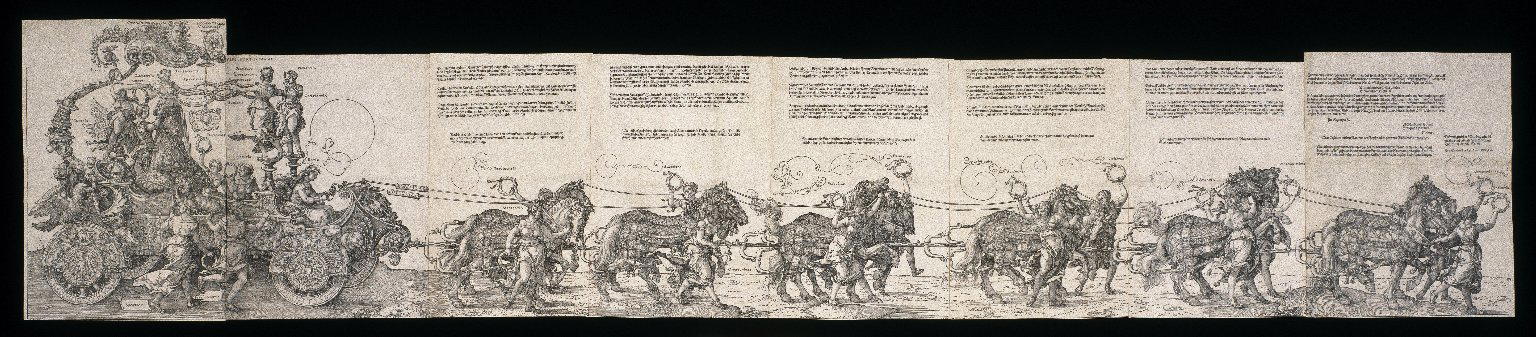
Maximilian is depicted as a latter-day Roman emperor, riding in an elaborate chariot whose four wheels express in Latin his renown (gloria), dignity (dignitas), magnanimity (magnificentia), and honor (honor). He and six teams of splendidly decorated horses are accompanied by figures that personify all the noble qualities of a virtuous ruler and statesman. The procession is surrounded by an interpretive text in German about the iconography of the image written by a scholar and friend of the artist’s.
Brooklyn’s woodcut is one of only a few existing versions of the first edition, published by Dürer in Nuremberg in 1522 with the German text. Subsequent editions were published with Latin text.
Maximilian is depicted as a latter-day Roman emperor, riding in an elaborate chariot whose four wheels express in Latin his renown (gloria), dignity (dignitas), magnanimity (magnificentia), and honor (honor). He and six teams of splendidly decorated horses are accompanied by figures that personify all the noble qualities of a virtuous ruler and statesman. The procession is surrounded by an interpretive text in German about the iconography of the image written by a scholar and friend of the artist’s.
Brooklyn’s woodcut is one of only a few existing versions of the first edition, published by Dürer in Nuremberg in 1522 with the German text. Subsequent editions were published with Latin text.
Caption
Albrecht Dürer (German, 1471–1528). The Great Triumphal Chariot of the Emperor Maximilian I, 1522, begun 1518. Woodcut from eight blocks on eight sheets of laid paper, 16 x 95 in. (40.5 x 241.3 cm). Brooklyn Museum, Gift of The Roebling Society, 83.43a-h. (Photo: Brooklyn Museum Photograph)
Gallery
Not on view
Gallery
Not on view
Artist
Title
The Great Triumphal Chariot of the Emperor Maximilian I
Date
1522, begun 1518
Medium
Woodcut from eight blocks on eight sheets of laid paper
Classification
Dimensions
16 x 95 in. (40.5 x 241.3 cm)
Credit Line
Gift of The Roebling Society
Accession Number
83.43a-h
Have information?
Have information about an artwork? Contact us at