Girl with Apple
William Glackens

Brooklyn Museum photograph
Object Label
Is this a modern Eve about to take a bite of the apple? William Glackens certainly counted on his viewers to make that association. Many of his models were young women earning their living in New York by entering the workforce in an expanding labor market. Glackens offered a fresh American update on the subject of the nude studio model by including a modern woman and fashionable contemporary attire. In paraphrasing one of France’s most famous paintings, Édouard Manet’s Olympia, he also aligned this work with one that was daring in its own time.
Caption
William Glackens (American, 1870–1938). Girl with Apple, 1909–1910. Oil on canvas, 39 7/16 x 56 3/16 in. (100.2 x 142.7 cm) frame: 46 3/4 x 63 3/4 x 2 3/4 in. (118.7 x 161.9 x 7 cm). Brooklyn Museum, Dick S. Ramsay Fund, 56.70. (Photo: Brooklyn Museum)
Gallery
Not on view
Collection
Gallery
Not on view
Collection
Artist
Title
Girl with Apple
Date
1909–1910
Medium
Oil on canvas
Classification
Dimensions
39 7/16 x 56 3/16 in. (100.2 x 142.7 cm) frame: 46 3/4 x 63 3/4 x 2 3/4 in. (118.7 x 161.9 x 7 cm)
Signatures
Signed lower left: "W. Glackens"
Credit Line
Dick S. Ramsay Fund
Accession Number
56.70
Frequent Art Questions
What if it was a tomato and not an apple? Would the meaning of this work change?
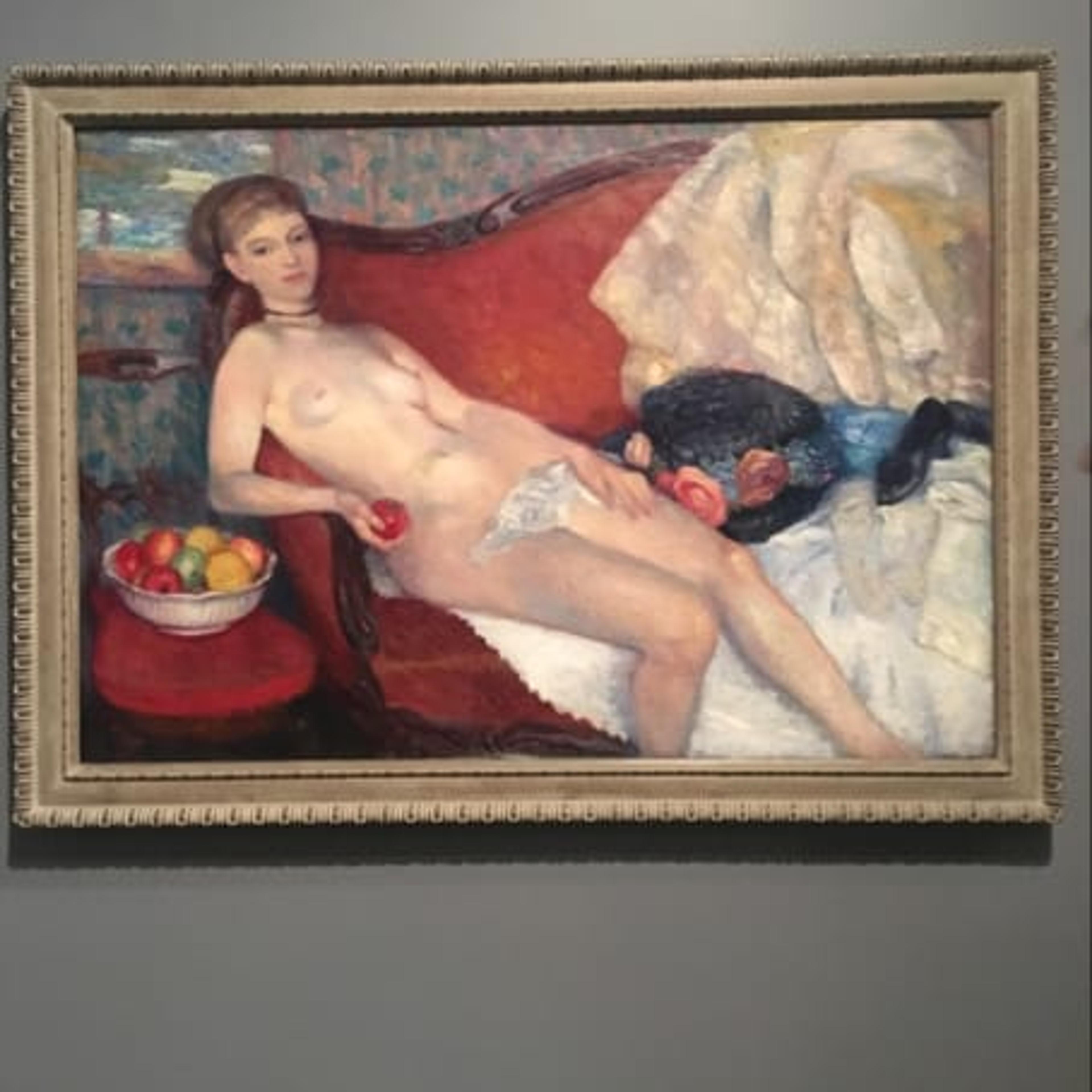 Ha! What a great question! I think it would change the meaning.The apple has thousands of years of symbolism behind it, especially in relation to the Bible and the fall of man. Eve plucks the fruit from the tree of knowledge, usually depicted as an apple.So a nude woman holding an apple has seductive and disobedient connotations—even though she's clearly a contemporary lady (see her fashionable large hat and the Rococo Revival sofa she lies on). Glackens seems to be presenting her to us as a modern-day Eve!Ah yes. My kind of lady.
Can you tell me who has owned it in the past and when the museum acquired it?
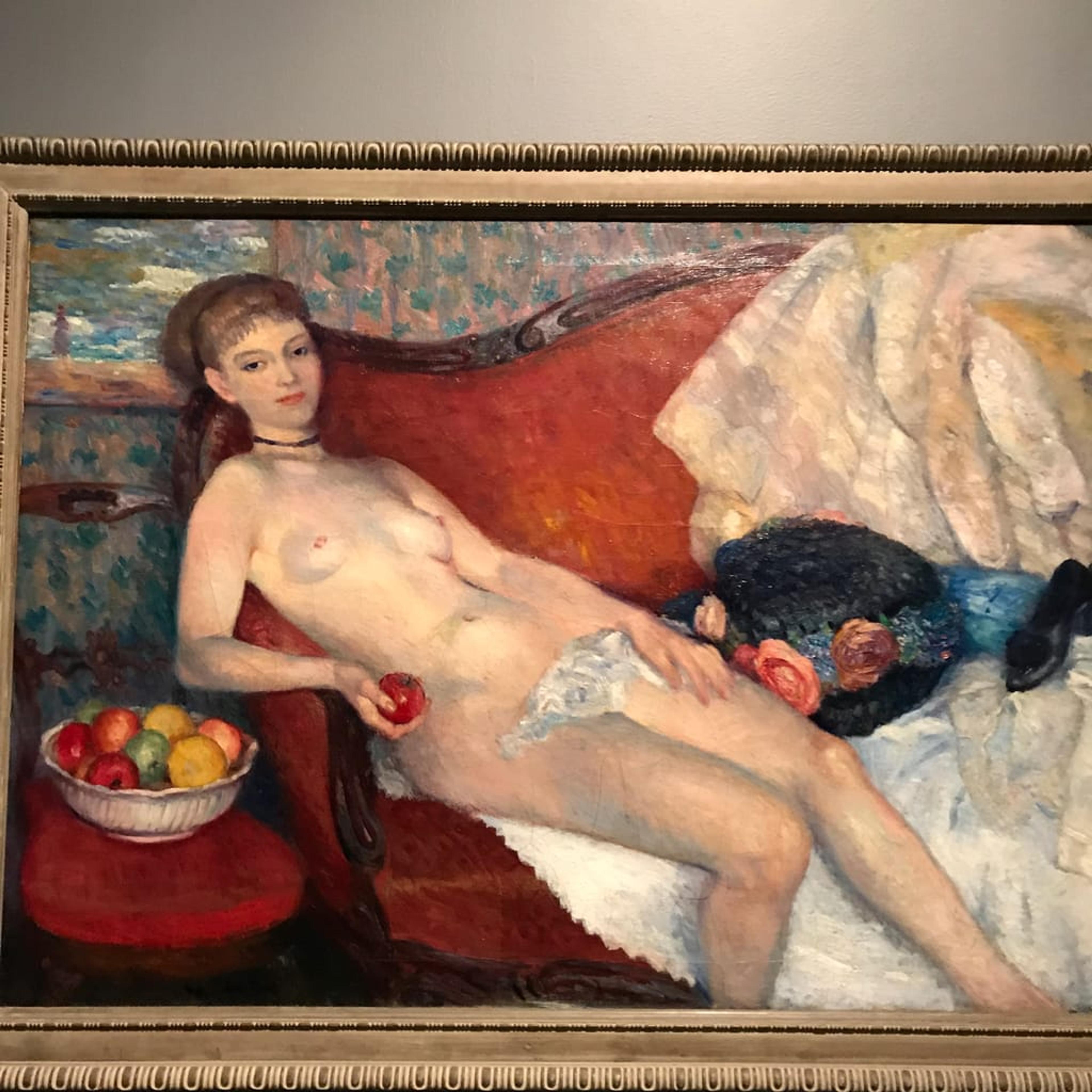 It debuted in 1910 at the "Exhibition of Independent Artists," an unjuried display open to all "intended as a venue for progressive works of art." It stayed in the artist's family until the Museum purchased it through a dealer in 1956.
Have information?
Have information about an artwork? Contact us at