Figural Group, The Finding of Moses


1 of 2
Object Label
The Wedgwood company hired William Beattie, a well-known sculptor in his day, to design four Old Testament figural groups to be produced in unglazed porcelain that resembles marble. These production-line objects of less-costly material were intended for middle-class consumers who imitated the collecting habits of the more well-to-do. Although the biblical subject of this group is the finding of Moses along the of the Nile River by the pharaoh's daughter, the half-dressed figure of the maid allowed the artist and consumer to admire the partially nude female form within the sanctity of the parlor.
Caption
Wedgwood and Sons (British, Staffordshire, 1759–present). Figural Group, The Finding of Moses, 1850–1860. Bisque porcelain, 19 3/4 x 15 1/2 x 11 in. (50.2 x 39.4 x 27.9 cm). Brooklyn Museum, Designated Purchase Fund, 87.74. (Photo: Brooklyn Museum)
Gallery
Not on view
Collection
Gallery
Not on view
Collection
Maker
Modelled by
Title
Figural Group, The Finding of Moses
Date
1850–1860
Medium
Bisque porcelain
Classification
Dimensions
19 3/4 x 15 1/2 x 11 in. (50.2 x 39.4 x 27.9 cm)
Signatures
no signature
Inscriptions
no inscriptions
Markings
507 (?) in pencil on back of base; x incised on bottom of base.
Credit Line
Designated Purchase Fund
Accession Number
87.74
Frequent Art Questions
Is there a specific reason this painting was placed behind the sculpture of Moses being found? The ancient Egyptians were polytheists and Jews and Christians monotheists, so they don't seem to fit.
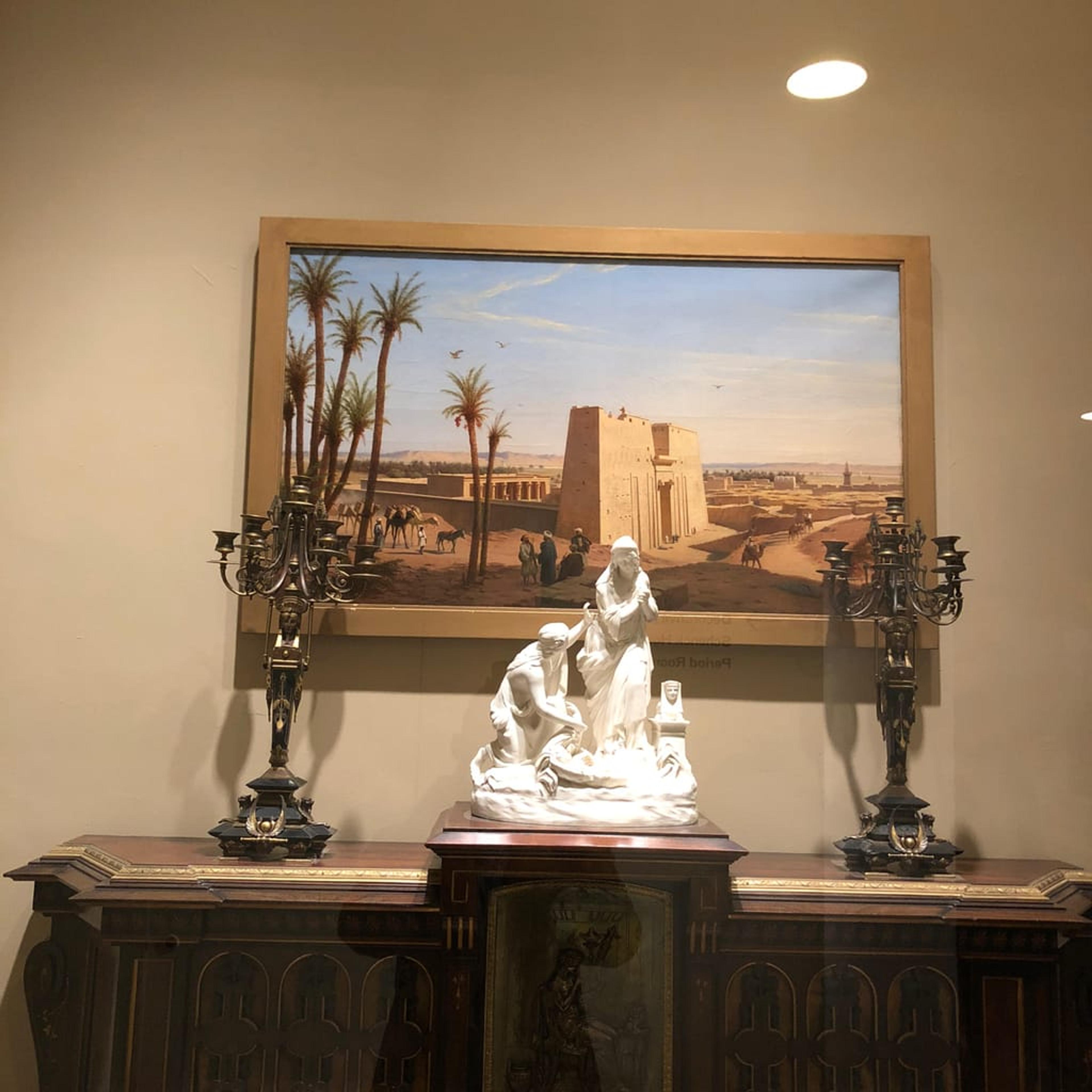 The finding of Moses is set in ancient Egypt and in the 19th century, design went through a phase called "Egyptomania" when anything remotely connected to Egypt was seen as fashionable. This trend was partially stimulated by the growing number of artists traveling abroad to places like Egypt. Some artists used the story of Moses as a pretense for creating an "Egyptian" scene that was suitable for a moralistic Victorian home. Altogether, the impression would be one of exoticism, rather than historical accuracy.
Have information?
Have information about an artwork? Contact us at