Magic Dinner Caster
1 of 2
Object Label
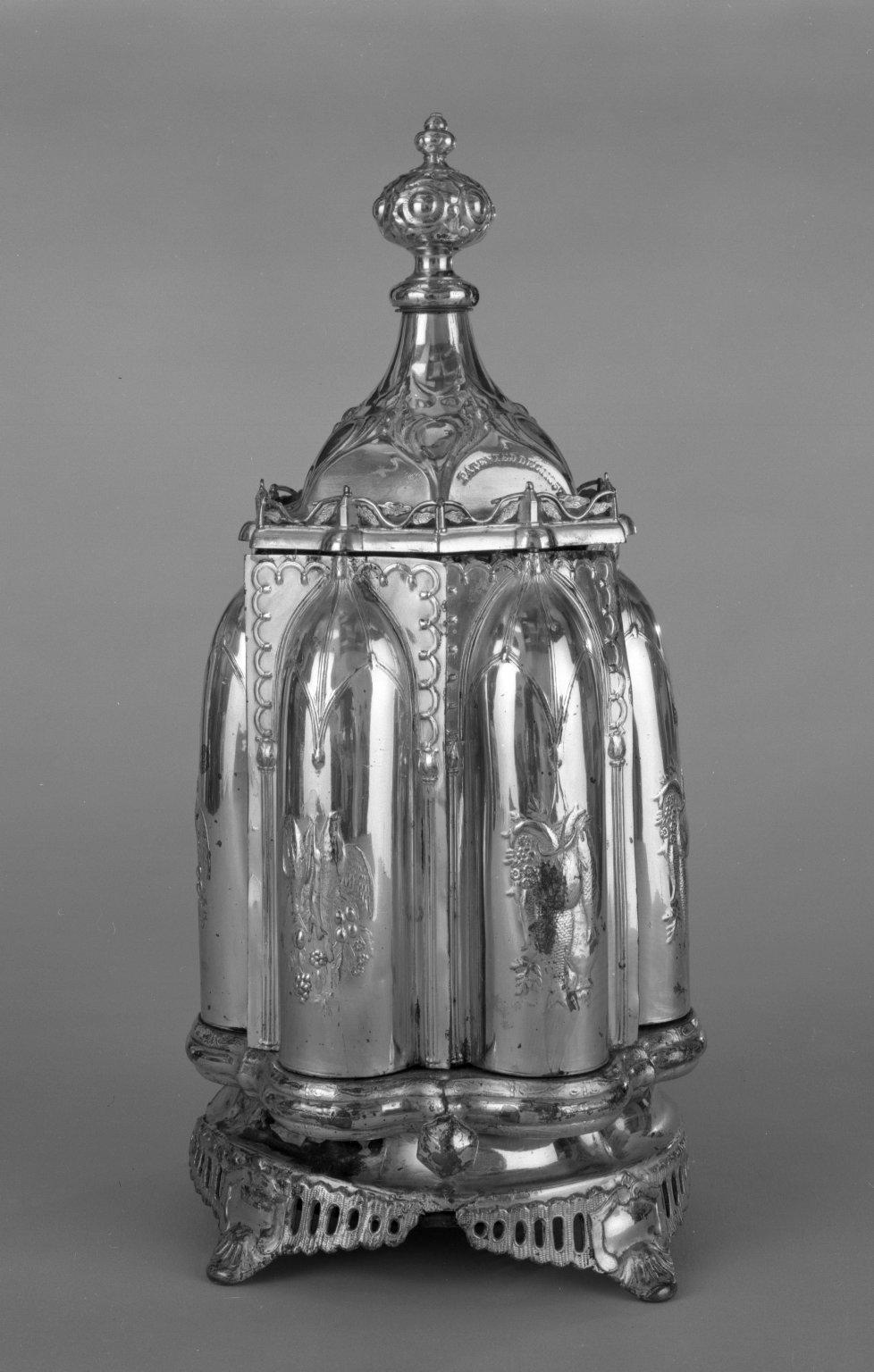
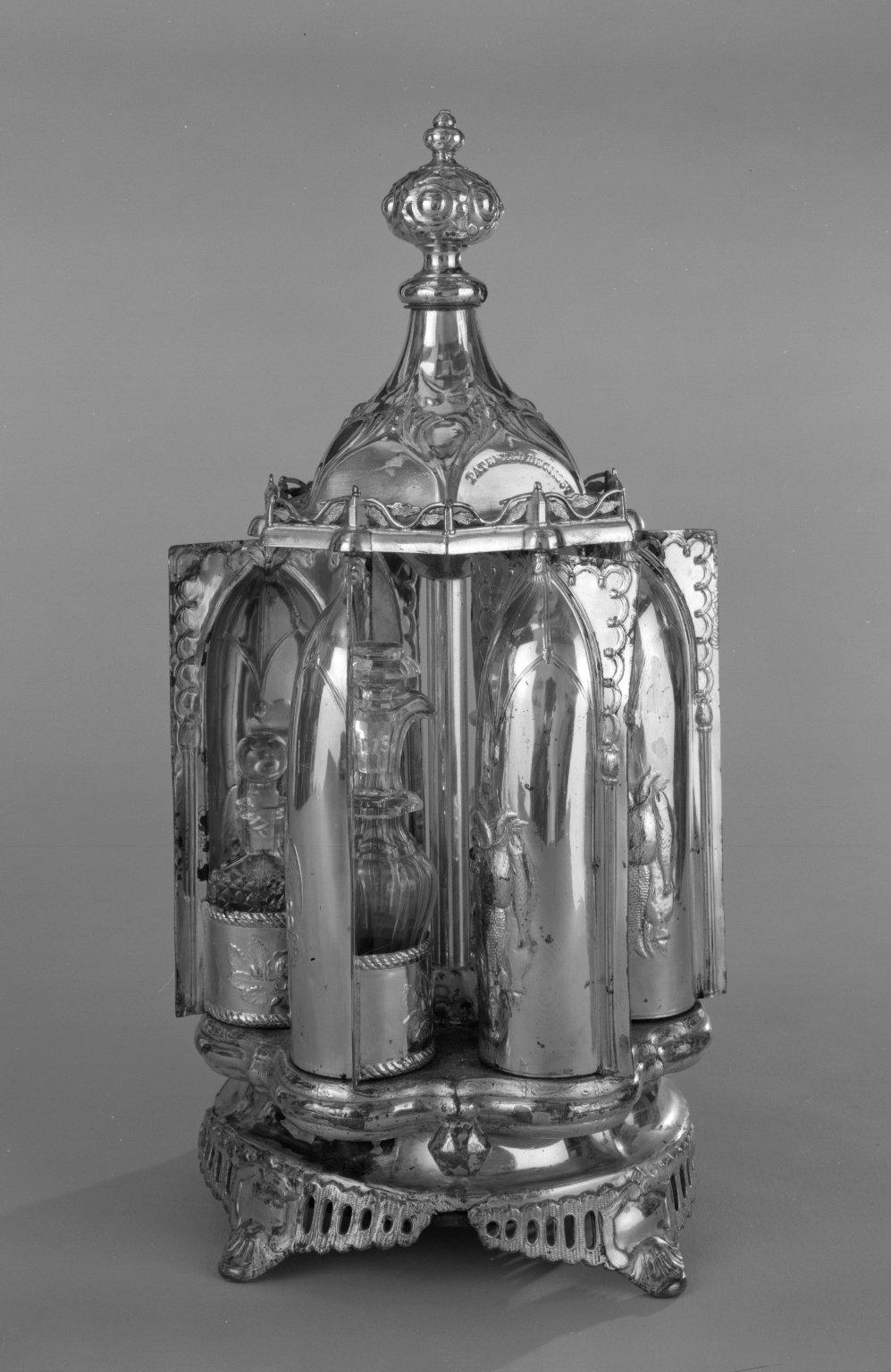
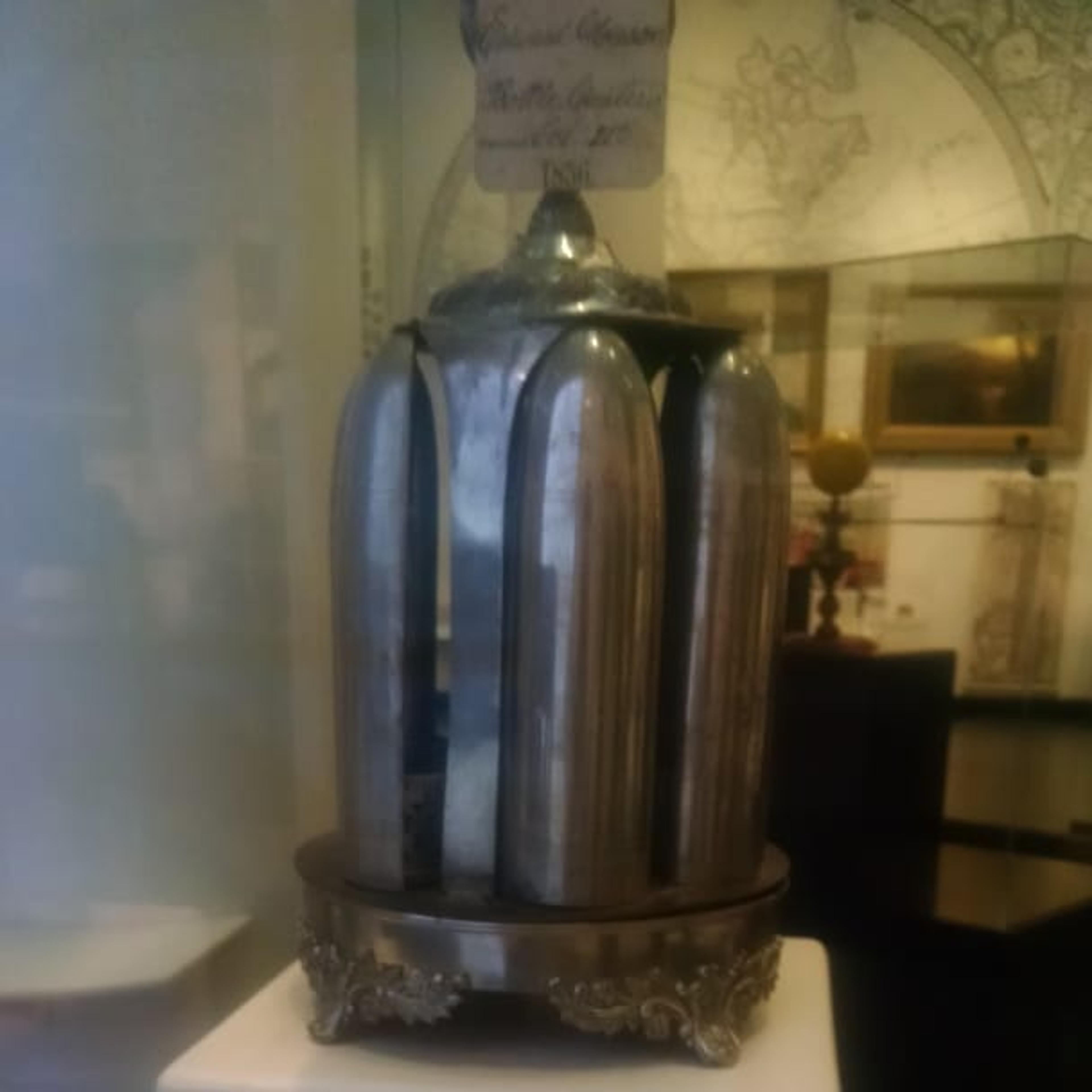
The Industrial Revolution created a fascination with novelty objects made for the middle class, such as the “magic caster,” patented by Edward Gleason in 1856. The turn of a knob rotates the niches to reveal bottles for condiments such as mustard, ketchup, and pepper.
Caption
R. Gleason & Sons. Magic Dinner Caster, Patented December 1, 1857. Silverplate, colorless glass, 17 x 9 1/8 x 9 1/8 in. (43.2 x 23.2 x 23.2 cm) 4 1/2 x 1 1/2 in. (11.4 x 3.8 cm). Brooklyn Museum, H. Randolph Lever Fund, 87.175.1-.7a-b. (Photo: Brooklyn Museum)
Gallery
Not on view
Collection
Gallery
Not on view
Collection
Maker
Title
Magic Dinner Caster
Date
Patented December 1, 1857
Medium
Silverplate, colorless glass
Classification
Dimensions
17 x 9 1/8 x 9 1/8 in. (43.2 x 23.2 x 23.2 cm) 4 1/2 x 1 1/2 in. (11.4 x 3.8 cm)
Signatures
no signature
Inscriptions
no inscriptions
Markings
embossed on one of six panels: "PATENTED DEC. 1 1857"
Credit Line
H. Randolph Lever Fund
Accession Number
87.175.1-.7a-b
Frequent Art Questions
I own many silver holloware pieces, but I have never seen anything like this!
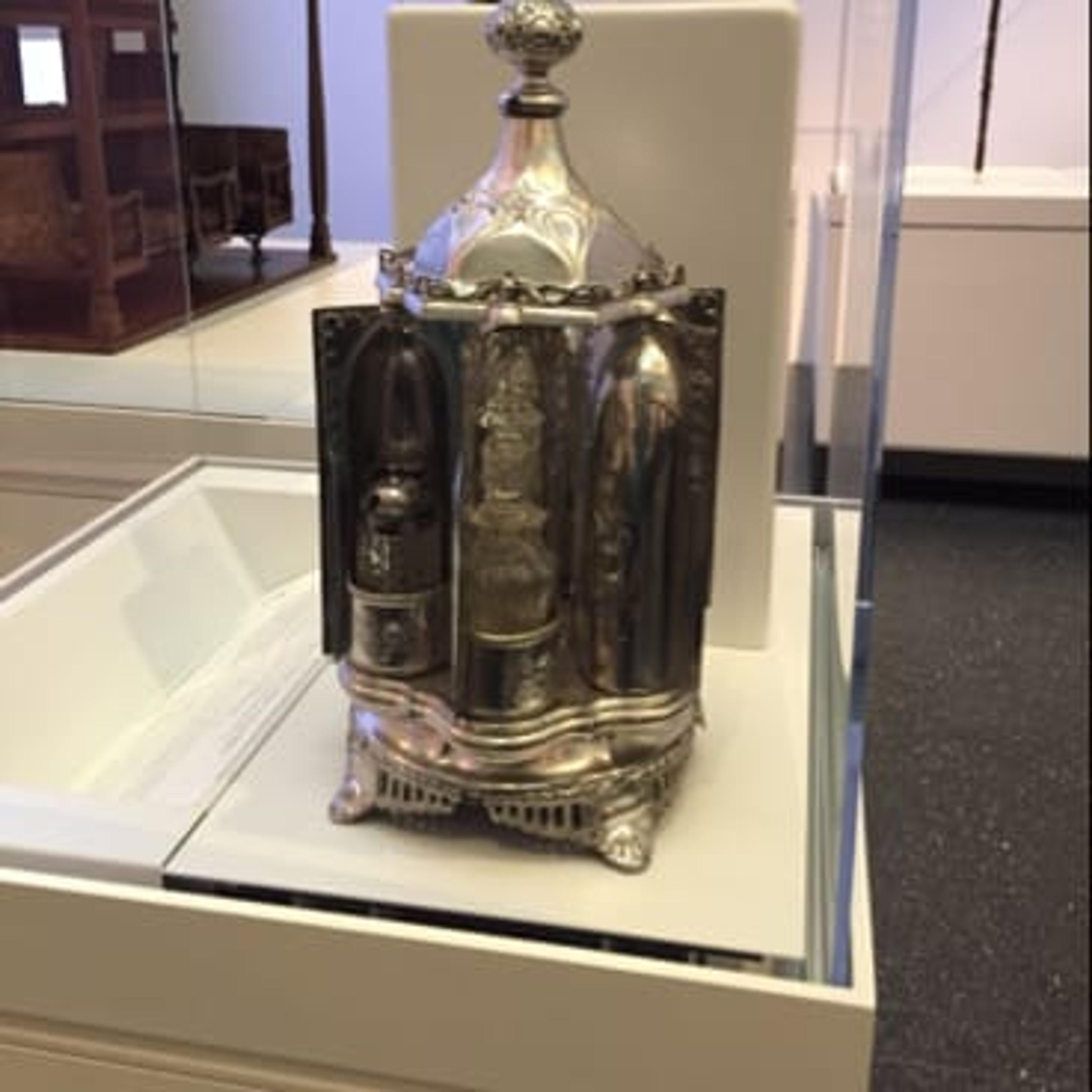 Yes, that's such an interesting piece! When the knob was turned, those niches would open to reveal condiment bottles. I love that it's called a "magic" dinner caster, the word magic makes it seem so special!
What is this?
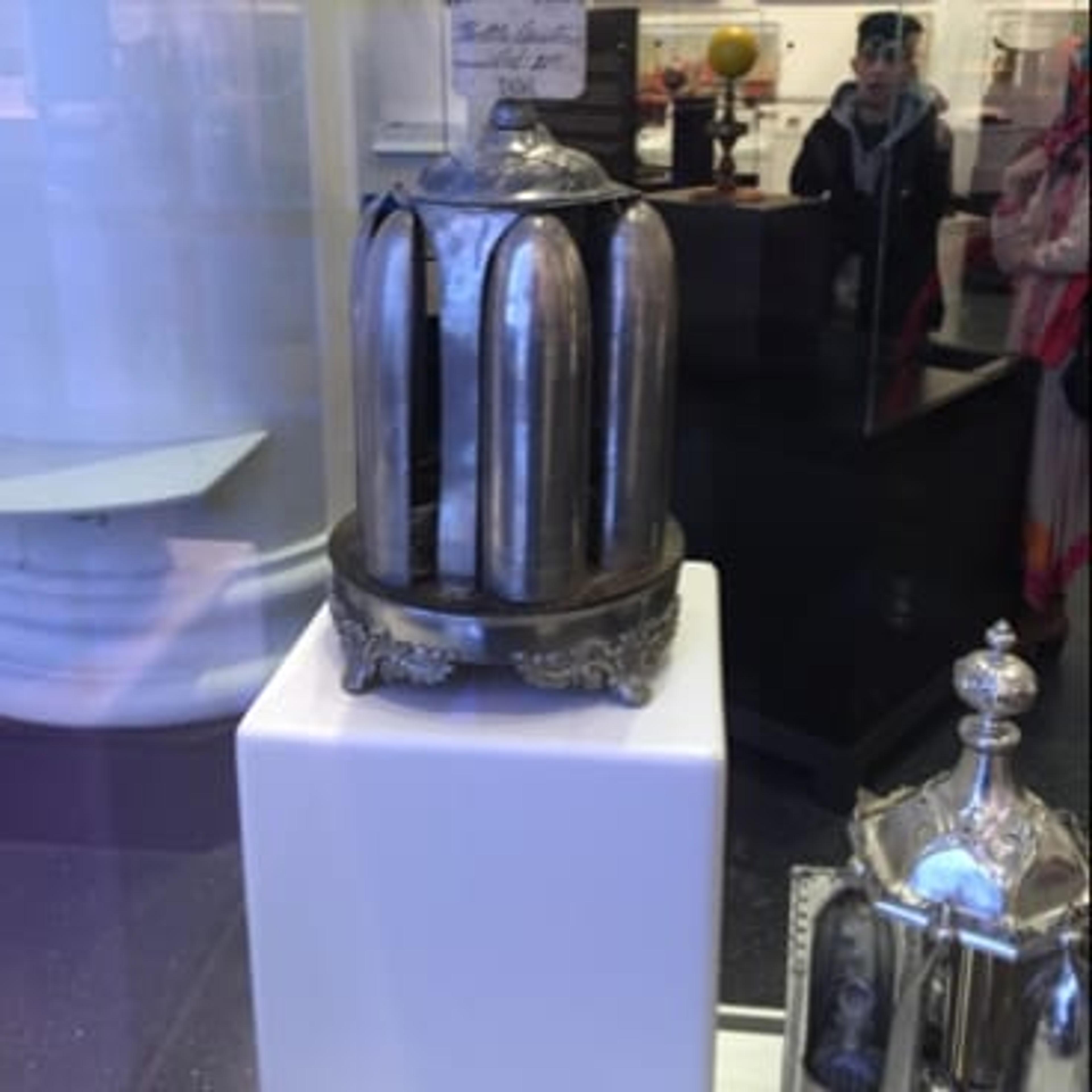 That is a magic caster! One is the object itself, and the other is a patent model that was submitted to the US Government by the manufacturer, R. Gleason & Sons, for a patent. This would be placed on a dinner table and when the knob at the top was rotated, it would spin and reveal condiment bottles in those little openings!
Why is the magic dinner caster made of silver plate?
 Silver plate was an innovation in the late 18th century. It allowed for objects that looked like they were pure silver, which was very expensive, but could be purchased by middle class people. Because of this, affordable silver plate objects became very popular.
Have information?
Have information about an artwork? Contact us at