Statue of Osiris
664–525 B.C.E., or later


1 of 7
Caption
Statue of Osiris, 664–525 B.C.E., or later. Bronze, 8 1/8 x 2 1/16 x 2 1/4 in. (20.6 x 5.2 x 5.7 cm). Brooklyn Museum, Charles Edwin Wilbour Fund, 37.372E. (Photo: Brooklyn Museum)
Gallery
Not on view
Gallery
Not on view
Frequent Art Questions
What was so symbolic about snakes?
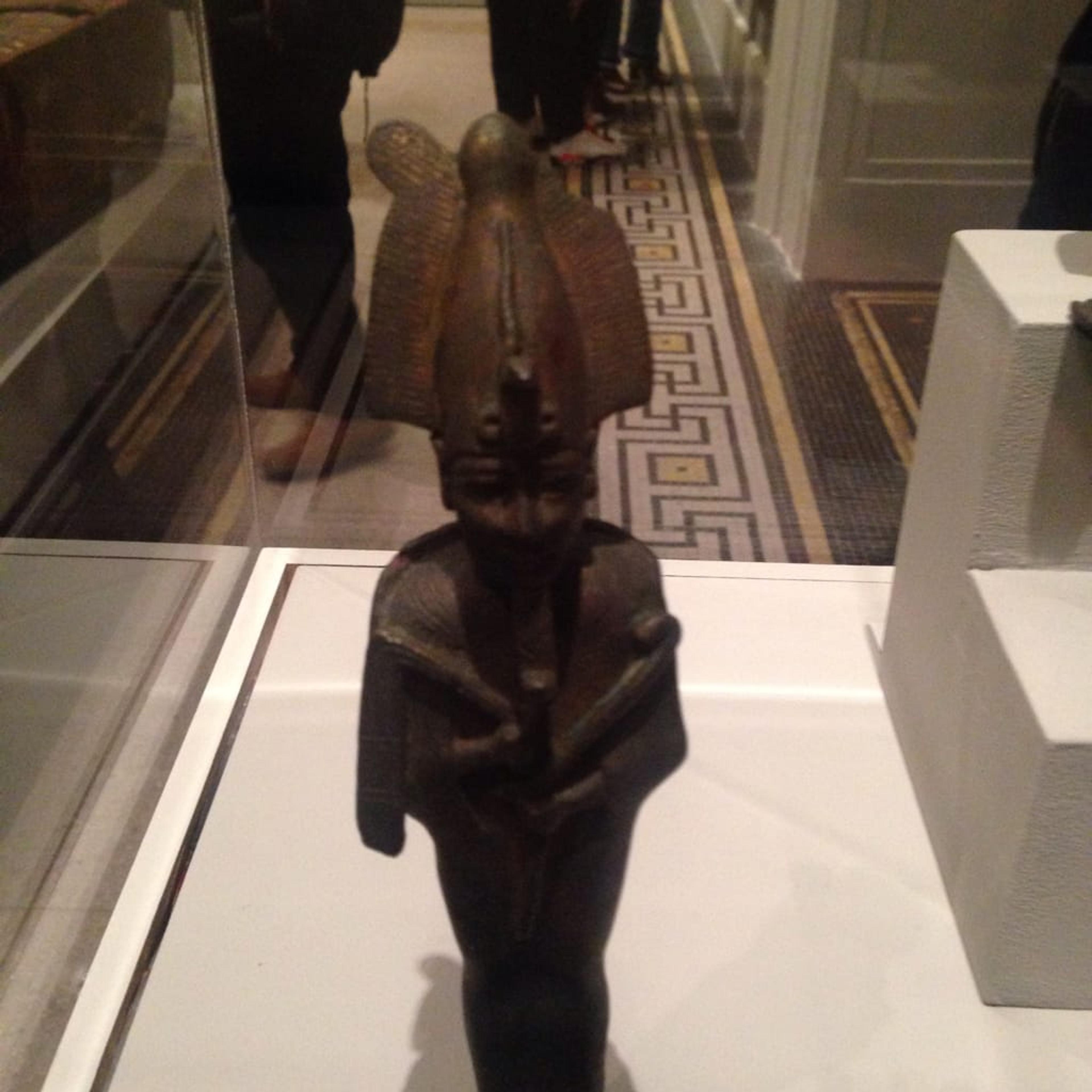 The cobra on this headdress, known as a uraeus, served an apotropaic or protective purpose. Because many snakes are poisonous, they were known to be dangerous and thus were associated with negatives characters such as the demon, Apophis. At the same time, the snake's power was used in mythology for protection and associated with protective goddesses like Wadjet and Maat.
What is this?
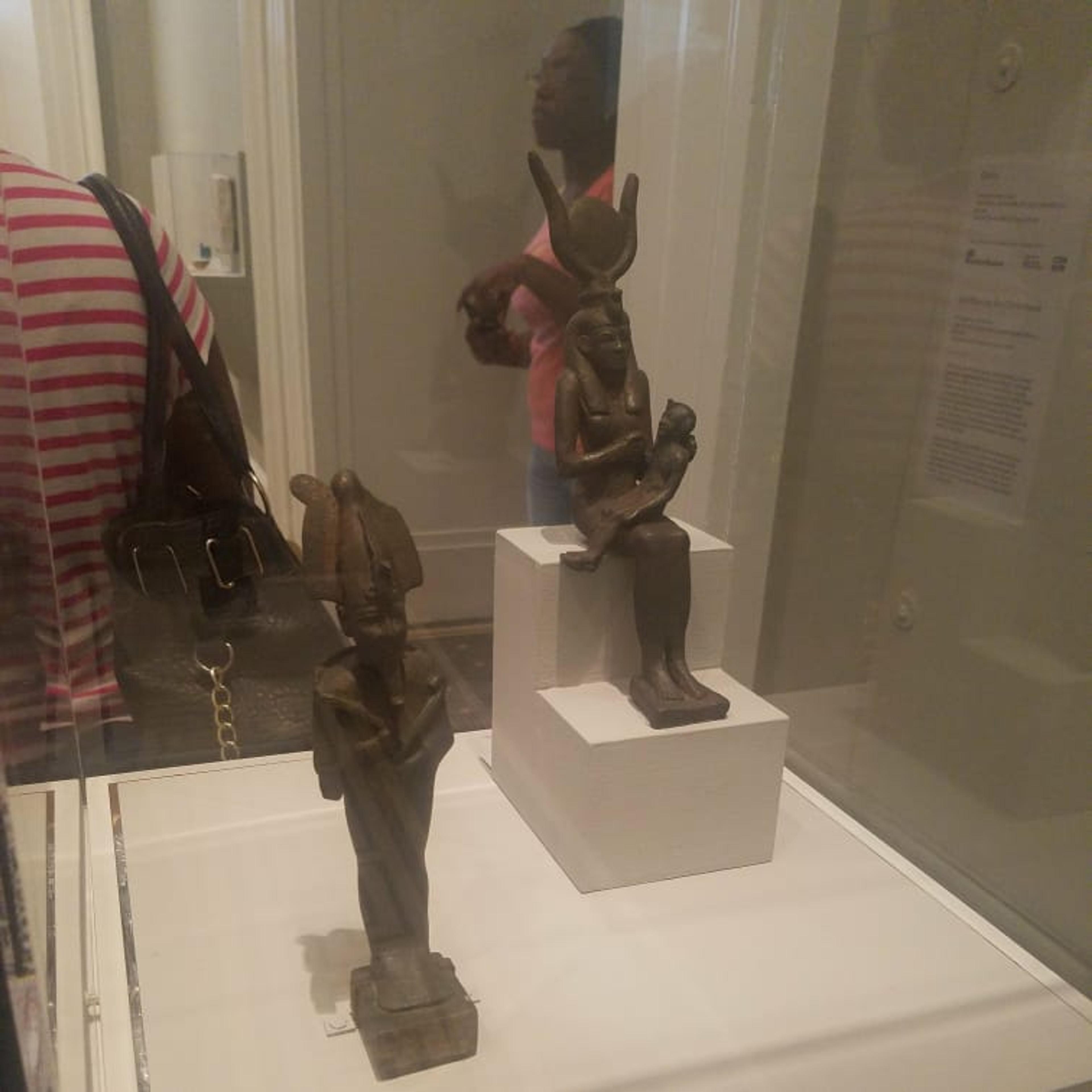 The statue higher up is of Isis nursing the child Horus, while the lower statue is one of Osiris who was Isis's husband and Horus's father. Together, the three form an archetypal family in ancient Egyptian beliefs.
Have information?
Have information about an artwork? Contact us at