Head of a Lion
Persian; Achaemenid


1 of 4
Object Label
The Achaemenid rulers of Persia (modern Iran) established an empire that lasted from 559 b.c. until it was conquered by Alexander the Great in 330 b.c. By that time, the Persian Empire controlled an area extending from Egypt through present-day Iraq, Iran, Syria, and Turkey into India. The Achaemenid kings built huge palace complexes at Persepolis and Pasargadae in southern Iran and hired craftsmen from throughout the world to decorate them with sculpture and reliefs.
This fragmentary lion’s head—representing an eye and part of the muzzle—was part of the decoration of a palace. The modeling of its facial folds is highly stylized and, as on all Achaemenid representations of lions, its mouth is open to snarl or roar.
This fragmentary lion’s head—representing an eye and part of the muzzle—was part of the decoration of a palace. The modeling of its facial folds is highly stylized and, as on all Achaemenid representations of lions, its mouth is open to snarl or roar.
Caption
Persian; Achaemenid. Head of a Lion, 5th–4th century B.C.E.. Bituminous limestone, pigment (Egyptian blue), 8 7/8 x 9 13/16 in. (22.6 x 25 cm). Collection of Robin B. Martin Trust, L54.3. (Photo: Brooklyn Museum)
Gallery
Not on view
Gallery
Not on view
Cultures
Title
Head of a Lion
Date
5th–4th century B.C.E.
Period
Persian Achaemenid Period
Geography
Place excavated: Persepolis, south of the Council Hall, Iran
Medium
Bituminous limestone, pigment (Egyptian blue)
Classification
Dimensions
8 7/8 x 9 13/16 in. (22.6 x 25 cm)
Credit Line
Collection of Robin B. Martin Trust
Accession Number
L54.3
Frequent Art Questions
Can you tell me about the Guennol collection?
The Guennol Collection, assembled by Alastair Martin and his wife, features a number of exceptional objects! Several were acquired by the museum or are on long term loan. The couple began collecting objects in the late 1940s, which they soon began offering to museums. Martin became a trustee of the Brooklyn Museum in 1948 and began lending and donating objects to the museum.The Collection is rather diverse and features art from ancient Egypt, the ancient Americas, Asian art, and American folk art. Objects from the collection can be found in numerous places around the Museum today.What's this?
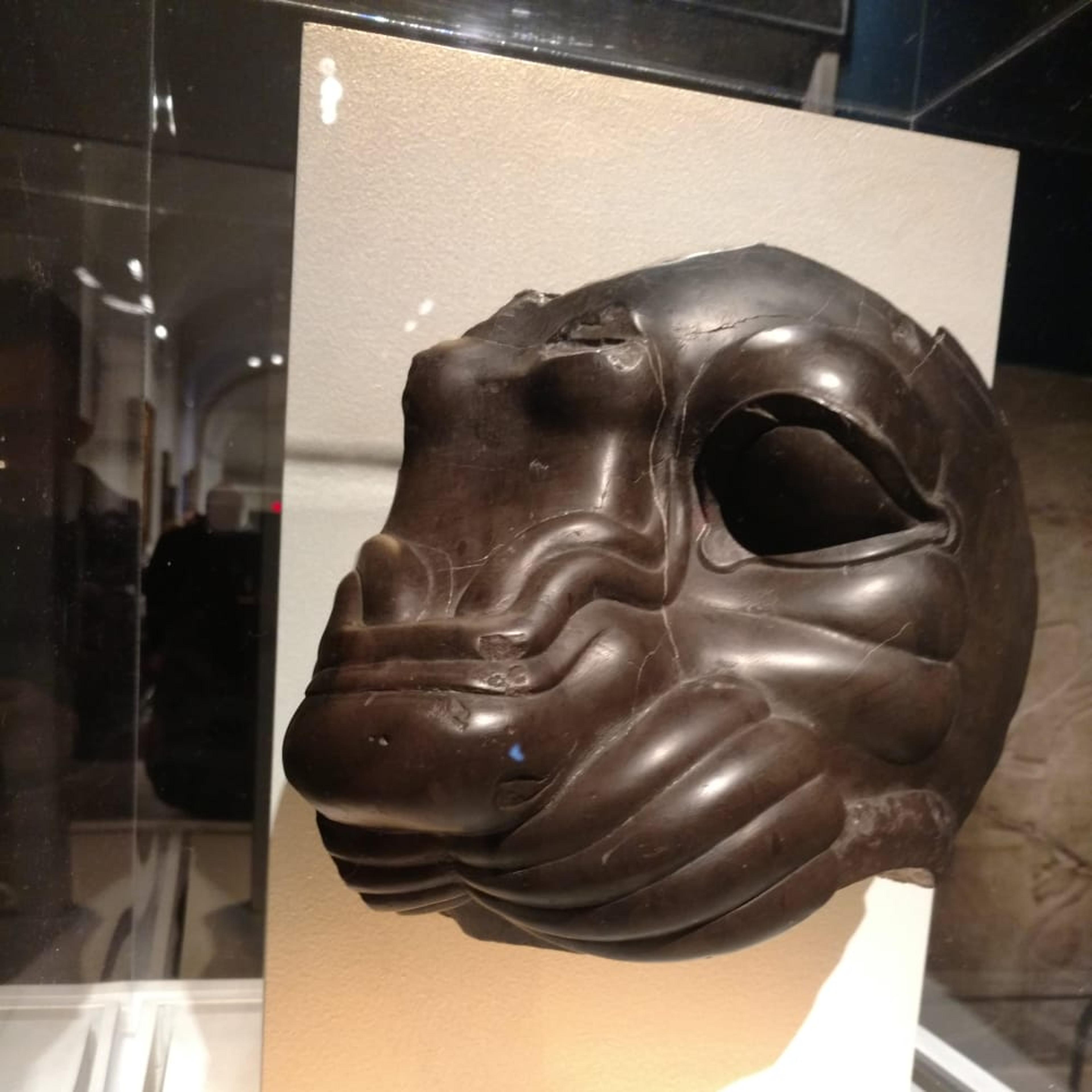 This is a fragment of a lion sculpture from ancient Persia or Iran. The curving lines used to create details in the face are characteristic of Achaemenid Persian art.
Tell me more.
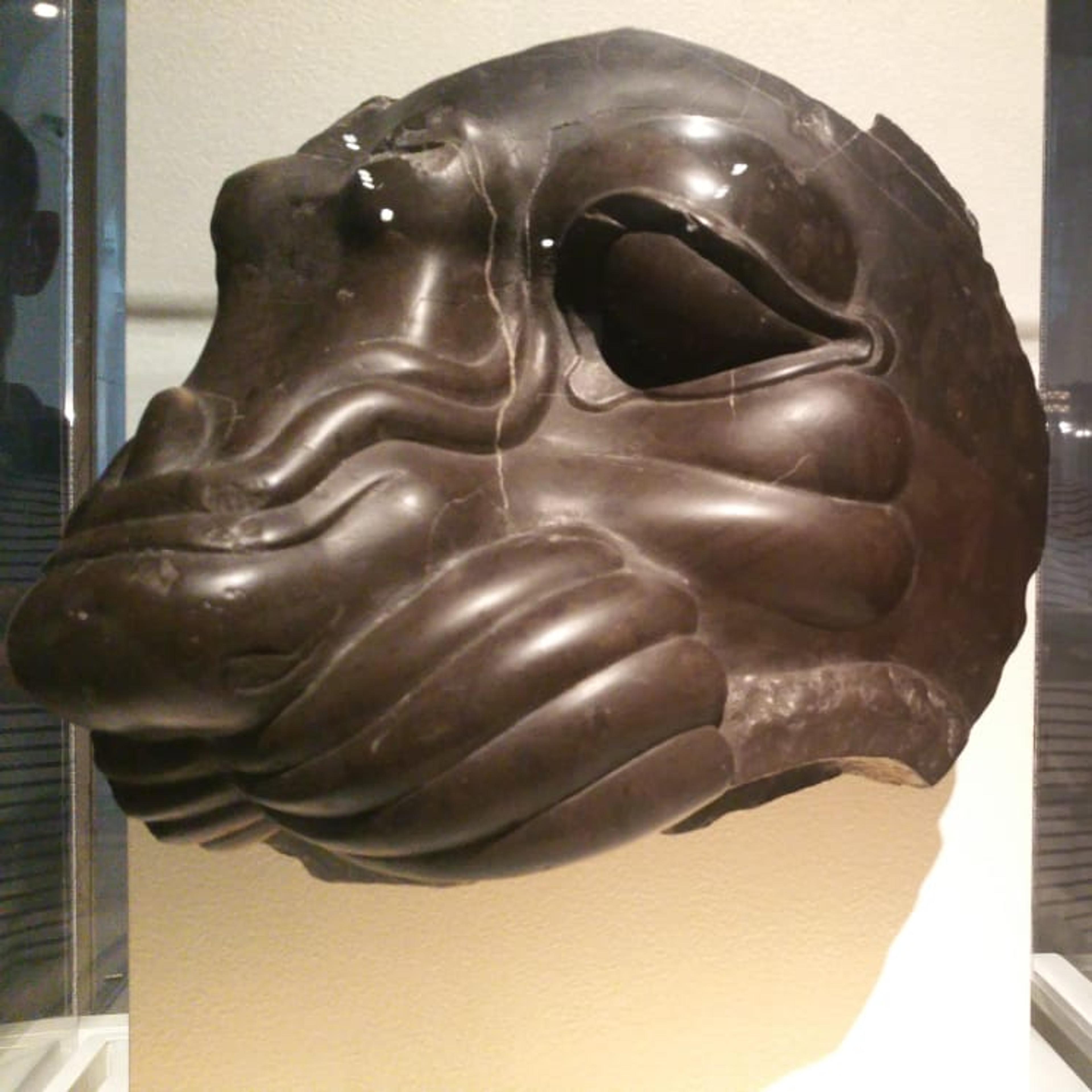 This lion head is a fragment of a larger stone sculpture from ancient Persia or Iran. It's likely that the lion's mouth was open in a snarl, given the stylized lines and folds of skin that are emphasized on the face.
Have information?
Have information about an artwork? Contact us at