Peyote Gourd
Osage
1 of 3
Object Label
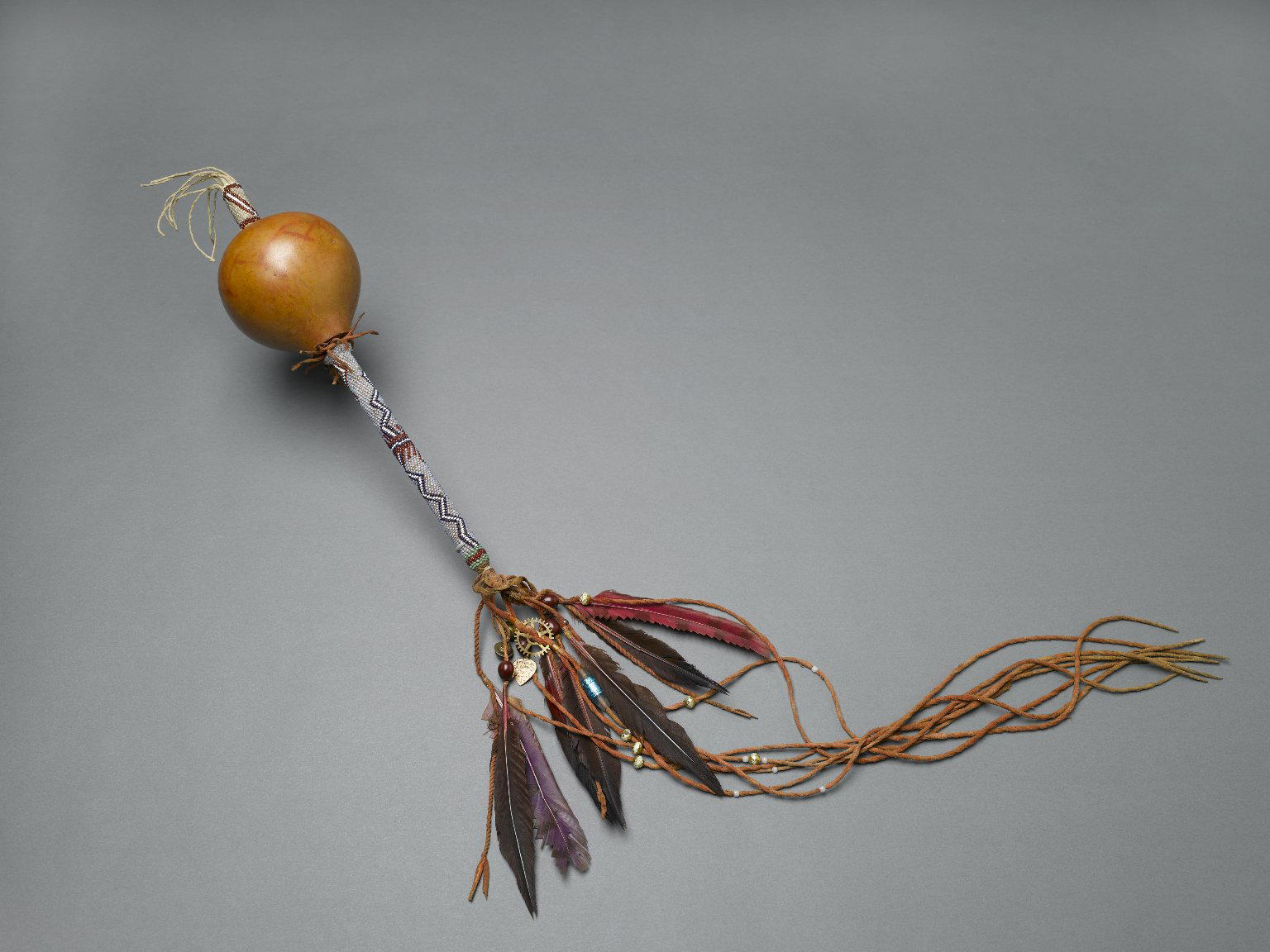
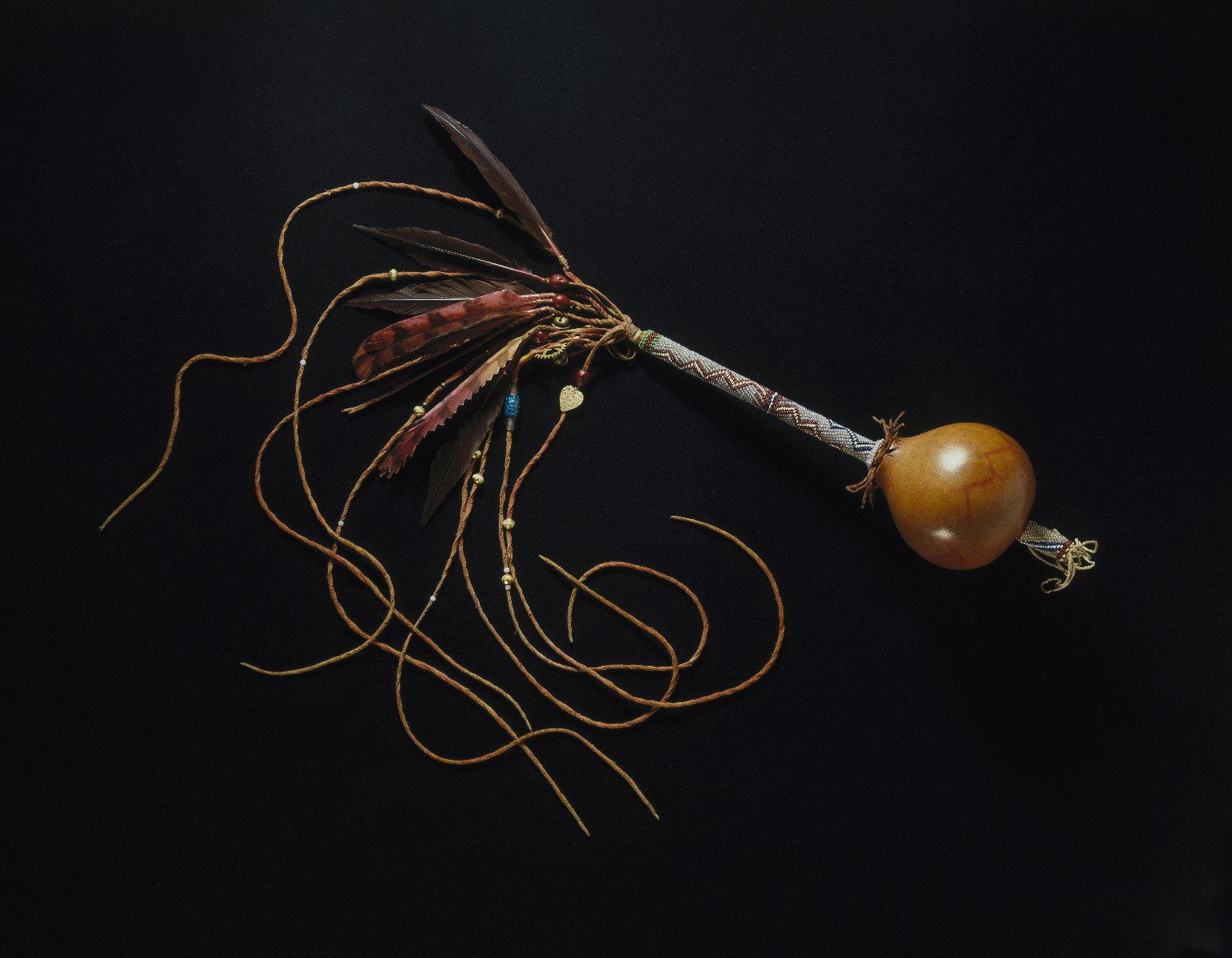
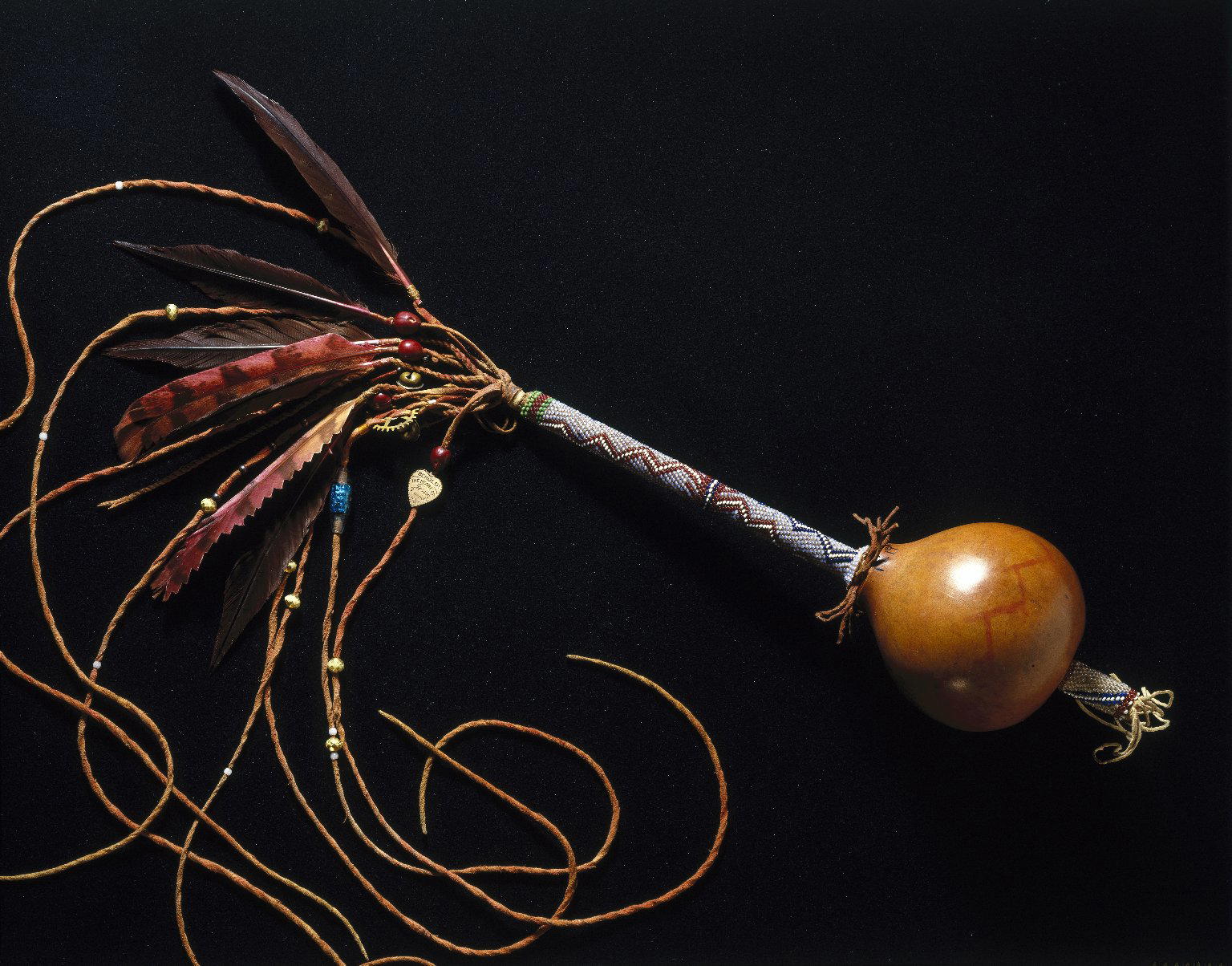
This peyote rattle was played during Native American Church ceremonies, which combine Native and Christian beliefs. Peyote is a hallucinogenic cactus that is ritually ingested in tea or dried form to induce visions, which are believed to help achieve more harmony with the universe. The gourd symbolizes the world, and the sound it makes represents prayers. The gourd’s zigzag decoration symbolizes Christ’s crown of thorns. The handle’s beaded lightning design, which signifies man’s ability to ascend from earth into heaven, is encircled by a red horsehair fringe that represents the rays of the sun at sunrise, the hour when Christ arose from the dead. The medal attached to the handle reads, “Behold the heart of Jesus is with me.”
Caption
Osage. Peyote Gourd, late 19th–early 20th century. Gourd, glass beads, metal, feathers, brass, sinew, nut or seed, cork, 27 9/16 x 2 3/4 in. (70 x 7 cm). Brooklyn Museum, Museum Expedition 1911, Museum Collection Fund, 11.694.9059. (Photo: Brooklyn Museum)
Gallery
Not on view
Collection
Gallery
Not on view
Collection
Culture
Title
Peyote Gourd
Date
late 19th–early 20th century
Medium
Gourd, glass beads, metal, feathers, brass, sinew, nut or seed, cork
Classification
Dimensions
27 9/16 x 2 3/4 in. (70 x 7 cm)
Credit Line
Museum Expedition 1911, Museum Collection Fund
Accession Number
11.694.9059
Frequent Art Questions
To create the sounds that each instrument makes, were the actual instruments on display used or were replicas made?
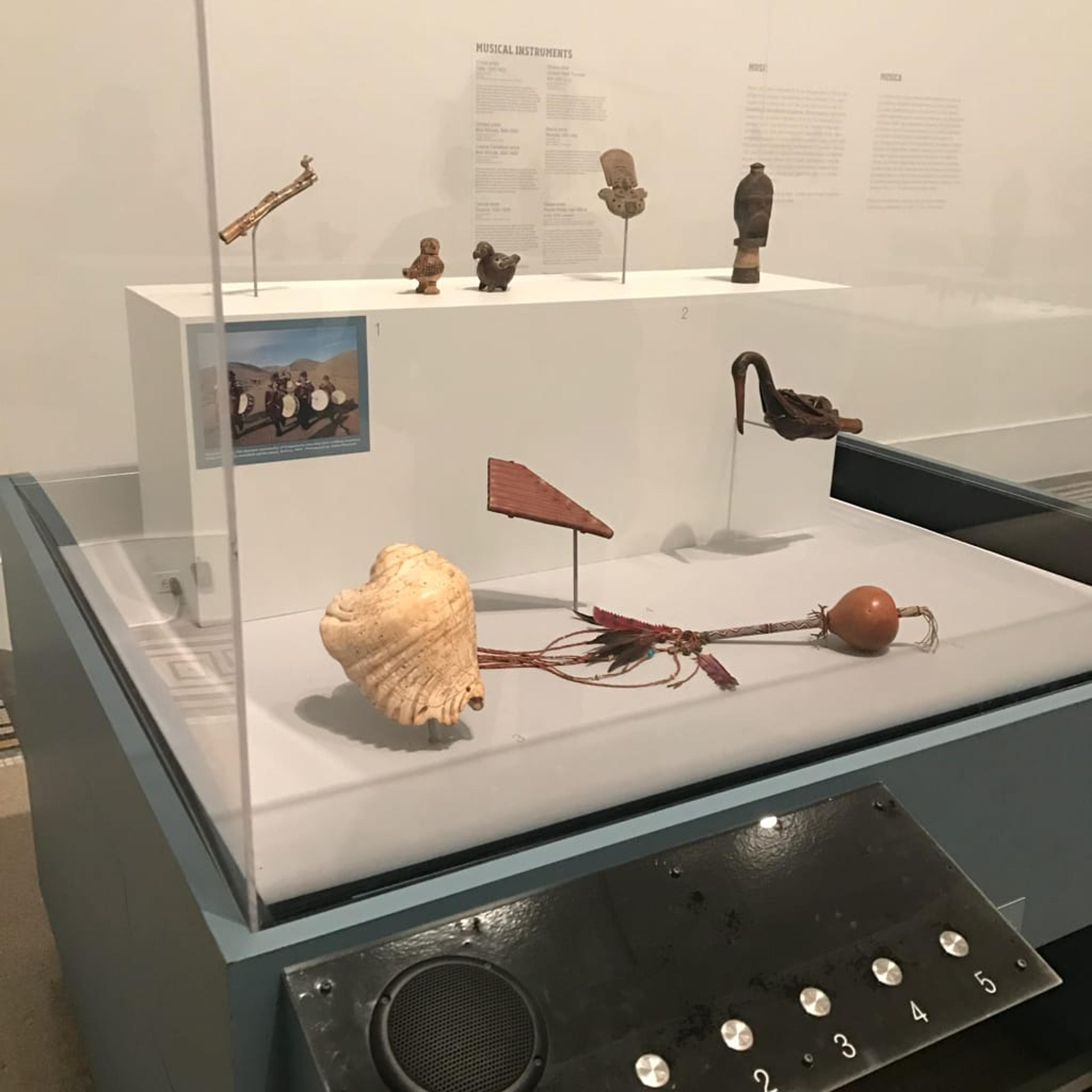 The sounds were sourced from soundtracks of similar types of instruments being played such as Dale Olsen’s Music of El Dorado and Peyote songs from the Smithsonian’s Folkways Records.
How was this used?
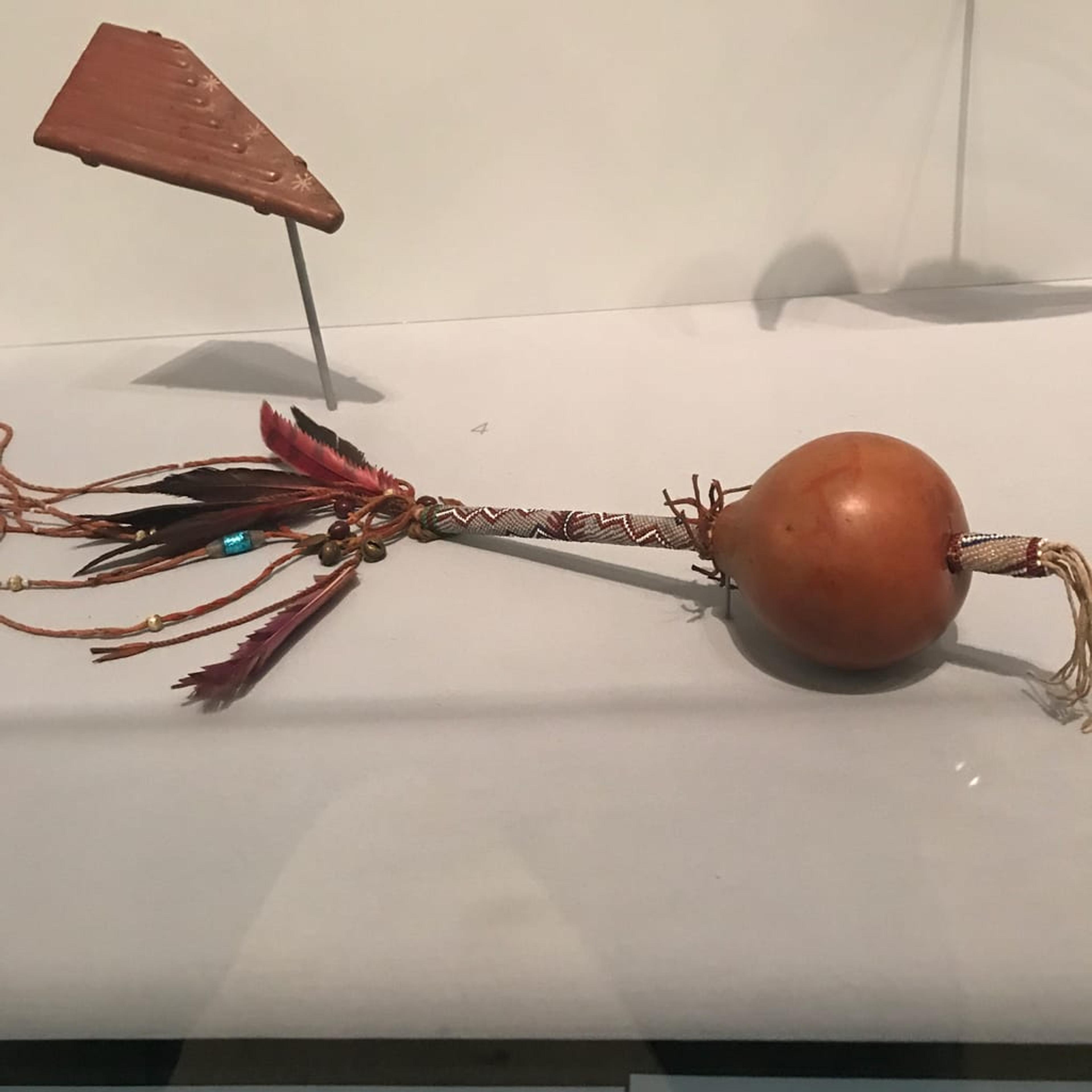 That is a Peyote Rattle of Osage manufacture. It would have been used in religious ceremonies. Its symbolism was described by Saucy Calf who an early museum curator purchased the instrument from.
Have information?
Have information about an artwork? Contact us at