Graal Vase, model 538M
Caption
Edvard Hald (Swedish, 1883–1980); Orrefors Glasbruk (founded 1898). Graal Vase, model 538M, 1950–1980. Glass, 5 1/2 x 4 3/4 x 4 3/4 in. (14.0 x 12.1 x 12.1 cm). Brooklyn Museum, Gift of Susan G. Solomon and Janis Warren in memory of their parents, Rita and Nathan Goldberg., 1992.245.
Gallery
Not on view
Collection
Gallery
Not on view
Collection
Designer
Maker
Title
Graal Vase, model 538M
Date
1950–1980
Medium
Glass
Classification
Dimensions
5 1/2 x 4 3/4 x 4 3/4 in. (14.0 x 12.1 x 12.1 cm)
Signatures
Edward Hald
Inscriptions
no incriptions
Markings
etched on bottom: "ORREFORS/SWEDEN/GRAAL VASE 538m/Edward Hald (signed)
Credit Line
Gift of Susan G. Solomon and Janis Warren in memory of their parents, Rita and Nathan Goldberg.
Accession Number
1992.245
Frequent Art Questions
Where did this vase come from?
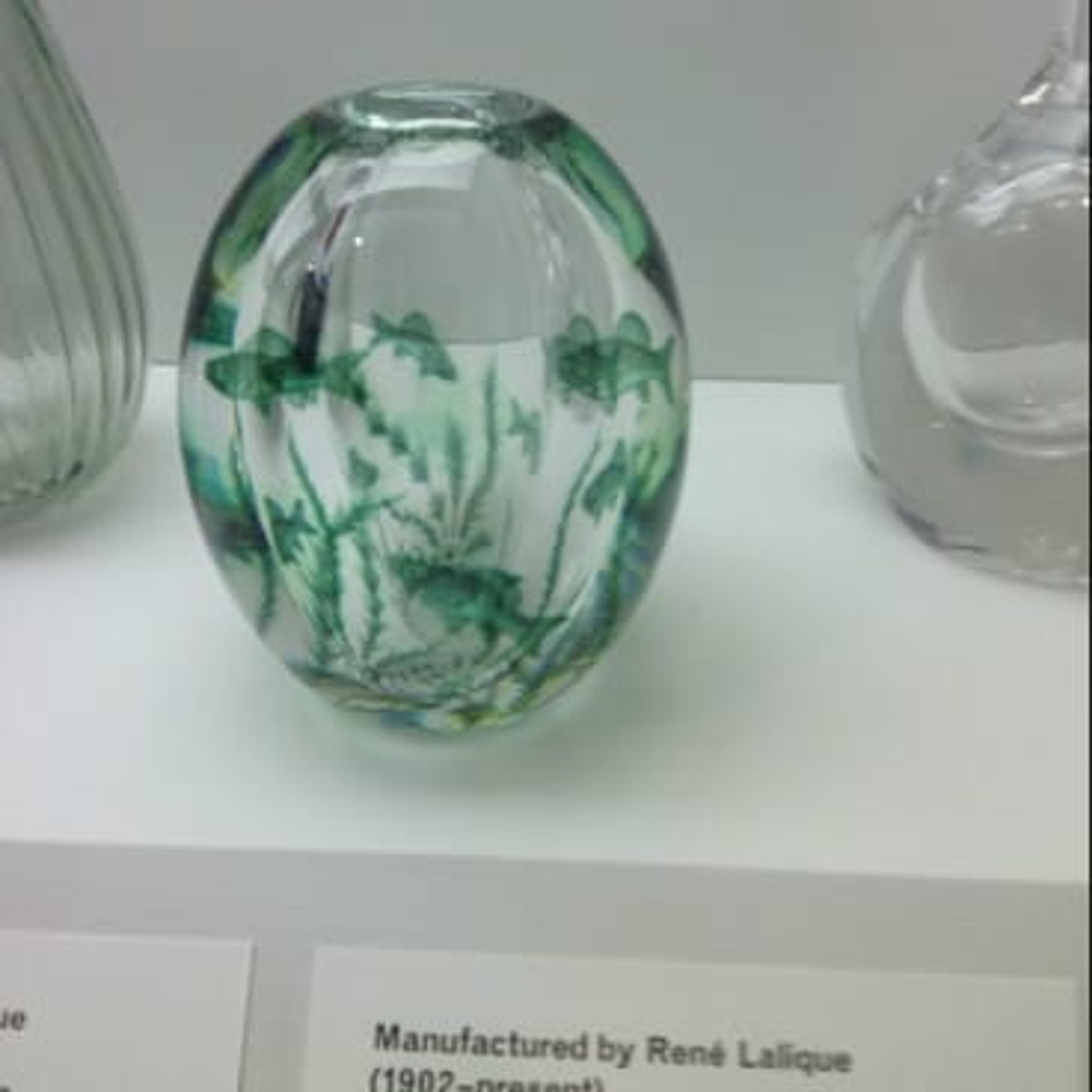 The designer, Hald, studied in Dresden, Stockholm, Copenhagen and Paris. Hald invented this glass making technique, called fishgraal. He painted the design onto the glass, a green layer in this case, with liquid bitumen. Then, all the green layer which isn't covered with the pattern is acid-etched away, so that the pattern stands out on a clear background. Then it is reheated to 400-500 degrees Celcius and carefully covered with another thick layer of crystal. The name, fish graal, comes from the fact that the first collection featured fish.
We are wondering how glass overcasing is done?
First a glass vessel was created. The design was painted onto the green glass with liquid bitumen. After this, the glass not covered by the bitumen was etched away, leaving only the designs present on the vessel. After this, the piece was reheated to 400 to 500 degrees celsius and covered with another layer of crystal, so the design is sandwiched between the two clear layers. The technique was invented by the glass maker who made this vase, Edvard Hald.What kind of fish are these?
We're not actually sure what kind of fish they are. That's a decently popular question about this piece. I can say that the technique used to create this kind of encased design was invented by the designer of this work, Edvard Hald, and is called fishgraal!
Have information?
Have information about an artwork? Contact us at