Vase
Wedgwood and Sons
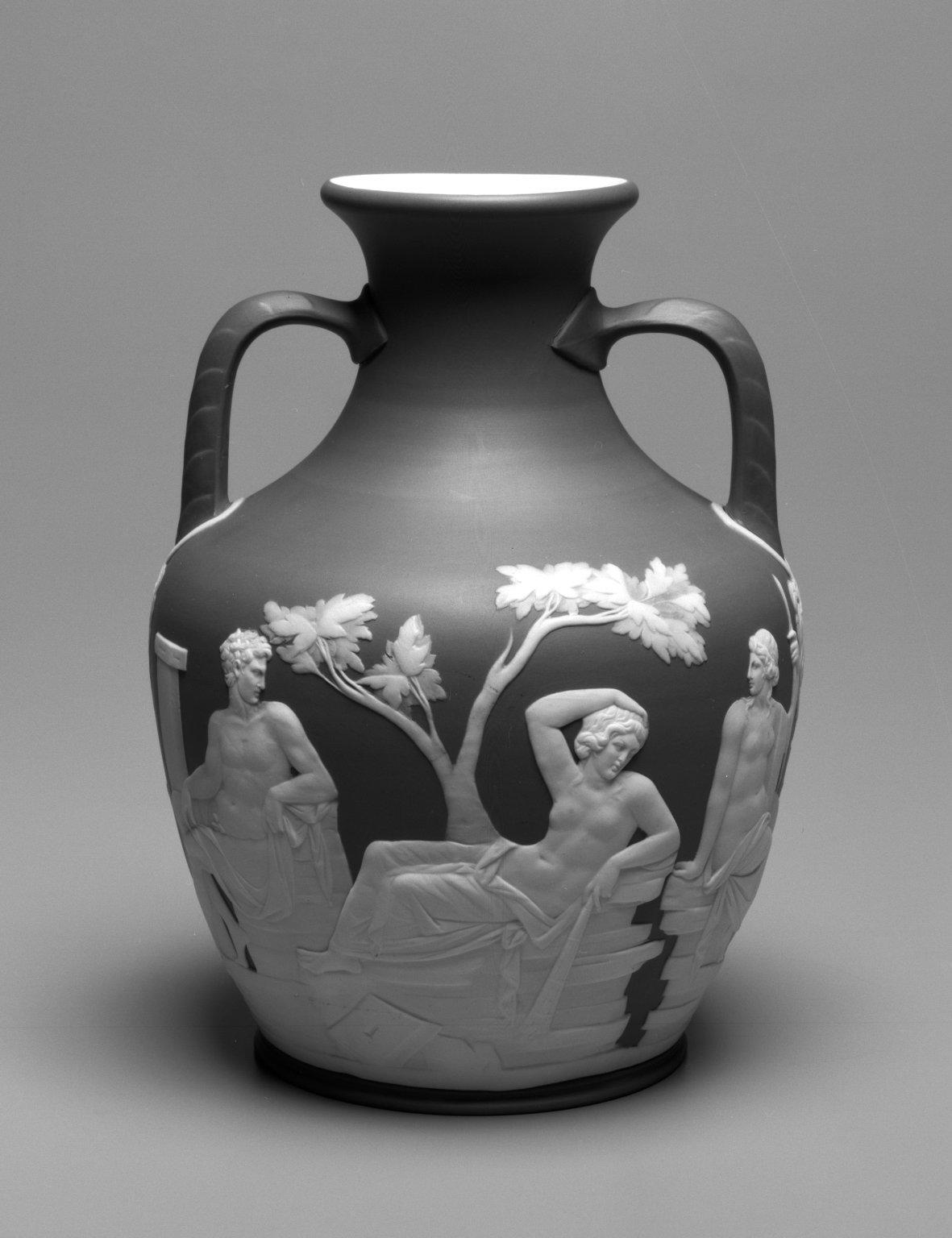
Brooklyn Museum photograph
Object Label
This is a later version of one of Wedgwood’s best-known pieces. It reproduces in ceramic the Portland Vase, one of the most famous objects from antiquity, now in the British Museum. An ancient Roman cameo glass vase from the reign of the emperor Augustus, it was found about 1600 and was owned by the Barberini family in Rome until it was bought by a Scotsman in 1780; it was eventually brought to England, where it was sold to the Duchess of Portland. The original vase has a dark blue glass body cased in white glass that was cameo cut to reveal the blue beneath. Wedgwood was eager to make copies of this famous artifact to sell. The first Wedgwood versions were made about 1787, and it has been in production ever since.
Caption
Wedgwood and Sons (British, Staffordshire, 1759–present). Vase, ca. 1801–1900. Tinted stoneware, 10 x 7 1/2 x 7 1/2 in. (25.4 x 19.0 x 19.0 cm). Brooklyn Museum, Gift of Mrs. William Liberman, 1996.85.1. (Photo: Brooklyn Museum)
Gallery
Not on view
Collection
Gallery
Not on view
Collection
Maker
Title
Vase
Date
ca. 1801–1900
Medium
Tinted stoneware
Classification
Dimensions
10 x 7 1/2 x 7 1/2 in. (25.4 x 19.0 x 19.0 cm)
Signatures
not signed
Inscriptions
no inscriptions
Markings
Impressed on bottom "WEDGWOOD"
Credit Line
Gift of Mrs. William Liberman
Accession Number
1996.85.1
Frequent Art Questions
Tell me more about this vase.
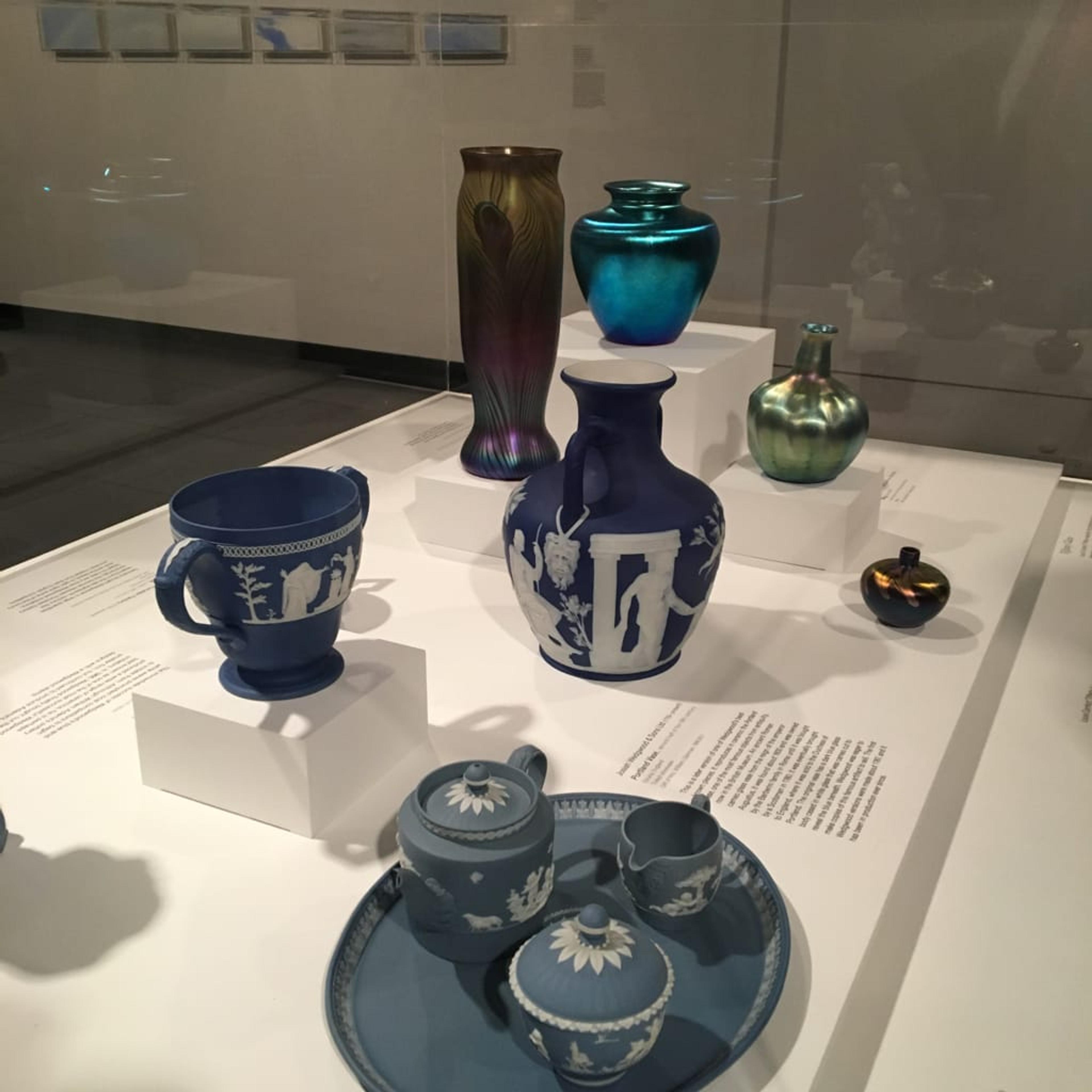 This is called The Portland Vase and is the signature work of the Wedgwood factory. Even today, the bottom of Wedgwood ceramics are marked with a tiny image of this vase. The original vase was an ancient piece of Roman glass. Wedgwood developed a special type of ceramic to make copies of it. He was such a brilliant marketer that he sold people tickets to come and see his copy of that ancient work of decorative art, and they were excited to see it, even though it was new and not the original.
Why was Wedgwood so famous and popular?
Josiah Wedgwood revolutionized the way that pottery was produced, distributed, and marketed, favoring a division of labor model for pottery production. He even invested in road networks that allowed his work to spread far and wide, and established a special London showroom to attract influential clientele. He also developed a great number of different clays and techniques for ceramics that helped to popularize his pottery.Could you please tell me more about this Waterford Wedgwood PLC?
Waterford Wedgwood PLC was a holding company created by the merger of the Wedgwood ceramics company and Waterford Crystal. That company later acquired additional luxury goods brands like Royal Doulton and Rogaška and was eventually acquired themselves by the Fiskars Group.Wedgwood, whose early ceramics are well represented in our collection, first made a name for themselves with the production of jasperware, a white-on-color (typically blue) style of decorative ceramics that took inspiration from Classical art.Today, Wedgwood continues to make luxury, decorative ceramics, and tablewares.
Have information?
Have information about an artwork? Contact us at