Mummified Cat
305 B.C.E.–395 C.E.


1 of 3
Caption
Mummified Cat, 305 B.C.E.–395 C.E.. Animal remains, linen, pigment, 14 7/8 × 2 3/4 × 3 3/4 in. (37.8 × 7 × 9.5 cm) mount (dims for support-board display): 3 3/4 × 7 × 18 in. (9.5 × 17.8 × 45.7 cm). Brooklyn Museum, Charles Edwin Wilbour Fund, 05.307. (Photo: Brooklyn Museum)
Gallery
Not on view
Gallery
Not on view
Title
Mummified Cat
Date
305 B.C.E.–395 C.E.
Period
Ptolemaic Period to Roman Period
Geography
Place made: Egypt
Medium
Animal remains, linen, pigment
Classification
Dimensions
14 7/8 × 2 3/4 × 3 3/4 in. (37.8 × 7 × 9.5 cm) mount (dims for support-board display): 3 3/4 × 7 × 18 in. (9.5 × 17.8 × 45.7 cm)
Credit Line
Charles Edwin Wilbour Fund
Accession Number
05.307
Frequent Art Questions
How and why did they mummify animals?
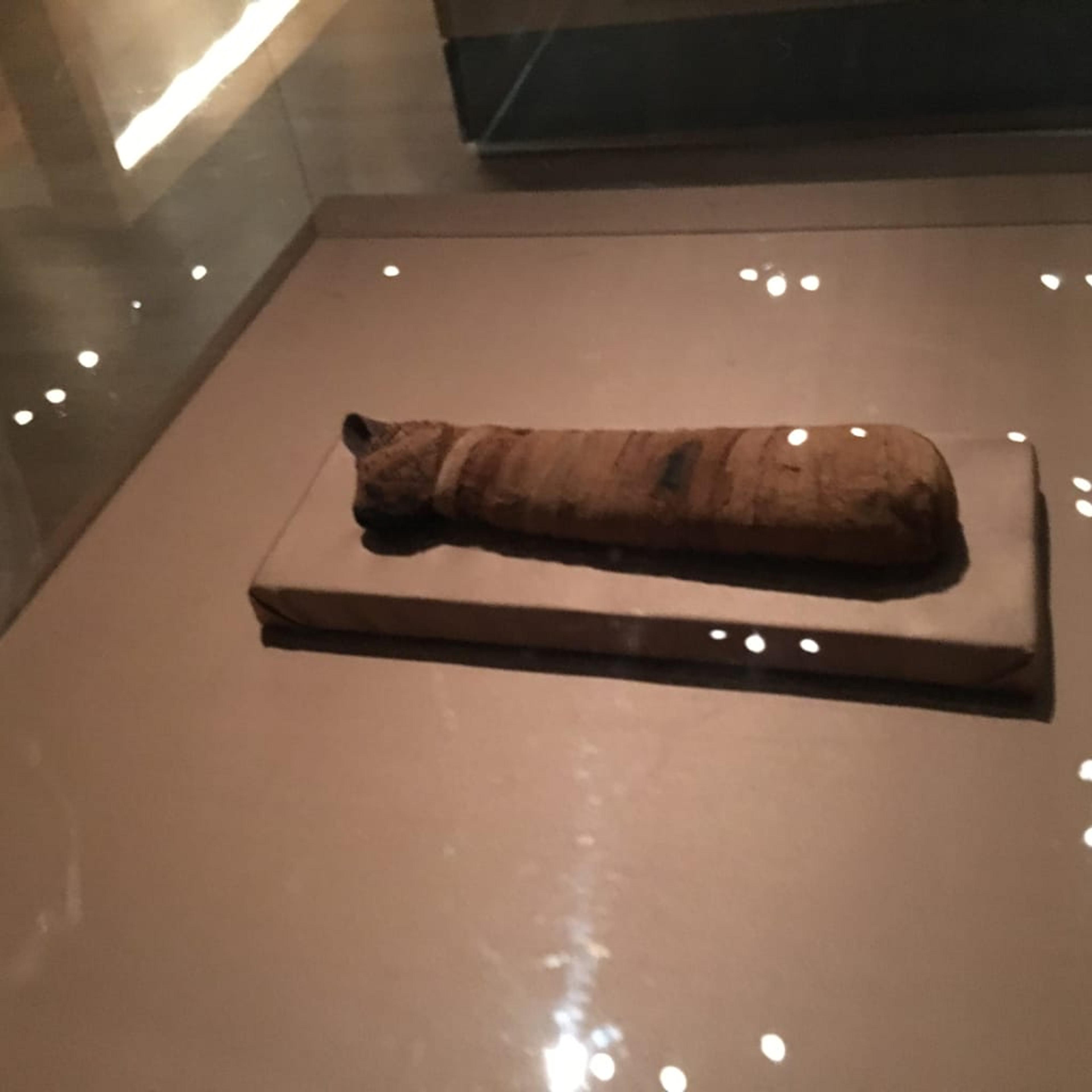 Animals were mummified much the same way humans were. The internal organs would be removed and the body would be treated with salt to dry it out. Later it would be wrapped and covered with resin. Frequently, what were sold as animal mummies were "false" mummies; the ibis here, for example, is just some feathers and stuffing wrapped up in linen.The mummies were believed to deliver one's wishes, gratitude, of messages to the gods, animal mummies functioned as votive offerings to the gods and the deceased.
Do you have any other special information about mummified animals?
Certainly! It is believed that most animal mummies were created as offerings to various gods. Sometimes the wealthy could mummify their pets to be buried with them, too.Is there a specific reason to offer animals to the gods?Offerings of food, animals and other objects were made to the gods for a multitude of reasons. People would make offerings while asking a god for assistance or to thank a god for something good. Certain animals were offered to certain gods, and at certain times. For example, the ibis being offered to Thoth which I just described. Another example is during a funeral procession when sometimes a jackal's skin would be placed in an offering to Anubis, who is often represented as a jackal, and is believed to be the guardian of mummies.Cool that makes senseIt makes complete sense to want to offer something special to Anubis so he would protect your mummy and safely escort you to the netherworld!Did the Egyptians keep pets
Yes! Cats and dogs, and even baboons and other animals have been known as pets, and are depicted in tomb reliefs, pottery and jewelry.Thanks
Have information?
Have information about an artwork? Contact us at