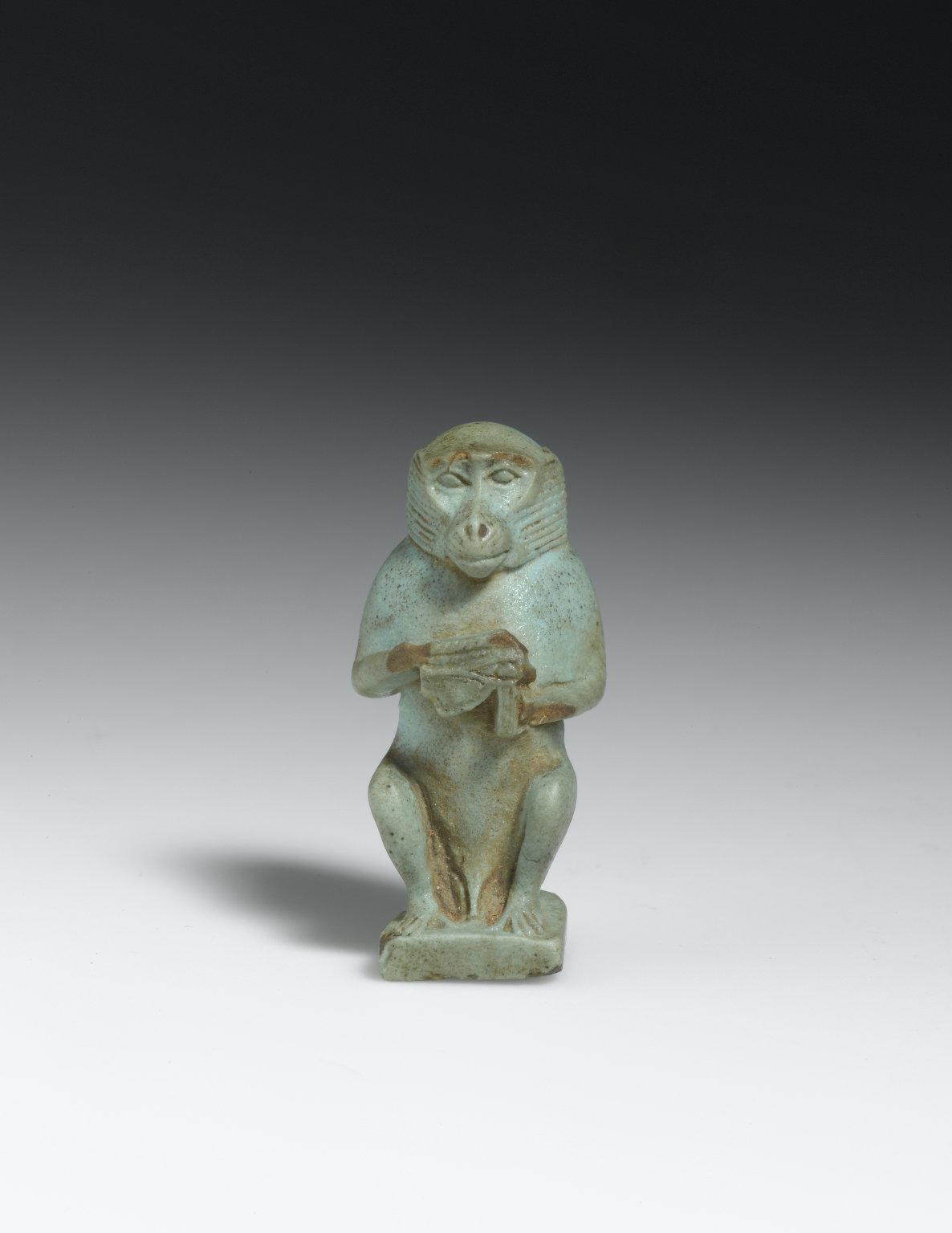
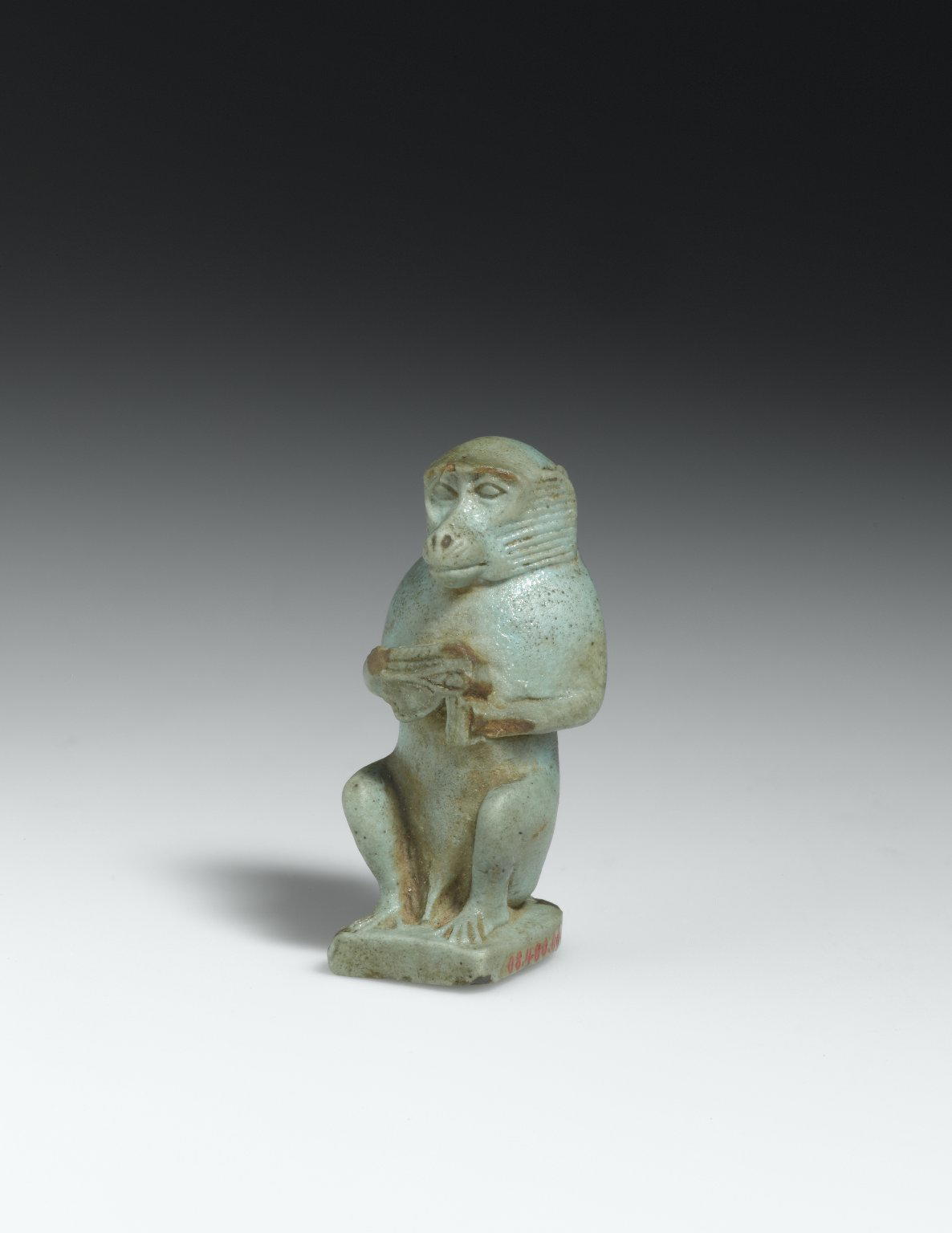
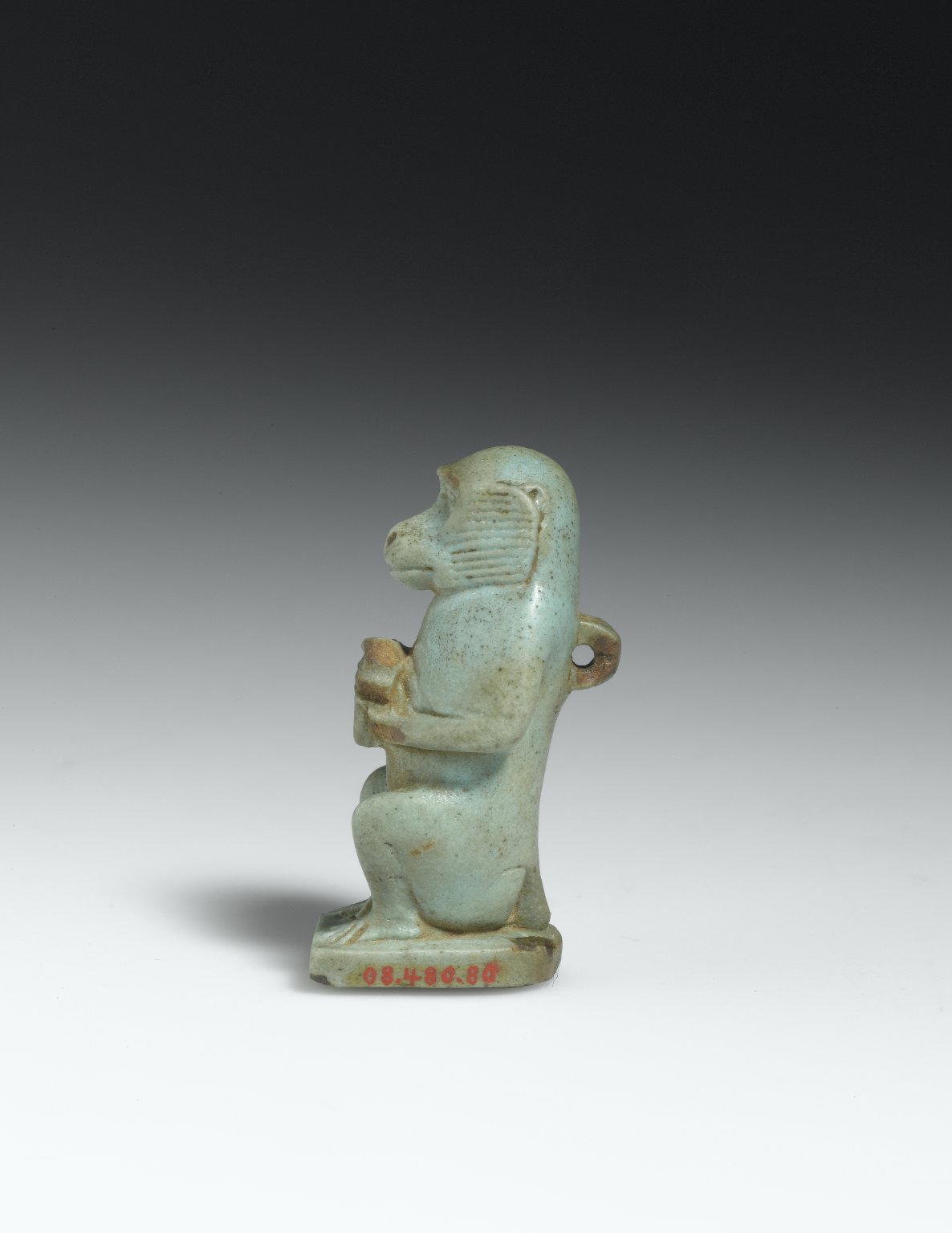
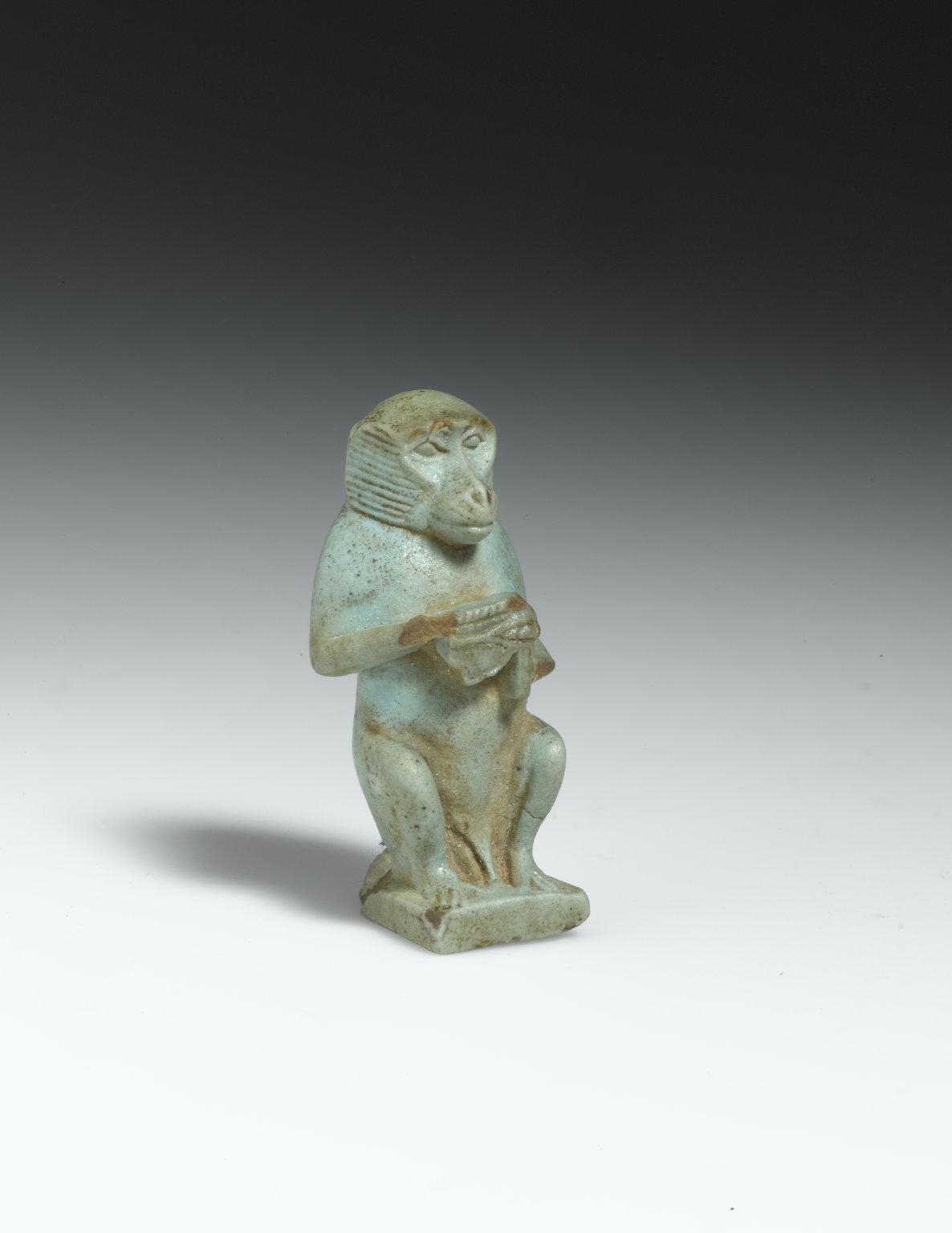
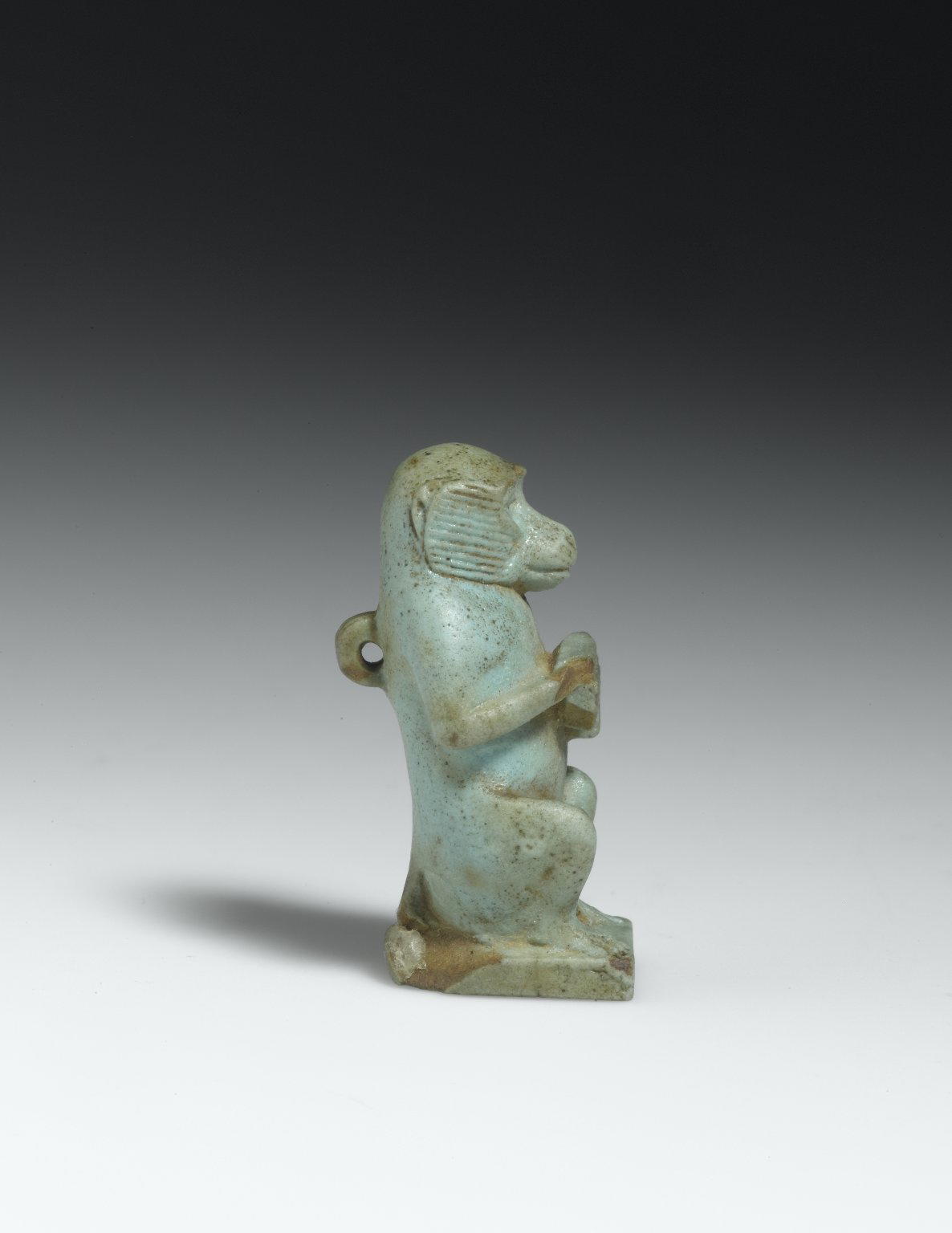
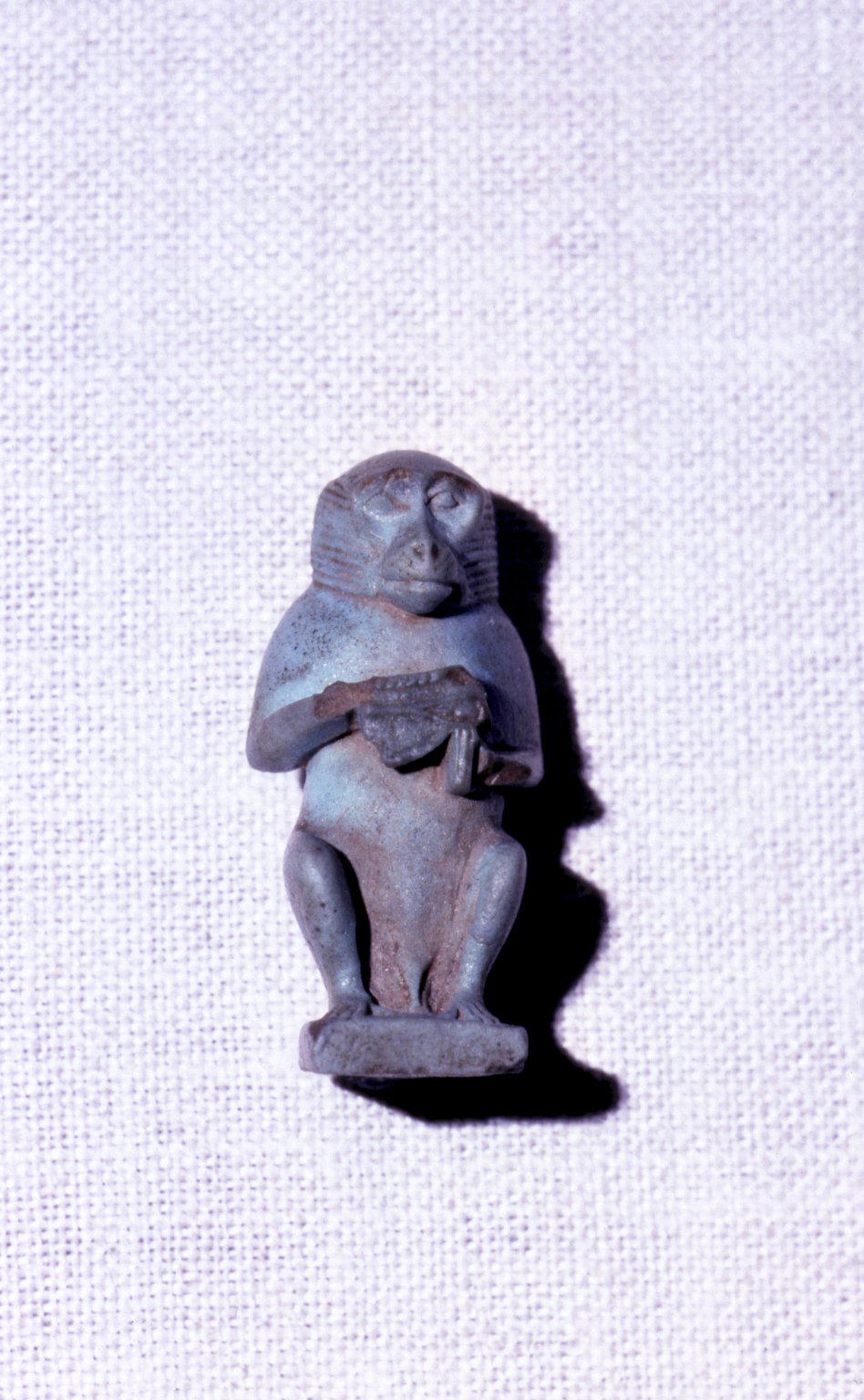
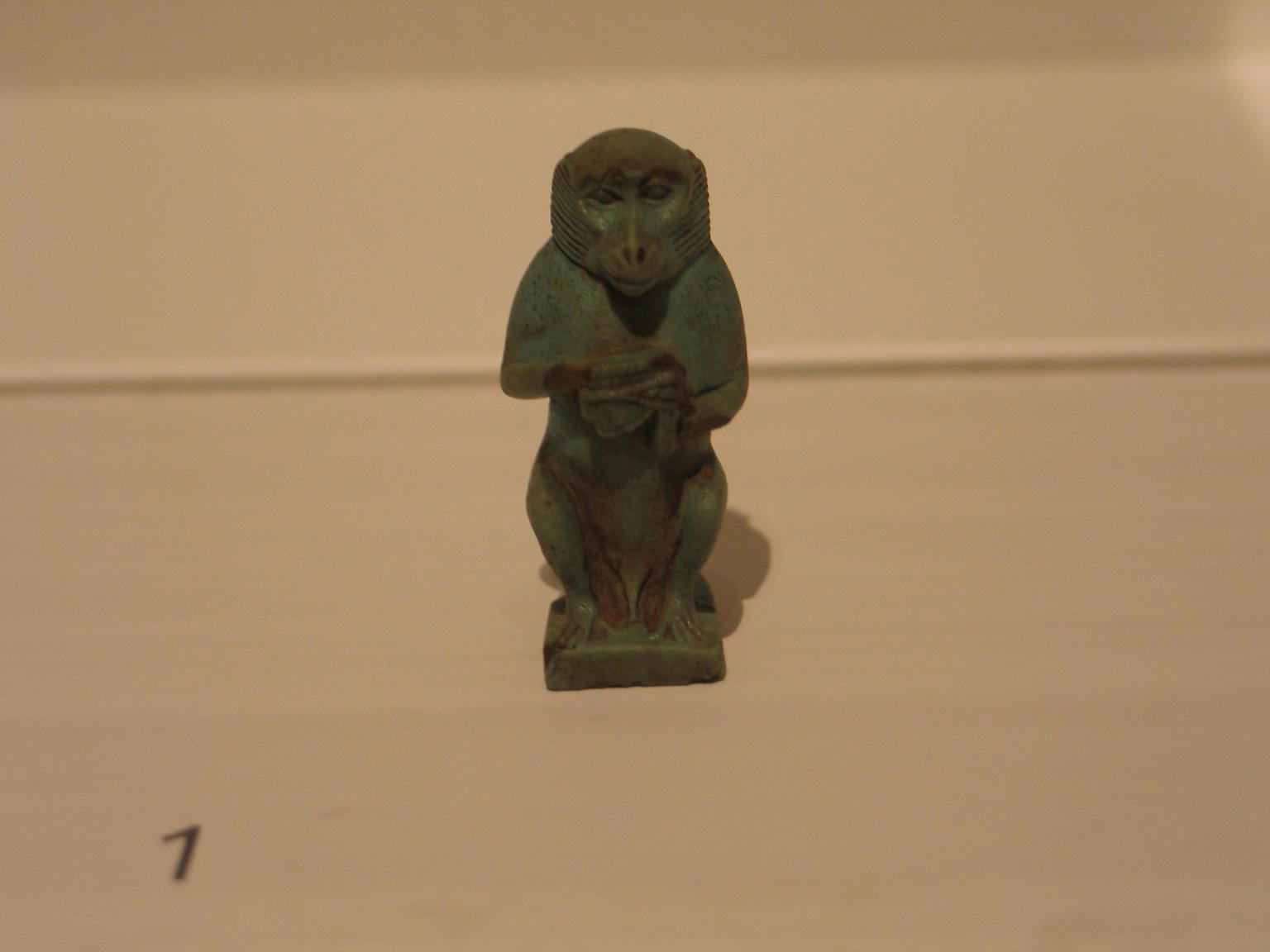
Thoth with Wadjet-eye
1 of 7
Object Label
The most common amulet is the eye of Horus, a human eye with the markings of a falcon's face. Mythology was central to ancient Egyptian magic, and this image is based on the myth of the destruction of one of the falcon-headed god Horus's eyes by the god Seth and its restoration to wholeness (wedja) by the god Thoth, a great magician, The wedjat-eye represented both wellbeing and the constantly renewed victory of the positive forces of the universe over evil or destructive forces.
Caption
Thoth with Wadjet-eye, 664–30 B.C.E.. Faience, 1 5/8 x 3/4 x 7/8 in. (4.1 x 1.9 x 2.2 cm). Brooklyn Museum, Charles Edwin Wilbour Fund, 08.480.80. (Photo: Brooklyn Museum)
Gallery
Not on view
Gallery
Not on view
Have information?
Have information about an artwork? Contact us at