Easy Chair (Butaca)
Unknown Maker
Brooklyn Museum photograph
Object Label
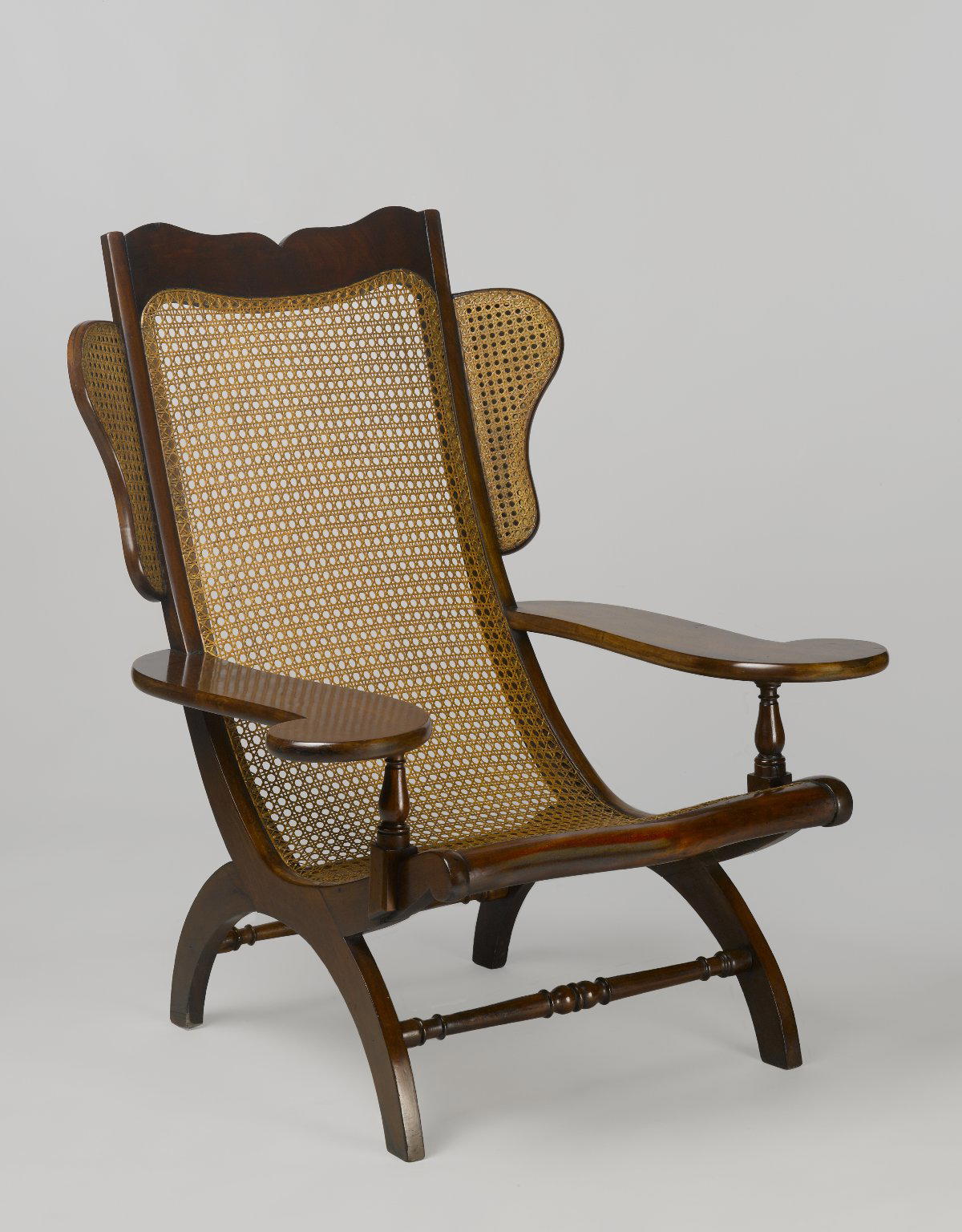
Butacas, colonial low easy chairs derived from pre-Columbian seat forms (see illustration), were ideal for intimate domestic spaces. The elite eighteenth-century example here includes carved rocaille decoration—fanciful sinuous curves with origins in the irregular edges of shells and rock formations—and cabriole legs adorned with a dog’s head and a bird (possibly references to the owner’s pets or interest in animals). The later mahogany-and-cane Cuban butaca includes foreign elements such as wings and a top rail molding.
The butaca type spread throughout the Caribbean and key ports along the Gulf of Mexico, particularly after Charles III signed the 1778 decree of free trade, which allowed Spanish American ports to trade directly with one another and with most ports in Spain.
The butaca type spread throughout the Caribbean and key ports along the Gulf of Mexico, particularly after Charles III signed the 1778 decree of free trade, which allowed Spanish American ports to trade directly with one another and with most ports in Spain.
Caption
Unknown Maker. Easy Chair (Butaca), second quarter 19th century. Mahogany, cane, 43 x 35 3/4 x 35 3/8 in. (109.2 x 90.8 x 89.9 cm). Brooklyn Museum, Gift of Mrs. J. Fuller Feder, by exchange and Brooklyn Museum Collection, 2011.58.1. (Photo: Brooklyn Museum)
Maker
Title
Easy Chair (Butaca)
Date
second quarter 19th century
Geography
Place made: Cuba
Medium
Mahogany, cane
Classification
Dimensions
43 x 35 3/4 x 35 3/8 in. (109.2 x 90.8 x 89.9 cm)
Markings
Unmarked
Credit Line
Gift of Mrs. J. Fuller Feder, by exchange and Brooklyn Museum Collection
Accession Number
2011.58.1
Have information?
Have information about an artwork? Contact us at