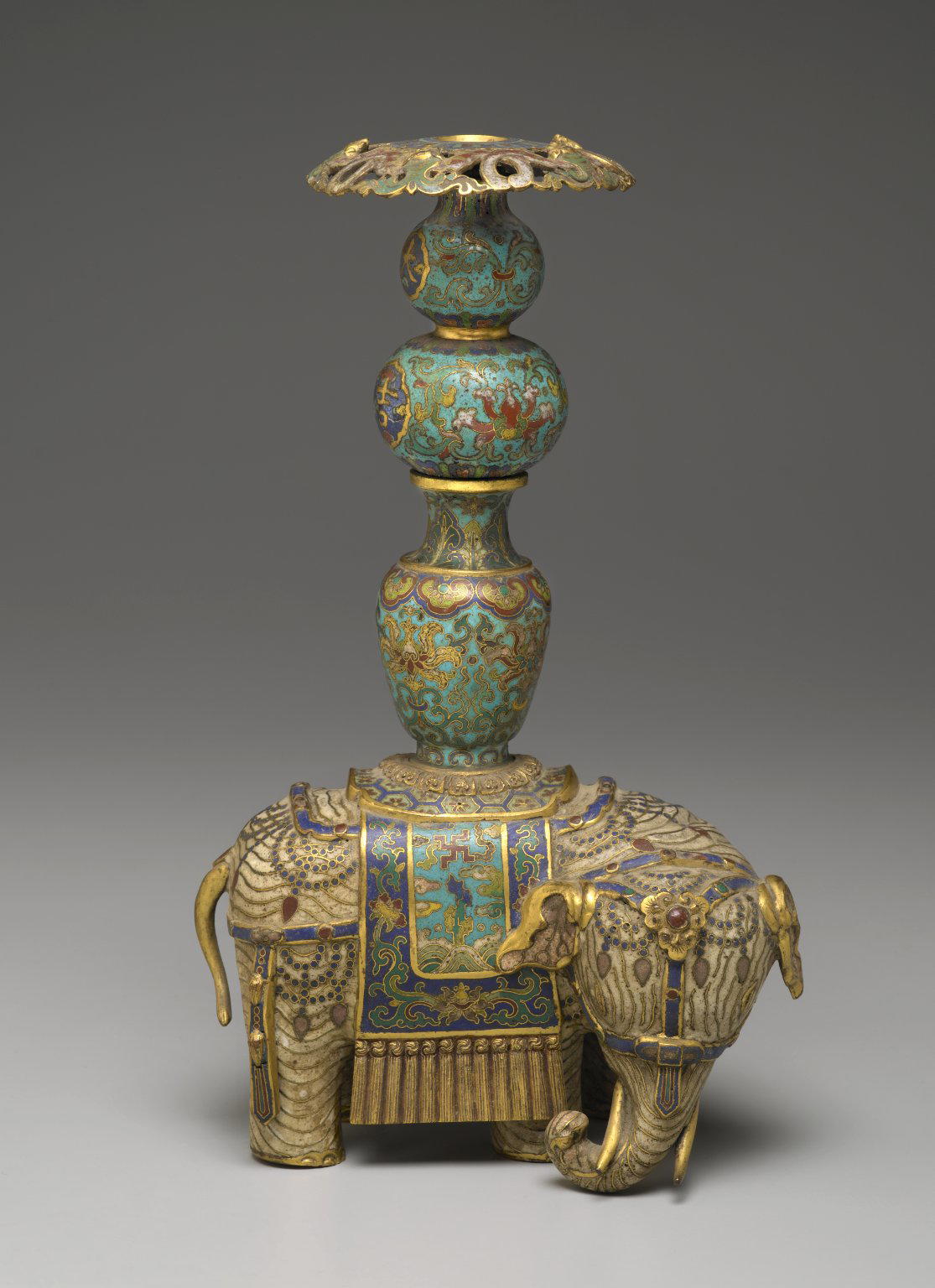
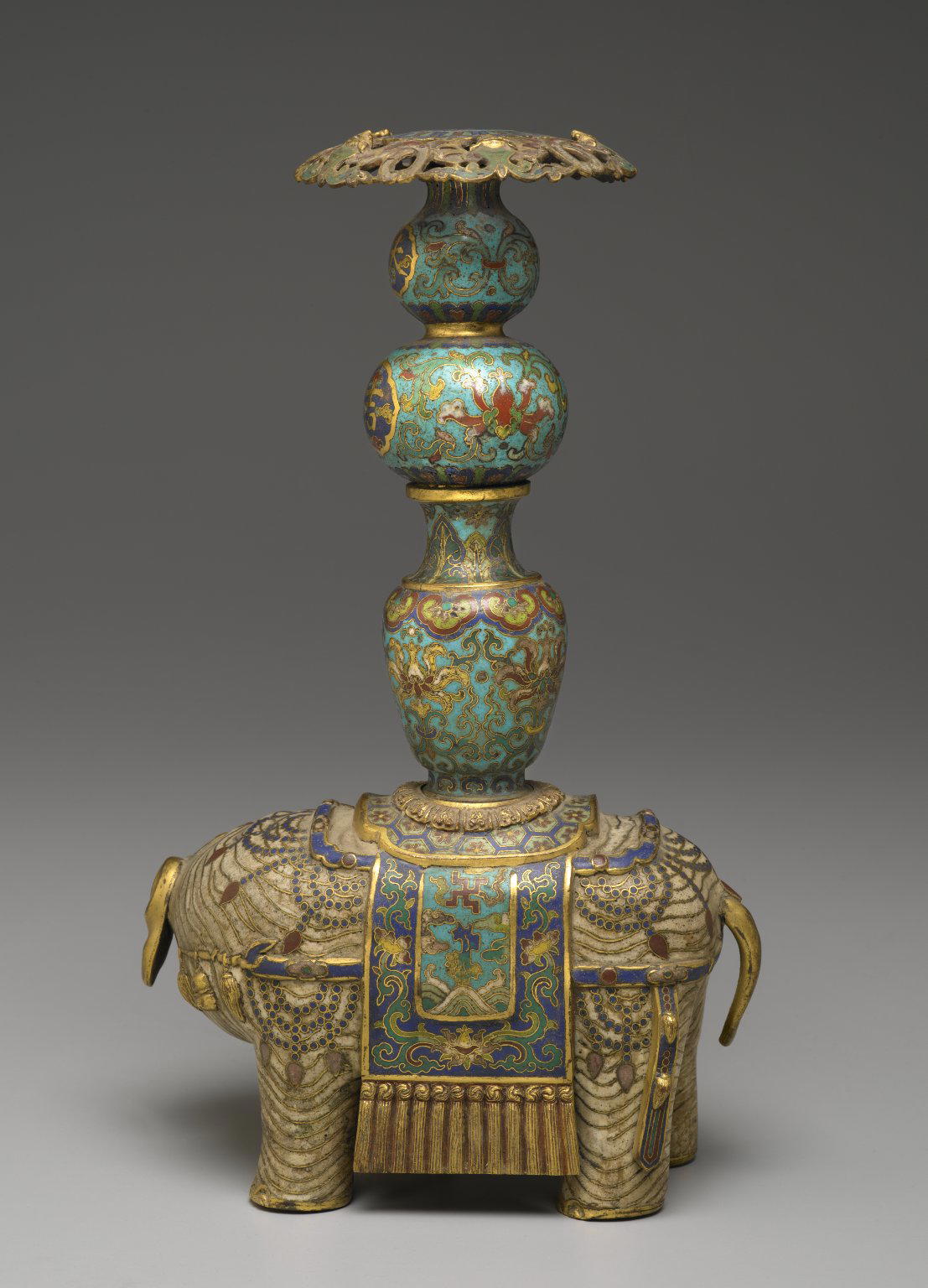
Figure of an Elephant with Two Miniature Vases
18th century
1 of 2
Object Label
This object, with its multiple meanings, was most likely made in the imperial workshops in Beijing for use in the palace. An elephant carrying a vase on its back is a rebus for peaceful times. During the Qing dynasty, processions celebrating the emperor’s birthday featured real elephants carrying vases on their backs. This cloisonné elephant bears two vases, the upper vase in the shape of a double gourd inscribed with da ji, meaning “great fortune.” Depicted on the elephant’s saddle blanket, a rock rising from the ocean with a swastika above it also has multiple meanings: the rock means permanence, the waves signify abundance, and the swastika is a homophone of the Chinese word for “ten thousand” (wan), which signifies “infinity,” meaning that these blessings are multiplied limitlessly.
Caption
Figure of an Elephant with Two Miniature Vases, 18th century. Cloisonné enamel on copper alloy, 12 x 7 x 4 1/2 in. (30.5 x 17.8 x 11.4 cm) elephant: 5 x 7 x 4 1/2 in. (12.7 x 17.8 x 11.4 cm). Brooklyn Museum, Gift of Samuel P. Avery, 09.633a-c. (Photo: Brooklyn Museum)
Collection
Collection
Title
Figure of an Elephant with Two Miniature Vases
Date
18th century
Dynasty
Qing Dynasty
Period
Qing Dynasty
Geography
Place made: China
Medium
Cloisonné enamel on copper alloy
Classification
Dimensions
12 x 7 x 4 1/2 in. (30.5 x 17.8 x 11.4 cm) elephant: 5 x 7 x 4 1/2 in. (12.7 x 17.8 x 11.4 cm)
Credit Line
Gift of Samuel P. Avery
Accession Number
09.633a-c
Have information?
Have information about an artwork? Contact us at