Tomb Painting of a Woman with Offerings
Brooklyn Museum photograph
Object Label
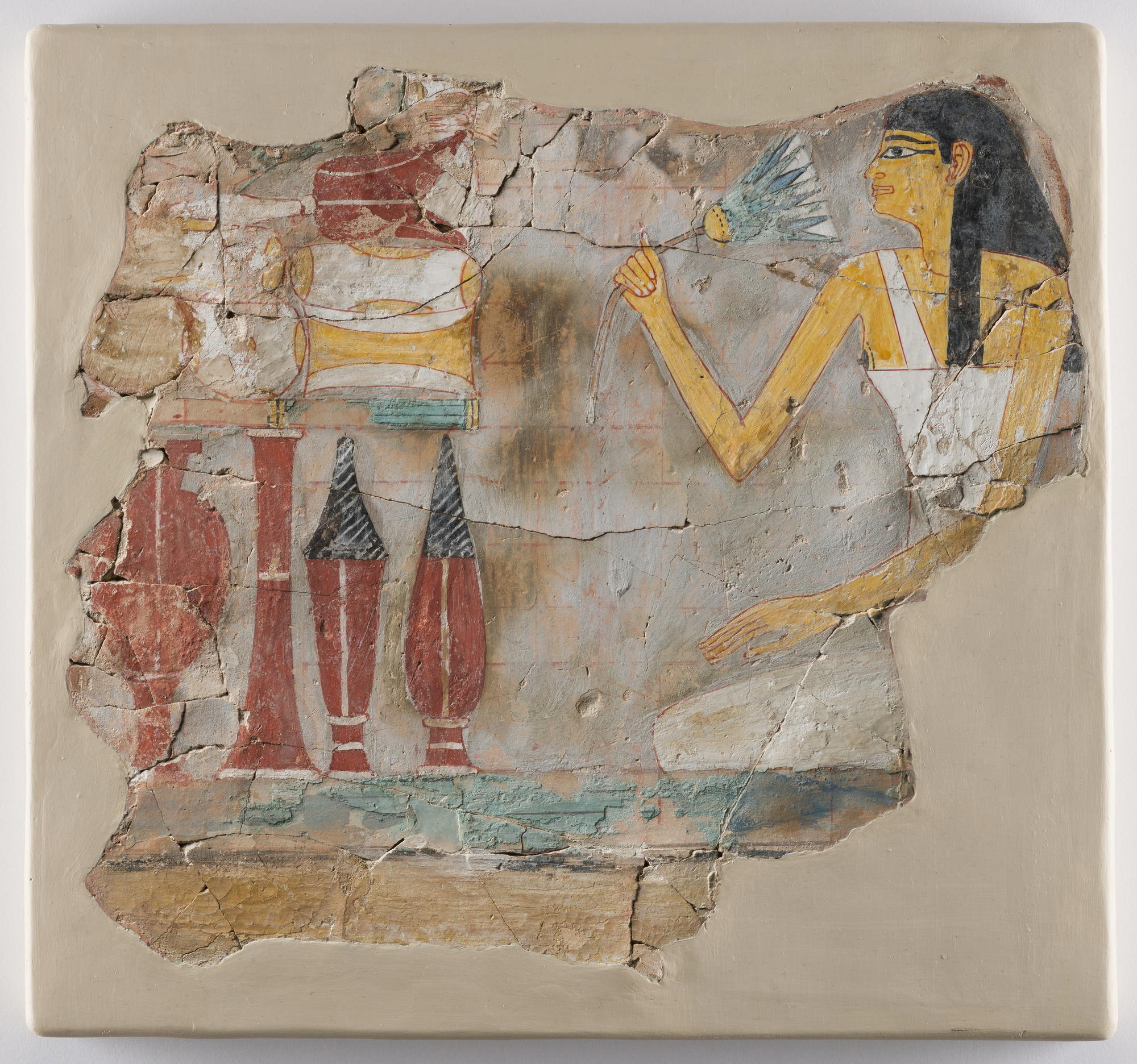
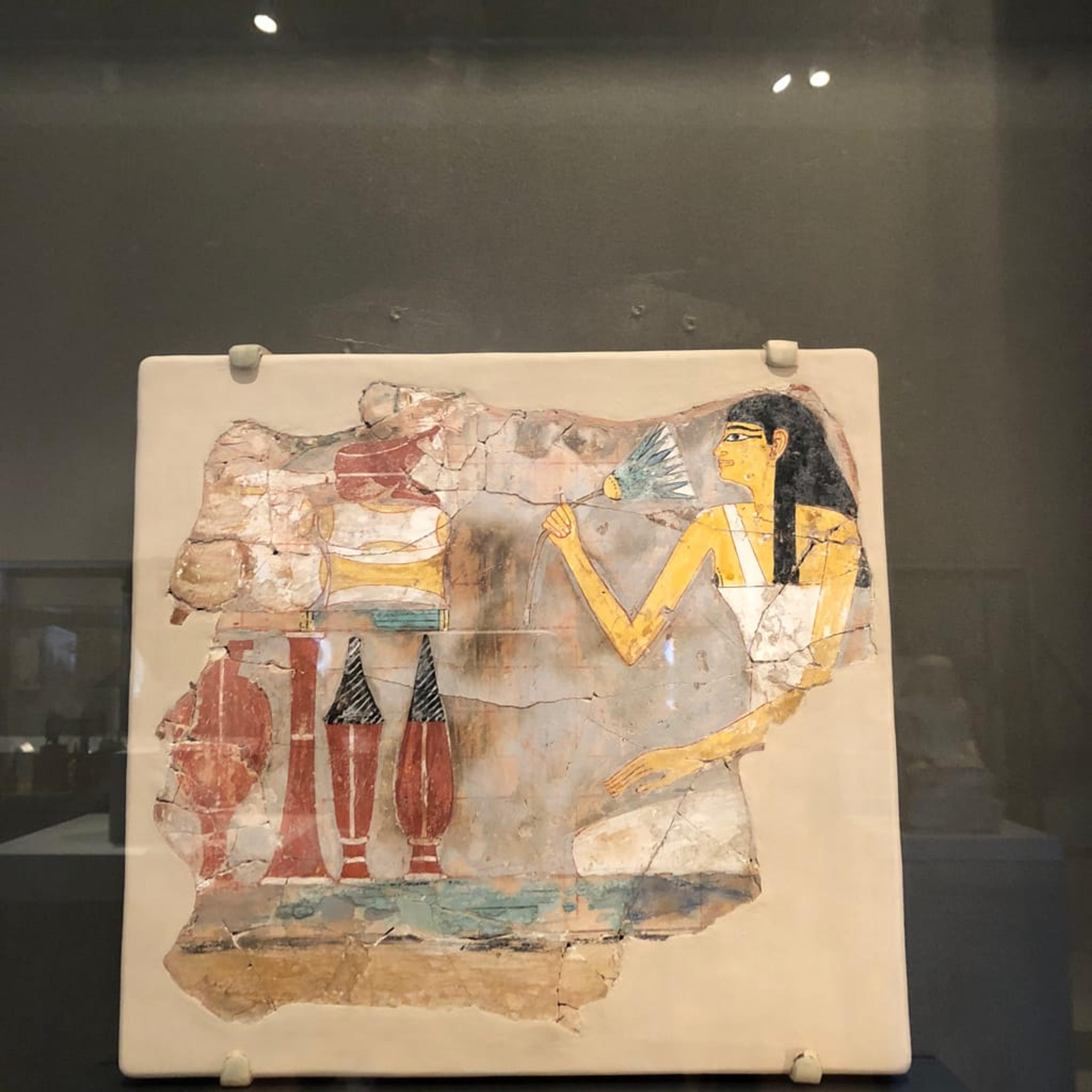
This fragment of wall painting from a tomb depicts a woman sitting on a green mat, inhaling the fragrance of a blue lotus. Sealed jars of beer and wine rest under a table loaded with other offerings of white and yellow loaves of bread and a dark red calf’s head. A grid of red lines that guided the draftsman in positioning the objects and proportioning the figures shows through where the paint has worn thin.
Caption
Tomb Painting of a Woman with Offerings, ca. 1539–1425 B.C.E.. Limestone, gesso, pigment, 11 1/2 × 12 1/2 × 1 3/8 in. (29.2 × 31.8 × 3.5 cm). Brooklyn Museum, Charles Edwin Wilbour Fund, 05.390. (Photo: Brooklyn Museum)
Gallery
Not on view
Gallery
Not on view
Title
Tomb Painting of a Woman with Offerings
Date
ca. 1539–1425 B.C.E.
Dynasty
early Dynasty 18
Period
New Kingdom
Geography
Possible place collected: Thebes, Egypt
Medium
Limestone, gesso, pigment
Classification
Dimensions
11 1/2 × 12 1/2 × 1 3/8 in. (29.2 × 31.8 × 3.5 cm)
Credit Line
Charles Edwin Wilbour Fund
Accession Number
05.390
Frequent Art Questions
Does the blue lotus symbolize something special in ancient Egyptian society?
 They sure do! In fact there are a few layers to their meaning: the flower, the Nile, and the color blue. Flowers were symbols of rebirth because they die and come back each year.The Nile of course was the source of life in ancient Egypt, so water plants were revered for their relationship to the river. Blue was significant both for its association with life-giving water, the waters of creation, and the precious stone lapis lazuli.Additionally, the scent of the lotus was prized in Egypt and often used in perfumes.
Have information?
Have information about an artwork? Contact us at