Wadjet-eye Ring
ca. 1352–1336 B.C.E.


1 of 2
Object Label
Rings
The earliest Egyptian rings were purely decorative, but later rings came to carry significance.
By the Eighteenth Dynasty of the New Kingdom, they were frequently inscribed with the name of a god, a king, or the owner. The most popular type was made of faience and bore the name of the reigning monarch. Archaeologists have discovered thousands of these simple, mold-made rings; they were probably distributed as mementos at religious or state celebrations. Other rings feature protective symbols, including the wedjat-eye. Wealthy members of Eighteenth Dynasty society often wore rings made of inlaid glass or semiprecious stones.
The earliest Egyptian rings were purely decorative, but later rings came to carry significance.
By the Eighteenth Dynasty of the New Kingdom, they were frequently inscribed with the name of a god, a king, or the owner. The most popular type was made of faience and bore the name of the reigning monarch. Archaeologists have discovered thousands of these simple, mold-made rings; they were probably distributed as mementos at religious or state celebrations. Other rings feature protective symbols, including the wedjat-eye. Wealthy members of Eighteenth Dynasty society often wore rings made of inlaid glass or semiprecious stones.
Caption
Wadjet-eye Ring, ca. 1352–1336 B.C.E.. Faience, 3/8 x Diam. 9/16 in. (0.9 x 1.5 cm). Brooklyn Museum, Gift of the Egypt Exploration Society, 34.6050. (Photo: Brooklyn Museum)
Title
Wadjet-eye Ring
Date
ca. 1352–1336 B.C.E.
Dynasty
Dynasty 18
Period
New Kingdom, Amarna Period
Geography
Place excavated: Tell el-Amarna, Egypt
Medium
Faience
Classification
Dimensions
3/8 x Diam. 9/16 in. (0.9 x 1.5 cm)
Credit Line
Gift of the Egypt Exploration Society
Accession Number
34.6050
Frequent Art Questions
Why is there an eyeball on jewelry?
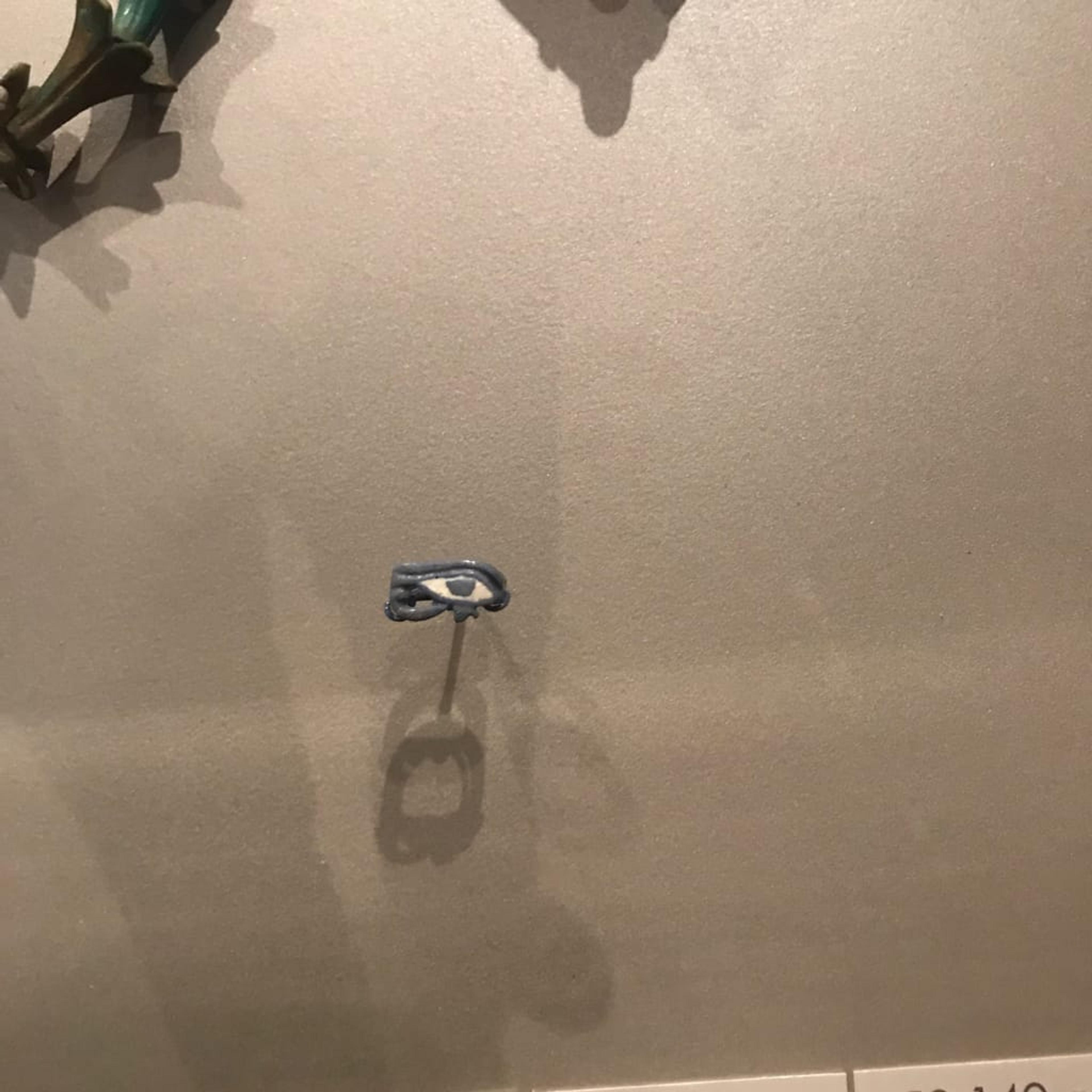 That is what is known as a Wedjat-eye, which is worn as a protective symbol. Also sometimes referred to the Eye of Horus, they are symbols of the restoration of wholeness.
Have information?
Have information about an artwork? Contact us at