Portion of a Historical Text


1 of 55
Object Label
The most important text recounts the efforts of a Thirteenth Dynasty Theban noblewoman named Senebtisi to establish legal ownership of ninety-five household servants, whose names indicate that forty-five were of Asiatic origin. The presence of so many foreigners in a single household suggests that the Asiatic population was increasing rapidly in Thirteenth Dynasty Egypt.
As was customary, some of these foreigners no doubt married Egyptians, adopted Egyptian beliefs and cultural traditions, and were absorbed into the cultural mainstream. Others, especially prisoners of war or descendants of military captives, remained loyal to their Asian heritage. Some of these foreigners facilitated the collapse of the Middle Kingdom and the later conquest of Egypt by the Asiatic Hyksos in the Second Intermediate Period.
Caption
Portion of a Historical Text, ca. 1809–1743 B.C.E.. Papyrus, ink, 35.1446a-e: 11 1/2 × 71 5/8 in. (29.2 × 182 cm) 35.1446a: 10 3/8 x 11 13/16 in. (26.3 x 30 cm) 35.1448b: 6 1/2 x 20 11/16 in. (16.5 x 52.5 cm) 35.1446c: 11 1/2 x 20 in. (29.2 x 50.8 cm) 35.1446d: 11 x 19 3/8 in. (28 x 49.2 cm). Brooklyn Museum, Gift of Theodora Wilbour, 35.1446a-e. (Photo: Brooklyn Museum)
Title
Portion of a Historical Text
Date
ca. 1809–1743 B.C.E.
Dynasty
late Dynasty 12 to Dynasty 13
Period
Middle Kingdom
Geography
Place collected: Egypt, Possible place made: Thebes, Egypt
Medium
Papyrus, ink
Classification
Dimensions
35.1446a-e: 11 1/2 × 71 5/8 in. (29.2 × 182 cm) 35.1446a: 10 3/8 x 11 13/16 in. (26.3 x 30 cm) 35.1448b: 6 1/2 x 20 11/16 in. (16.5 x 52.5 cm) 35.1446c: 11 1/2 x 20 in. (29.2 x 50.8 cm) 35.1446d: 11 x 19 3/8 in. (28 x 49.2 cm)
Credit Line
Gift of Theodora Wilbour
Accession Number
35.1446a-e
Frequent Art Questions
What kind of black ink do they use to write on papyrus?
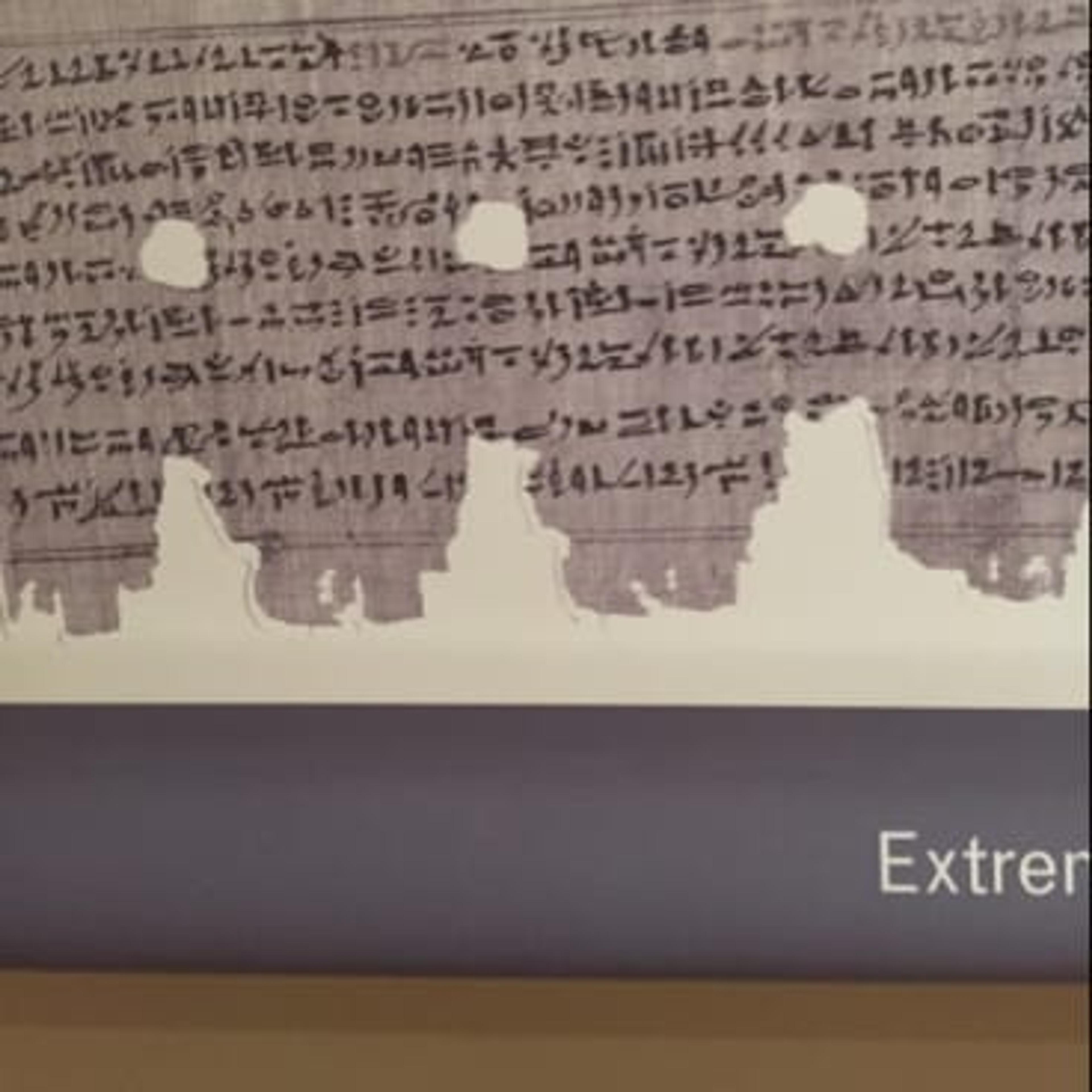 The black ink used was created by mixing soot with water.
What's going on here?
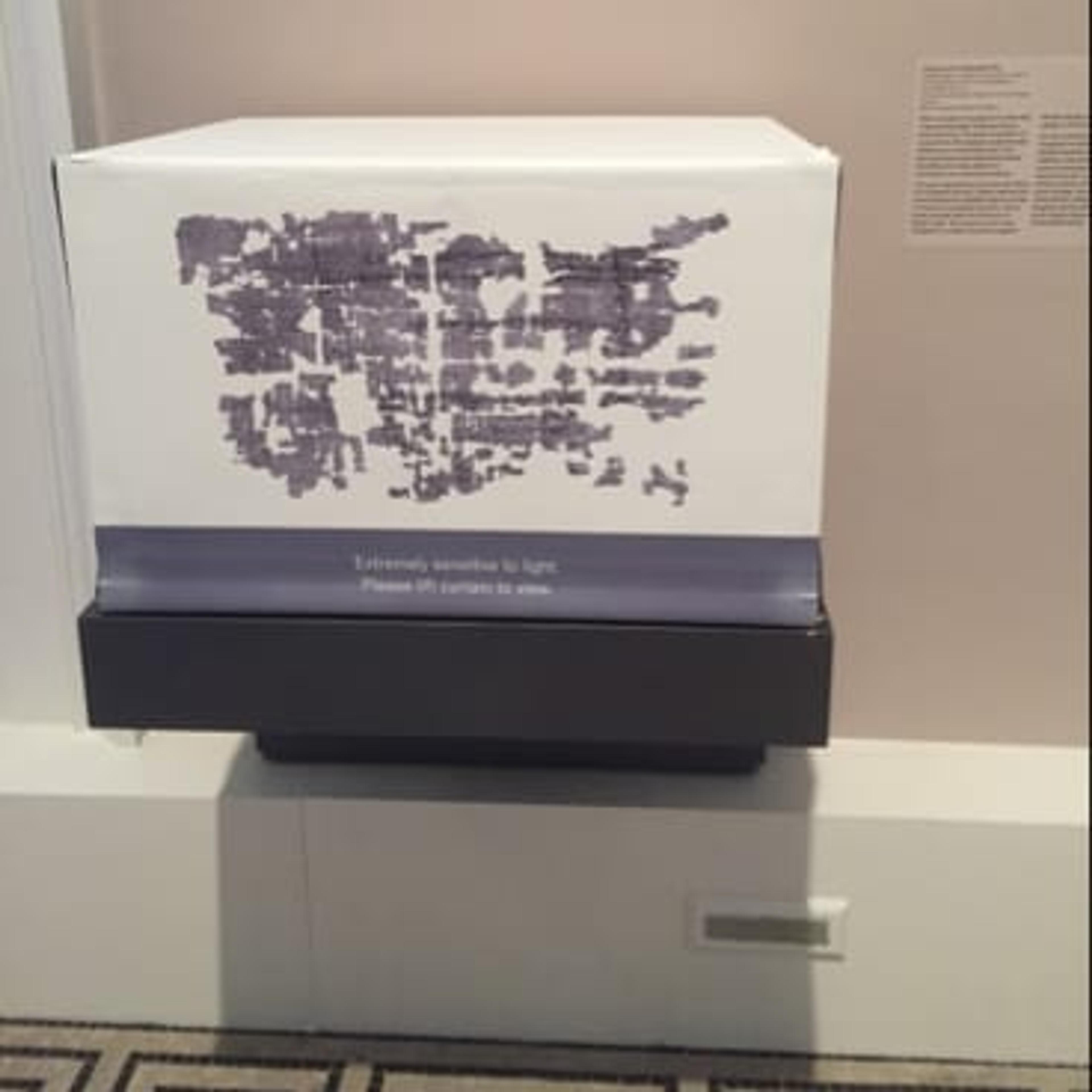 Objects like that papyrus, as well as textiles and other works on paper, need to be protected from light because light damage is cumulative and irreversible. That's why the object in the case is covered. If you continue back to The Mummy Chamber, you will see another long papyrus that is kept mainly in the dark, with lights that are motion sensored.The sign says this was written in a cursive form of hieroglyphics called hieratic. Did this influence written Hebrew or Aramaic in any way?There is a relationship. Hieroglyphs and Hieratic are the basis for an alphabet known to scholars as Proto-Sinaitic or Proto-Canaanite which directly influenced the Phoenician alphabet on which both Hebrew and Aramaic (among others) are based.
Are all hieroglyphs now understood?
Yes, they sure are!Just because of the Rosetta Stone?The Rosetta stone was an important key in understanding how hieroglyphs work, but Egyptologists already had figured out a bit about the language. They could translate some of the signs, but the Rosetta, which contains the same text written in three writing systems, led to the discovery that the hieroglyphs were an alphabetic writing system.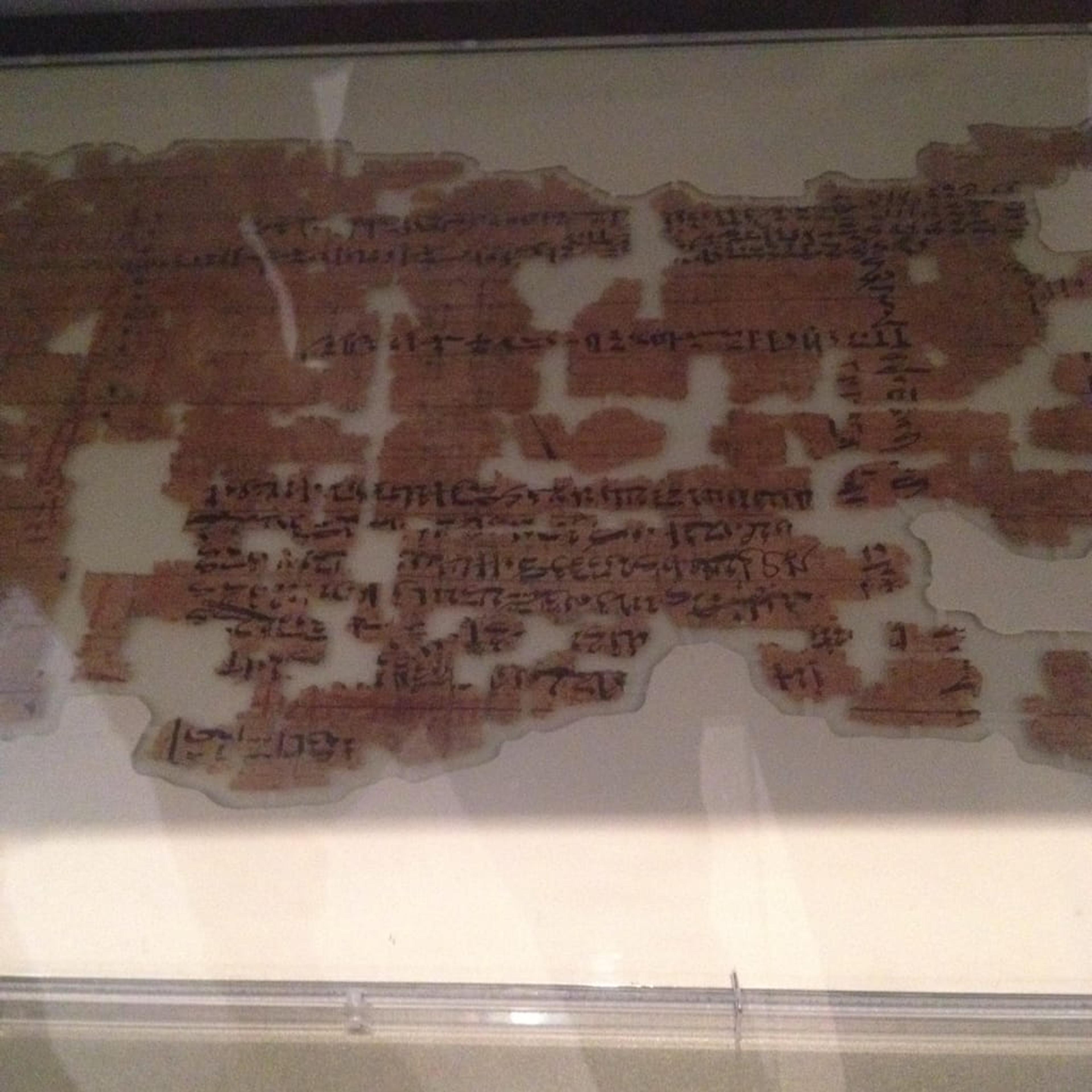 How different is this from hieroglyphs?This is hieratic. If you think of hieroglyphs as print, think of hieratic as cursive. They're not too different!
Is this the Shiphrah slave list? What does it say?
This document talks about the attempts by Senebtisi, a noblewoman from Thebes, to establish legal ownership of 95 servants for her household. The papyrus is considered particularly valuable to researchers in part because it lists the names of 45 individuals who are "Asiatic" which is how the ancient Egyptians referred to people from the Levant. The papyrus is used to draw the conclusion that the Canaanite population was increasing dramatically in Egypt at this time.I read that one of the names on the list is Shiphrah, a midwife who helped prevent the genocide of Hebrew children by the Egyptians. Is that true?The name "Šp-ra" does appear on the list in reference to a Canaanite woman. Scholars assume that this is a hieroglyphic transliteration of the Hebrew name "Shiphra."We cannot be certain that it refers to the same person described in the Biblical text.Cool!
Have information?
Have information about an artwork? Contact us at