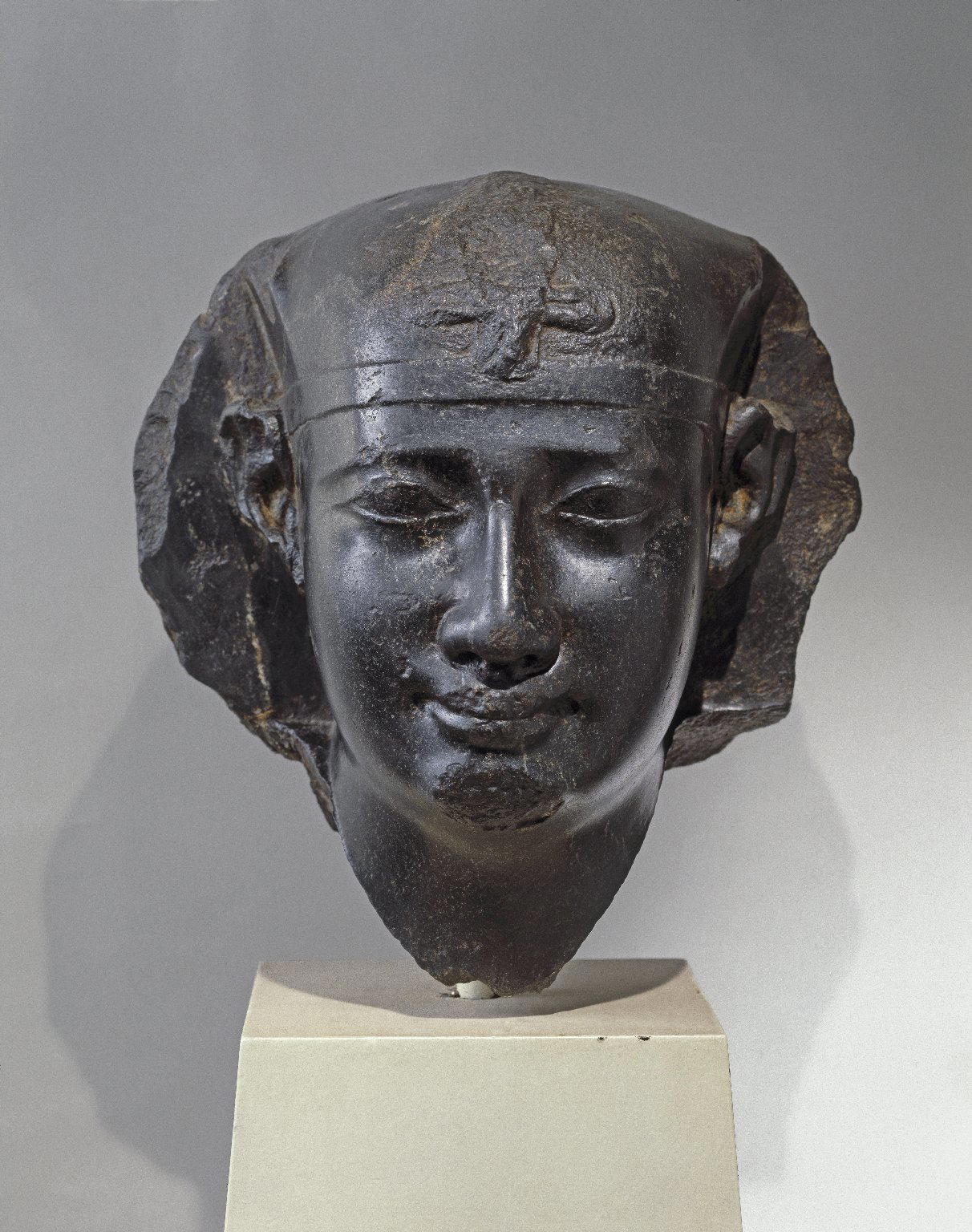
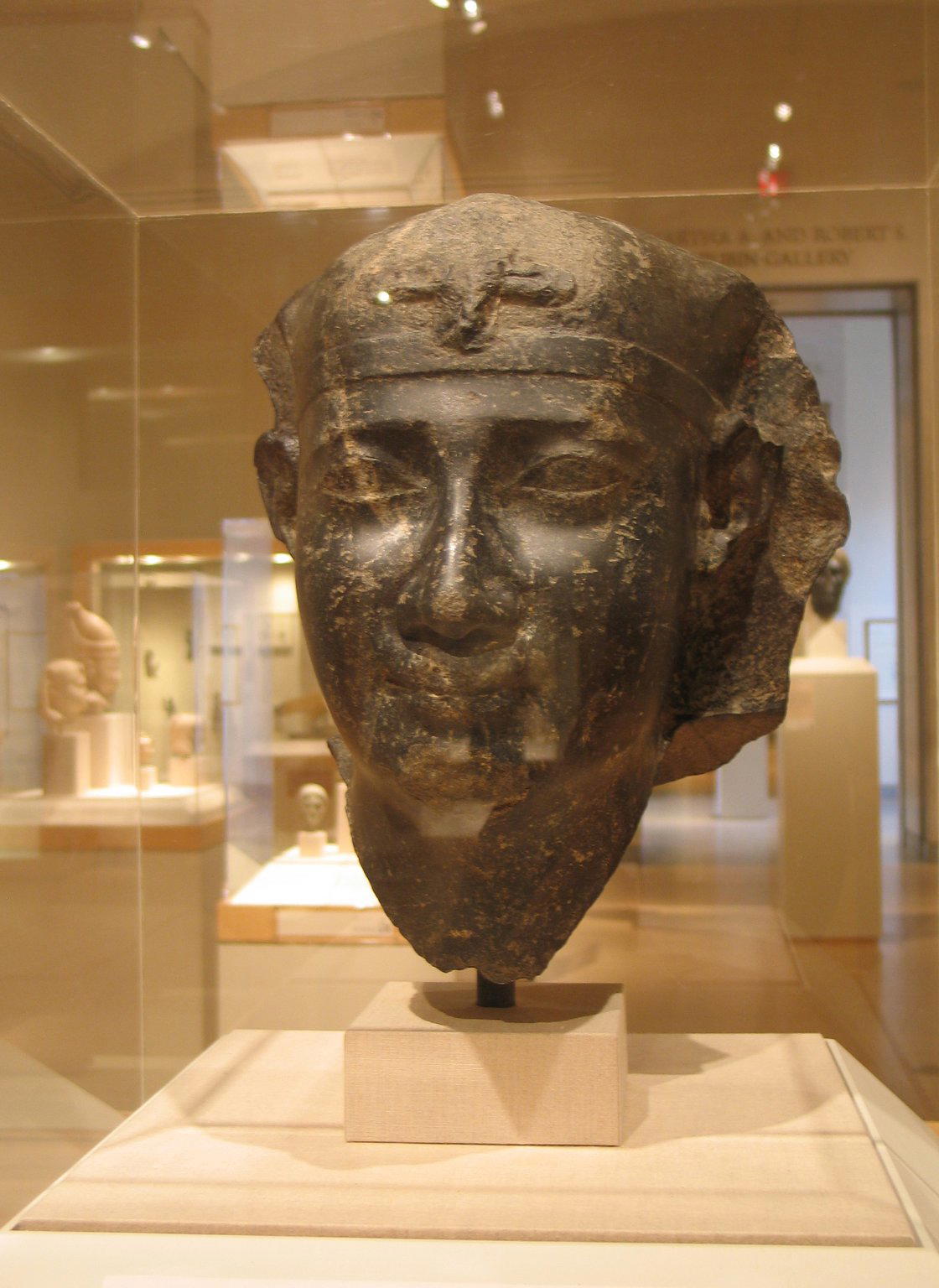
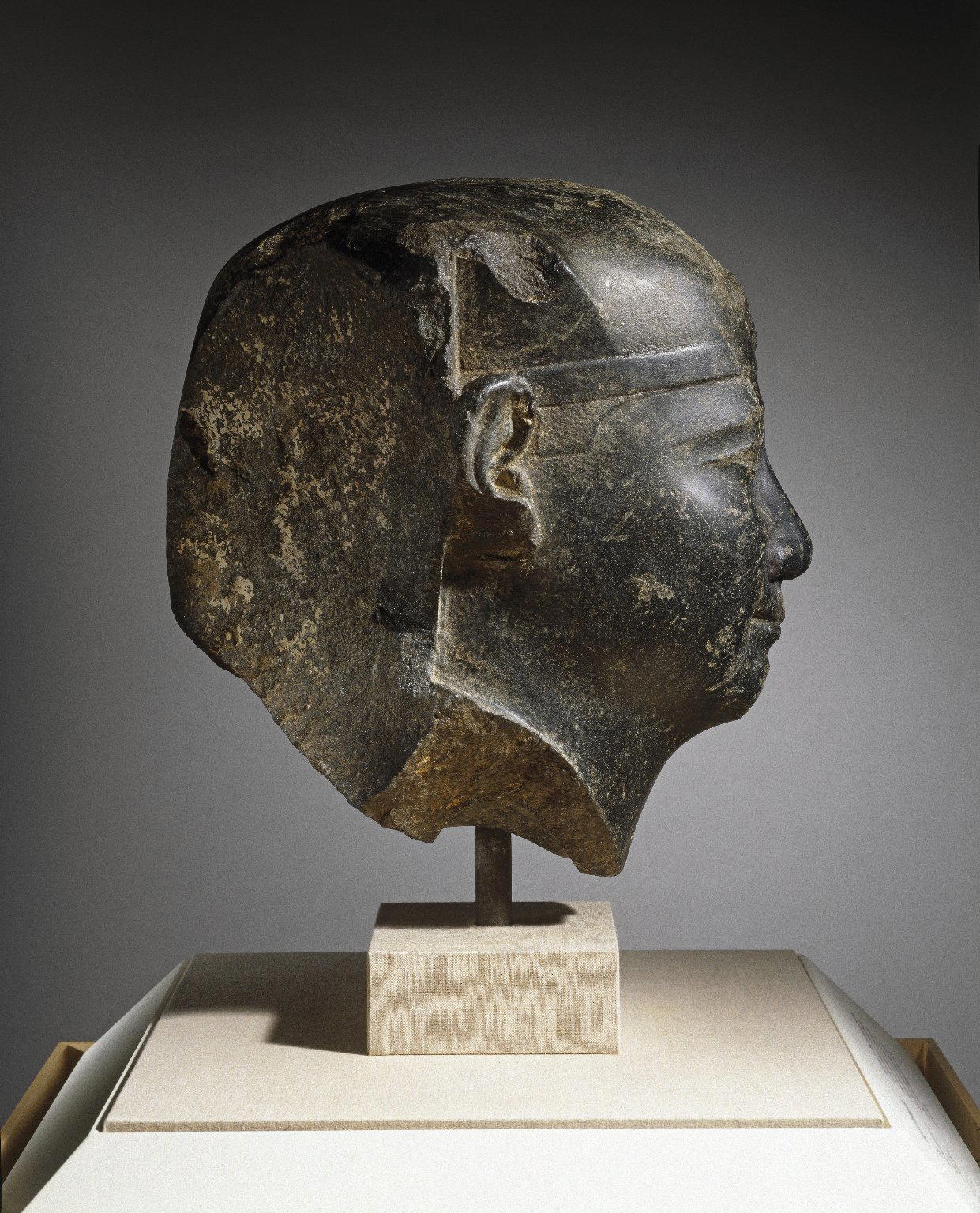
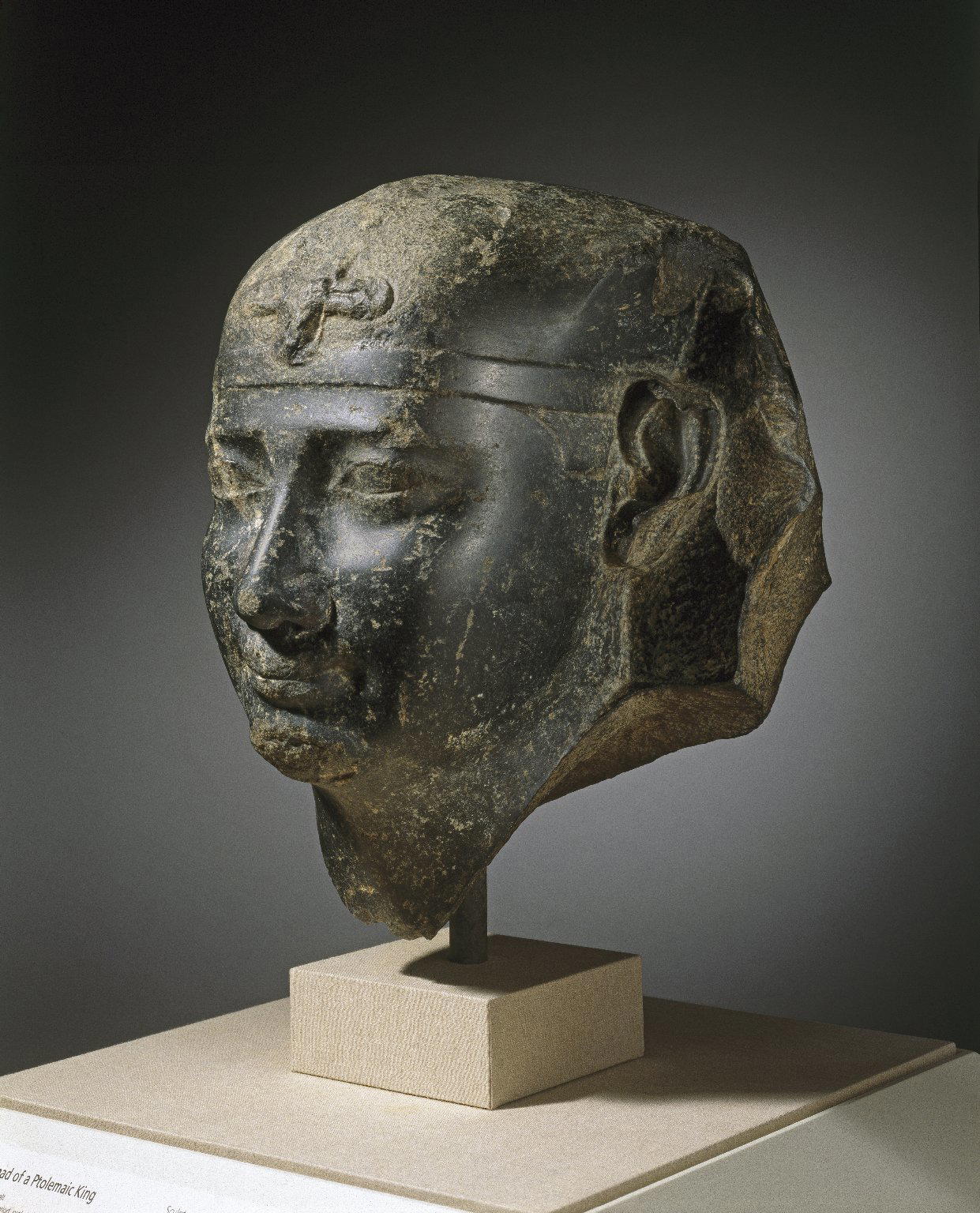
Head of a Ptolemaic King
3rd century B.C.E. (probably)
1 of 4
Object Label
Sculptors working for the Ptolemaic kings of Egypt occasionally showed their royal subjects in traditional style. This head depicts a Ptolemaic ruler wearing the ancient nemes-headcloth with a protective uraeus cobra. The king's ovoid face with full, fleshy cheeks suggests that the artisan may have been trying to reproduce the physical features of a specific ruler. However, in the absence of dated parallels for this head, we do not know whom it represents.
Caption
Head of a Ptolemaic King, 3rd century B.C.E. (probably). Basalt, 16 x 16 1/2 x 16 in. (40.6 x 41.9 x 40.6 cm). Brooklyn Museum, Charles Edwin Wilbour Fund, 53.75. (Photo: Brooklyn Museum)
Frequent Art Questions
Who is this?
Since there is no inscription we can’t be sure, but the headdress and style of his face tell us that he was a king during the Ptolemaic Dynasty. The Ptolemaic Dynasty was founded by a man named Ptolemy who had been one of Alexander the Great’s highest ranking generals. The following 15 kings were all named Ptolemy; the dynasty ended the famous Cleopatra VII.Egyptian Art during the Ptolemaic Dynasty continued to used many familiar symbols like this nemes headdress and uraeus cobra, but shows a clear stylistic influence from Greek art.
Have information?
Have information about an artwork? Contact us at