Head of a Man with a Rosette Diadem
1 of 2
Object Label
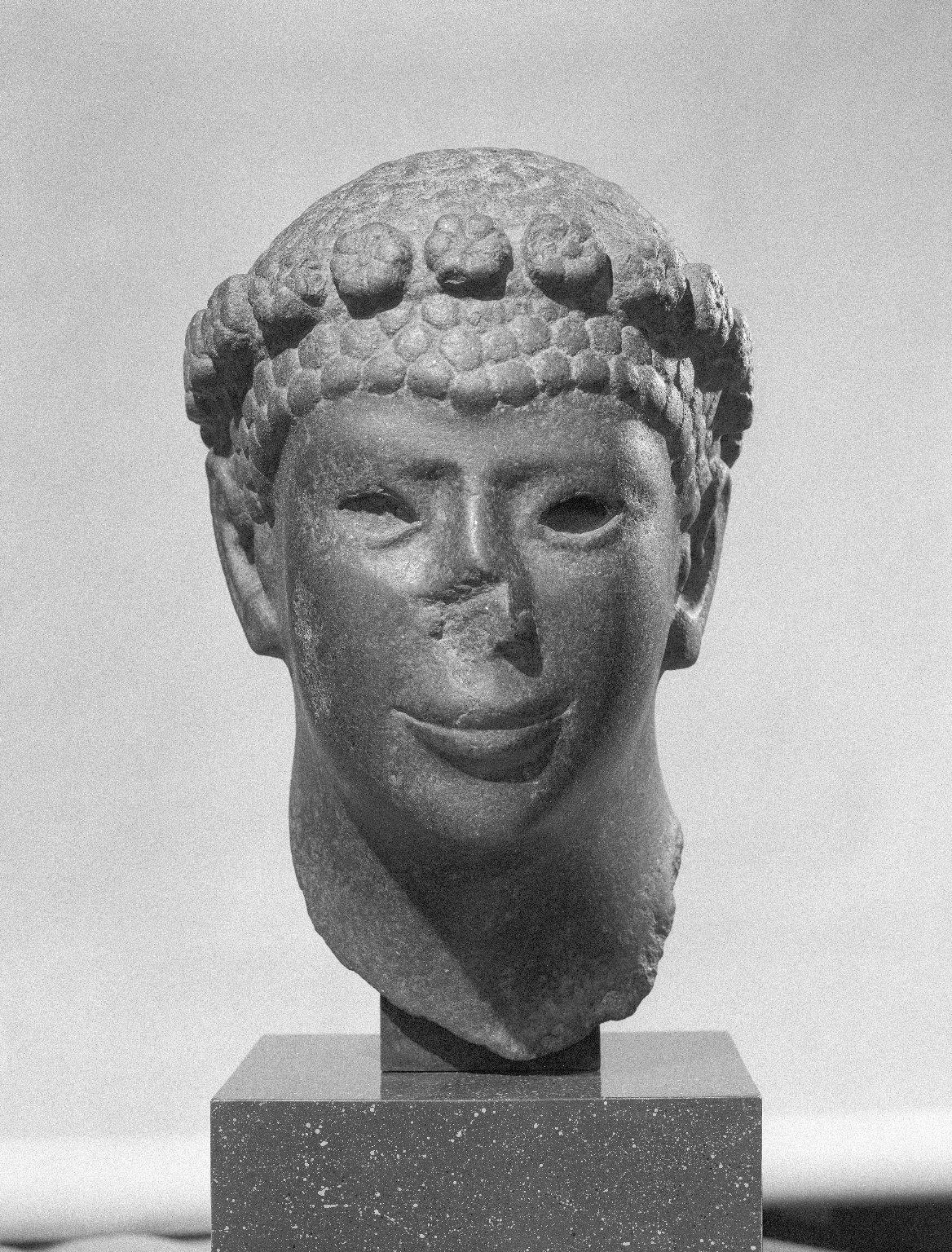
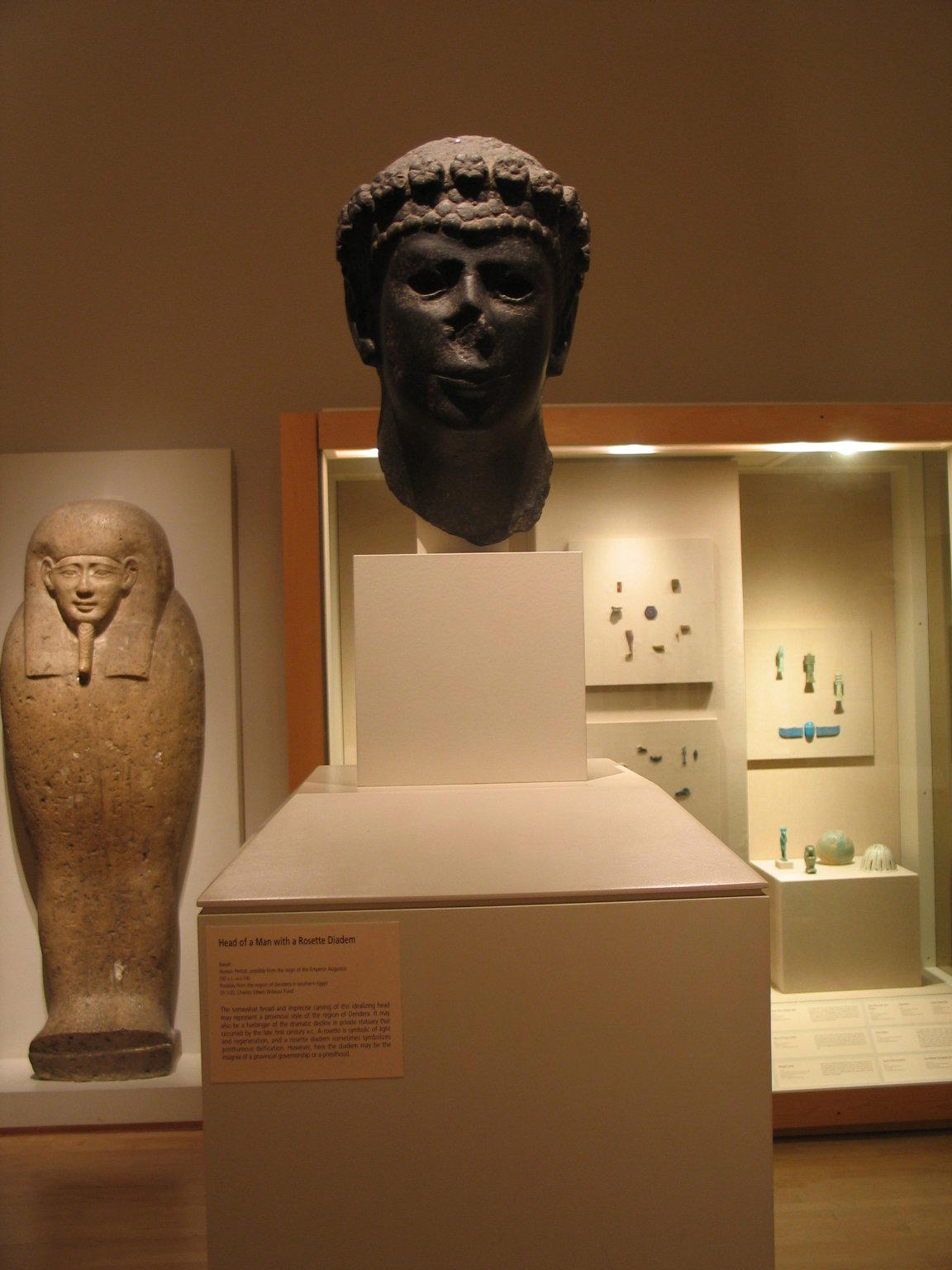
The somewhat broad and imprecise carving of this idealizing head may represent a provincial style of the region of Dendera. It may also be a harbinger of the dramatic decline in private statuary that occurred by the late first century B.C. A rosette is symbolic of light and regeneration, and a rosette diadem sometimes symbolizes posthumous deification. However, here the diadem may be the insignia of a provincial governorship or a priesthood.
Caption
Head of a Man with a Rosette Diadem, 30 B.C.E.–14 C.E.. Basalt, Height: 15 7/16 in. (39.2 cm). Brooklyn Museum, Charles Edwin Wilbour Fund, 55.120. (Photo: Brooklyn Museum)
Title
Head of a Man with a Rosette Diadem
Date
30 B.C.E.–14 C.E.
Period
Roman Period
Geography
Possible place made: Dendera, Egypt
Medium
Basalt
Classification
Dimensions
Height: 15 7/16 in. (39.2 cm)
Credit Line
Charles Edwin Wilbour Fund
Accession Number
55.120
Have information?
Have information about an artwork? Contact us at