Headrest of Shemai


1 of 3
Object Label
This headrest—the Egyptian version of a pillow—was found in the tomb of a man named Shemai. Headrests were believed to have magical powers that protected the head from evil spirits. The inscription on this example invokes Osiris, god of the afterworld, suggesting that Shemai had it made specifically for his tomb.
Caption
Headrest of Shemai, ca. 2288–2170 B.C.E.. Alabaster, pigment, 7 5/8 in. (19.4 cm) base: 6 3/16 × 2 3/4 in. (15.7 × 7 cm). Brooklyn Museum, Charles Edwin Wilbour Fund, 59.3. (Photo: Brooklyn Museum)
Title
Headrest of Shemai
Date
ca. 2288–2170 B.C.E.
Dynasty
Dynasty 6
Period
Old Kingdom
Geography
Place excavated: Deir el Nawahid, Egypt
Medium
Alabaster, pigment
Classification
Dimensions
7 5/8 in. (19.4 cm) base: 6 3/16 × 2 3/4 in. (15.7 × 7 cm)
Credit Line
Charles Edwin Wilbour Fund
Accession Number
59.3
Frequent Art Questions
Have you ever tested out a headrest like this? All I can think is "ow!"
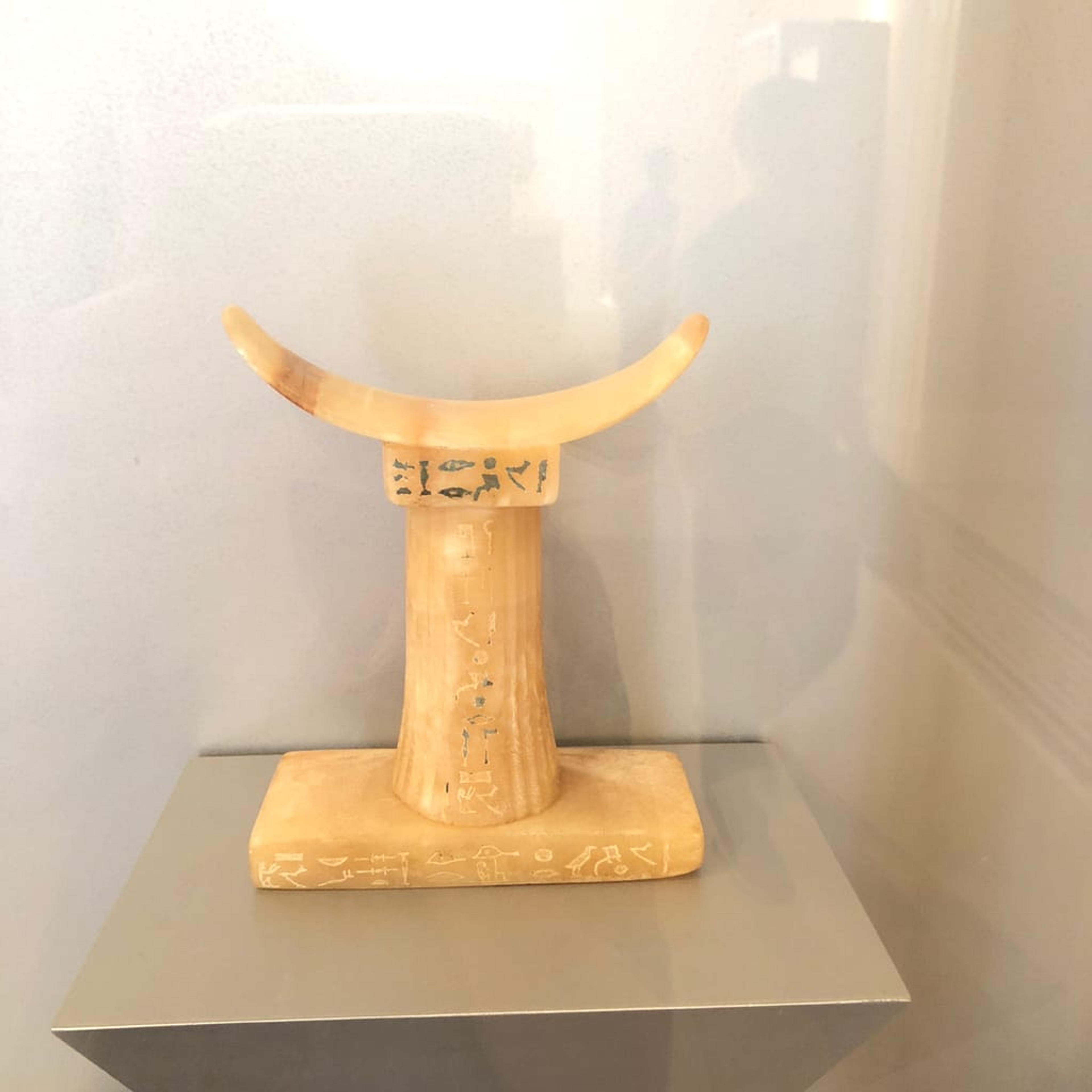 I've never tried one of those headrests, personally! I do know though, that part of the reason it looks so uncomfortable is that its missing its cushion!It's definitely very supportive! It may have also been a cooler way to rest in a very hot climate, since it allows for circulation all around the head and neck (unlike a soft pillow).This one was excavated from a tomb, where it was placed with the expectation that the deceased person would have used it in the afterlife.
Have information?
Have information about an artwork? Contact us at