Figure of the God Bes
664–332 B.C.E.
Caption
Figure of the God Bes, 664–332 B.C.E.. Faience, 6 3/8 x 4 9/16 x 4 7/16 in. (16.2 x 11.6 x 11.3 cm). Brooklyn Museum, Charles Edwin Wilbour Fund, 34.1191.
Gallery
Not on view
Gallery
Not on view
Title
Figure of the God Bes
Date
664–332 B.C.E.
Dynasty
Dynasty 26
Period
Late Period
Medium
Faience
Classification
Dimensions
6 3/8 x 4 9/16 x 4 7/16 in. (16.2 x 11.6 x 11.3 cm)
Credit Line
Charles Edwin Wilbour Fund
Accession Number
34.1191
Frequent Art Questions
Could you tell me how faience was made?
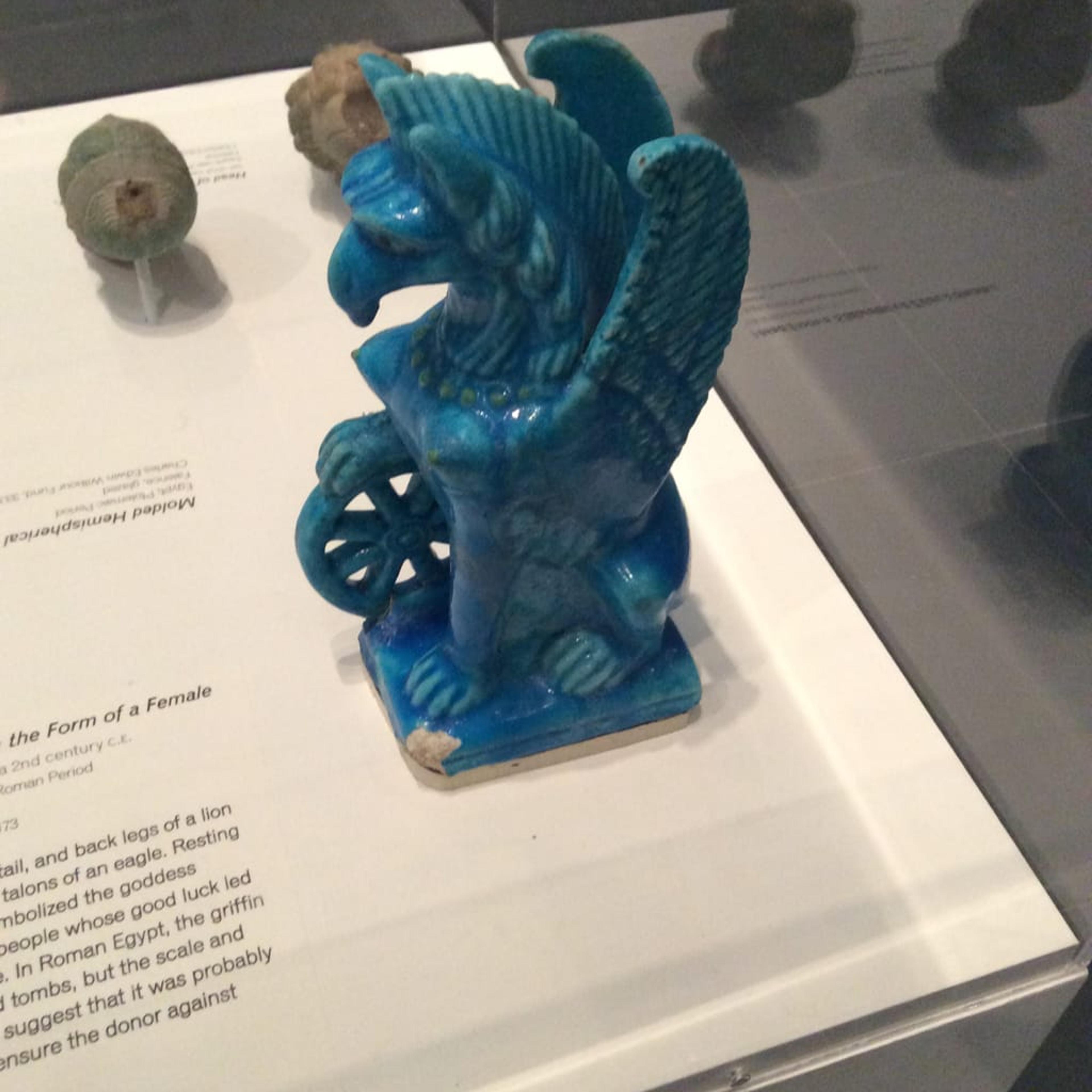 Faience is a man-made mixture of "ground quartz or quartz-sand held together by and alkaline binder. The bright and shiny surface seen on this figurine is a result of glazing. The glaze was made of a form of powdered glass mixed with a liquid and applied either with a brush or by dipping the entire figurine.It gets it's blue color from copper that is mixed into or applied to the surface of the quartz body before firing.
Tell me more.
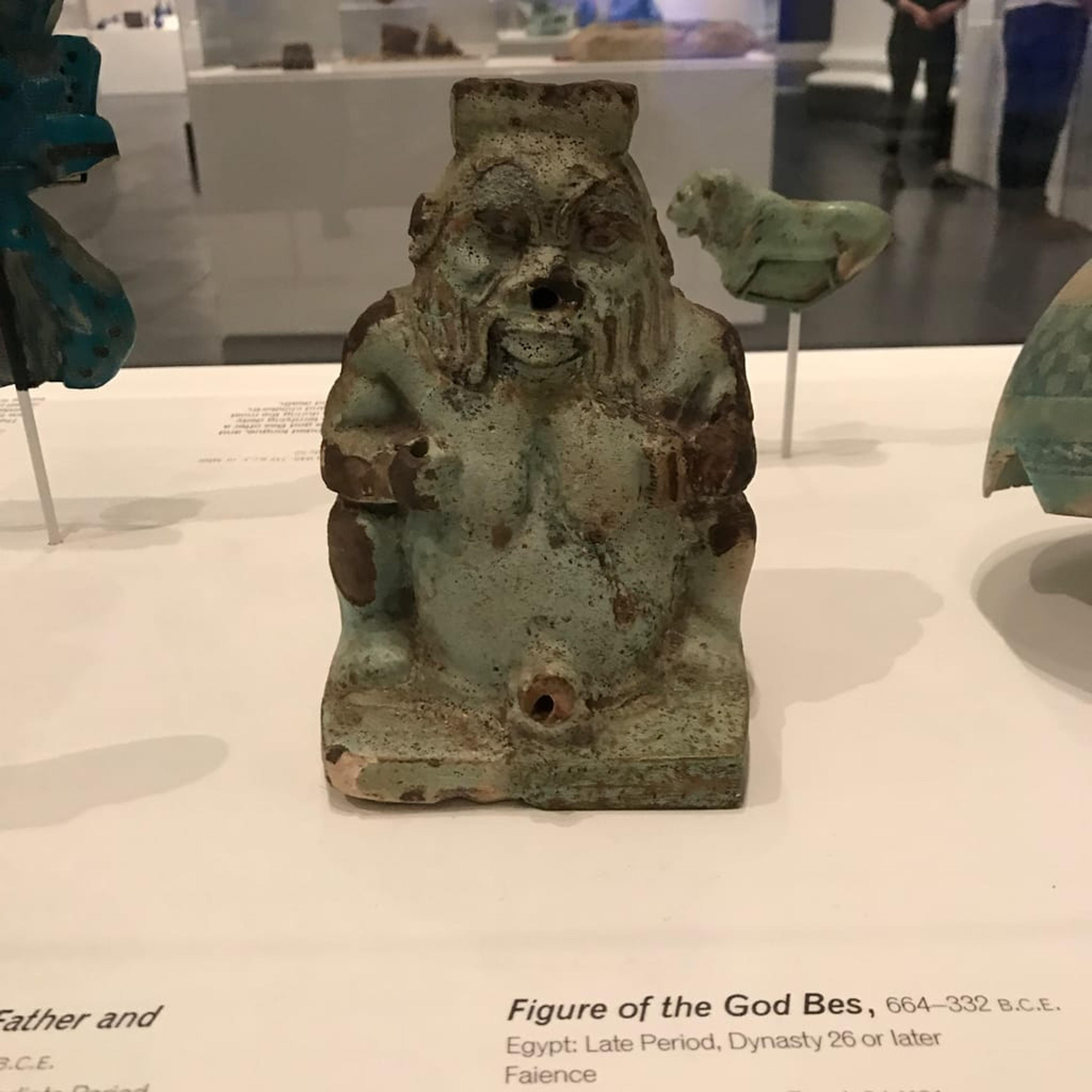 This figure of the Egyptian deity Bes is a water clock made from faience, a popular material in Ancient Egyptian sculpture. Faience approximated the blues of turquoise and lapis lazuli for a fraction of the price. It was made using a mixture of quartz and alkaline binder and, copper to achieve the blue color.
Can you tell me about the Figure of the God Bes?
Bes was worshipped in ancient Egypt as the protector of households, mothers and children, and childbirth. Images of Bes were kept in the home. He was meant to look as off-putting as possible in order to scare away demons from the house!It's very nice!I think so too! I love the deep blue of faience. The ancient Egyptian word for faience meant "brilliant" or "dazzling". Faience was an affordable alternative to the more expensive lapis lazuli. The color blue was also symbolic to the Egyptians, who associated the color with the life-giving waters of the Nile River.Was God Bes actually GodESS Bes?
I don't think anyone has asked that before! The ancient Egyptians only referred to Bes as male so we have no reason to believe otherwise. I'm curious, what made you ask?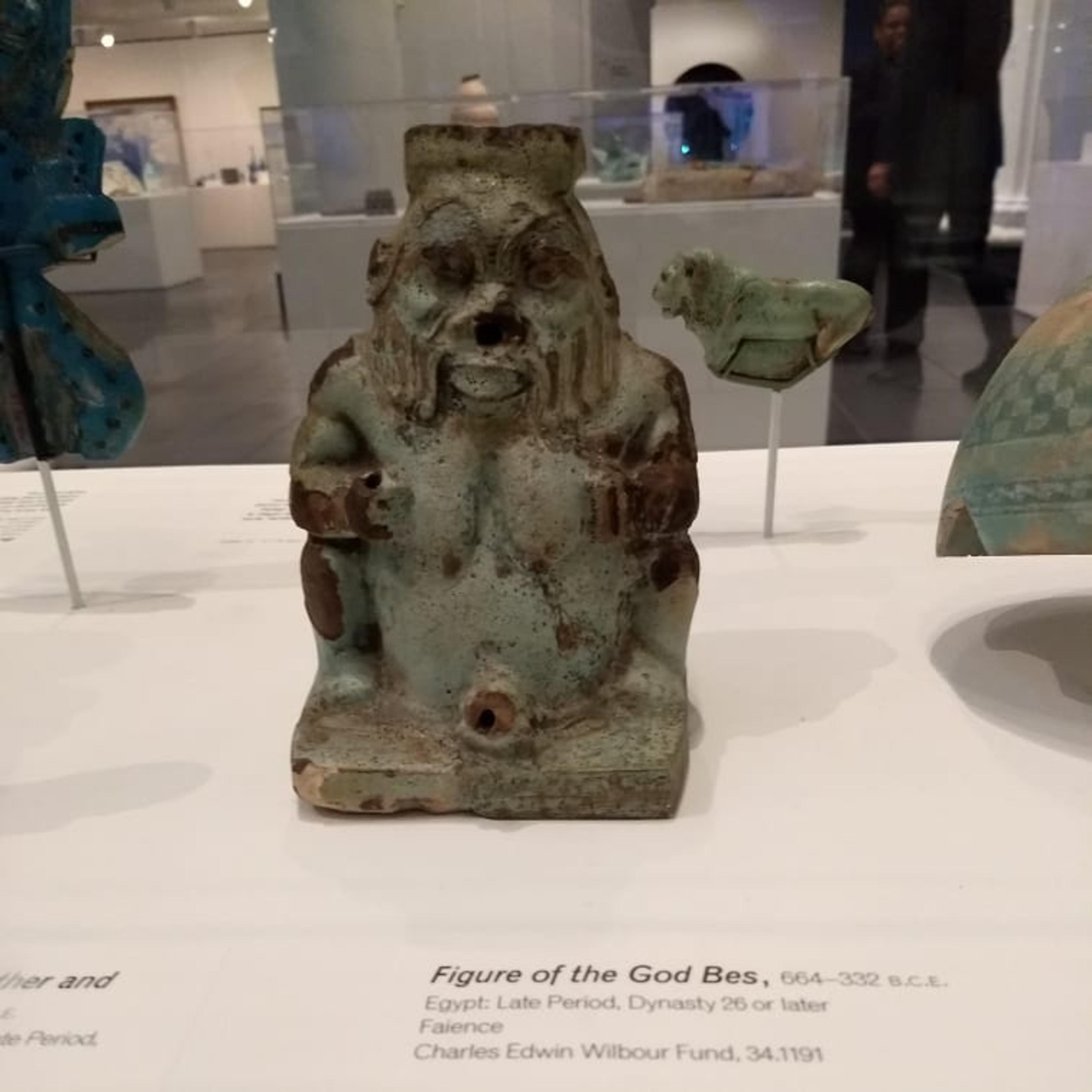 "She" appears to have breasts and an umbilical cord, which, to me, implies birth, etc...I see what you mean! HIs "breasts" are intended, here, as a sign of his girth which implies prosperity and fertility of the earth. The umbilical chord-like structure has more to do with this object's function as a water clock.Interesting! Thanks!You're welcome! There is another image of Bes in this case and more on the third floor that give you a better idea of how the god was typically depicted!Gotcha!
Have information?
Have information about an artwork? Contact us at