Jar Lid with Human Face
1 of 2
Object Label
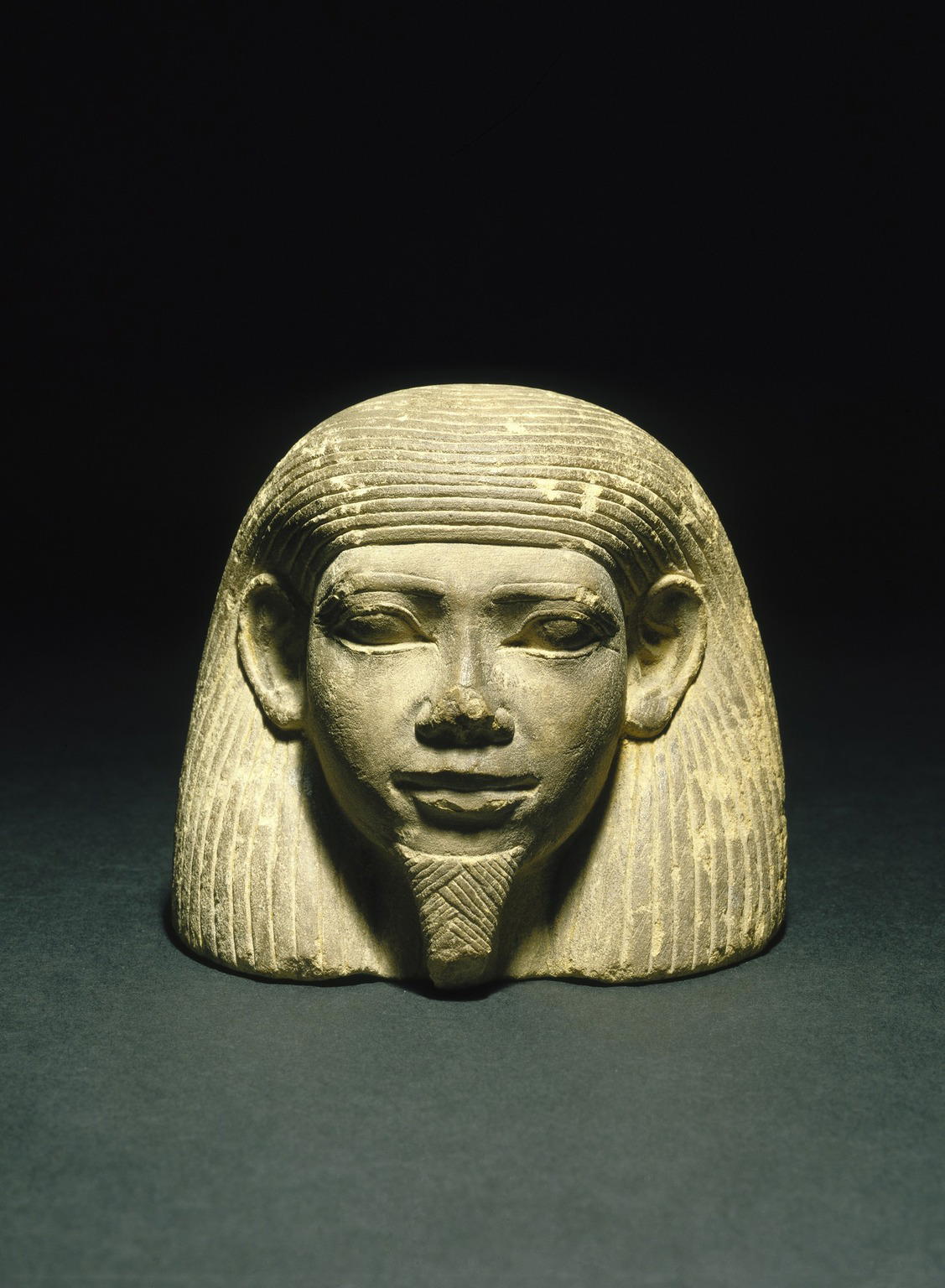
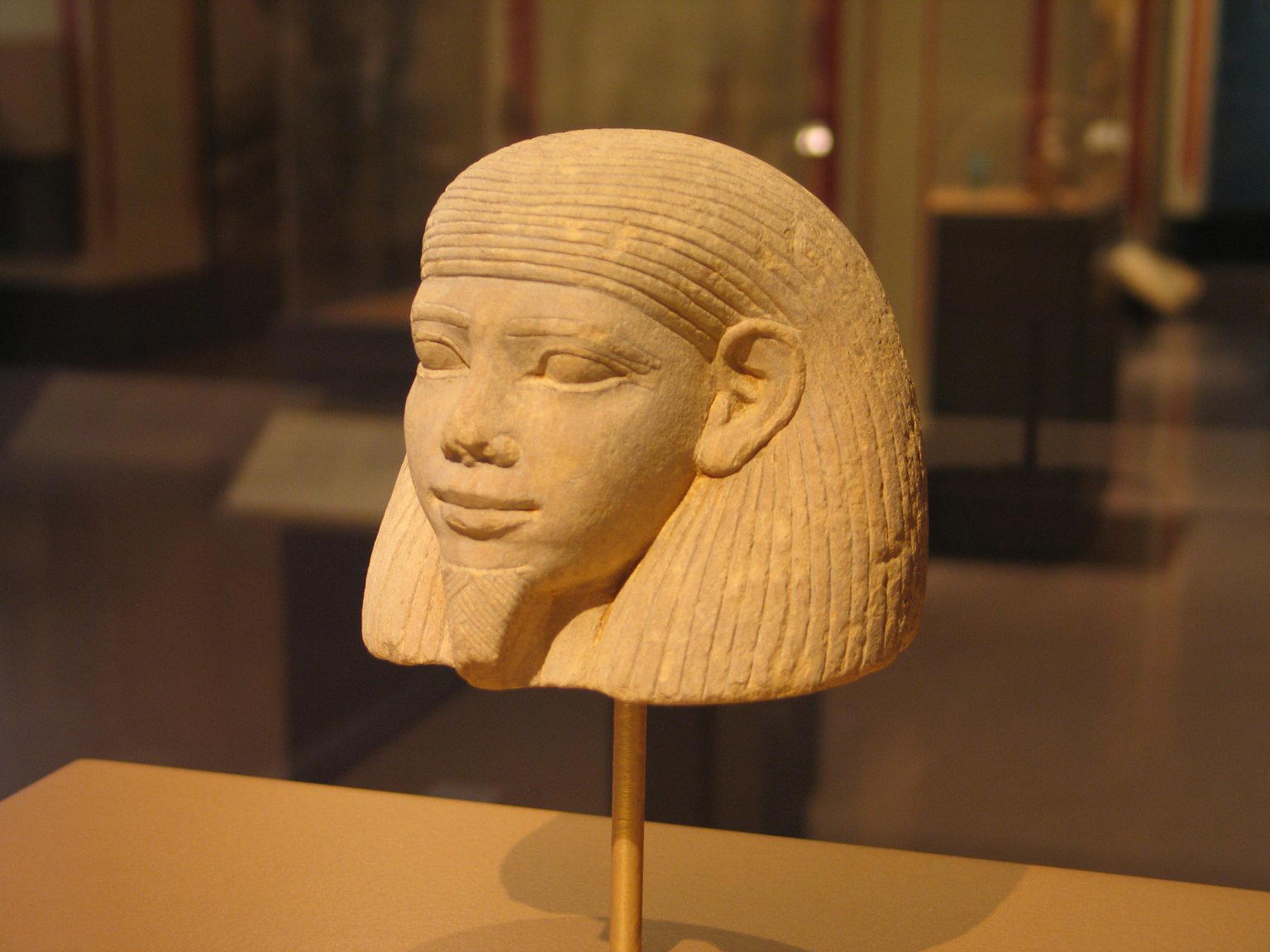
The absence of any trace of shoulders indicates that this limestone head was never part of a complete sculpture. It probably served as the lid of a canopic jar, a vessel containing a corpse’s vital organs that were removed during mummification. The artist who carved this face followed the dominant style of mid-Twelfth Dynasty, including full, fleshy cheeks, wide open eyes with a high, arcing upper lid, and an overall sense of serenity.
Caption
Jar Lid with Human Face, ca. 1876–1837 B.C.E.. Limestone, 4 × 4 7/16 × 4 1/16 in. (10.2 × 11.2 × 10.3 cm). Brooklyn Museum, Purchased with funds given by Christos G. Bastis and Charles Edwin Wilbour Fund, 87.78. (Photo: Brooklyn Museum)
Title
Jar Lid with Human Face
Date
ca. 1876–1837 B.C.E.
Dynasty
middle Dynasty 12
Period
Middle Kingdom
Geography
Place made: Egypt
Medium
Limestone
Classification
Dimensions
4 × 4 7/16 × 4 1/16 in. (10.2 × 11.2 × 10.3 cm)
Credit Line
Purchased with funds given by Christos G. Bastis and Charles Edwin Wilbour Fund
Accession Number
87.78
Frequent Art Questions
Did ancient Egyptians where head coverings = all the time? Are these people wearing head coverings? What are they made out of?
The quick answer is no. You'll see in our galleries a few sculptures that depict men with bald heads too. In the first sculpture you photographed, she is wearing a vulture headdress, which is a symbol of maternal protection and associated with goddesses and queens, over her hair.The second sculpture simply wears a thick hairstyle. This may have been a wig made from hair (the finest examples, of course, were human), or his own hair with the addition of extensions.Headdresses, in ancient Egyptian art can be a helpful indicator of rank or identity. Hairstyles can even help us date artworks based on when certain styles were in fashion.Interesting -- thank you!
Have information?
Have information about an artwork? Contact us at