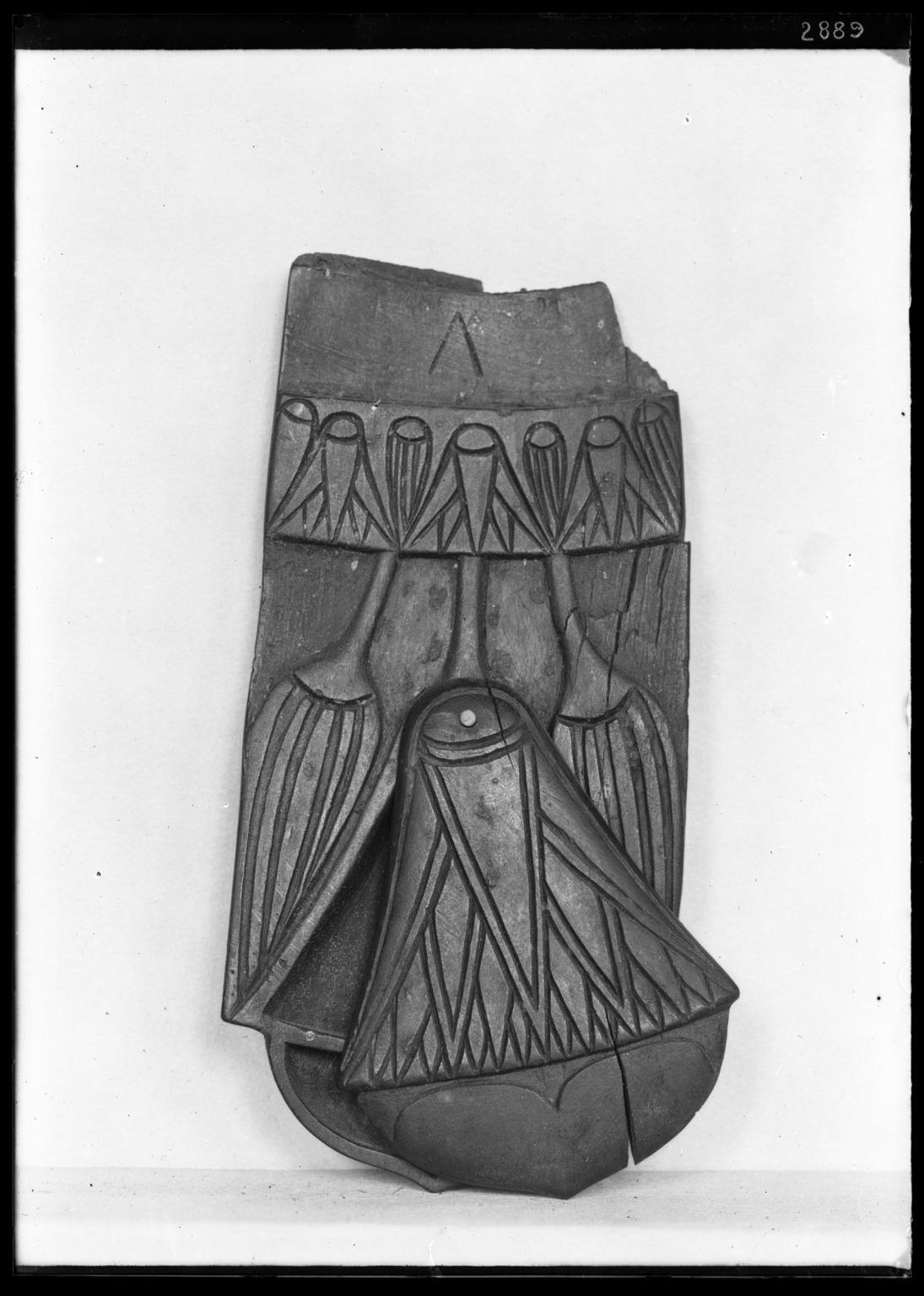
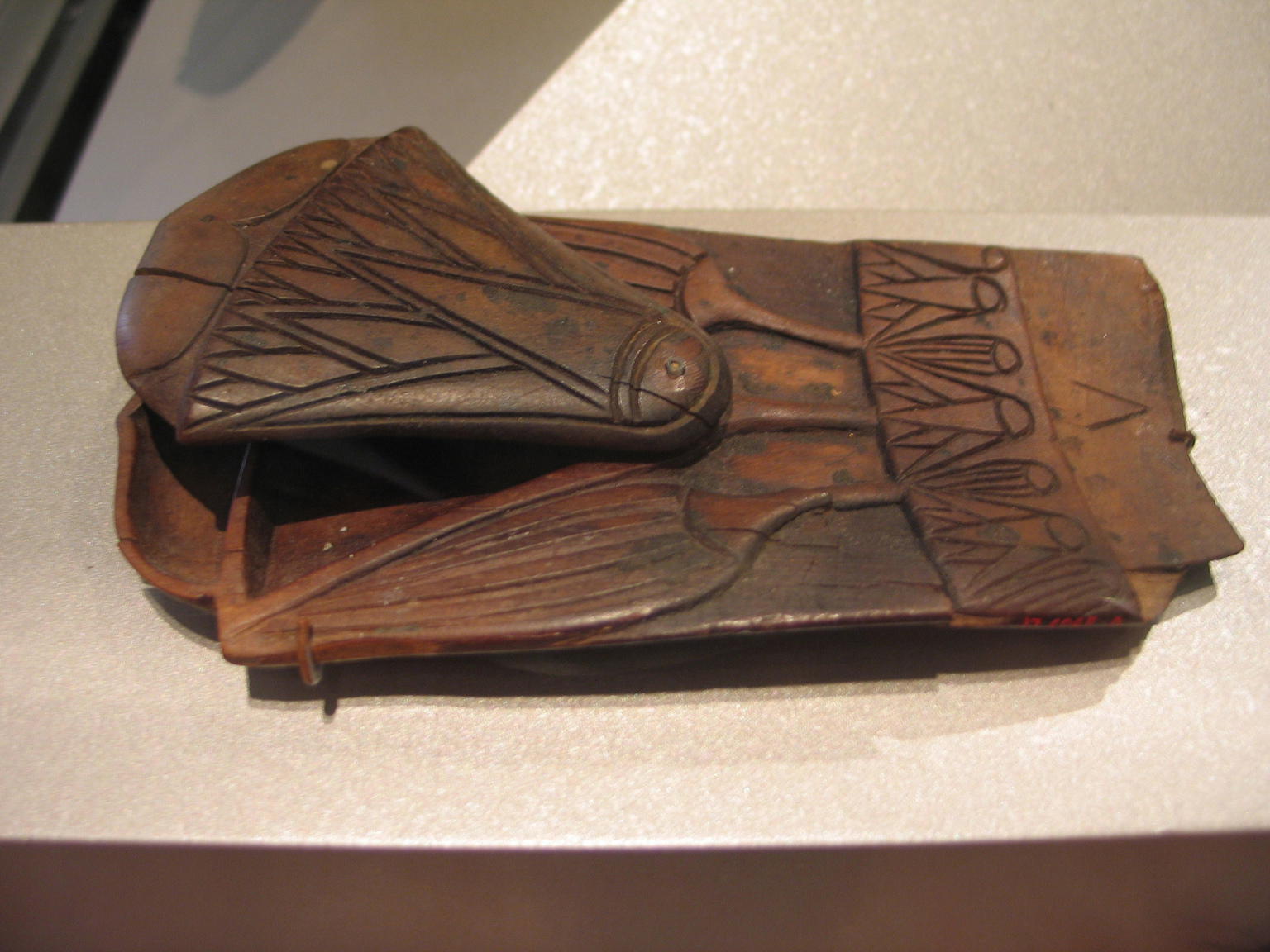
Fragment of Spoon in Form of Lotus
ca. 1539–1292 B.C.E.
1 of 2
Object Label
Spoons
Elaborate burials often included offerings of spoons with decorated bowls and handles, though their purpose is uncertain.
Early Egyptologists proposed that the spoons were used to remove solid ointments from wide-necked jars. Although many scholars still favor this traditional interpretation, others believe the spoons were cultic objects used in religious ceremonies. They probably served both functions: spoons decorated with images of birth-gods seem appropriate for domestic use; those with symbols of rebirth, such as the lotus, were probably intended for rituals.
Elaborate burials often included offerings of spoons with decorated bowls and handles, though their purpose is uncertain.
Early Egyptologists proposed that the spoons were used to remove solid ointments from wide-necked jars. Although many scholars still favor this traditional interpretation, others believe the spoons were cultic objects used in religious ceremonies. They probably served both functions: spoons decorated with images of birth-gods seem appropriate for domestic use; those with symbols of rebirth, such as the lotus, were probably intended for rituals.
Caption
Fragment of Spoon in Form of Lotus, ca. 1539–1292 B.C.E.. Wood, 2 3/4 × 5 1/2 in. (7 × 14 cm). Brooklyn Museum, Charles Edwin Wilbour Fund, 37.606E. (Photo: Brooklyn Museum)
Title
Fragment of Spoon in Form of Lotus
Date
ca. 1539–1292 B.C.E.
Dynasty
Dynasty 18
Period
New Kingdom
Geography
Possible place made: Saqqara, Egypt
Medium
Wood
Classification
Dimensions
2 3/4 × 5 1/2 in. (7 × 14 cm)
Credit Line
Charles Edwin Wilbour Fund
Accession Number
37.606E
Have information?
Have information about an artwork? Contact us at