Offering Bearers
1 of 2
Object Label
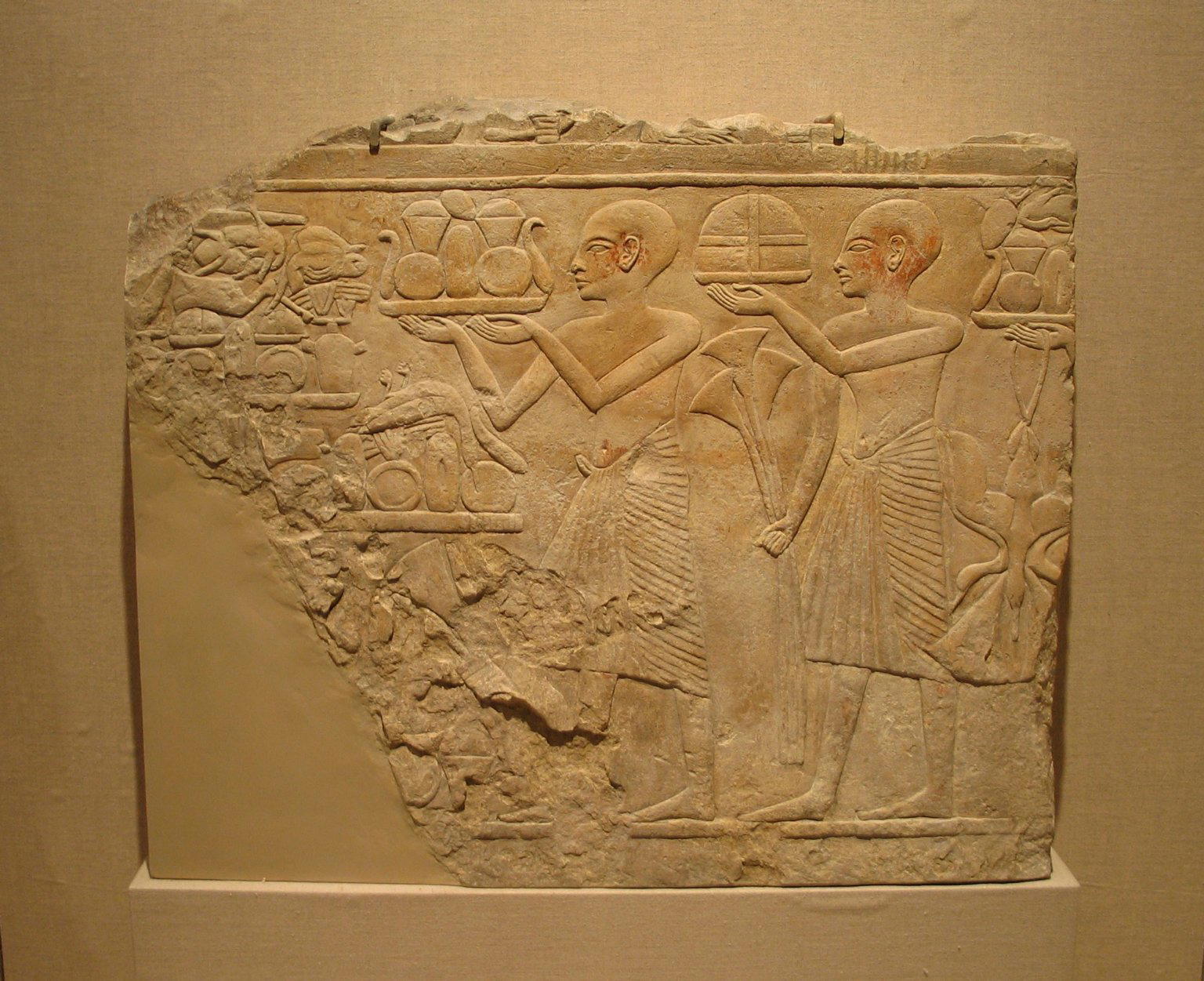
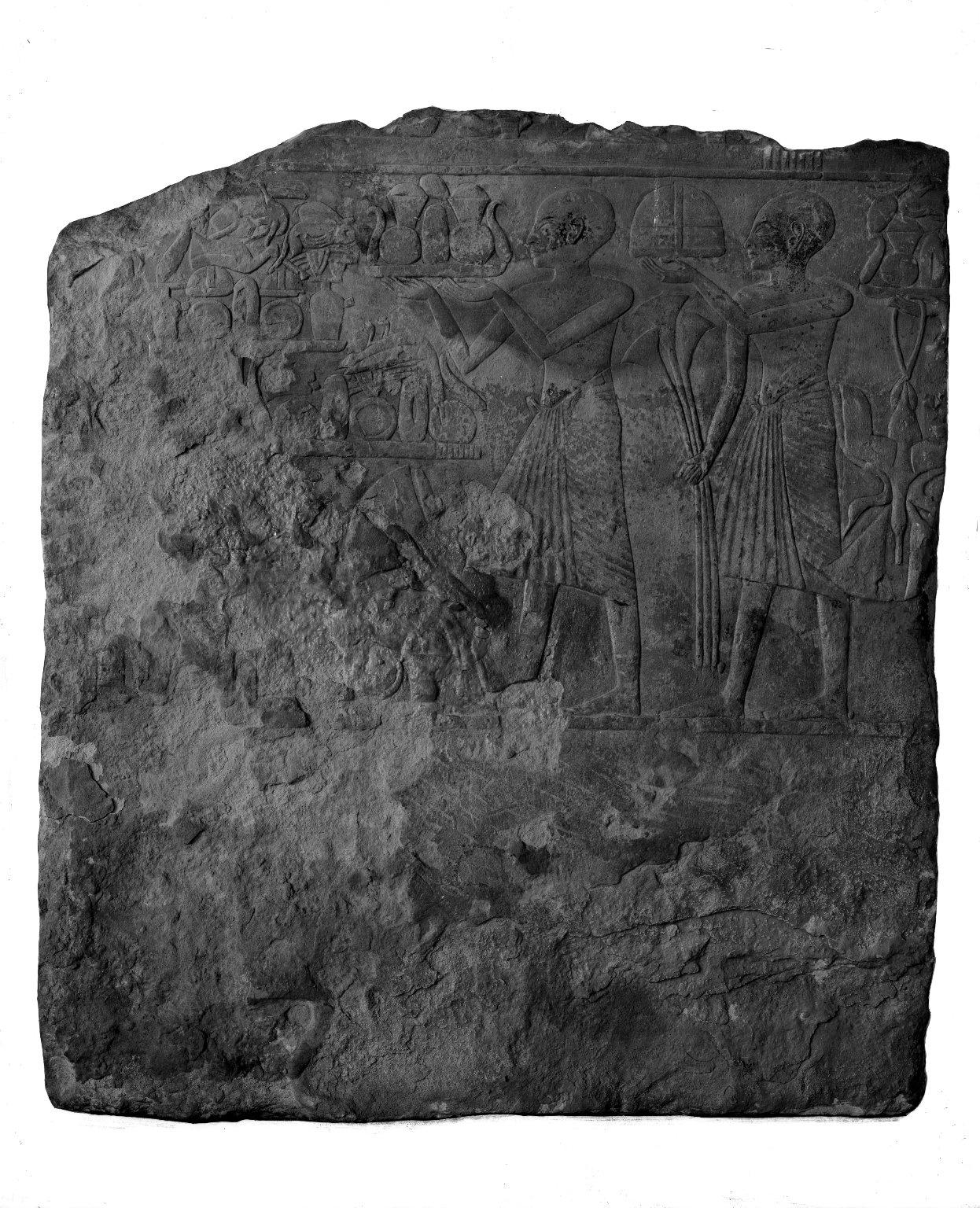
Among the most common motifs found in Egyptian tombs is the formal presentation of offerings. The complete scene to which this fragment belonged showed a row of men bringing gifts to an offering table laden with bread, meat, fowl and metal vessels probably containing wine. Of particular interest is the brace of ducks or geese suspended from a hand at the far right. The style of the faces and the elaborate design of the costumes owe much to the inspiration of the Amarna Period. The composition of the scene, however, is far more formal than similar designs executed during the reign of Akhenaten.
Caption
Offering Bearers, ca. 1323–1250 B.C.E.. Limestone, pigment, 15 7/8 x 19 1/8 in. (40.3 x 48.5 cm). Brooklyn Museum, Charles Edwin Wilbour Fund, 37.1505E. (Photo: Brooklyn Museum)
Title
Offering Bearers
Date
ca. 1323–1250 B.C.E.
Dynasty
late Dynasty 18 to early Dynasty 19
Period
New Kingdom
Geography
Reportedly from: Saqqara, Egypt
Medium
Limestone, pigment
Classification
Dimensions
15 7/8 x 19 1/8 in. (40.3 x 48.5 cm)
Credit Line
Charles Edwin Wilbour Fund
Accession Number
37.1505E
Frequent Art Questions
Can you tell me about this?
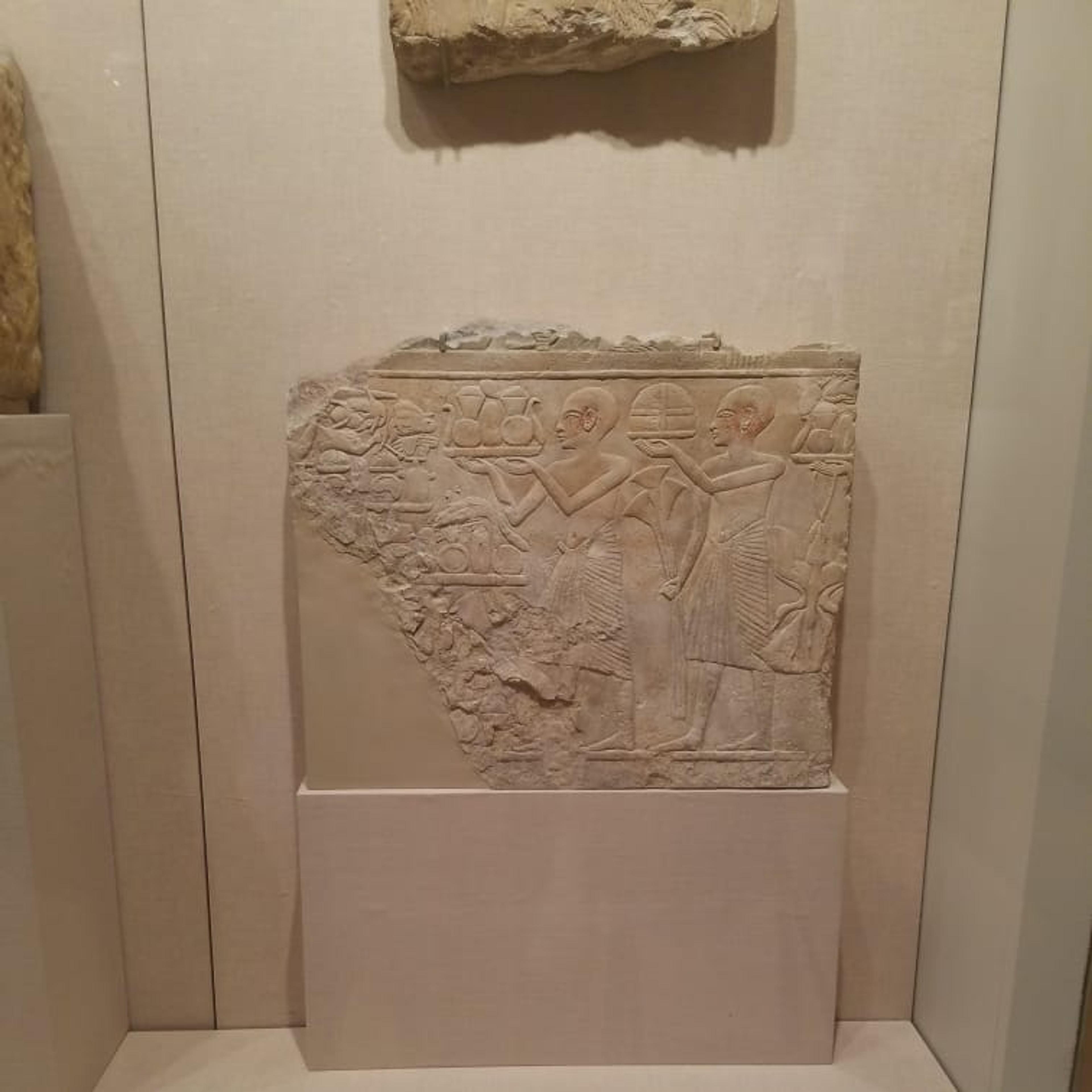 This relief came from a tomb. In ancient Egyptian afterlife beliefs, scenes like this were pretty necessary. While living in the afterlife, a person would still need to eat and drink, just like in their previous life. Burials would contain stores of food and priests would continue to make food offerings to the deceased after the funeral had ended. Scenes of offerings, particularly food offerings, would be able to supplement or function as actual food would have. This is a fragment of what would have been a much larger scene and placed among other reliefs in the tomb. These reliefs, along with other objects like coffins, were all part of the equipment a person would need for the afterlife.
Have information?
Have information about an artwork? Contact us at