Metate
1000–1400
Object Label
This metate, or grinding stone, was most likely a ceremonial object. The diamond-shaped relief carvings on the head and tail, and the circular designs on the legs probably represent the animal’s spotted fur.
Jaguars are frequently represented in Costa Rican objects. As fierce predators, they were revered and feared for their agility and strength. These qualities fit the animal’s supernatural aspect as a deity of the underworld, darkness, and death.
Jaguars are frequently represented in Costa Rican objects. As fierce predators, they were revered and feared for their agility and strength. These qualities fit the animal’s supernatural aspect as a deity of the underworld, darkness, and death.
Caption
Metate, 1000–1400. Volcanic Stone, 7 x 9 5/16 x 18 1/4 in. (17.8 x 23.7 x 46.4 cm). Brooklyn Museum, Alfred W. Jenkins Fund, 34.5088.
Gallery
Not on view
Collection
Gallery
Not on view
Collection
Title
Metate
Date
1000–1400
Geography
Place found: Mercedes Farm, Costa Rica
Medium
Volcanic Stone
Classification
Dimensions
7 x 9 5/16 x 18 1/4 in. (17.8 x 23.7 x 46.4 cm)
Credit Line
Alfred W. Jenkins Fund
Accession Number
34.5088
Frequent Art Questions
The jaguar metate, what are the things that it would be used to grind?
Metates are generally used to grind maize or other plants. This Jaguar Metate from Costa Rica was probably used for ceremonial purposes. It has very little signs of everyday use.This is a strange table, what was it used for?
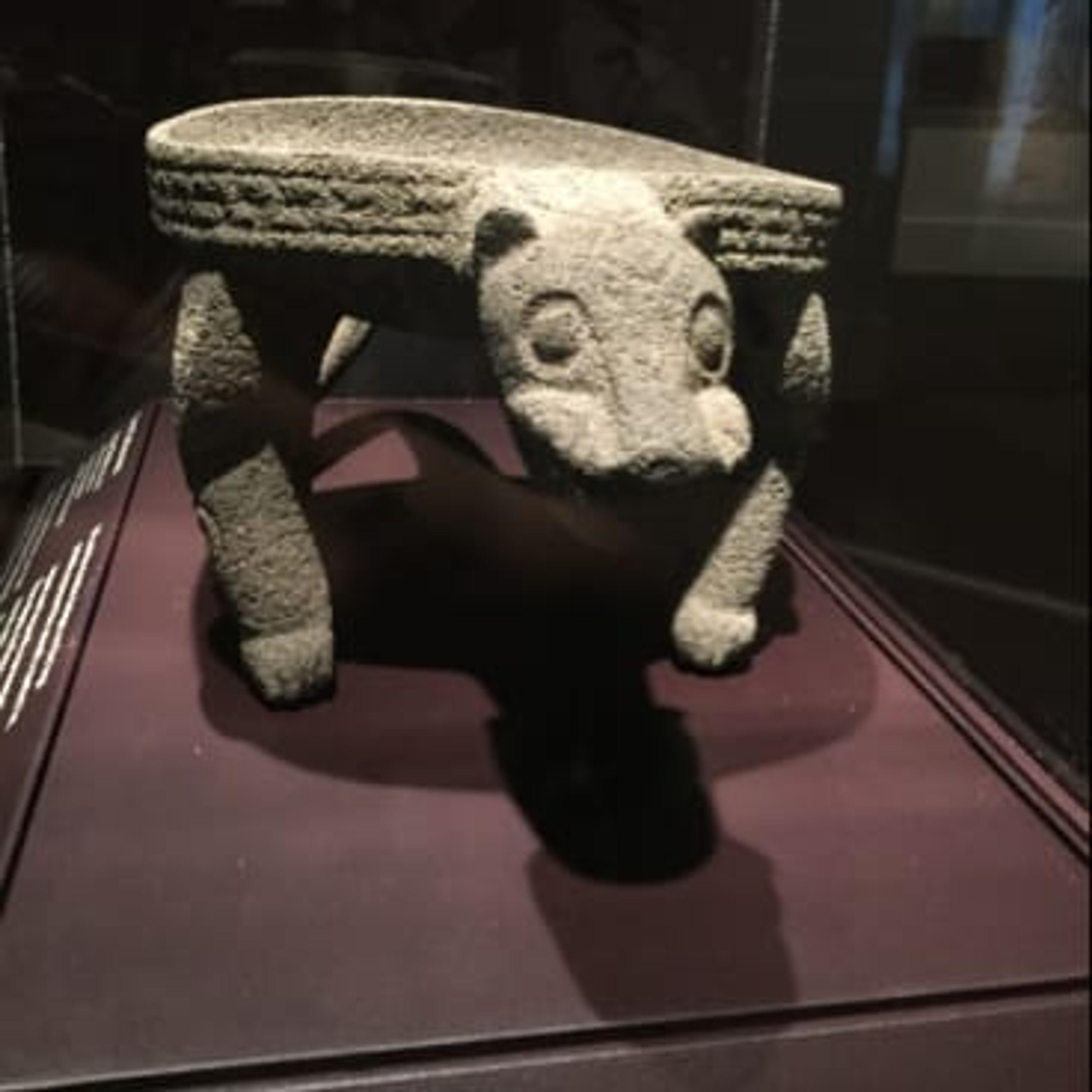 It looks like a table, but it's actually a metate or grinding stone. It comes from Costa Rica. It is very elaborate and doesn't show any signs of use, so it was likely a ceremonial object. The jaguar, one of the most powerful land-based animals in the region, was often tied to power and royalty.
What kind of items would people grind with this metate? How was it used in ceremonies?
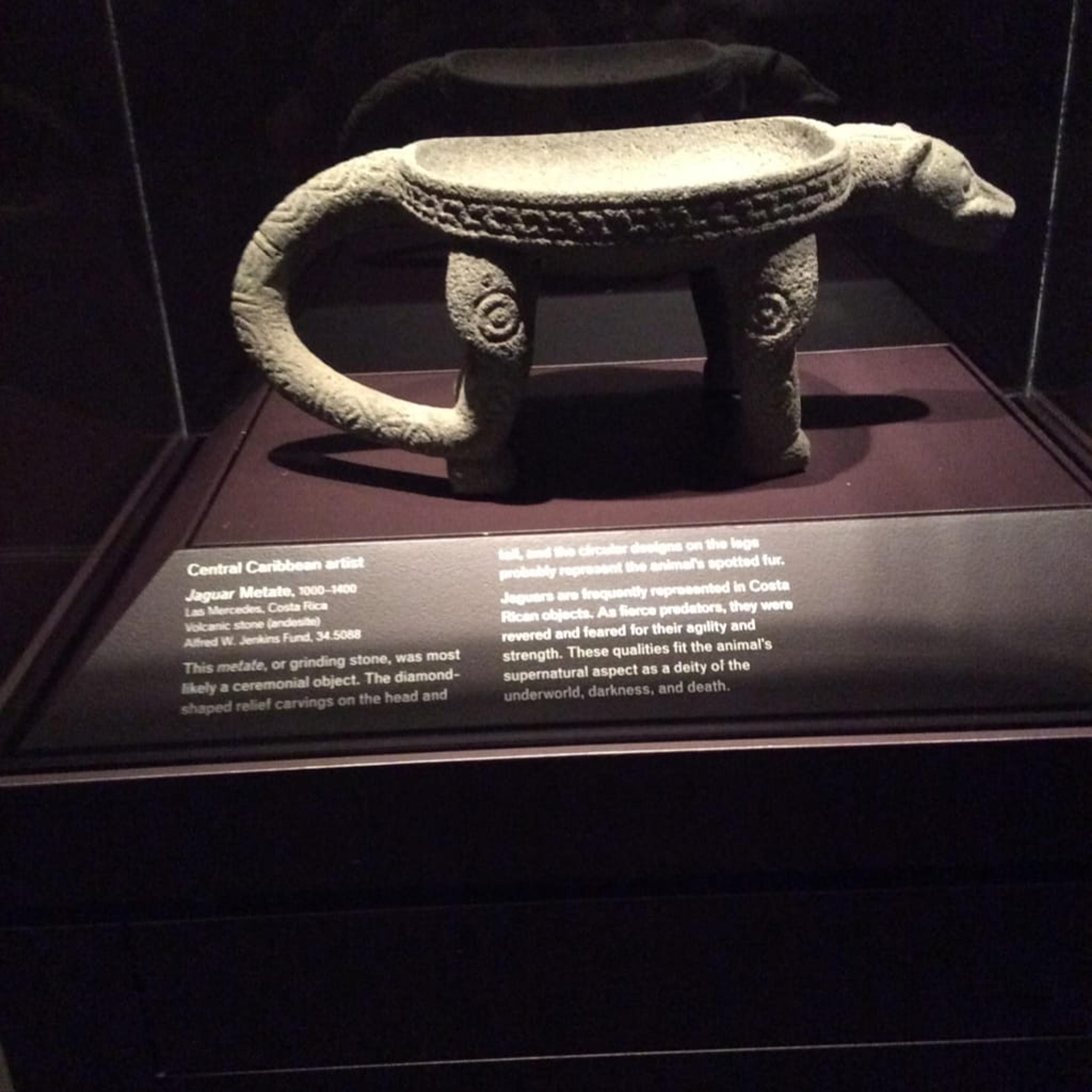 This particular metate likely only served a ceremonial/symbolic purpose rather than a practical one as it doesn't show any signs of wear. Although, we're not exactly sure how it was worked into ceremonies, we do know that the jaguar, as the largest feline predator in Central America, often symbolized power and royalty.In daily life, less ornately decorated metate were used to grind maize and other plants for cooking.
Have information?
Have information about an artwork? Contact us at