The Sleep of Reason Produces Monsters (El sueño de la razon produce monstruos)


1 of 2
Object Label
The most famous image, The Sleep of Reason Produces Monsters (El sueño de la razon produce monstruos), conveys a purposeful ambiguity regarding the conflict between Spanish religiosity and Enlightenment thought: sueño may refer both to the sleep or absence of reason, and to the dream of reason (reason unchecked) that produces monsters. This idea reappears later in the exhibition in Robert Longo’s work.
Caption
Francisco de Goya y Lucientes (Spanish, 1746–1828). The Sleep of Reason Produces Monsters (El sueño de la razon produce monstruos), 1797–1798. Etching and aquatint on laid paper, Sheet: 11 7/8 x 8 in. (30.2 x 20.3 cm) Other (Plate): 8 1/2 x 5 15/16 in. (21.6 x 15.1 cm) Image: 7 1/4 x 4 13/16 in. (18.4 x 12.2 cm). Brooklyn Museum, A. Augustus Healy Fund, Frank L. Babbott Fund, and Carll H. de Silver Fund, 37.33.43.
Gallery
Not on view
Gallery
Not on view
Title
The Sleep of Reason Produces Monsters (El sueño de la razon produce monstruos)
Portfolio
Date
1797–1798
Geography
Place made: Spain
Medium
Etching and aquatint on laid paper
Classification
Dimensions
Sheet: 11 7/8 x 8 in. (30.2 x 20.3 cm) Other (Plate): 8 1/2 x 5 15/16 in. (21.6 x 15.1 cm) Image: 7 1/4 x 4 13/16 in. (18.4 x 12.2 cm)
Inscriptions
Upper right in plate: "43." Verso upper center in graphite: "37.33-43"
Markings
Verso stamped upper center: "BROOKLYN MUSEUM/BROOKLYN, N.Y." in rectangle (Lugt 307b)
Credit Line
A. Augustus Healy Fund, Frank L. Babbott Fund, and Carll H. de Silver Fund
Accession Number
37.33.43
Frequent Art Questions
Can you tell me more about these two?
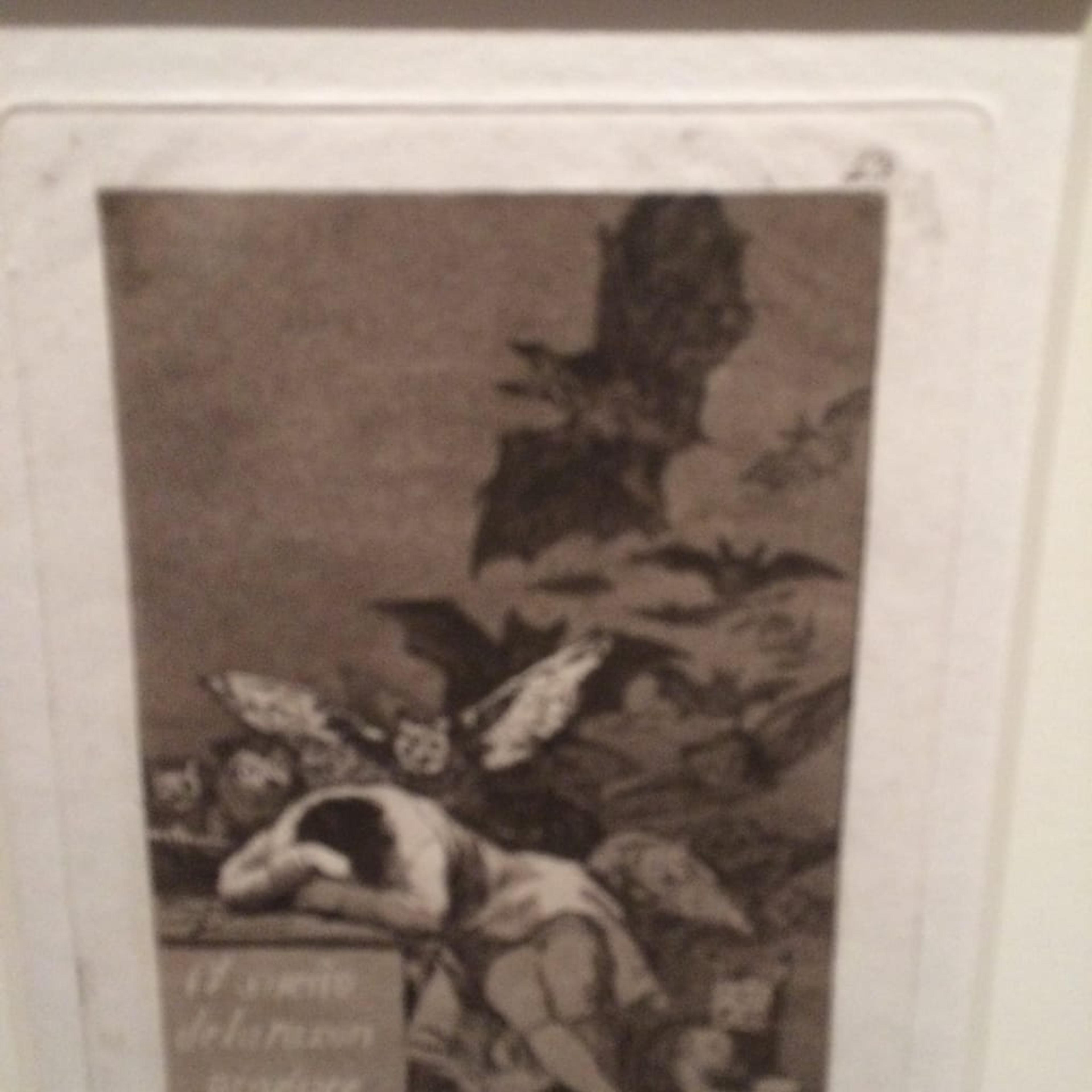 The first photo you sent is "The Sleep of Reason Produces Monsters." The name is a play on words. “Sueño” can mean “sleep” or “dream.” The implication is that when reason sleeps monsters are dreamt up instead to fill the space or that the figure is experiencing reason in excess, unchecked by reality.The second shows an old witch showing a young witch how to fly. Goya often critiqued belief in magic and folklore in his prints. You can see that he also liked to use owls as symbols of demons or monsters.
Have information?
Have information about an artwork? Contact us at