Youth Triumphant (La Jeunesse triomphante)
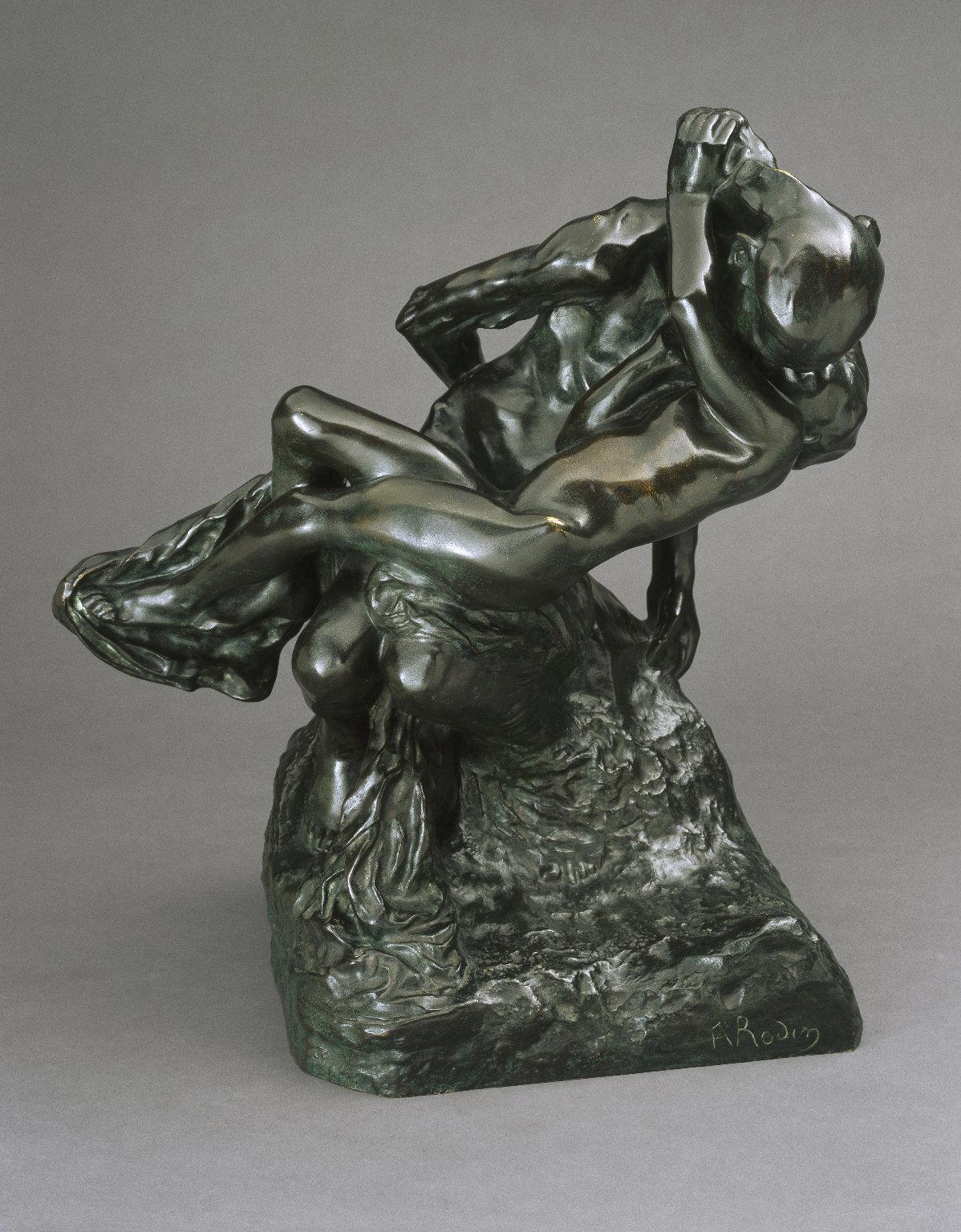
Brooklyn Museum photograph
Object Label
The wizened old woman here epitomizes Rodin’s frequent interest in depicting unconventional or unidealized figures.
Caption
Auguste Rodin (French, 1840–1917). Youth Triumphant (La Jeunesse triomphante), 1896; cast date unknown (after 1898). Bronze, 20 1/2 x 18 x 12 3/4 in. (52.1 x 45.7 x 32.4 cm). Brooklyn Museum, Gift of the Iris and B. Gerald Cantor Foundation, 84.210.2. (Photo: Brooklyn Museum)
Gallery
Not on view
Gallery
Not on view
Title
Youth Triumphant (La Jeunesse triomphante)
Date
1896; cast date unknown (after 1898)
Geography
Place made: France
Medium
Bronze
Classification
Dimensions
20 1/2 x 18 x 12 3/4 in. (52.1 x 45.7 x 32.4 cm)
Signatures
Bottom right: "A. Rodin"
Markings
Side with feet, stamp for Thiébaut
Credit Line
Gift of the Iris and B. Gerald Cantor Foundation
Accession Number
84.210.2
Frequent Art Questions
Is this a young couple? A precedent for The Kiss?
 The Kiss was actually sculpture over a decade before this one! This sculpture, called "Youth Triumphant," shows an older woman and a younger woman. Rodin liked to combine and recombine limbs and figures he had sculpted in new ways, and often left works like this up to the individual interpretation of the viewer.The older of the two women reappears in another work by Rodin called "The Helmet-Maker’s Wife."While the women embrace, their relationship remains unclear, complicated by the multiple titles given to this work, including "Fate and the Convalescent" and "Young Girl and Fate."Thank you!!!
Tell me more.
 Not much is known about Rodin's inspiration for this sculpture, known as Youth Triumphant.Like many of his works, what is especially interesting about this work, is the movement of the bodies. Rodin was particularly interested in conveying emotion through gesture. These figures' faces are largely obscured so you must turn to the bodies to begin to interpret it.
How did the reduction process work? Was it a mechanical process using some sort of 3D pantograph or did the workshop just copy a large work smaller?
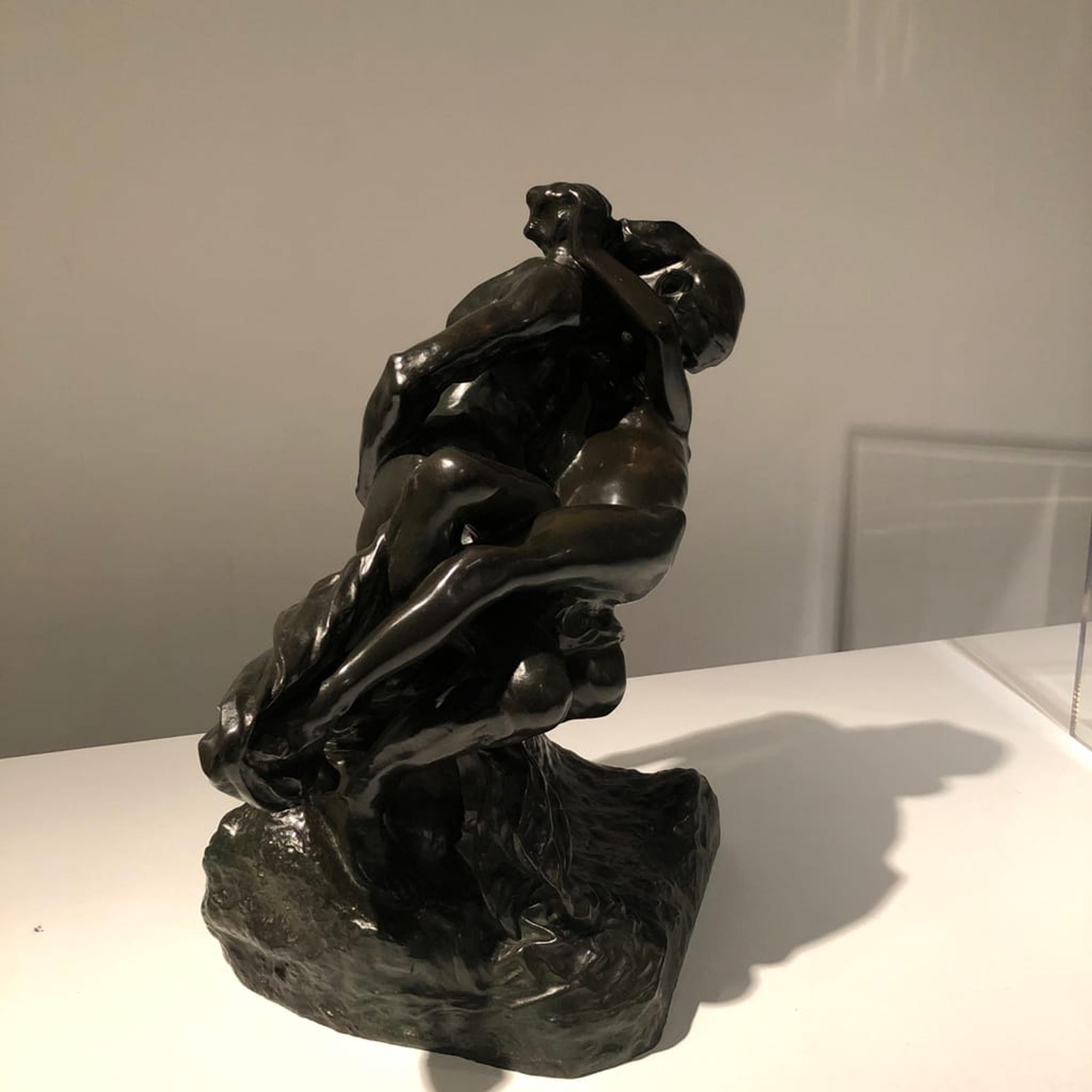 It was a manual process with some mechanical assistance. To reduce works, Rodin and his assistants used a Collas Machine.The Collas Machine basically allowed the person sculpting a reduced work to keep that work and the original sculpture at the exact same angle. Needles and a sharp cutting instrument attached to the machine would allow the sculptor to transfer the profile of one sculpture to the other.Thanks!
The label mentions dropped scissors, is there a reason why the scissors would have been dropped behind?
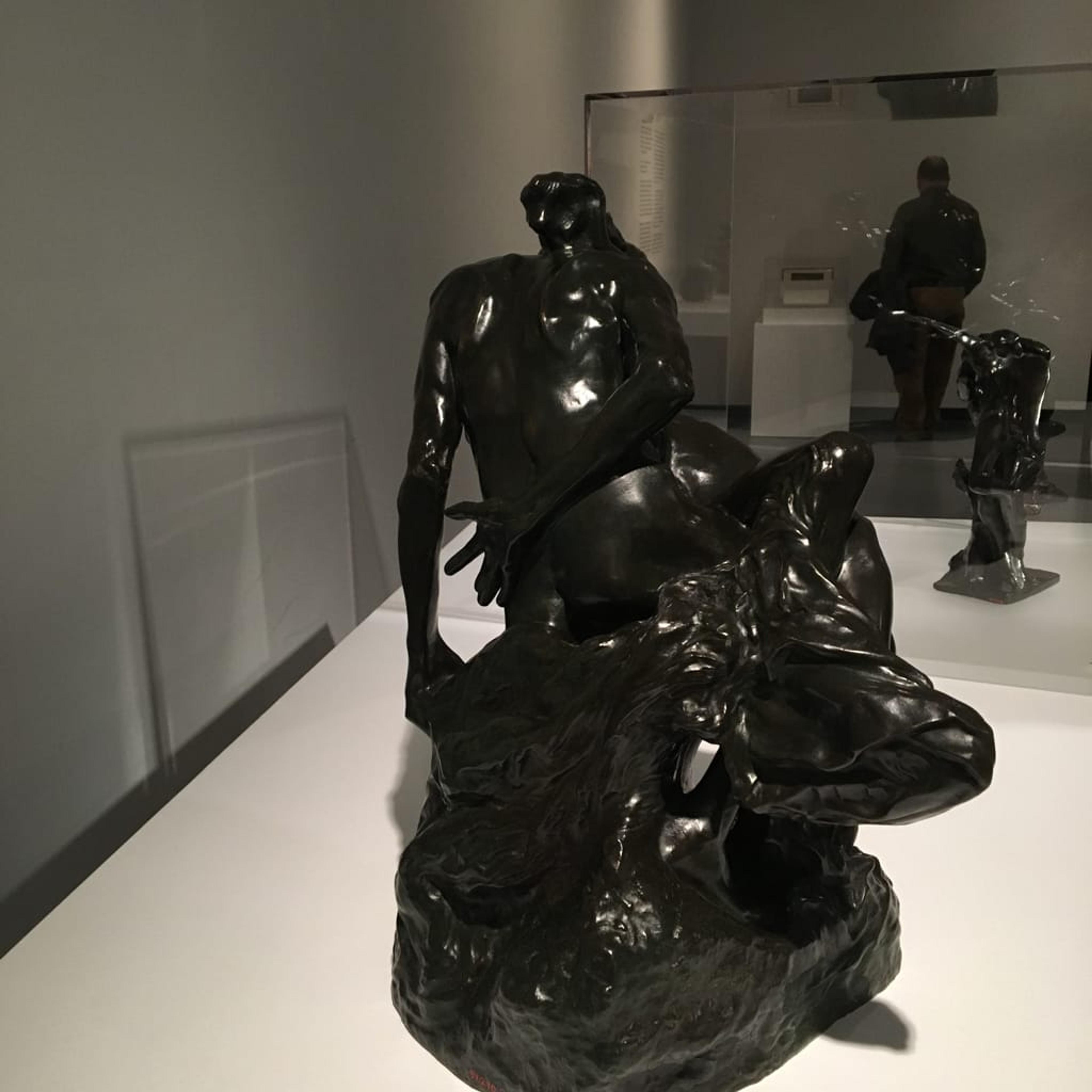 In Greek mythology the "fates," figures that appear as old women, carry enchanted scissors that they use to end people's lives manifested in the form of a thread.In this sculpture, the dropped scissors suggest that the Fate will not be cutting the young woman's thread and the young women will be able to go on living.
Have information?
Have information about an artwork? Contact us at