Stela of Hori
Nubian; Egyptian


1 of 14
Object Label
At the top of this stela, the priest Hori kneels before a ram-headed lion inscribed “Amun-Re, Lord of the thrones of the Two Lands [Egypt] who is in front of Amara West.” The composite animal, wearing a crown of ostrich feathers adorned with cobras, symbolizes this god.
Composite animals were among the first of Egyptian artists’ creations and continued for four thousand years as integral to art and religion. By combining the ram and lion, the fertility of the one and the strength of the other were emphasized in the god Amun.
Composite animals were among the first of Egyptian artists’ creations and continued for four thousand years as integral to art and religion. By combining the ram and lion, the fertility of the one and the strength of the other were emphasized in the god Amun.
Caption
Nubian; Egyptian. Stela of Hori, ca. 1292–1190 B.C.E. Sandstone, 19 3/16 x 14 x 3 in., 47.5 lb. (48.8 x 35.6 x 7.6 cm, 21.55kg). Brooklyn Museum, Gift of the Egypt Exploration Society, 38.544. (Photo: Brooklyn Museum (Gavin Ashworth, photographer))
Gallery
Not on view
Gallery
Not on view
Title
Stela of Hori
Date
ca. 1292–1190 B.C.E
Dynasty
late Dynasty 19, or later
Period
New Kingdom
Geography
Place excavated: Amara West, Sudan (ancient Nubia)
Medium
Sandstone
Classification
Dimensions
19 3/16 x 14 x 3 in., 47.5 lb. (48.8 x 35.6 x 7.6 cm, 21.55kg)
Credit Line
Gift of the Egypt Exploration Society
Accession Number
38.544
Frequent Art Questions
Which god is this?
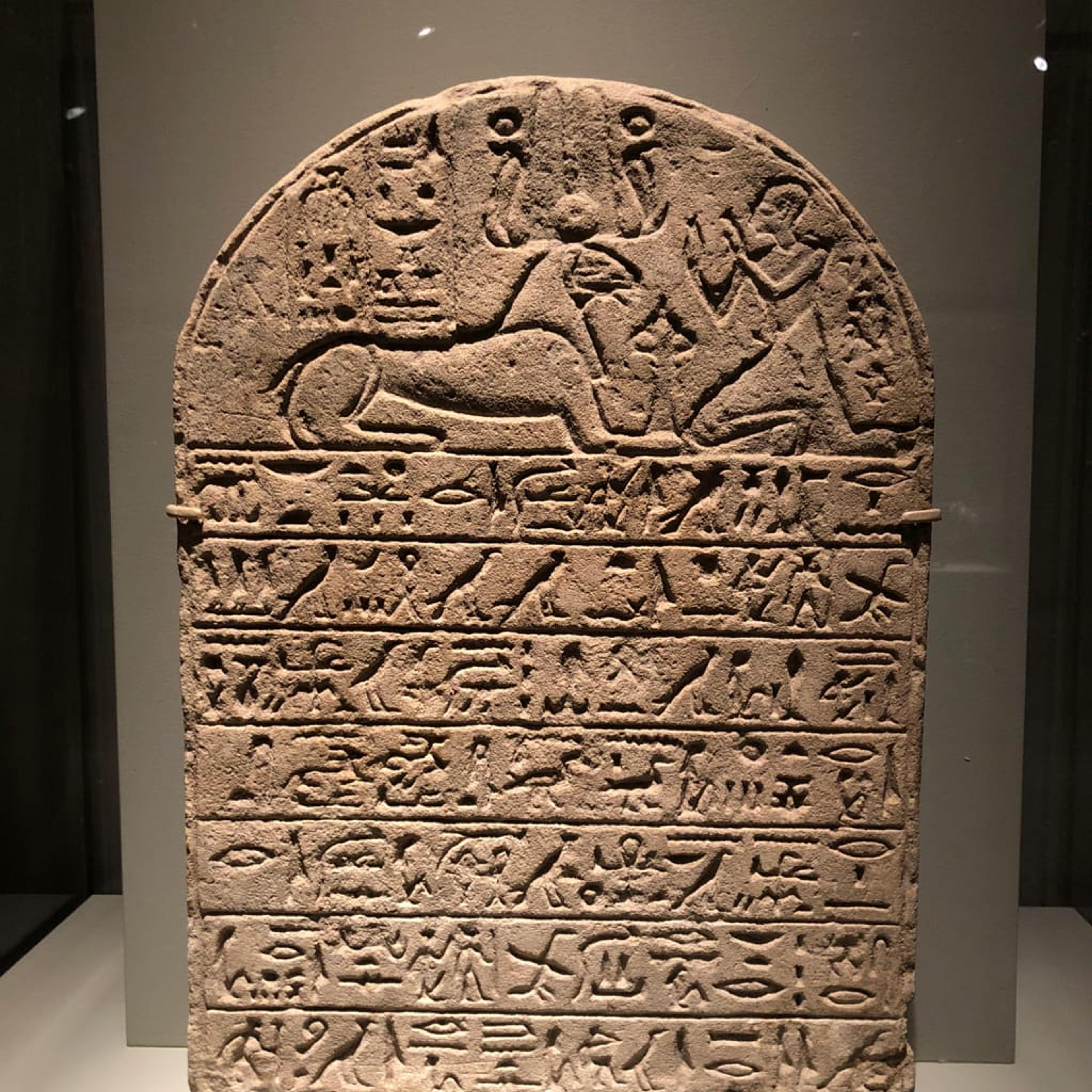 The animal at the top of that stela is a ram-headed lion who is referred to as “Amun-Re, Lord of the thrones of the Two Lands [Egypt] who is in front of Amara West.” The priest, Hori is kneeling before him.The ram was seen as a symbol of virility very early on in Egyptian history. The lion was also seen as representing strength and kingship. Those characteristics are being embodied by Amun-Re when he is shown in this composite form.This stela was donated by a man named Hori to the god Amun-Re.
Did we get our tradition of tombstones from the Egyptians?
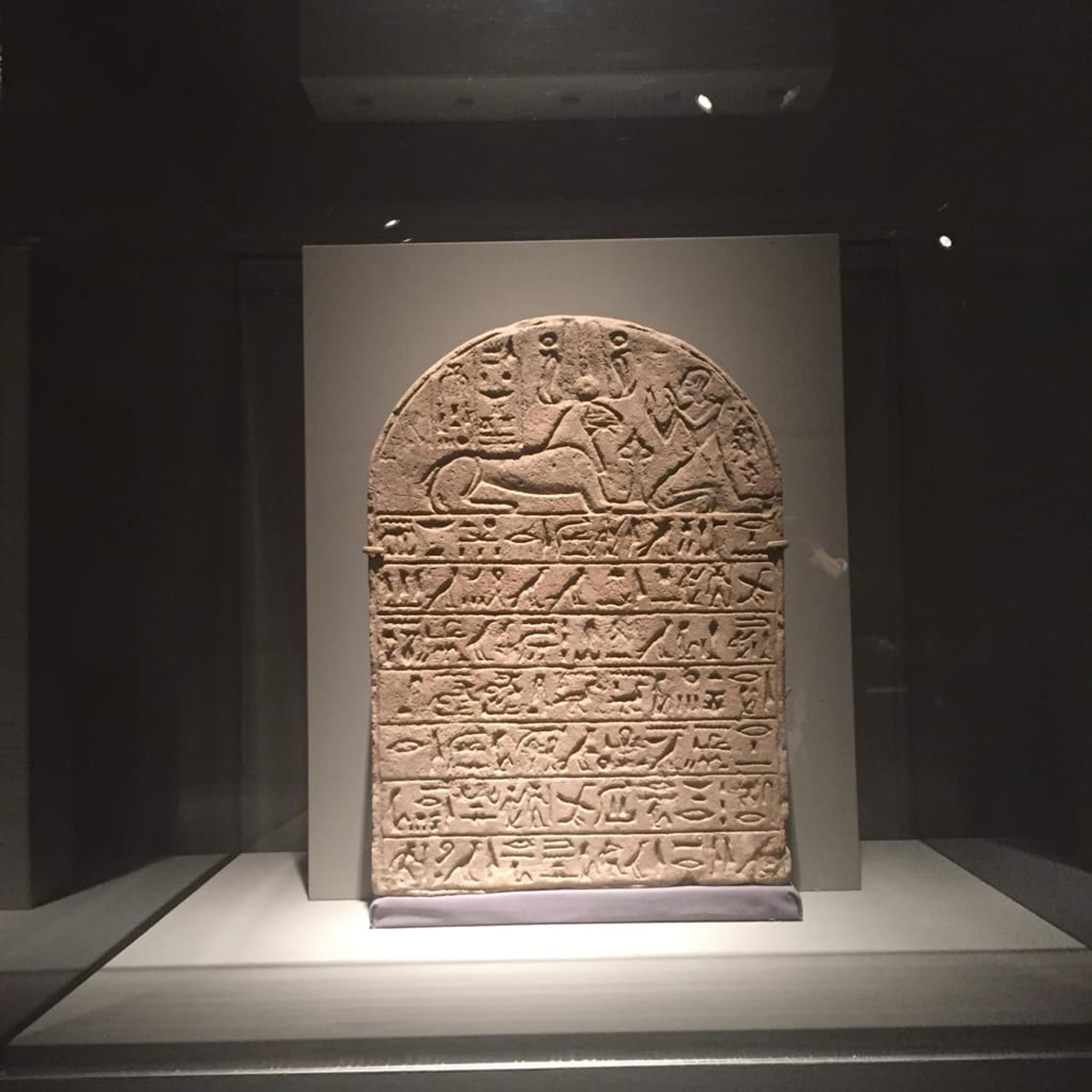 As to the tradition of tombstones, marking the grave of the deceased with inscribed stone was a common practice in many different cultures that influenced our own modern western traditions. It is unlikely the practice comes solely from the Egyptians.
Can modern historians read hieroglyphs?
Yes they can! In fact, by reading the hieroglyphs is how curators know that this stela was donated by a man named Hori.Cool! Thank you!You're welcome! The text at the top, names Hori and Amun-Re of Amara West (a site in modern Sudan). The body of the text is like a prayer to the god on behalf of Hori.
Have information?
Have information about an artwork? Contact us at