Panoramic Landscape (Paysage panoramique)

Brooklyn Museum photograph
Object Label
Sketching outside, artists made informal studies in oils or charcoal of terrain, foliage, and sky—glimpses of often unremarkable topography through which they conveyed their sensory experiences of light and atmosphere. They often used these quickly rendered landscapes as inspiration for formal compositions made in their studios. Such nineteenth-century pleinairists were an important influence on subsequent generations of artists, including Joaquín Sorolla y Bastida, who carried small panels to work outside to capture his motifs in bold, saturated colors.
Caption
Théodore Rousseau (French, 1812–1867). Panoramic Landscape (Paysage panoramique), ca. 1831–1834. Oil on paper mounted on canvas, 5 5/8 × 11 1/2 in. (14.3 × 29.2 cm) frame: 9 3/4 × 15 1/2 × 2 1/4 in. (24.8 × 39.4 × 5.7 cm). Brooklyn Museum, Healy Purchase Fund B, 1999.30. (Photo: Brooklyn Museum)
Gallery
Not on view
Gallery
Not on view
Artist
Title
Panoramic Landscape (Paysage panoramique)
Date
ca. 1831–1834
Geography
Place made: France
Medium
Oil on paper mounted on canvas
Classification
Dimensions
5 5/8 × 11 1/2 in. (14.3 × 29.2 cm) frame: 9 3/4 × 15 1/2 × 2 1/4 in. (24.8 × 39.4 × 5.7 cm)
Credit Line
Healy Purchase Fund B
Accession Number
1999.30
Frequent Art Questions
Tell me more.
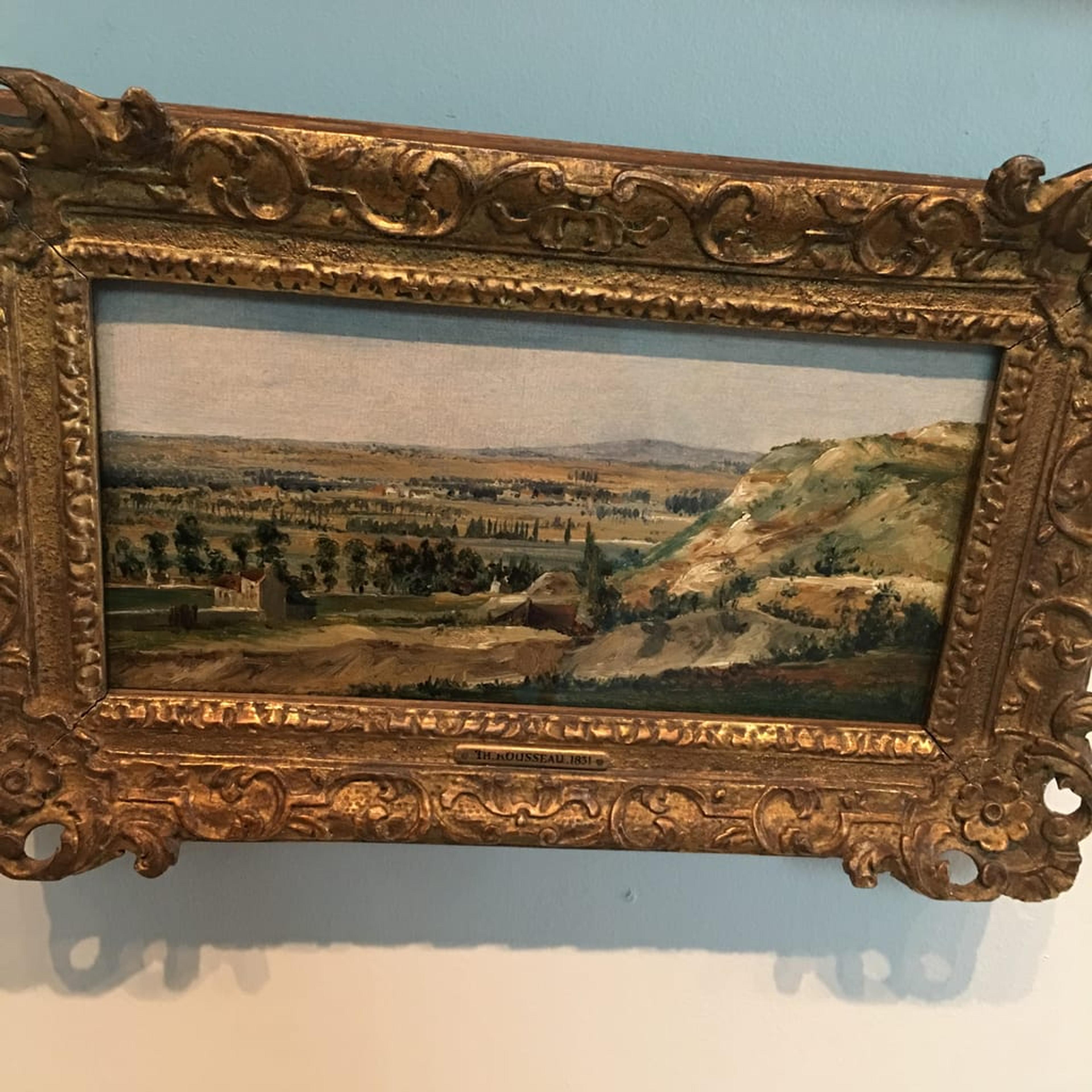 I love the way that, despite its small size, this painting gives you a sense of an expansive landscape.This was painted when Rousseau was a young man, and his work was continuously rejected by the Paris Salon.
Tell me more!
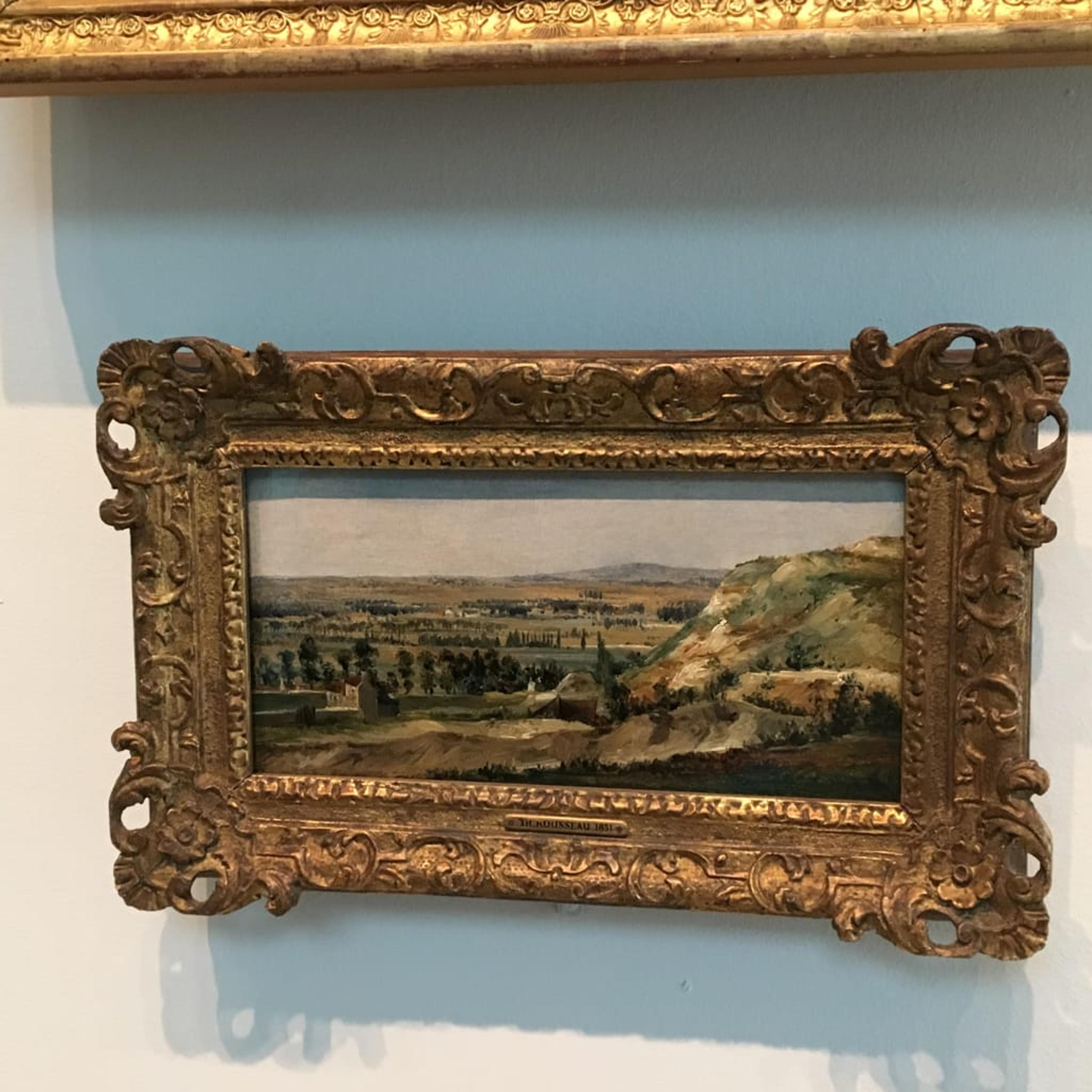 Théodore Rousseau was one of the leading artists of the Barbizon School known for painting outdoors and careful observations of nature.Rousseau was inspired by Dutch landscapes of the 17th century that he would have seen at the Louvre in Paris. His own interpretations, however, were less idealized. We see here, for example, that much of the vegetation had browned.
Have information?
Have information about an artwork? Contact us at